Find Treatment By
Rehabs by Location


Learn
About Us
Recovery.com combines independent research with expert guidance on addiction and mental health treatment. Our mission is to help everyone find the best path to recovery through the most comprehensive, helpful network of treatment providers worldwide.
Advisory Council
Our advisory council brings together leaders in behavioral health, technology, and business. Their diverse expertise ensures our resources and product are innovative, evidence-based, and effective. They guide our mission as accomplished individuals dedicated to improving the landscape of addiction recovery and mental wellness.
How to Choose the Right Sober Living Home for Your Recovery



Transitioning from the highly structured environment of a residential treatment center back into the real world can be challenging, as this is a very vulnerable time. You have progressed to a point in your recovery where 24/7 clinical supervision is no longer necessary, yet you aren’t quite ready to get back to the day-to-day without consistent, regular support that encourages your continued recovery.
That’s where a sober living home comes in.
A sober living home can bridge this gap, offering you that “just right” amount of support you need at this time. Choosing the right one, however, isn't just about finding a vacancy, but instead, selecting the environment that will nurture your new life and support long-term recovery.
What Is a Sober Living Home?
At its core, a sober living home (sometimes called a halfway house, transitional housing, or recovery residence) is a home-like, substance-free living environment where individuals can engage in life skills while practicing abstinence.1
Sober living homes offer more personal autonomy than inpatient treatment or other recovery programs do. For example, rather than remaining within the parameters of a campus or following a daily therapeutic schedule, sober living homes are rooted in accountability. You live with peers who share similar recovery goals as you, governed by a set of rules, such as curfews, designed to reinforce discipline.1 Within a sober living home is a community built on the premise of peer support, recognizing that while you must do the work yourself, you cannot do it alone.
Types of Sober Living Homes
Not all sober living homes are the same. Some have stricter requirements while others encourage more independence.1 Assessing where you are in your recovery prior to choosing a sober living home can help ensure that you will receive the appropriate level of support.
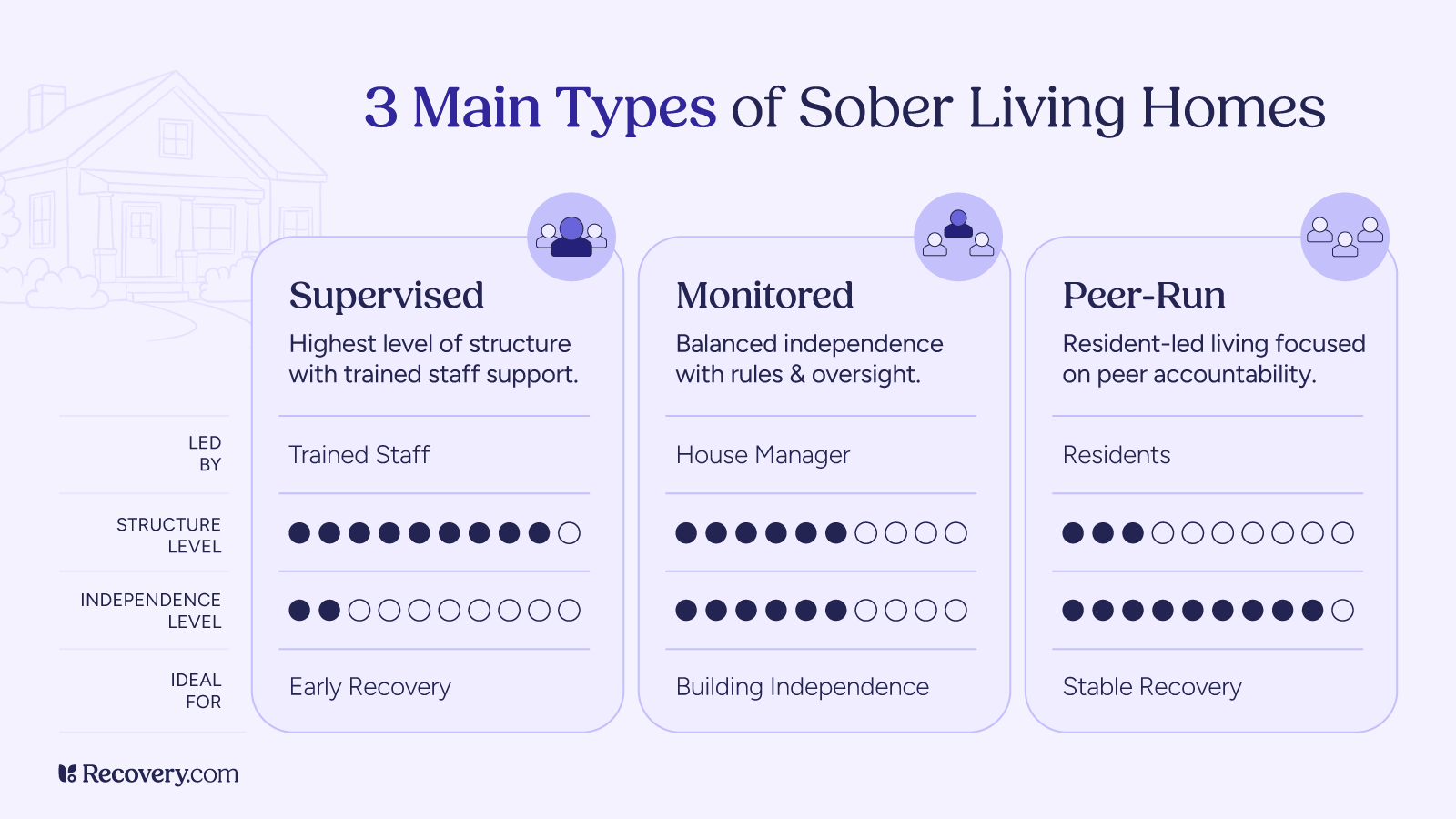
Types of sober living homes include:1
- Supervised Recovery Residences - Homes are supervised by trained, credentialed staff who provide weekly developmental programming to residents.
- Monitored Recovery Residences - Homes run on house rules and peer accountability and residents receive support services.
- Peer-Run Recovery Residences - Homes are operated by the residents, who elect house leaders to oversee rules such as maintaining abstinence, paying rent on time, and behaving appropriately.
If this is your first time getting sober or if you haven’t been sober for a long time, more structured sober living homes can offer a stronger set of guardrails than peer-run residences, and vice versa.
Find The Perfect Treatment For You
Answer a few questions and we'll match you with the best options.
What Are You Struggling With?
What Kind of Care Do You Need?
What Insurance Do You Have?
Top 5 Things to Consider When Choosing a Sober Living Home
There are many things you should take into consideration when choosing a sober living home, such as how much support you may need and what type of home may be the best for you, as previously mentioned. However, there are some additional things to think about prior to making this decision.
1. Cleanliness & Safety
A sober living home should be clean and well-maintained. When looking at specific homes, consider doing an in-person tour rather than just looking online. This allows you the ability to get up close and personal with the home, rather than simply relying on photos.
Look for basics, such as working smoke detectors, functional plumbing, and heat/air conditioning. Sober living homes that are neglected tend to reflect a management team that is either overwhelmed or unavailable, signaling that your needs might not be met, either.
2. Management and Staff Credentials
A professional, well-run sober living home will have qualified people behind it ensuring its success. This can include house managers (both those who live in the home with the residents and those who live off-site) who offer a sense of structure and order and who can play mediator should any disputes arise.
In some sober living homes, these managers are individuals who are in recovery themselves and have been for some time. In others, there may be individuals who are trained in the treatment of substance use disorders and recovery who are credentialed, experienced, and qualified to serve.
When looking into a home that interests you, be sure to ask about management. Learn the hierarchy, check for proper accreditation, and see who will be there to help assist when you need it. Ask questions that show they are ready to handle any situation that might compromise your sobriety, such as:
- What is the protocol if someone overdoses?
- What happens if a resident has a mental health crisis?
- Is there Narcan on-site?
3. Supportive Environment
In a healthy sober living home, residents hold each other to a high standard. This means that residents care enough about a housemate to hold them accountable if their behavior changes. This does not mean that residents are looking to point fingers or get others in trouble, but in fact the opposite.
A sober living home where people take their recovery seriously and are willing to compassionately support others is essential in building long-term sobriety and recovery.
In addition to accountability, residents may do things together to develop a strong network of support. This can include things like having dinner together, attending a 12-Step program meeting as a group, or simply going out and having fun. Typically, houses where residents do things together produce higher success rates than those where residents simply co-exist.
4. Location & Amenities
There is often much conversation about whether or not to attend rehab away from home or to stay local, however it is important to weigh location options when looking for a sober living home that is right for you, too.
Moving to a new town, state, or city can offer a geographical “cure” by removing you from the environment where you were active in your addiction, but being near your existing support network, like a sponsor, friends, or family members, can be equally vital. Take time to think about what is the best option for you prior to making your decision.
At the same time, consider what you enjoy having access to in your life. This might include amenities such as having a park, gym, or salon nearby. It could also include being in an area that is walkable as opposed to one where a vehicle is needed. For logistical ease, ensure basic necessities, such as a grocery store, gas station, or doctor’s office, are also easily accessible.
5. Cost & Insurance
Sober living is most often an out-of-pocket expense that insurance does not provide any coverage for. Think of paying for a sober living home like you would pay rent for an apartment or house.
The cost of these homes can vary wildly and depend on several factors, such as the neighborhoods they are located in, the quality of the home themselves, and what amenities/luxuries are included. While some high-end "sober suites" can cost thousands, most community-based sober living homes are affordable. When weighing your options, be sure the overall cost is affordable for you.
While insurance does not typically cover rent for a sober living home, they usually provide coverage for services you obtain while residing in one, such as individual or group therapy, psychiatric care, and so on. Check with your insurance company to go over your specific plan to find out what you’re afforded and what your limitations are.
Explore Sober Living Treatment Centers
Sober Living Red Flags
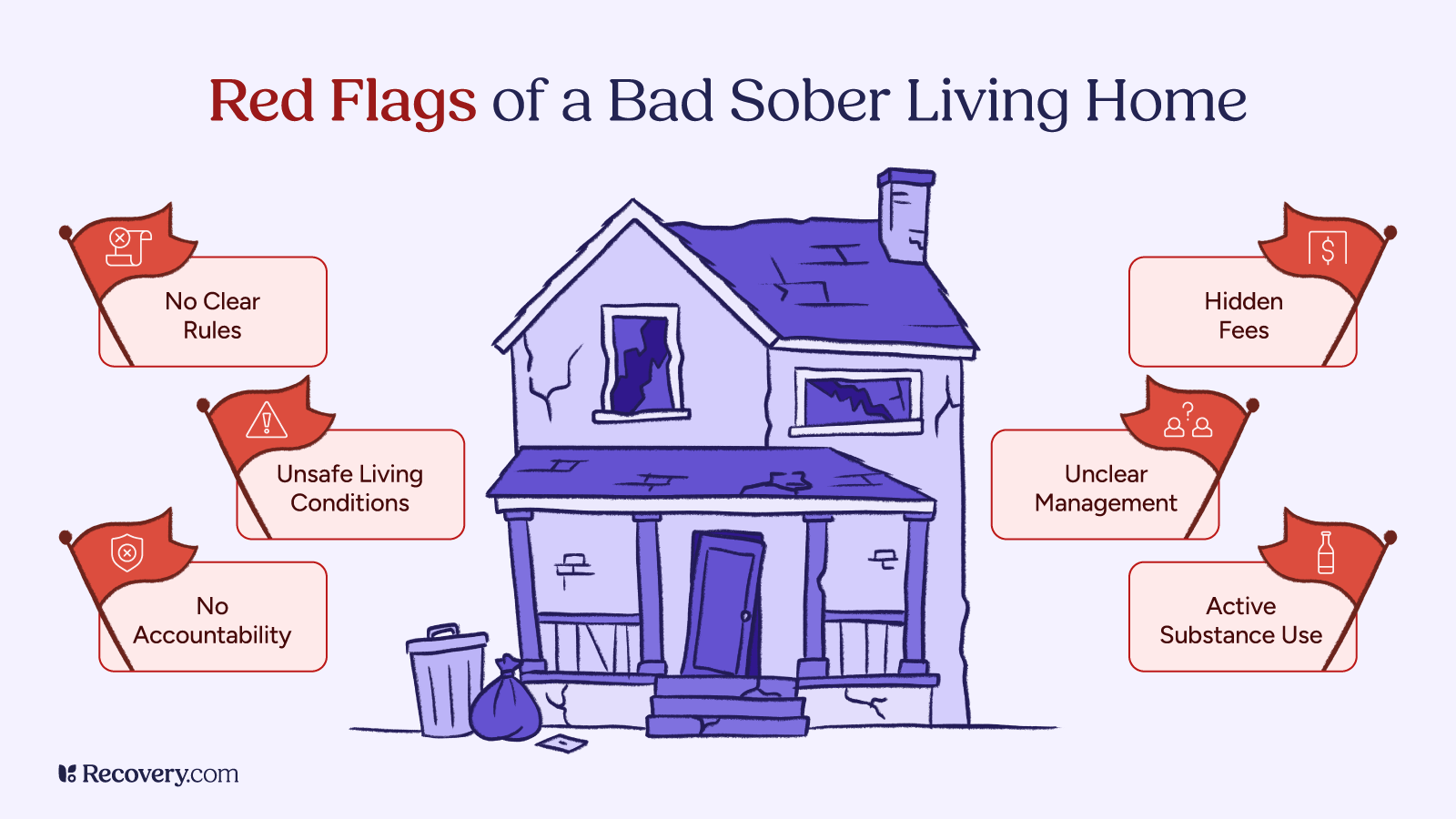
Unfortunately, not all sober living homes will have your best interest at heart. Be wary of sober living red flags, such as:
- No random drug testing.
- No house rules.
- Overcrowding.
- Unsanitary conditions.
- Unqualified staff.
Additionally, it is not only a major red flag, but also illegal, if a house offers you money or free rent to stay there in exchange for using your insurance for unnecessary lab tests, etc. Walk away immediately.














How Do I Find a Sober Living Home?
The internet is an excellent starting point, but it shouldn’t be your only source. Digital marketing isn’t always the most reliable way to make major life decisions, so make arrangements and tour the house (or houses) you are interested in in-person if possible.
You can also reach out to your current treatment team or therapist. They usually either have a list of accredited recovery homes with proven track records or know other professionals who do.
Your support group or 12-Step group can also be of help. If you are not yet a member or do not have a local group, do not hesitate to contact Alcoholics Anonymous (AA) or Narcotics Anonymous (NA) groups in the area you’re considering. Word-of-mouth in the recovery community and local support groups is incredibly powerful, and people generally want to help when they can.
They may be able to give you intel about which sober living homes are worth checking out and which ones you should steer clear of. They might share their own personal experiences with sober living homes, offering you an opportunity to expand your knowledge prior to making your choice.
What Questions Should I Ask?
When you meet with a house manager to learn more about a sober living home, it is important to remember that you are interviewing them as much as they are interviewing you. A good rule of thumb is to have a list of questions prepared prior to the meeting so that you are prepared and don’t leave out anything you meant to bring up.
Some commonly asked questions include:
- What does a typical day look like?
- What are the house rules?
- Are there house meetings or other meeting requirements?
- Are drug/alcohol tests conducted regularly?
- What is your success rate?
- What do you do to keep the premises clean and safe?
- How do you manage conflict among residents?
- How are relapses handled?
- What makes this sober house different from others?
- What is the biggest reason residents leave?
Remember, there is no such thing as a “stupid question.” If there is something you are curious about, or information that you’d like to have but don’t, ask. Any sober living home worth residing in will have a manager who welcomes all of your questions and makes you feel comfortable doing so.
Committing to the Process for Lasting Change
Choosing the right sober living home is the first step, but staying there is the journey. There will be days when you disagree with the rules, days when your roommates annoy you, and days when you just want to leave. But remember: the friction of living with others is exactly what polishes your character.
By choosing a home that offers the right balance of accountability, community, and safety, you aren't just finding a place to sleep. You are choosing the soil in which your new life will grow. Take the time to choose wisely, then dive in with everything you’ve got.
Start Your Recovery Journey
If you’re ready to find addiction treatment for yourself or a loved one, we’re here to help. Find a sober living home that fits your recovery. Browse sober living homes on Recovery.com and filter by location, cost, amenities, and more to find a supportive place to continue your recovery journey. Don’t wait. Get help today.
FAQs
Yes. While many people transition to sober living after completing inpatient treatment, others move in after outpatient treatment, detox, or even after deciding they need a more supportive recovery environment. Each home has its own admission requirements, so it's important to ask about eligibility.
There is no one-size-fits-all timeline. Many people stay between three and twelve months, but some remain longer depending on their recovery progress, financial stability, employment, and housing goals. The best length of stay is one that allows you to build a strong foundation before returning to independent living.
Many sober living homes encourage residents to work, attend school, or volunteer and may connect them with local employment resources, recovery meetings, life skills programs, and community services. While the level of support varies by home, the goal is to help residents build healthy routines, gain independence, and create a stable life in recovery.



Our Promise
How Is Recovery.com Different?
We believe everyone deserves access to accurate, unbiased information about mental health and recovery. That's why we have a comprehensive set of treatment providers and don't charge for inclusion. Any center that meets our criteria can list for free. We do not and have never accepted fees for referring someone to a particular center. Providers who advertise with us must be verified by our Research Team and we clearly mark their status as advertisers.
Our goal is to help you choose the best path for your recovery. That begins with information you can trust.