Find Treatment By
Rehabs by Location


Learn
About Us
Recovery.com combines independent research with expert guidance on addiction and mental health treatment. Our mission is to help everyone find the best path to recovery through the most comprehensive, helpful network of treatment providers worldwide.
Advisory Council
Our advisory council brings together leaders in behavioral health, technology, and business. Their diverse expertise ensures our resources and product are innovative, evidence-based, and effective. They guide our mission as accomplished individuals dedicated to improving the landscape of addiction recovery and mental wellness.
How Much Does Rehab Cost?



The cost of rehab varies considerably depending on the type of treatment you need, how long you receive care, where you go for treatment, and whether you use health insurance. However, having a clearer idea of typical drug and alcohol rehab costs can make it easier to compare your options and plan for treatment.
A 2026 secret-shopper study that contacted more than 1,000 residential treatment facilities across the United States found that a 30-day stay at a residential facility averaged about $27,500 before insurance.1 The study estimated that people using in-network insurance paid an average of approximately $5,500, although actual out-of-pocket costs depend on the individual insurance plan, deductible, coinsurance, provider network and services received.1
Other levels of care, including detox, partial hospitalization and intensive outpatient treatment, have different costs.
Average Rehab Costs by Type of Treatment
There is no single price for addiction treatment. The following estimates come from a 2026 nationwide secret-shopper pricing study and are intended to provide a general idea of what different types of care may cost.1
Medical Detox
- Average program length: 6 days
- Average total cost: $6,500
- Estimate in-network cost: $1,300
- Estimated out-of-network cost: $3,800-$9,000
Residential Rehab
- Average program length: 30 days
- Average total cost: $27,500
- Estimate in-network cost: $5,500
- Estimated out-of-network cost: $19,300-$33,000
Partial hospitalization program (PHP)
- Average program length: 30 days
- Average total cost: $15,000
- Estimate in-network cost: $3,000
- Estimated out-of-network cost: $10,500-$18,000
Intensive outpatient program (IOP)
- Average program length: 30 sessions
- Average total cost: $10,400
- Estimate in-network cost: $2,100
- Estimated out-of-network cost: $7,300-$12,500
These figures are estimates, not guaranteed prices. Your actual rehab cost with insurance can be higher or lower based on your health plan, network status, treatment needs, location and the facility you choose.1
If you are comparing programs, ask each treatment center for a personalized estimate rather than assuming the advertised or average price will be what you ultimately pay.
Find The Perfect Treatment For You
Answer a few questions and we'll match you with the best options.
What Are You Struggling With?
What Kind of Care Do You Need?
What Insurance Do You Have?
What Affects the Cost of Rehab?
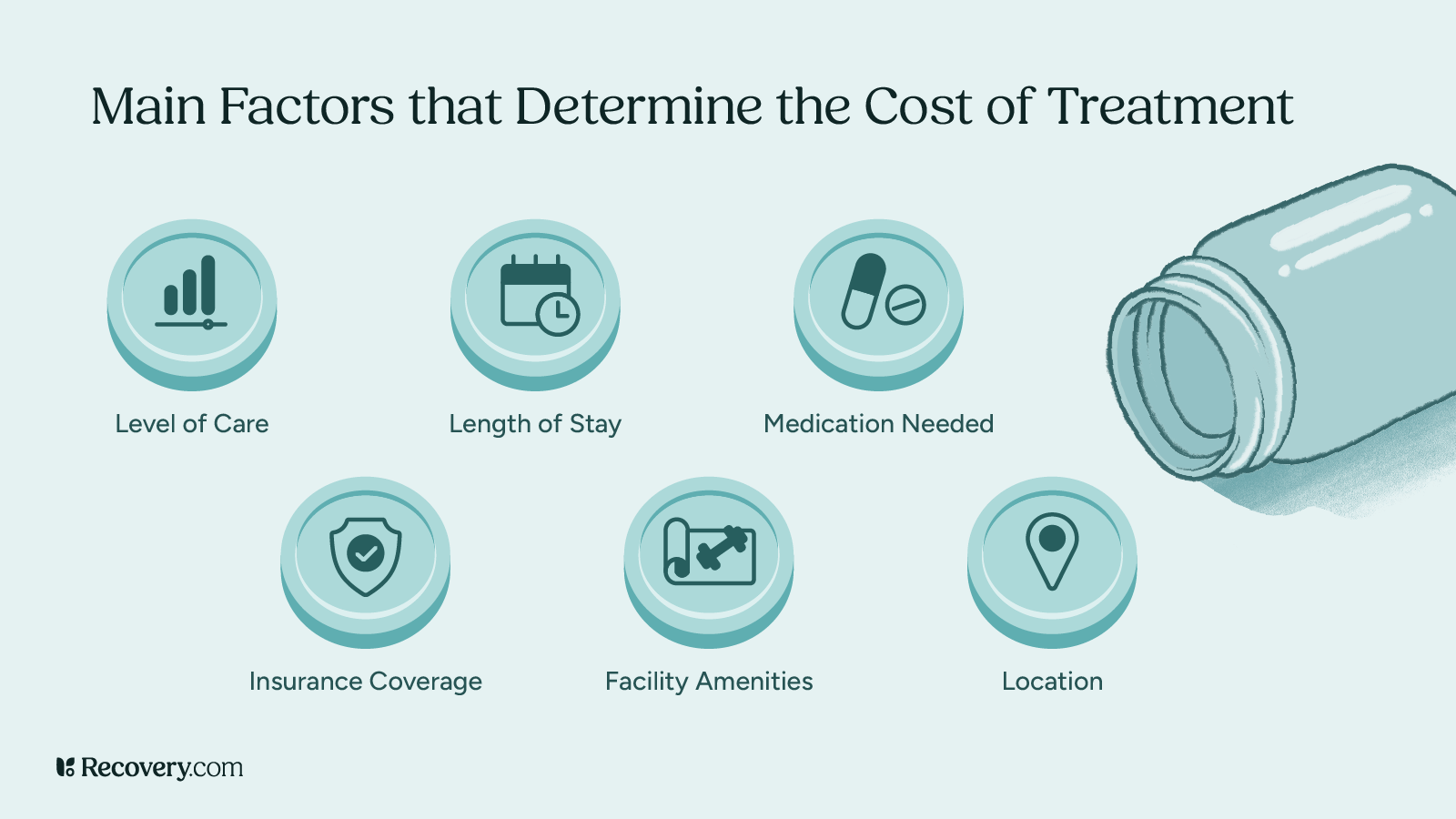
Several factors can determine how much rehab costs, including level of care, length of treatment, location, and services and amenities.
Level of Care
Treatment intensity is one of the biggest factors affecting addiction treatment cost. Someone receiving 24-hour residential care generally requires more staffing, housing and services than someone attending treatment several times a week while living at home.
Common levels of addiction treatment include:
- Medical detox.
- Residential or inpatient treatment.
- Partial hospitalization programs (PHPs).
- Intensive outpatient programs (IOPs).
- Outpatient therapy
The right level of care should be based on your clinical needs rather than cost alone. The American Society of Addiction Medicine (ASAM) Criteria uses factors such as a person's physical health, mental health, substance use, risks, strengths and recovery environment to help determine an appropriate level of treatment.2
If you aren't sure which approach may be appropriate, learning about the differences between inpatient and outpatient rehab can help you understand your options before speaking with a treatment professional.
Length of Treatment
Longer programs generally have higher total prices because they include more days or sessions of treatment. However, treatment does not need to follow a predetermined 28- or 30-day timeline.
ASAM recommends that the overall length of stay and treatment respond to a person's progress and changing needs rather than automatically ending after a fixed number of days.2
Ask a treatment center whether the quoted price covers the entire expected program or represents a daily, weekly or monthly rate.
Location
Treatment costs can differ by state and region. Programs located in areas with higher operating, staffing or housing expenses may cost more.
Travel should also be factored into your overall budget. A treatment program farther from home may involve airfare, transportation, lodging for family members or other expenses that are separate from the facility's treatment fee.
Services and Amenities
The services included in a program can also affect pricing. Medical services, psychiatric care, medication-assisted treatment, individual therapy, group therapy and specialty treatment may affect the total cost.
Programs offering high-end accommodations and extensive amenities can charge significantly more. However, a higher price does not automatically mean better clinical care.
When comparing programs, look beyond amenities and ask about clinical credentials, accreditation, treatment approaches, staffing and whether the program is equipped to address your specific needs.
Explore Drug Addiction Treatment Centers
How Much Does Rehab Cost?
How much rehab costs depends largely on the type of treatment you receive. Factors such as different levels of support, staffing, and time in treatment can significantly affect the total cost.
Medical Detox
Medical detox provides medical support while alcohol or other substances leave the body. The level of monitoring and treatment required varies according to the substance involved, withdrawal risks and a person's health.
The 2026 pricing study estimated an average detox cost of approximately $1,078 per day, or about $6,500 for a six-day episode of care.1
Detox is not necessary for every person entering addiction treatment. When it is needed, it is usually the first stage of care rather than a substitute for ongoing addiction treatment.
Residential or Inpatient Rehab
Residential rehab cost is generally higher than outpatient care because clients live at the treatment facility and receive support around the clock.
In the 2026 pricing study, the average price for 30 days of residential treatment was approximately $27,500 before insurance.1
That does not mean every 30-day rehab program costs $27,500. Some programs cost substantially less, while luxury rehab centers or highly specialized programs may cost much more.
If price is a major consideration, you can compare affordable rehab centers and then speak directly with individual facilities about current rates, insurance, and financial assistance.
Partial Hospitalization and Intensive Outpatient
People who do not require 24-hour residential care may receive structured treatment while continuing to live at home or in supportive sober living housing.
A partial hospitalization program (PHP) typically provides more treatment hours per week than an intensive outpatient program (IOP).
In the 2026 study, a PHP averaged approximately $501 per day, while IOP treatment averaged about $348 per session. Using the program lengths modeled in the study, this equaled approximately $15,000 for 30 days of PHP or $10,400 for 30 IOP sessions before insurance.1
The number of treatment days or sessions you actually need may differ, so ask programs how they calculate their charges.
Cost of Rehab With Insurance
Insurance can substantially reduce what some people pay for addiction treatment, but rehab cost with insurance depends on your specific plan.
All health insurance plans through the Affordable Care Act Marketplace are required to cover mental health treatment and substance use disorder services as essential health benefits. Covered services include behavioral health treatment, inpatient mental and behavioral health services, and substance use disorder treatment. Specific benefits still differ by state and plan.3
Insurance coverage does not necessarily mean treatment will be free. Your out-of-pocket costs may depend on:
- Your deductible.
- Copays.
- Coinsurance.
- Your plan's out-of-pocket maximum.
- Whether the provider is in-network.
- The amount your insurance company considers allowable for the service.
- Whether prior authorization is required.
- Whether a particular service is considered medically necessary.
Using an in-network provider can make an especially large difference. In the 2026 pricing study, the estimated patient responsibility for a 30-day residential program averaged approximately $5,500 in-network compared with approximately $19,300–$33,000 out-of-network.1
Before choosing a treatment center, contact your health plan and the facility to confirm benefits. Ask specifically what level of care is covered, whether the center is in-network, whether authorization is required and what you are expected to pay.
Does Medicaid Pay for Rehab?
Medicaid may help eligible individuals pay for substance use disorder treatment, but coverage and participating providers vary by state.
The Centers for Medicare & Medicaid Services (CMS) reports that many states include behavioral health services for people with substance use disorders through Medicaid State Plans, managed care waivers and Section 1115 demonstrations.4
If you have Medicaid, check your state's specific benefits and confirm that the treatment center accepts your Medicaid plan before admission.
You can also browse rehabs that accept Medicaid.
Does Medicare Pay for Rehab?
Medicare covers certain mental health and substance use disorder screenings, services and treatment programs.5
Depending on eligibility and the services required, coverage can include inpatient hospital care, outpatient substance use disorder treatment, intensive outpatient services, partial hospitalization and opioid use disorder treatment.5
Coverage requirements and costs differ depending on the service and part of Medicare being used. Confirm coverage before beginning treatment whenever possible.
You can search for rehabs that accept Medicare.
Cost of Rehab Without Insurance
Understanding how much does drug rehab cost without insurance may appear overwhelming, but the full listed price is not always the amount you will have to pay.
If you are self-paying, ask the facility about:
- Its cash-pay or self-pay rate.
- Sliding-scale fees.
- Payment plans.
- Scholarships or financial assistance.
- Discounts for paying in advance.
- State or publicly funded treatment options.
If you do not have insurance or choose not to use it, federal rules generally give you the right to receive a Good Faith Estimate of expected charges when care is scheduled at least three business days in advance or when you request an estimate.6
If a bill from a provider is at least $400 higher than that provider's Good Faith Estimate, you may be eligible to use the federal patient-provider dispute process.6
Ask for pricing in writing whenever possible and find out exactly what is included. Medication, laboratory testing, physician services, transportation or other services may sometimes be billed separately.
For additional options, see our guide to how to pay for drug and alcohol rehab.














Are Free or Low-Cost Rehab Programs Available?
Some people may qualify for publicly-funded or reduced-cost addiction treatment.
The Substance Abuse and Mental Health Services Administration’s (SAMHSA) Substance Use Prevention, Treatment, and Recovery Services Block Grant provides funding to states and other jurisdictions for substance use prevention, treatment, and recovery services. These funds can support priority treatment for people without insurance, people who temporarily lose coverage and services that Medicaid, Medicare, or private insurance do not cover.7
Depending on where you live, other options may include:
- State-funded treatment programs.
- Community health centers.
- Nonprofit treatment providers.
- Sliding-scale programs.
- Treatment scholarships.
- Local or state behavioral health programs.
Availability and eligibility requirements differ by location.

How to Lower Your Out-of-Pocket Rehab Costs
If cost is affecting your treatment decision, there are several practical steps you can take before choosing a program.
- Start with the level of care you actually need. More intensive treatment is not automatically better treatment. A qualified professional can help determine the clinically appropriate setting based on your needs.2
- Check your insurance network. In-network treatment can significantly reduce patient costs compared with out-of-network care.1
- Verify your benefits before admission. Ask your insurer about deductibles, copays, coinsurance, prior authorization, covered treatment levels, and your expected out-of-pocket responsibility.
- Ask the treatment center for an itemized estimate. Find out what is included in the quoted rate and what may be billed separately.
- Ask about financial assistance. Some facilities offer self-pay discounts, payment plans, scholarships, or sliding-scale pricing.
- Explore publicly funded options. Medicaid, Medicare, and state-funded programs may provide additional avenues for accessing treatment.4,5,7
Price is an important factor, but it should be considered alongside clinical quality, the treatment offered and whether the program is appropriate for your needs.
Questions to Ask a Rehab Before You Pay
Before enrolling in a treatment program, consider asking:
- What is the total expected cost of treatment?
- Is that price per day, per month or for the entire program?
- What services are included?
- Are medications, laboratory work, or physician services billed separately?
- Are you in-network with my insurance plan?
- What do you estimate my out-of-pocket cost will be?
- Does my insurance require prior authorization?
- Do you offer self-pay discounts, payment plans, or scholarships?
- Can you provide the estimated charges in writing?
- What happens financially if I need a longer or shorter stay than originally expected?
Getting these answers before admission can make it easier to compare treatment centers on something more meaningful than the advertised price alone.

Find Treatment That Fits Your Needs and Budget
Knowing how much rehab costs can make treatment feel more manageable, but an online average cannot tell you exactly what you will pay.
The next step is to compare programs that provide the level of care you need, check which facilities work with your insurance and request a personalized estimate before making a decision.
Browse treatment centers to compare options by location, level of care, insurance, price and treatment needs. Once you find programs that fit what you're looking for, contact their admissions teams directly to verify coverage, ask about financial assistance and get current pricing.
FAQs
There is no single national price that applies to every program. In a 2026 study of more than 1,000 residential treatment facilities, a 30-day residential program averaged approximately $27,500 before insurance.1 Detox, PHP, IOP and outpatient treatment have different price structures.
The same 2026 pricing study found an average of about $27,500 for a 30-day residential treatment program. The estimated average patient responsibility was approximately $5,500 with in-network insurance, though individual costs can vary substantially.1
Outpatient treatment generally involves fewer facility and housing expenses because you do not live at the treatment center. However, total cost depends on how often you attend treatment, how long treatment continues and the services you receive.
The least expensive option is not necessarily the appropriate one. Treatment intensity should be matched to your individual needs.6
Many health insurance plans cover substance use disorder treatment. Marketplace plans must cover substance use disorder services as an essential health benefit, although the exact services, networks and cost-sharing requirements depend on the plan.2
Contact your insurance provider for an estimate of your specific coverage and expected costs.
Yes. People without insurance may use self-pay rates, payment plans, sliding-scale programs, scholarships, publicly funded programs or other financial assistance.
If you are not using insurance, ask the provider for a written Good Faith Estimate of expected charges before treatment.7
There isn't one treatment type that will be cheapest for everyone. Costs depend on the services needed, duration, insurance coverage and individual program.
Rather than choosing a treatment setting based solely on price, first determine the appropriate level of care and then compare affordable programs that provide it.6



Our Promise
How Is Recovery.com Different?
We believe everyone deserves access to accurate, unbiased information about mental health and recovery. That's why we have a comprehensive set of treatment providers and don't charge for inclusion. Any center that meets our criteria can list for free. We do not and have never accepted fees for referring someone to a particular center. Providers who advertise with us must be verified by our Research Team and we clearly mark their status as advertisers.
Our goal is to help you choose the best path for your recovery. That begins with information you can trust.