Find Treatment By
Rehabs by Location


Learn
About Us
Recovery.com combines independent research with expert guidance on addiction and mental health treatment. Our mission is to help everyone find the best path to recovery through the most comprehensive, helpful network of treatment providers worldwide.
Advisory Council
Our advisory council brings together leaders in behavioral health, technology, and business. Their diverse expertise ensures our resources and product are innovative, evidence-based, and effective. They guide our mission as accomplished individuals dedicated to improving the landscape of addiction recovery and mental wellness.
What Is a Sober Living Home? A Guide to Recovery Housing



- Sober living homes are substance-free residences that provide structure, accountability, and peer support during recovery.
- People may live in sober living homes after treatment, while attending outpatient care, or when they need a recovery-focused living environment.
- Research suggests that recovery housing is associated with positive outcomes, including reduced substance use, improved employment, and stronger social support.
- The right sober living home depends on a person’s recovery goals, support needs, and stage of recovery.
Recovery doesn’t end when treatment does. For many people, the transition from a structured treatment program back to everyday life can be challenging. Sober living homes can help bridge the gap by providing a safe, substance-free environment where people can strengthen recovery skills by building healthy routines and connecting with supportive peers.1
Sober living homes are a type of recovery housing, which is a support service designed to help people maintain recovery from substance use disorder (SUD).1 These homes are built on the idea that a stable living environment, positive social connections, and accountability can support long-term recovery.
Research shows that recovery housing options like sober living homes are associated with positive outcomes, including decreased substance use, lower likelihood of returning to substance use, increased employment, and stronger family relationships.1
Recovery housing options like sober living homes are increasingly recognized as an important part of the continuum of care, helping people maintain momentum as they work toward lasting recovery and wellbeing. This page will help you learn more about sober living homes and how to find one to fit your needs.
What Is a Sober Living Home?
A sober living home is a safe, substance-free residence that provides a recovery-focused living environment for people who want to maintain their sobriety.1 Residents live alongside others in recovery and benefit from more immediate peer support and accountability in a structured setting that encourages health habits and long-term recovery.1
People often move into a sober living home after inpatient addiction treatment, but that’s not always the case. Some people live in a sober living home while participating in outpatient addiction treatment programs, while others enter recovery housing without being enrolled in formal treatment at all. Eligibility requirements vary from one sober living home to another.

Sober living homes are just one type of recovery housing.1 While people often use the terms sober living home and recovery housing interchangeably, recovery housing is actually a broader category that includes several levels of support.1
The National Alliance for Recovery Residences (NARR), whose framework is recognized by the Substance Abuse and Mental Health Services Administration (SAMHSA), describes a continuum of four recovery housing levels:1
- Level I (Peer-Run Housing): Recovery residences, such as Oxford Houses, where residents share responsibility for household operations, decision-making, and peer support without on-site professional staff.
- Level II (Sober Living Homes): Structured, peer-supported residences with house managers and community accountability. Residents participate in governance and are encouraged to engage in recovery support services and mutual-help groups.
- Level III (Supervised Housing): Recovery residences that provide additional structure, life-skills support, and recovery-focused services through trained staff who help residents navigate daily responsibilities and recovery goals.
- Level IV (Residential Treatment Housing): Residential programs that combine housing with on-site clinical treatment services and professional oversight for individuals who need a higher level of support.
Find The Perfect Treatment For You
Answer a few questions and we'll match you with the best options.
What Are You Struggling With?
What Kind of Care Do You Need?
What Insurance Do You Have?
Who Is a Sober Living Home For?
Sober living homes can benefit a wide range of people in recovery, but they aren’t the right fit for everyone. Recovery isn’t one-size-fits-all. According to the National Institute on Drug Abuse (NIDA), effective treatment is individualized and should be tailored to a person’s unique needs, substance use history, and recovery goals.2 As a result, whether someone is a good candidate for sober living depends on their specific situation.
People who may benefit from a sober living home include:
- People transitioning out of inpatient treatment, which is a highly structured, live-in level of care that provides 24-hour supervision and support.2 Sober living can help residents gradually adjust to greater independence while maintaining a recovery-focused environment.
- People participating in outpatient treatment, which does not require living on-site while attending scheduled therapy sessions and recovery services.2 Sober living can provide additional structure and peer support between treatment appointments.
- People who want a substance-free living environment because their current home situation includes triggers, stressors, or exposure to alcohol and other drugs.
- People seeking accountability and peer support from others who understand the challenges of recovery.
- People rebuilding daily routines, including returning to work, school, family responsibilities, and community life.
For some individuals, particularly those with severe substance use disorders or significant medical or mental health needs, a higher level of care, such as inpatient treatment, may be more appropriate before transitioning to sober living. The best recovery plan is one that matches a person's individual needs and circumstances.2
Explore Sober Living Treatment Centers
How Does a Sober Living Home Work?
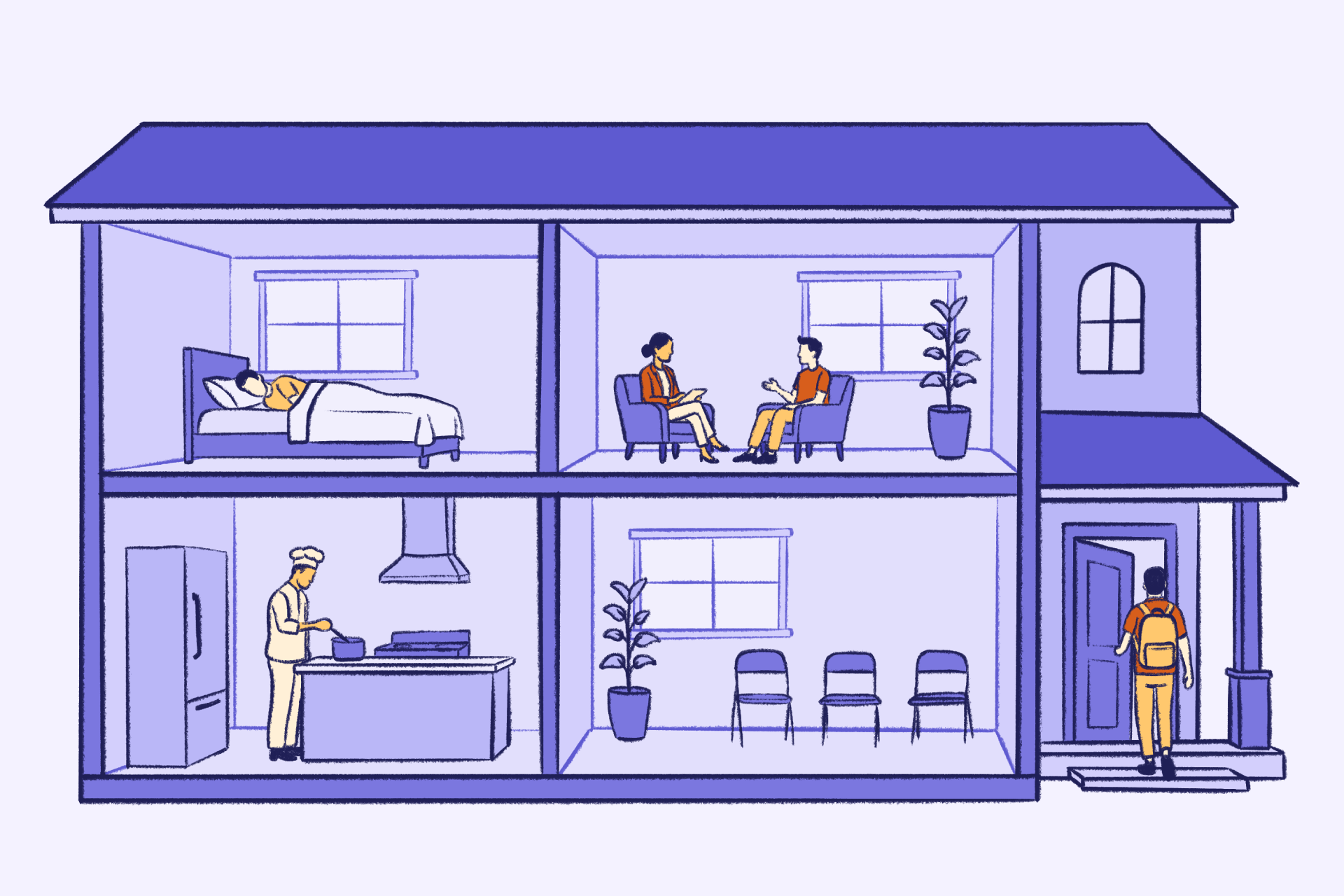
Sober living homes provide a structured, substance-free environment where people can focus on recovery while gradually returning to everyday responsibilities. While every residence is different, most sober living homes share a few common features:1,3
- Peer support and community. Residents live with others who are also committed to recovery, creating opportunities for accountability, encouragement, and shared experiences.
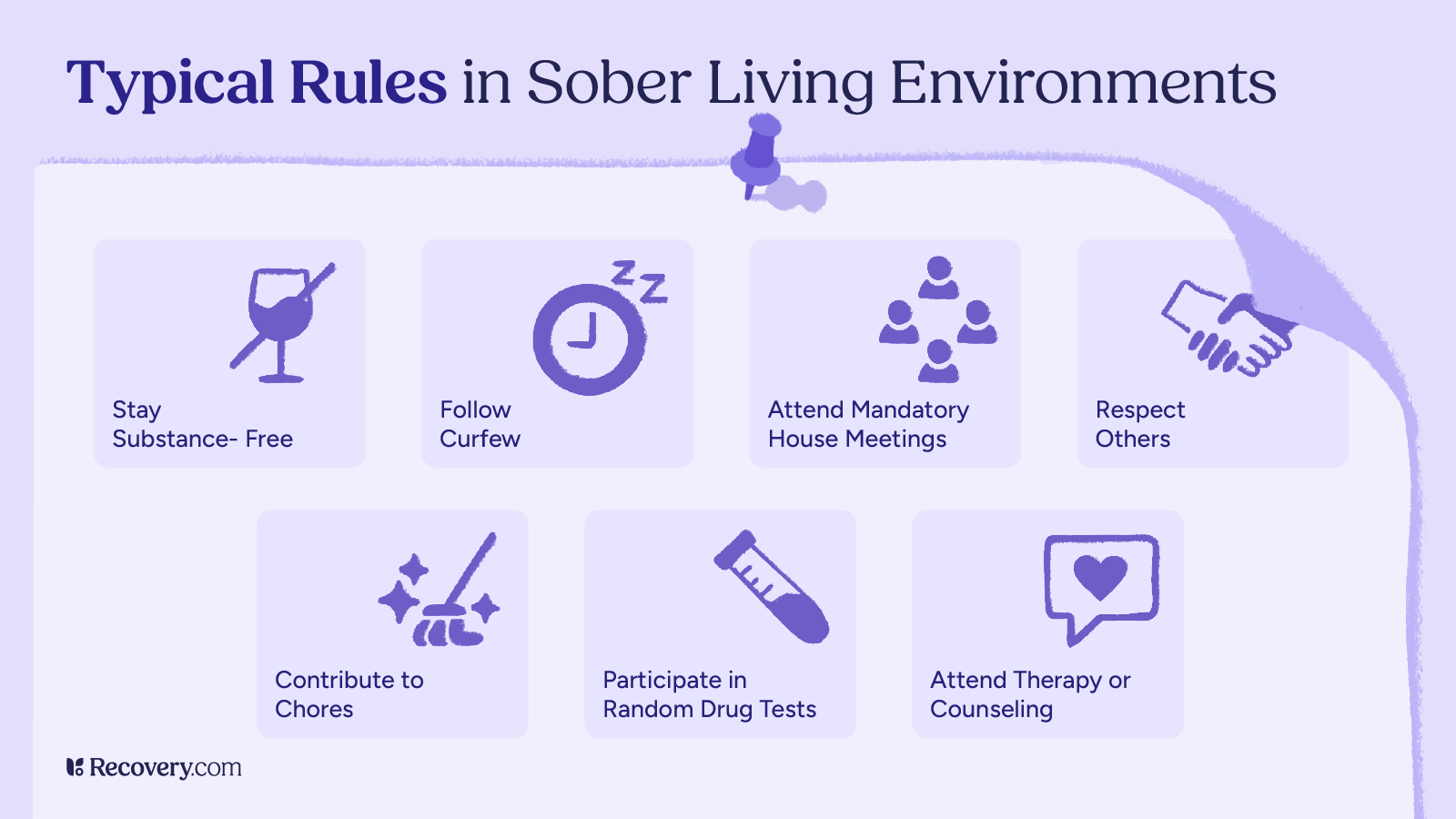
- House rules and structure. Most homes require residents to remain abstinent from alcohol and other drugs, contribute to household responsibilities, and follow community guidelines that support a healthy living environment. Depending on the residence, rules may include curfews, drug testing, and guest restrictions to help maintain accountability.
- Recovery-focused activities. Depending on the program, residents may be encouraged or required to attend 12-Step meetings (e.g., Alcoholics Anonymous), other mutual-support groups, participate in treatment, maintain employment, or pursue educational goals.
- A bridge to independent living. Unlike inpatient treatment, most sober living settings typically do not provide 24-hour clinical care. Instead, they provide a supportive environment where residents can practice recovery skills while navigating work, relationships, and other day-to-day responsibilities.
There is no standard length of stay in a sober living home. Some people stay for a few months, while others remain for six months or longer. The right timeline depends on a person's recovery progress and readiness for independent living. Many sober living homes don’t set a strict maximum length of stay, allowing residents to transition when they feel prepared for the next step.
Learn more: What to Expect In a Sober Living Home














Are Sober Living Homes Effective?
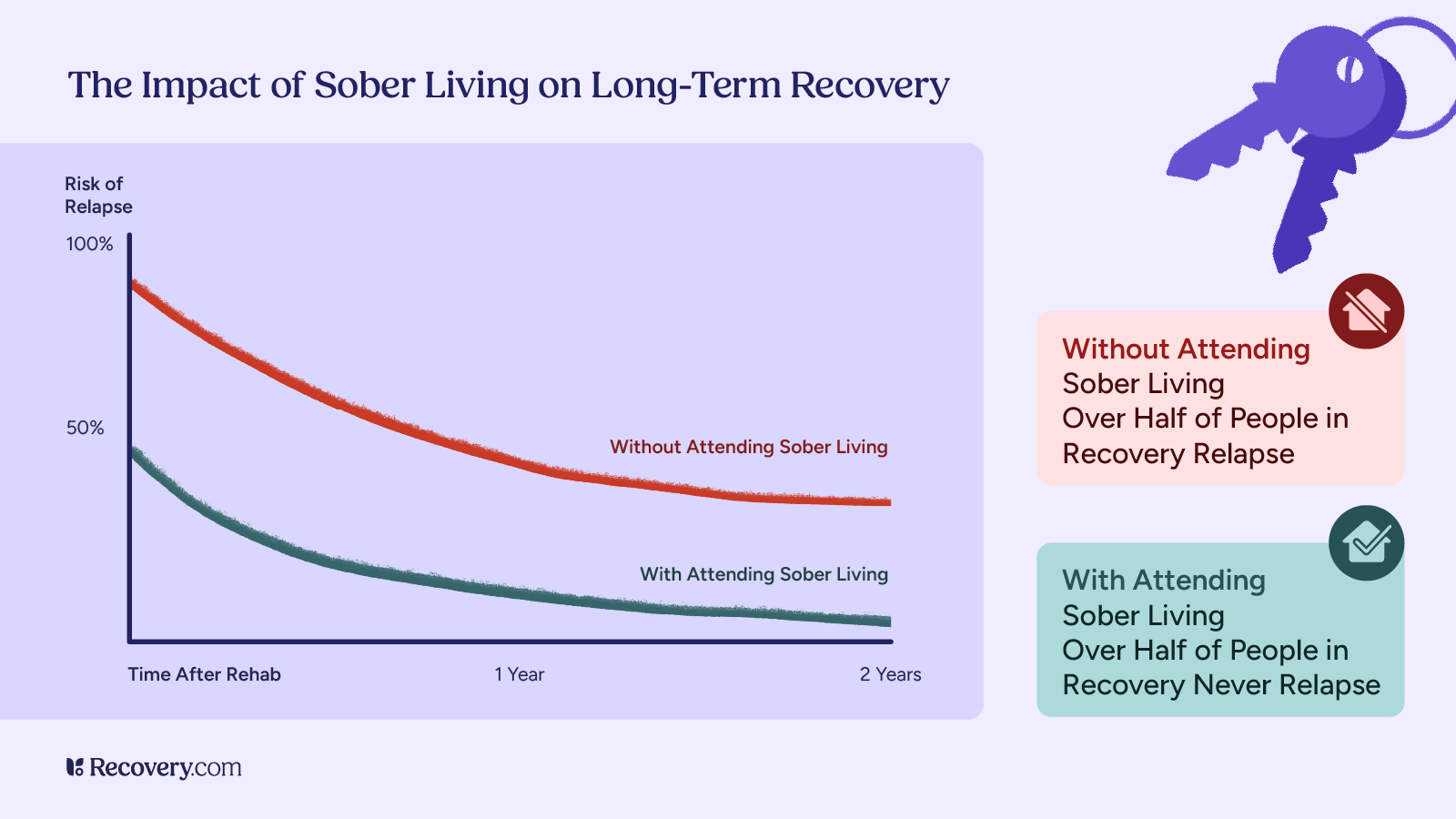
Yes, research suggests that sober living homes and other forms of recovery housing can be effective tools for supporting long-term recovery from addiction.1 While recovery outcomes vary from person to person, research show that recovery housing is associated with:1
- Decreased substance use.
- Lower likelihood of a return to substance use.
- Lower rates of incarceration.
- Increased employment.
- Higher income.
- Improved family relationships.

In a study of 300 residents living in sober living homes, participants showed improvements in alcohol and drug use, psychiatric symptoms, employment, and arrest rates over an 18-month period.3
More recent research suggests that the length of stay may play an important role in recovery outcomes. A 2023 study found that residents who stayed in sober living homes for at least six months experienced higher rates of abstinence, fewer depression and psychiatric symptoms, and decreased likelihood of ongoing substance use disorders and legal problems compared to those who left earlier. The researchers concluded that remaining in sober living for six months or longer may provide meaningful recovery benefits and support long-term recovery.4
Benefits of Sober Living Homes
Sober living homes can provide several benefits for people who want additional support during recovery. While each residence is different, many offer:
- A substance-free environment. Living in a home where alcohol and other drugs are not permitted can reduce exposure to triggers and support recovery goals.
- Peer support and accountability. Residents live alongside others who understand the challenges of recovery, creating opportunities for encouragement, shared experiences, and a built-in support system.
- Structure and routine. House rules, responsibilities, and recovery-focused expectations can help residents build healthy habits and establish stability in their daily lives.
- Transition assistance and life skills training. Some, but not all, sober living homes provide life skills training to help residents reintegrate into society. Programs may include budgeting, job searching, cooking, and relationship-building skills.
- Connection to recovery resources. Many sober living homes encourage or require participation in treatment, 12-Step programs, mutual-support groups, employment, education, or other recovery-supportive activities.
Together, these benefits can help residents strengthen recovery skills, build confidence, and prepare for a successful transition to independent living.
Choosing a Sober Living Home
Not all sober living homes are the same. House rules, level of support, location, recovery philosophy, and cost of sober living can vary from one residence to another. The best fit depends on your individual recovery goals, support needs, and stage of recovery.
When evaluating your options, it's important to consider the home's structure, expectations, and approach to recovery. You may also want to ask about staff involvement, peer support opportunities, and connections to treatment or recovery services.
Learn more: How to Choose a Sober Living Home
Find a Sober Living Home That Fits Your Needs
Whether you're transitioning from treatment or looking for a recovery-focused living arrangement, the right sober living home can help you maintain momentum in your recovery journey.
If you're exploring your options, Recovery.com can help. Browse sober living homes near you or out of state, including popular locations like California, Florida, Texas, and New York. Compare programs, and find a recovery residence that matches your needs.
FAQs
A sober living home provides a safe, substance-free environment where people can build recovery skills, establish healthy routines, and receive peer support.1
There is no standard length of stay. Some people stay for a few months, while others remain for six months or longer, depending on their needs and recovery goals.
Not always. While many residents enter sober living after treatment, some homes also accept people who are participating in outpatient care or pursuing addiction recovery without formal treatment.
Research suggests that recovery housing is associated with positive outcomes such as reduced substance use, improved employment, housing stability, and stronger social support.1
Sober living homes are sometimes confused with halfway houses, but the two are not always the same. While both provide substance-free housing, halfway houses are often government-funded or connected to the criminal justice system, whereas sober living homes are typically recovery-focused residences designed to support long-term sobriety.
Rehab provides clinical treatment and medical or therapeutic services, while most sober living settings offer a recovery-focused living environment with peer support and accountability.



Our Promise
How Is Recovery.com Different?
We believe everyone deserves access to accurate, unbiased information about mental health and recovery. That's why we have a comprehensive set of treatment providers and don't charge for inclusion. Any center that meets our criteria can list for free. We do not and have never accepted fees for referring someone to a particular center. Providers who advertise with us must be verified by our Research Team and we clearly mark their status as advertisers.
Our goal is to help you choose the best path for your recovery. That begins with information you can trust.