Find Treatment By
Rehabs by Location


Learn
About Us
Recovery.com combines independent research with expert guidance on addiction and mental health treatment. Our mission is to help everyone find the best path to recovery through the most comprehensive, helpful network of treatment providers worldwide.
Advisory Council
Our advisory council brings together leaders in behavioral health, technology, and business. Their diverse expertise ensures our resources and product are innovative, evidence-based, and effective. They guide our mission as accomplished individuals dedicated to improving the landscape of addiction recovery and mental wellness.
What to Expect While You’re in Rehab


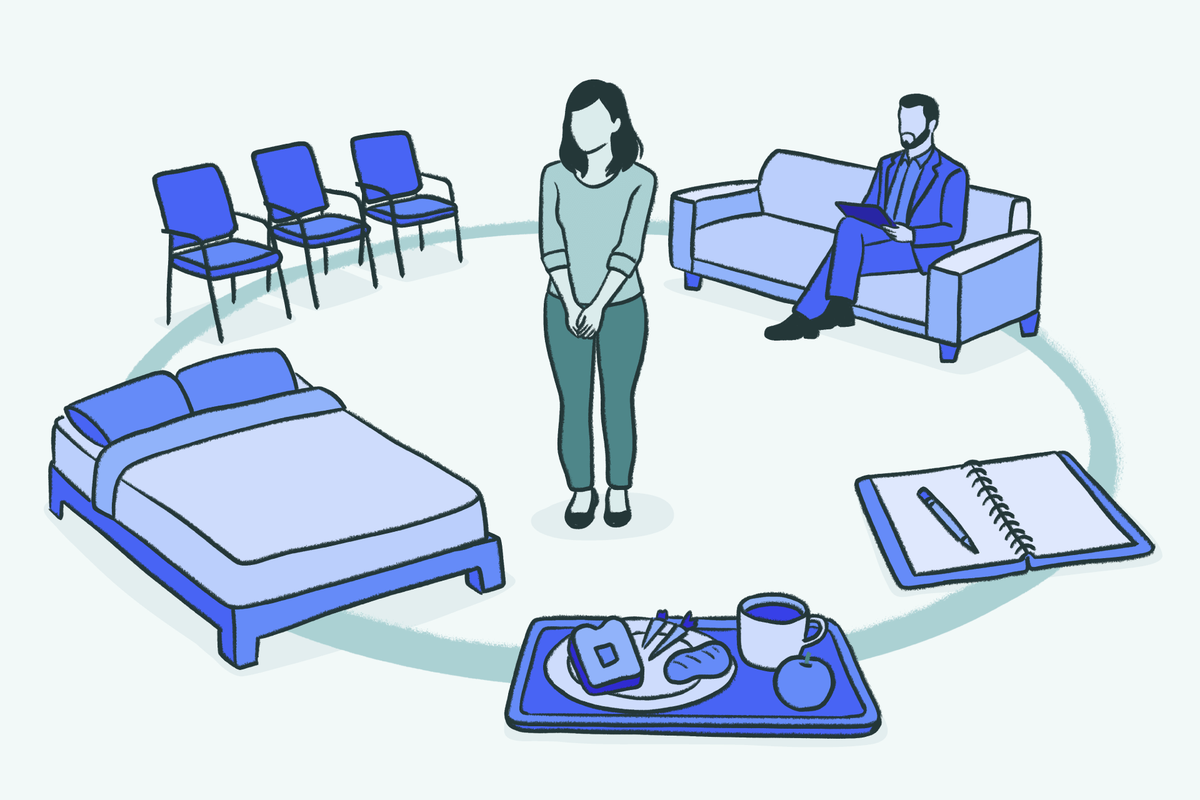
Entering an inpatient or residential rehab treatment program for substance misuse or addiction can be stressful, especially when you don’t know what to expect in rehab. While treatment programs differ, many are similar in structure and types of offerings. This page will help you learn more about what happens in rehab, so you can feel confident and prepared to start your recovery journey.
What Is Rehab?
Rehab is a treatment program to help people overcome substance misuse and addiction. In general, there are two types of rehab: inpatient and outpatient.
Inpatient rehab involves living at a facility while you receive 24/7 intensive care and support, while outpatient rehab allows people to receive treatment while living at home.1 Ultimately, your rehab environment should be the least restrictive setting for your needs.
Outpatient programs, which include partial hospitalization programs (PHP), intensive outpatient programs (IOP), and standard outpatient programs, vary in the hours of treatment provided, often ranging between 10-20 hours a week depending on the program and your needs. You can continue to live at home while participating in any one of these outpatient programs, too.
Sober living homes are another residential setting for people in recovery. Sober living homes typically do not provide treatment but have a community where residents hold each other accountable, share the responsibilities of running the home, and encourage or mandate attendance at self-help programs.2
Program lengths vary based on several factors, such as the severity of a person’s substance misuse. Some stays in rehab can be shorter, lasting around 28 to 30 days. Some programs are designed to last 60 days or 90 days, while some last 6-12 months or longer.3
Find The Perfect Treatment For You
Answer a few questions and we'll match you with the best options.
What Are You Struggling With?
What Kind of Care Do You Need?
What Insurance Do You Have?
How Does Drug or Alcohol Rehab Work?
Most rehab programs follow a similar process when a patient enters into treatment. This process usually includes:4
- Intake: This is a process of undergoing a thorough assessment of your medical, behavioral, and social background to help determine the best course of treatment.
- Detoxification: While not always necessary, this is often the first phase of rehab, especially if you have been using alcohol, benzodiazepines, or opioids. This is the process of ridding your body of certain harmful substances. Detox involves having medical supervision while withdrawing from substances to prevent complications or severe withdrawal symptoms while working to achieve stabilization.
- Entry into rehab: This involves entering treatment in an inpatient or outpatient program.
Explore Drug Addiction Treatment Centers
What to Expect During Rehab Check-In
Check-in typically involves an initial assessment by the care team to learn more about your needs. This assessment may include various evaluations that take into consideration your substance use, medical history, and personal factors, like co-occurring disorders and social support. Following the assessment, the care team will often create an individualized treatment plan for you that may include a combination of interventions such as behavioral therapy, individualand group therapy, medication, and support groups.5
A Day in Inpatient Rehab
If you’re thinking about seeking rehab for yourself or a loved one, you are likely wondering, ‘What is rehab like?’ and ‘What do you do in rehab?’
While what happens in rehab varies, drug and alcohol addiction programs are typically highly structured and follow a set schedule. Most programs incorporate various forms of therapies, specialized activities like holistic treatments, support groups, and time for reflection.
A typical day in rehab may look like:
- 7:00 am: Wake up, breakfast, and medications.
- 9:00 am: Treatment group.
- 10:30 am: Personal time.
- 11:00 am: One-on-one counseling.
- 12:30 pm: Lunch.
- 1:30 pm: Activities, such as exercise, yoga, or meditation.
- 3:00 pm: Afternoon group treatment, such as art, equine, or music therapy.
- 4:30 pm: Personal time.
- 5:30 pm: Dinner.
- 6:30 pm: 12-Step meeting.
- 8:00 pm: Evening group session.
- 9:00 pm: Personal time.
- 11:00 pm: Bedtime.
This is just an example of what your day may look like. Only staff members at the specific program you are interested in can tell you exactly what a day in rehab will be like. Still, the sample schedule above gives you a good idea of what you may do in rehab.














Types of Therapy Commonly Available During Rehab
While there can be many differences between types of drug rehab programs, most programs incorporate a handful of evidence-based therapies, such as:3,6
- Individualized behavioral therapy teaches coping mechanisms and skills to reduce your chances of relapse. This approach also addresses multiple areas of your life, such as employment, legal issues, or family conflict, to solve problems that can impair recovery.
- Group therapy incorporates peer support as part of the process of recovery. Group therapy can be used along with individualized therapy.
- Family therapy is an important component of drug rehab programs. Families can be helpful in the role of providing accountability and ongoing support while you are in treatment and recovery. In addition, family members can learn to avoid behaviors that help maintain substance use disorders within the family.
- Cognitive behavioral therapy, which is a commonly used treatment technique that works to help you change the way you think about drugs or alcohol and find other ways to cope with stress.
- Motivational interviewing, which seeks to help you overcome resistance to change. It is intended to motivate you to participate in drug treatment.
- Contingency management, which involves incentives for staying in recovery. Treatment programs may offer prizes or vouchers for items as rewards for completing treatment goals. For example, a program may give you movie tickets for submitting three consecutive negative urine drug screens.
How Should I Prepare for Rehab?
It is a good idea to call ahead and ask the facility for a packing list and what items are considered contraband, such as cell phones. You can also ask about dress codes, as some programs have rules about certain types of clothing. In general, you will need clothing and an official form of identification, such as a driver’s license or passport. If necessary, you should also bring your insurance information and verify your insurance before going.
What to Expect After Rehab
What happens after rehab varies depending on your situation. However, your treatment plan should include comprehensive aftercare planning and relapse prevention strategies that can help you maintain your recovery. Aftercare has been shown to help prevent relapse in high-risk people, as well as increase the chances of long-term recovery overall.6 Some of these services include:3,6,7
- Outpatient treatment, which can help reinforce coping skills to avoid relapse. This may include participation in different levels of outpatient care, such as a PHP or an IOP.
- Individual counseling or psychotherapy, where you can receive ongoing help for sustaining your recovery process after rehab.
- Sober living homes, which can provide a drug- and alcohol-free, structured environment to help facilitate your recovery.
- Medication management, which can help to address psychiatric needs, such as medication for depression or anxiety, to help prevent relapse. In addition, medications for substance use disorders can help people maintain recovery.
- Self-help groups, such as Alcoholics Anonymous or Narcotics Anonymous, which are based on the 12-Step model.
There Is Hope for Recovery
Addiction is treatable, and a life of freedom is possible. Connect with drug and alcohol treatment centers that specialize in your specific needs, from holistic care to medication-assisted treatment. Don’t wait another day to get help; find a recovery program that works for you.
FAQs
The consequences of using drugs or alcohol in rehab depend on the program. Some drug rehab programs may dismiss you, but others may work to get you back into recovery as soon as possible.
Whether you can bring your phone or computer to rehab also depends on the drug rehab program. Typically, a program will ask you to leave computers at home, but phones may be allowed in limited circumstances. Some programs allow you to access your phone for short periods. The idea in rehab is to concentrate on recovery and not focus on outside work or relationships.
The ability to leave rehab early depends on the rules of the program, or if you are there voluntarily. For example, if you are committed to treatment through something like the Marchman Act (a Florida statute that allows family members to petition the courts for mandatory assessment and treatment of a substance use disorder), you may be allowed to leave rehab without a doctor’s approval.
Many people wonder if you can make someone go to rehab. While in some cases, you may seek involuntary treatment under something like the Marchman Act for a family member, there are other approaches to getting someone into treatment who does not want to go. For example, CRAFT, which stands for Community Reinforcement and Family Training, is an evidence-based approach that family members can use when they want to get someone into treatment who is refusing to do so. CRAFT teaches family members skills, such as communication, positive reinforcement, and implementing negative consequences for the family member’s ongoing substance use. This approach is reported to be successful in 7 of 10 cases to get someone to go to rehab.8



Our Promise
How Is Recovery.com Different?
We believe everyone deserves access to accurate, unbiased information about mental health and recovery. That's why we have a comprehensive set of treatment providers and don't charge for inclusion. Any center that meets our criteria can list for free. We do not and have never accepted fees for referring someone to a particular center. Providers who advertise with us must be verified by our Research Team and we clearly mark their status as advertisers.
Our goal is to help you choose the best path for your recovery. That begins with information you can trust.