Find Treatment By
Rehabs by Location


Learn
About Us
Recovery.com combines independent research with expert guidance on addiction and mental health treatment. Our mission is to help everyone find the best path to recovery through the most comprehensive, helpful network of treatment providers worldwide.
Advisory Council
Our advisory council brings together leaders in behavioral health, technology, and business. Their diverse expertise ensures our resources and product are innovative, evidence-based, and effective. They guide our mission as accomplished individuals dedicated to improving the landscape of addiction recovery and mental wellness.
Recovery-Friendly Workplaces: Benefits, Rights, and Best Practices



In 1976, Operation Understanding broke new barriers and helped change the recovery movement forever. Now, 50 years later, we’re honoring that legacy—and building what comes next.
Part of this effort is sharing the latest evidence-based information on topics that are important to you.
This toolkit was created in partnership with Mobilize Recovery and Recovery.com for Operation Understanding.
A recovery friendly workplace is an employer that uses intentional policies and practices to support employees managing or recovering from a substance use disorder, rather than treating that recovery as a liability.1 In 2024, an estimated 46.3 million adults in the United States had a substance use disorder.2 Based on the most recent data connecting substance use and employment status, nearly two thirds of adults with a substance use disorder, about 30.1 million people, held jobs.3
Recovery friendly practices give employers a direct way to support that part of their workforce, and they give you, if you're in recovery yourself, a workplace that treats it as a strength rather than something to hide.
What Is a Recovery Friendly Workplace?
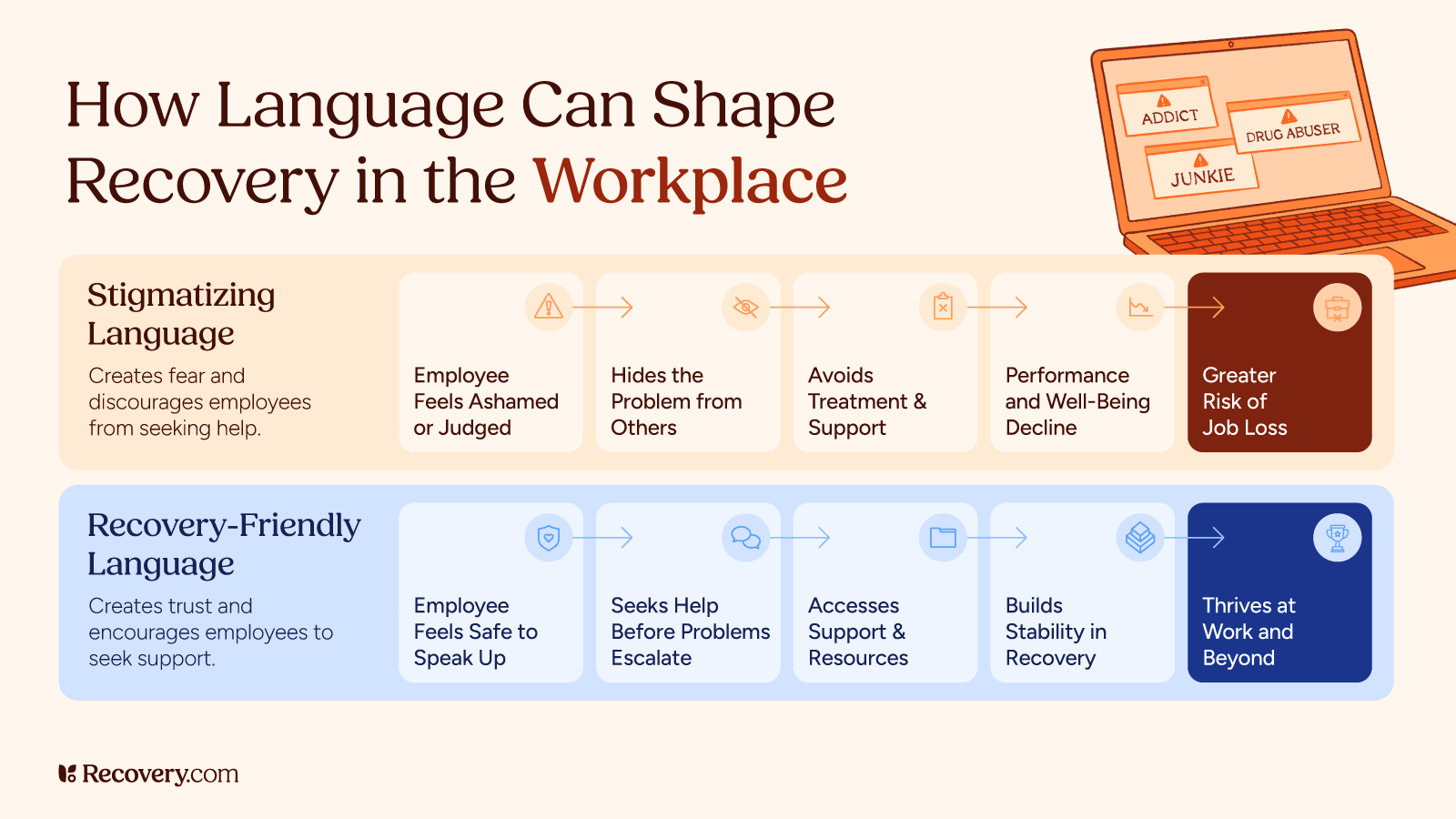
A recovery-friendly workplace uses evidence-based policies to unite an organization around one idea: recovery from a substance use disorder is a strength, not a disqualifier.1 Sounds simple. It changes a lot in practice. These workplaces work intentionally with people in recovery, reduce stigma through education, and build clear pathways for employees to get help without fear of losing their job.1
You'll also come across two related terms, and it's worth knowing how they're different. A recovery-ready workplace refers to a more structured federal framework, developed through the Recovery-Ready Workplace Toolkit, that gives employers specific policy guidance across hiring, prevention, and support.4
Workplace-supported recovery is the research term behind all of it: an integrated set of policies that reduce workplace conditions that contribute to substance use disorder while increasing the supports that help you stay in or return to a job during recovery.1 In practice, the three terms point at the same thing from different angles: a job that supports recovery instead of punishing it.
Find The Perfect Treatment For You
Answer a few questions and we'll match you with the best options.
What Are You Struggling With?
What Kind of Care Do You Need?
What Insurance Do You Have?
Why Recovery Friendly Workplaces Matter
Substance use disorder is common in the workforce, and its effects reach well beyond the person experiencing it.5 Employers also absorb real costs from untreated substance use disorder. One CDC-supported analysis estimated that absenteeism linked to substance use costs a hypothetical employer of 10,000 workers about $232,000 in lost wages every year.6 Zoom out further, and broader national estimates put the cost of substance use to the economy above $400 billion annually.7
Here's something that often gets missed: substance use disorder recovery is also protected under federal disability law. The Americans with Disabilities Act (ADA) extends employment protections to people in recovery from alcohol or substance use disorders, meaning employers generally cannot discriminate against you because of a past substance use disorder or your status as being in recovery.8 For employers, the legal reality and the practical one point in the same direction: supporting recovery is both compliant and good for the business.
Benefits of a Recovery-Friendly Workplace
Recovery-friendly workplaces benefit both employers and employees. By reducing stigma, connecting people with support, and creating healthier working conditions, these workplaces can improve employee well-being, strengthen retention, and reduce costs and safety risks.
For employers
Recovery-friendly practices give employers several concrete benefits:
- Lower absenteeism and reduced lost-wage costs tied to untreated substance use disorder.6
- Access to a large, motivated talent pool. With millions of employed adults already managing a substance use disorder, recovery-friendly policies help retain the employees already on staff rather than losing them to unaddressed struggles.3
- A stronger overall workplace culture, since recovery-supportive practices reduce the workplace conditions linked to substance use while increasing the supports available to the whole team.1 You can read more about employee wellness and why it matters as part of that broader picture.
- Reduced legal and safety risk, since recovery-supportive policies address workplace conditions linked to substance use before they escalate.1
For employees
For you as an employee, a recovery-friendly workplace means reduced stigma, so you feel safer disclosing a struggle and asking for help before it affects your job.1 It means real, employer-connected access to recovery support, since stable employment itself functions as a meaningful part of many people's recovery by providing structure, purpose, and financial stability.9 It also comes with legal protections under the ADA that can allow you to take protected leave for treatment if you're eligible.8 If burnout or job stress is part of what's driving your substance use, rehab for work-related burnout is worth understanding as part of a fuller recovery picture.














How to Build Recovery-Friendly Practices at Work
You don't need to build a program from scratch to make this real. The federal Recovery-Ready Workplace Toolkit, developed by the Department of Labor together with SAMHSA and other federal agencies, lays out concrete, evidence-based practices employers across any industry can adopt.4 Core practices generally include:
- Reducing stigma through manager and staff training on substance use disorder and recovery.10
- Making naloxone accessible and training staff to respond to an overdose. How to use naloxone and where to find it is one place to start.
- Offering flexible, protected leave for treatment. If you're weighing this step, how to request time off work for rehab walks through the process.
- Understanding leave protections, since many workers can use FMLA for mental health provisions for substance use disorder treatment as well.
- Training managers to recognize and respond supportively to signs of substance misuse, rather than defaulting to punitive action.10
- Building peer recovery support into the workplace, since peer connection is one of the most consistently cited supports in workplace recovery research.1
Recovery.com also has a dedicated guide on how employers can build a recovery-friendly workplace with a deeper look at implementation specifics.

Recovery Friendly Workplace Initiatives Across the U.S.
Recovery-friendly workplace programs exist at both the federal and state level, and they're growing fast. At the federal level, the White House Office of National Drug Control Policy convened a Federal Recovery Friendly Workplace Interagency Workgroup, which led to the joint development of the Recovery-Ready Workplace Toolkit alongside the Department of Labor.3
At the state level, a nationwide landscape analysis identified organizations in 31 states actively working to prevent substance use disorder and support recovery in employment through their own recovery-friendly workplace programs.11 These state programs vary in structure, and the same analysis found that many still lack the resources needed for outreach, training, and certification at scale, even as the movement continues to grow.11
What Recovery-Friendly Workplaces Mean for Jobseekers in Recovery
If you're in recovery and job hunting, a recovery-friendly workplace can mean a job where your recovery is treated as a strength rather than something to conceal.1 You are not required to disclose a substance use disorder or your recovery status to a prospective or current employer, and the ADA generally protects you from discrimination based on a past substance use disorder once you're no longer engaging in illegal drug use.8
It's also worth remembering what actually affects job performance. Research on workplace-supported recovery consistently frames the workplace itself, not your recovery status, as the variable that matters. An untreated substance use disorder is what creates risk, while stable employment and support tend to reinforce recovery.9 If you're rebuilding your career after treatment, how to find a job after rehab walks through practical next steps.
Learn More
2026 RFW National & State Recovery Friendly Workplace Report
Recovery-Ready Workplace | U.S. Department of Labor
How Recovery.com Can Help
Recovery.com is a free, impartial treatment navigation platform that helps people find evidence-based addiction and mental health care quickly, with clinically reviewed content, transparent center profiles, and tools designed to enhance treatment access. If you or someone you know is ready to explore treatment options, you can find addiction treatment near you to start that search today.
This toolkit was created in collaboration with Mobilize Recovery for Operation Understanding.
FAQs
The terms overlap but aren't identical. Recovery-friendly typically describes an employer's broader cultural commitment to supporting people in recovery, while recovery-ready refers to the specific federal framework laid out in the Recovery-Ready Workplace Toolkit.4 Researchers also use workplace-supported recovery as a formal term for the underlying model both approaches draw from.1
There's no single national certification process, so it's less about a checkbox and more about building the practices. Many employers start with the federal Recovery-Ready Workplace Toolkit, which provides guidance on policies, training, and support structures, and some states also run their own recovery friendly workplace designation programs.4,11
The federal Recovery-Ready Workplace Toolkit is free to access.4 The real investment is staff time: training managers, updating policies, and building the internal support structures the toolkit recommends.
It's a federal resource developed by the Department of Labor with SAMHSA and other federal agencies that gives public and private employers practical guidance for preventing and responding to substance use disorder in the workforce.4
No. You are not required to disclose a substance use disorder or recovery status to your employer, and the ADA protects you from discrimination based on a past substance use disorder once you're no longer engaging in illegal drug use.8
No. While opioid-related deaths helped drive national attention to this issue, recovery friendly practices are built around substance use disorder broadly, including alcohol and other substances, not opioids alone.3




Our Promise
How Is Recovery.com Different?
We believe everyone deserves access to accurate, unbiased information about mental health and recovery. That's why we have a comprehensive set of treatment providers and don't charge for inclusion. Any center that meets our criteria can list for free. We do not and have never accepted fees for referring someone to a particular center. Providers who advertise with us must be verified by our Research Team and we clearly mark their status as advertisers.
Our goal is to help you choose the best path for your recovery. That begins with information you can trust.