Find Treatment By
Rehabs by Location


Learn
About Us
Recovery.com combines independent research with expert guidance on addiction and mental health treatment. Our mission is to help everyone find the best path to recovery through the most comprehensive, helpful network of treatment providers worldwide.
Advisory Council
Our advisory council brings together leaders in behavioral health, technology, and business. Their diverse expertise ensures our resources and product are innovative, evidence-based, and effective. They guide our mission as accomplished individuals dedicated to improving the landscape of addiction recovery and mental wellness.
Porn Addiction Statistics: What 16,000+ Self-Assessments Reveal


Recovery.com hosts a free, anonymous self-assessment designed to help people privately reflect on their relationship with pornography. Since July 2025, more than 16,000 people have completed it. Here’s what their answers show and what it means for how the behavioral health field talks about, screens for, and treats compulsive pornography use.
A note on this data: This is an anonymous, self-selected online screener, not a clinical diagnosis or a random sample of the general population. People who seek out a self-assessment on an addiction resource site are more likely already wondering if they have a problem, so these numbers reflect a self-selected group, not the general public. Note that respondents could skip questions, so each percentage reflects only those who answered that item.
The Big Picture
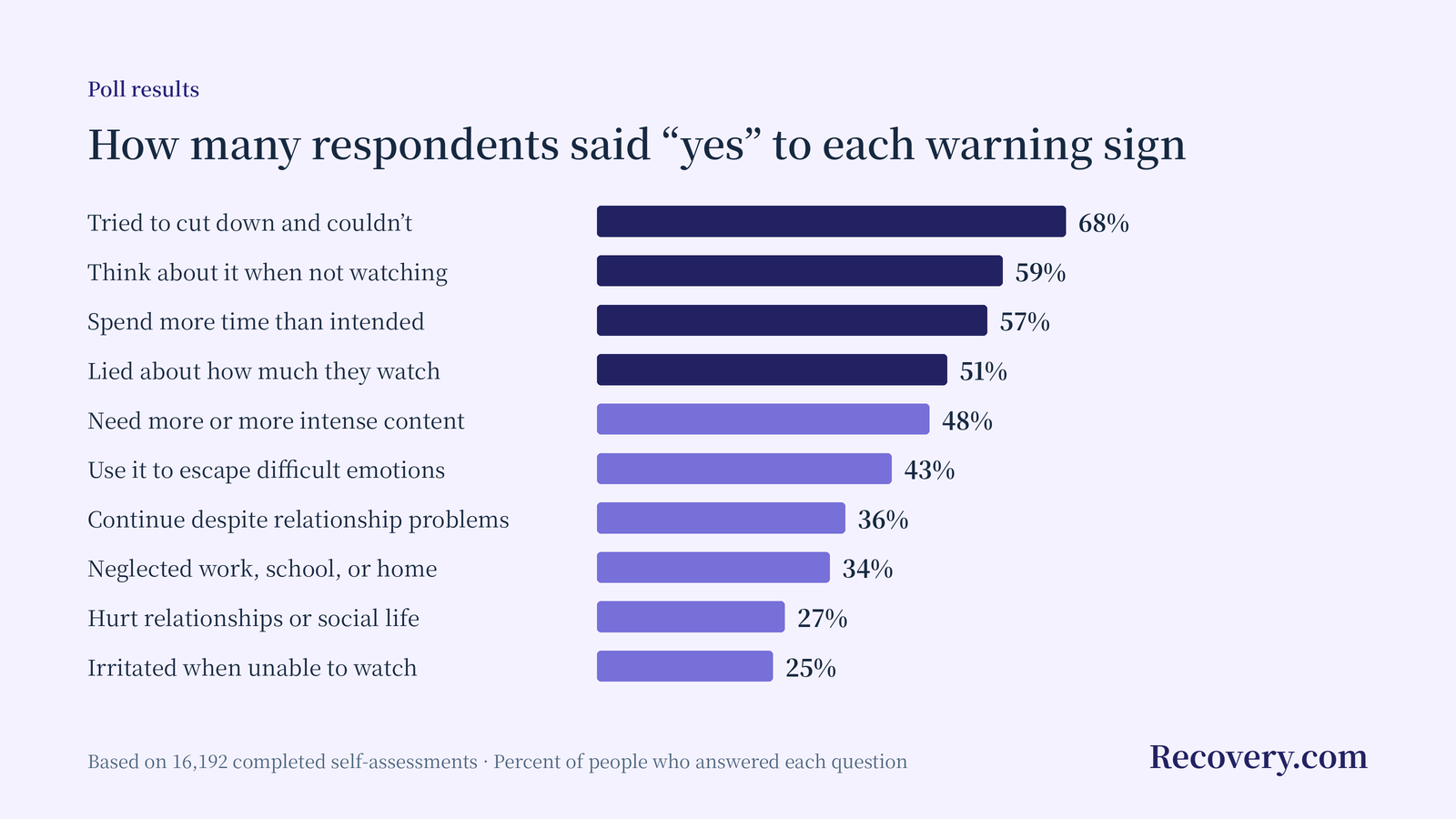
Nearly everyone who took the self-assessment (95%) answered “yes” to at least one warning sign of porn addiction. The most commonly endorsed items were about loss of control: about two-thirds said they’d tried to cut down or stop and couldn’t, and well over half said they think about pornography even when they’re not watching it, or spend more time watching than they intended to.
Find The Perfect Treatment For You
Answer a few questions and we'll match you with the best options.
What Are You Struggling With?
What Kind of Care Do You Need?
What Insurance Do You Have?
How Many Warning Signs People Report
Most respondents didn’t report just one warning sign. The typical (median) respondent said “yes” to 4 of the 10 questions. On average, people answered ‘yes’ to 4 out of 10 questions about their pornography use. Just under half of the respondents said 'yes' to 5 or more, and 22% said yes to 7 or more.
Some signs also tend to show up together. 87% of respondents reported at least one of the three loss-of-control signs (spending more time than intended, failed attempts to cut back, or preoccupation), and 29% reported all three. Just over half (51%) reported at least one concrete consequence, such as relationship problems or neglected responsibilities.
![11-score-distribution.png] Alt text: Bar chart of self-assessment scores from 0 to 10. Scores of 2 to 4 are most common, the median is 4, and 22% of respondents scored 7 or higher.](https://media.recovery.com/images/17fb7c7387eb53fc72923e8a4aa90bfa0243f18c-1600x900.png/porn-addiction-self-assessment-data.png/?w=2000&fit=max&auto=format)
Loss of Control
The clearest signal in this data is impaired control, one of the core features clinicians look for in compulsive sexual behavior.1 Many people who watch pornography feel they can’t stop, even when they want to, which points to compulsivity.
Spending More Time Than Intended Watching Pornography
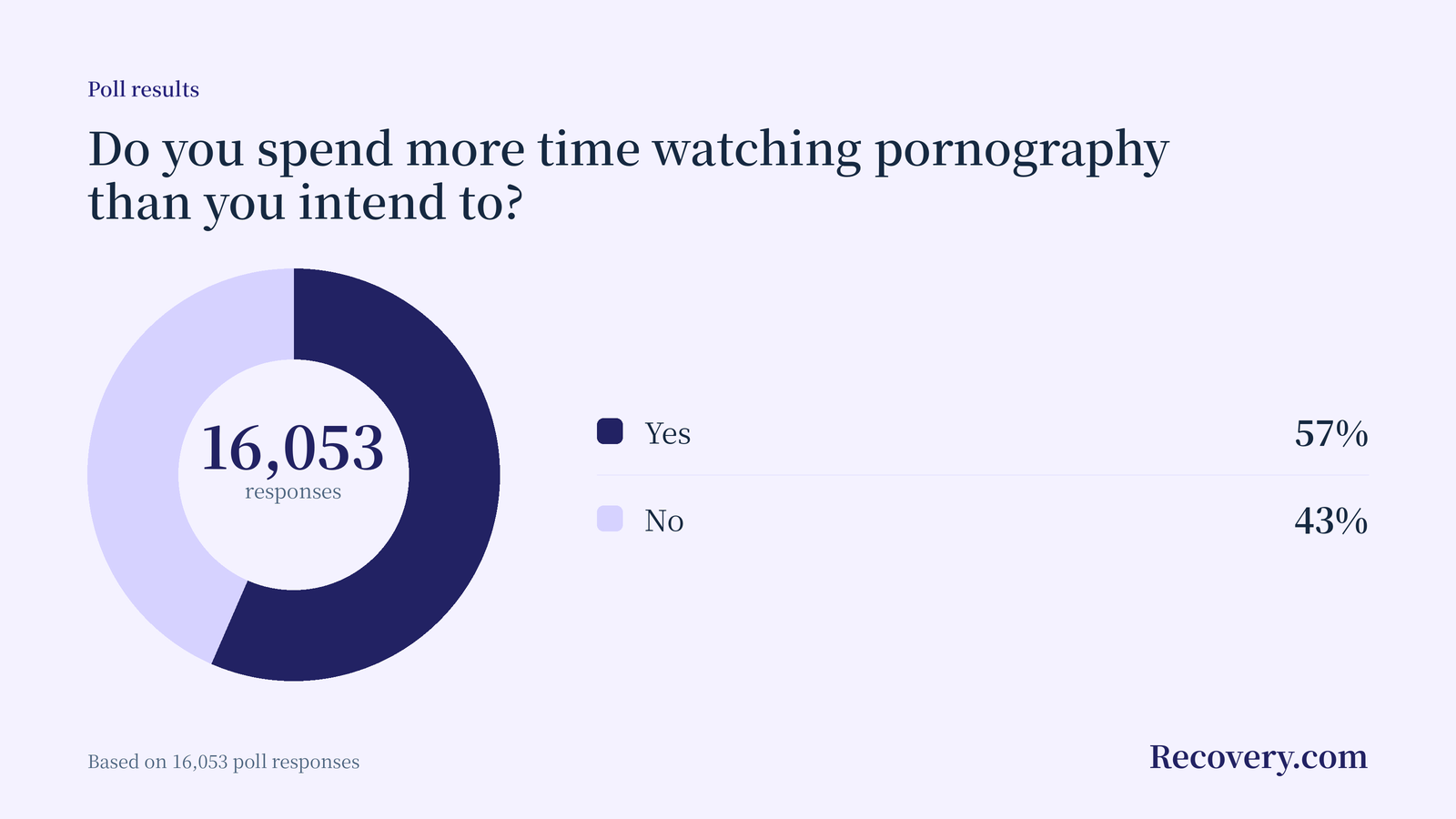
More than half of respondents (57%) said they spend more time watching pornography than they intend to. This is one of the simplest, earliest markers of a behavior slipping out of someone’s control.
Trying to Stop, and Not Being Able To
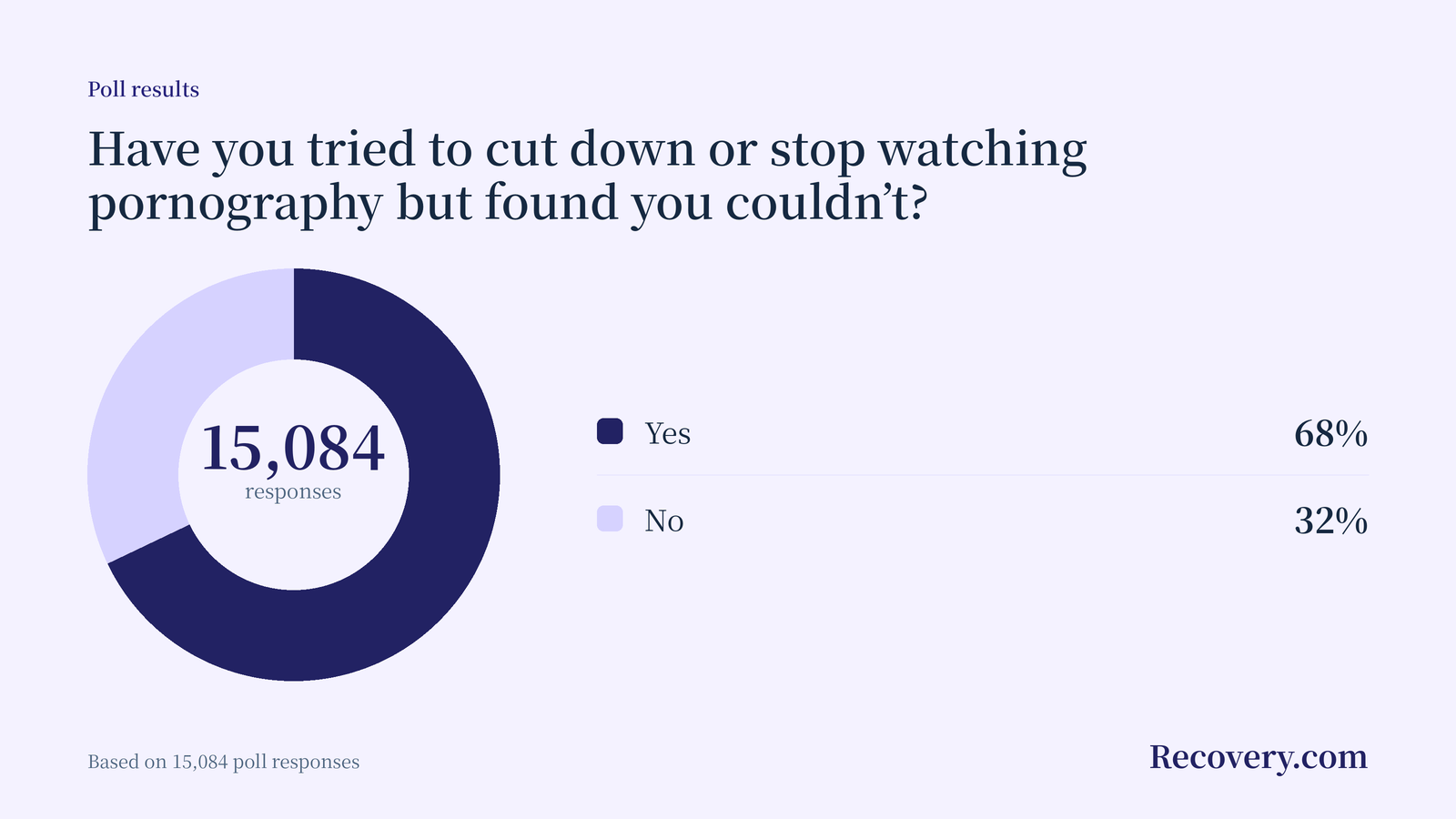
This was the single most common “yes” in the entire self-assessment. About two out of three respondents (68%) said they’ve tried to cut down or stop watching pornography and found they couldn’t. Repeated, unsuccessful efforts to cut back are one of the diagnostic features of compulsive sexual behavior disorder, making this result especially noteworthy.1
Preoccupation
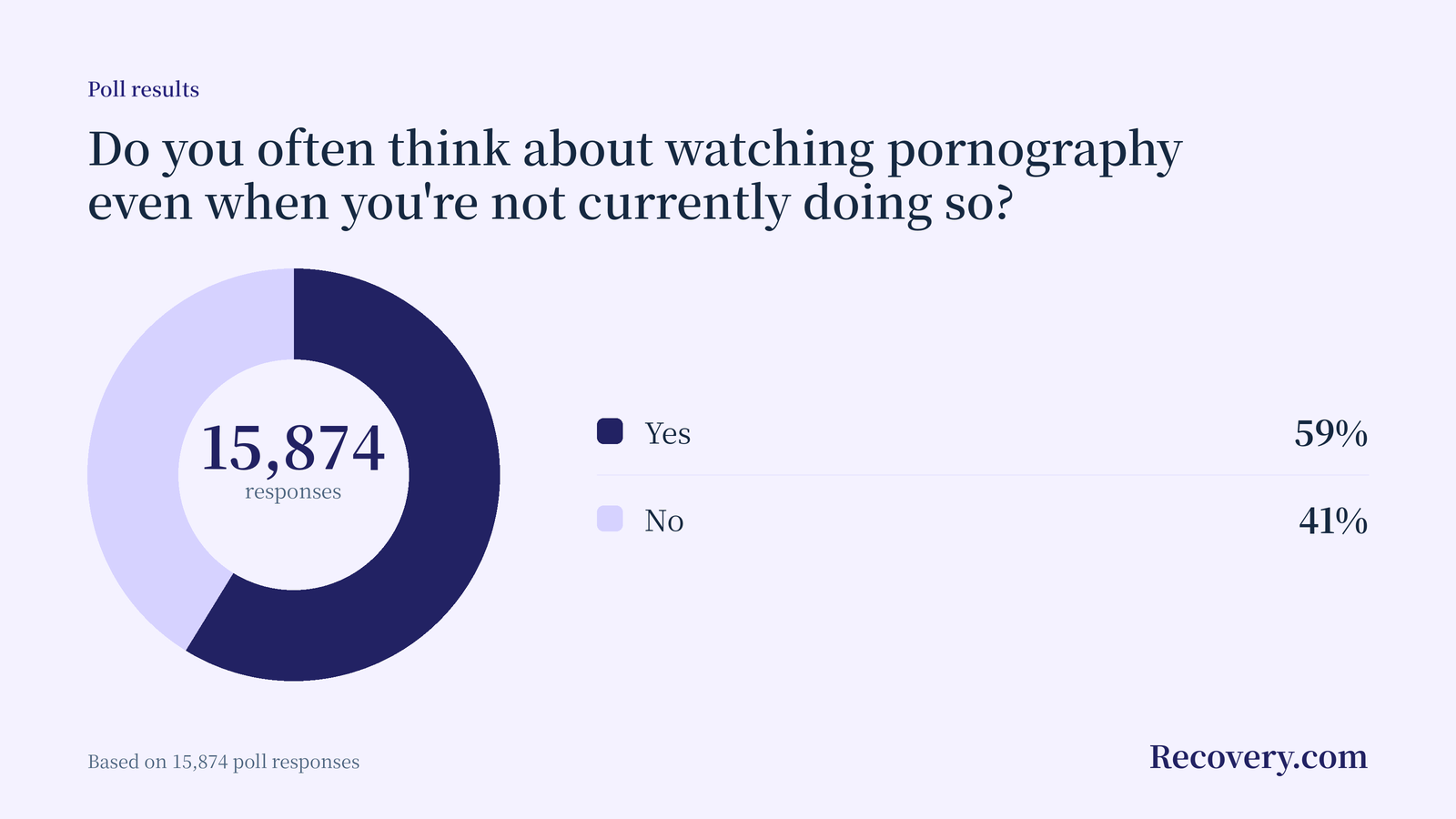
Close to 6 in 10 respondents (59%) said they think about watching pornography even when they aren’t currently doing so. Preoccupation like this, where a behavior takes up mental space well beyond the time spent on it, is common in compulsive patterns.
Brain imaging research has found that people with compulsive sexual behavior show stronger reward-system responses to sexual cues, in the same brain regions involved in drug cravings.2 This may help explain why some people feel a stronger pull toward this behavior than others, though researchers don’t yet know whether this response exists beforehand or develops over time with repeated exposure.





Tolerance and Escalation
Over time, you may find that the same amount or type of pornography no longer has the effect it once did. Nearly half of respondents described this shift, a pattern that closely mirrors tolerance in substance use disorders. Here’s what that looks like in the data and what research suggests about why it happens.
Needing More to Get the Same Effect
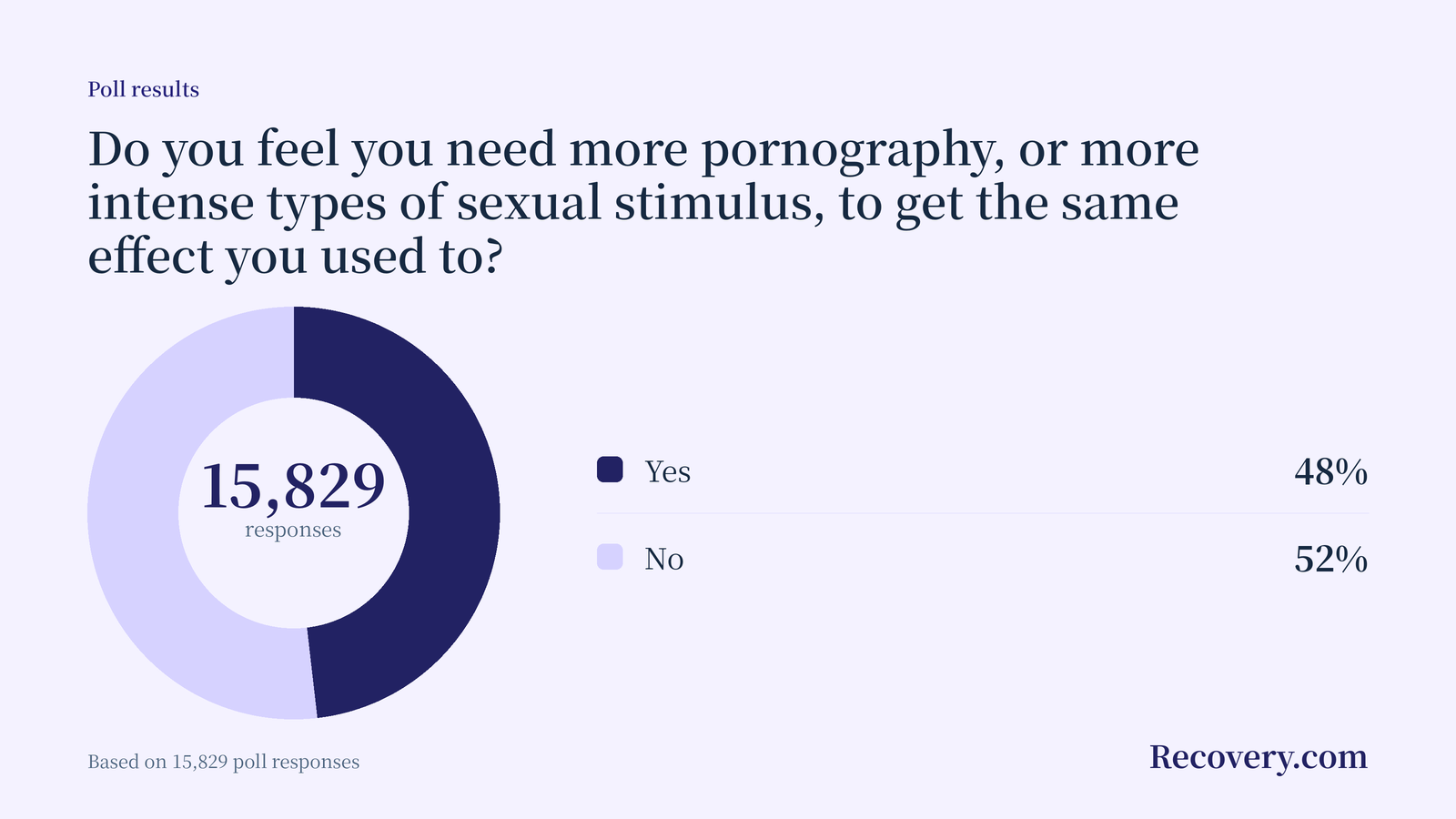
Nearly half of respondents (48%) said they feel they need more pornography, or more intense material, to get the same effect they used to. This mirrors the tolerance pattern seen in substance use disorders, where the brain’s reward response dulls over time, and a person needs more of a substance to feel the same effect.3
Research on compulsive sexual behavior has found a similar pull toward novelty, with people showing a stronger preference for new sexual images.4
Using Pornography to Cope
For many respondents, pornography isn’t only about sexual gratification. It’s also a way to manage stress, difficult emotions, and life problems. This group stood out in the data, reporting relationship strain, neglected responsibilities, and irritability at about twice the rate of respondents who don’t use pornography this way.
Escaping Difficult Emotions
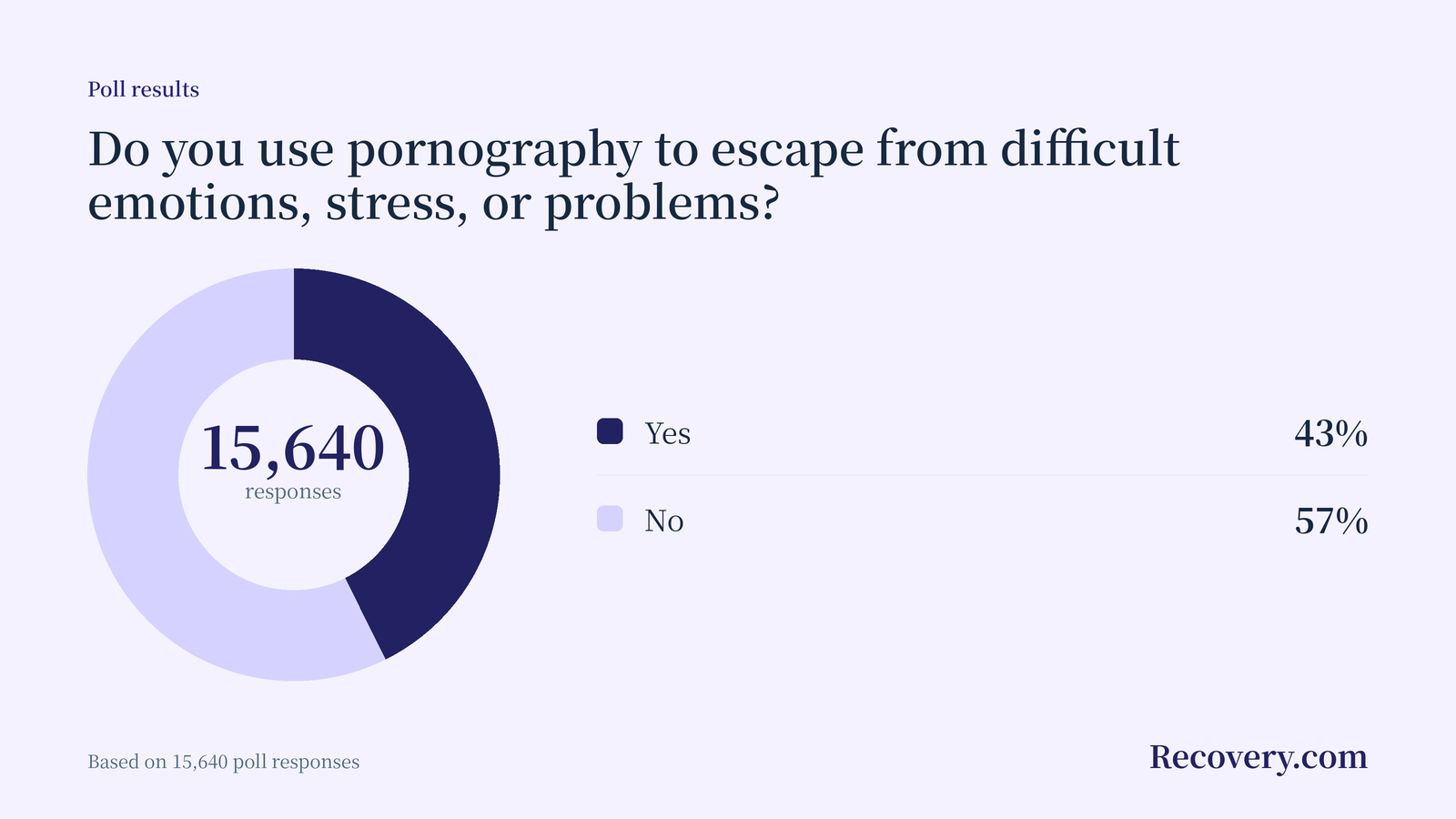
More than 4 in 10 respondents (43%) said they use pornography to escape difficult emotions, stress, or problems. This shows that many people use pornography to manage difficult emotions, not just for sexual gratification.5 It’s also the warning sign that has grown the most since the first edition of this report.
People who use pornography to cope were far more likely to report other problems, too. Compared with respondents who said no to this question, they were:
- More than twice as likely to say pornography has hurt their relationships or social life (42% vs. 16%).
- About twice as likely to keep using despite relationship problems (52% vs. 24%).
- About twice as likely to have neglected work, school, or home responsibilities (47% vs. 24%).
- More than twice as likely to feel irritated or uncomfortable when they can’t watch (39% vs. 16%).
This data can’t show cause and effect, but the pattern suggests that when pornography becomes a way to manage emotions, it’s more likely to spill into other areas of life.
Withdrawal-Like Symptoms
Withdrawal is usually associated with substances like alcohol or opioids, but you can also feel uncomfortable when a compulsive behavior is suddenly unavailable. This was the least common warning sign in the self-assessment, yet it still affected 1 in 4 respondents.
Irritability When They Can’t Watch
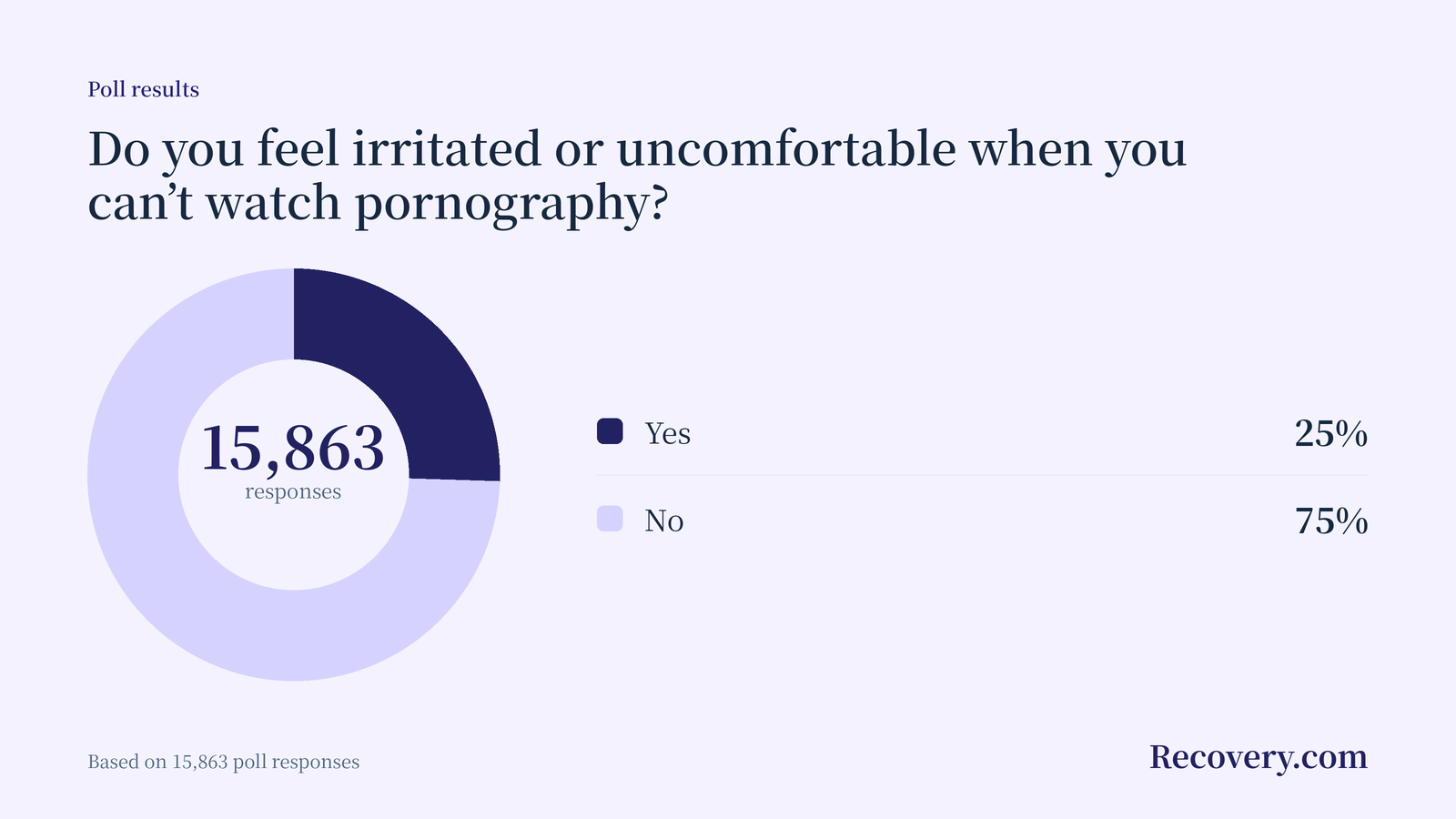
About 1 in 4 respondents (25%) said they feel irritated or uncomfortable when they can’t watch pornography. This was the least commonly endorsed item overall, but it still represents thousands of people who experience distress when pornography isn’t available.
Real-World Consequences
A smaller, but still substantial, share of respondents said pornography use has spilled over into important areas of their lives.
Relationships and Social Life
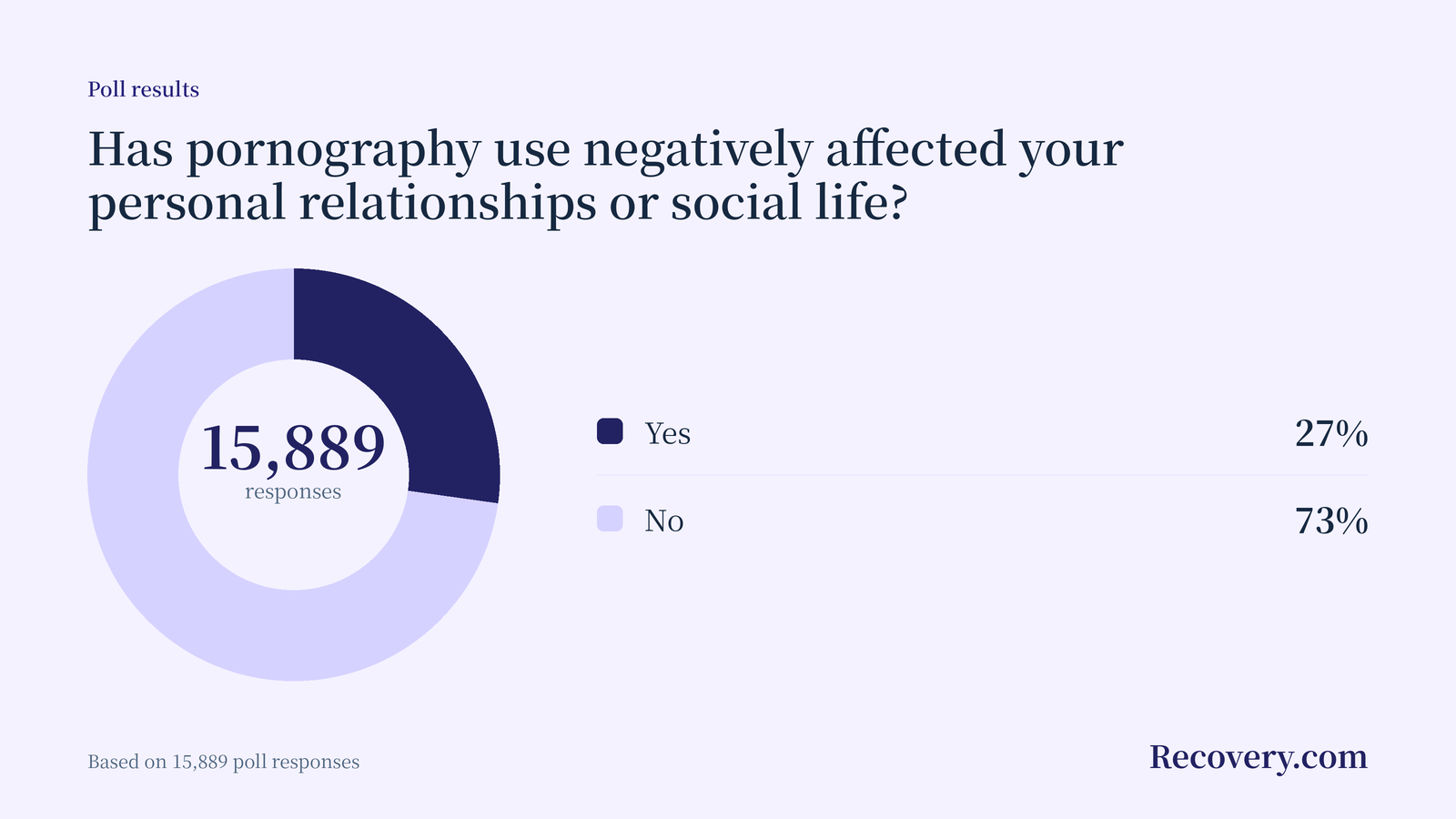
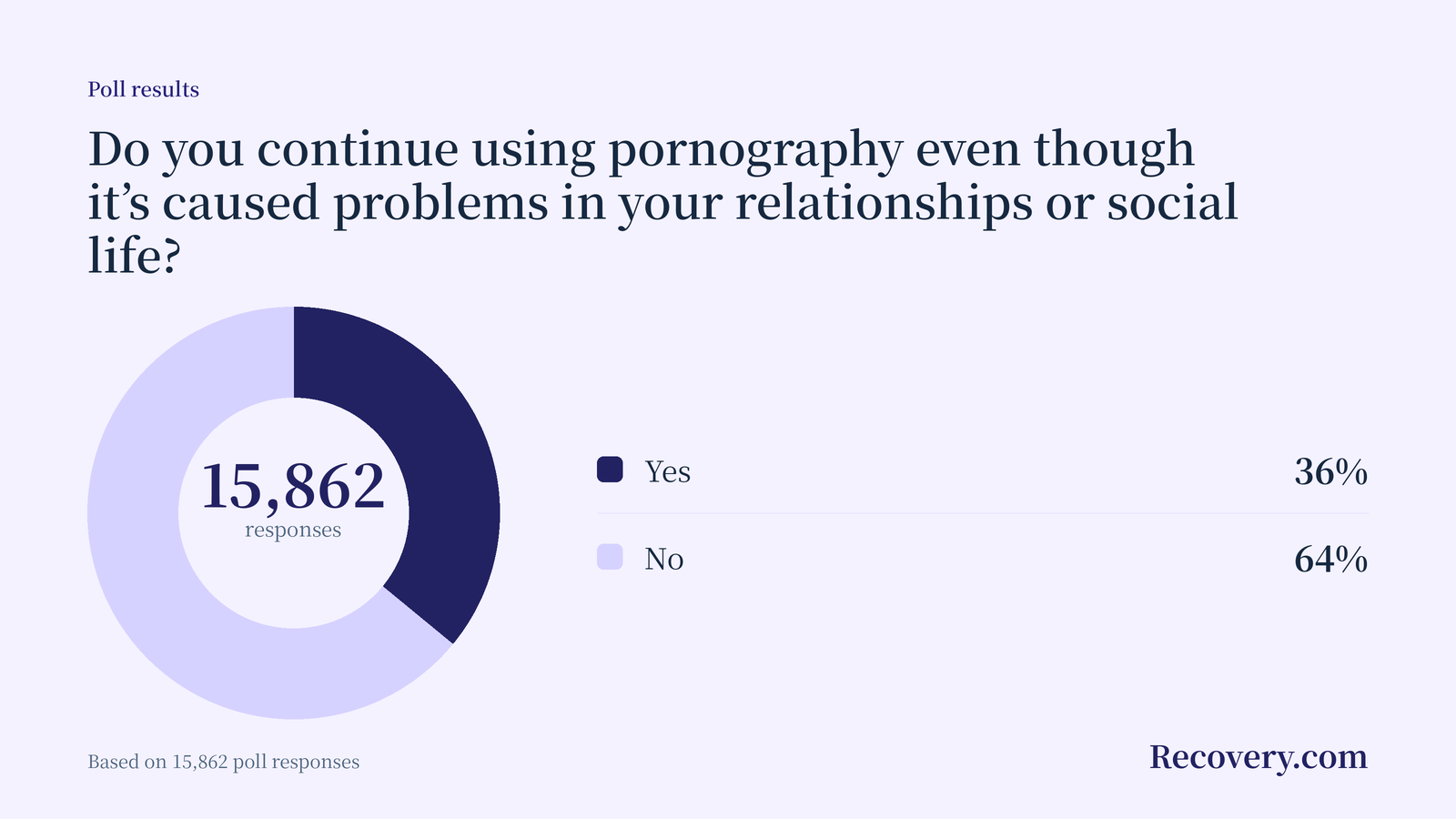
Two separate questions looked at how pornography use affects relationships. In one, 27% of respondents said their pornography use has negatively affected their personal relationships or social life. In a second question, 36% said they continue using pornography even though it has caused problems in their relationships or social life.

The higher number for the second question may reflect differences in wording, or it may suggest some respondents recognize relationship strain more readily when it’s framed around continued use. When relationships are affected, family and couples therapy can help partners rebuild communication and trust.
Work, School, and Home Responsibilities
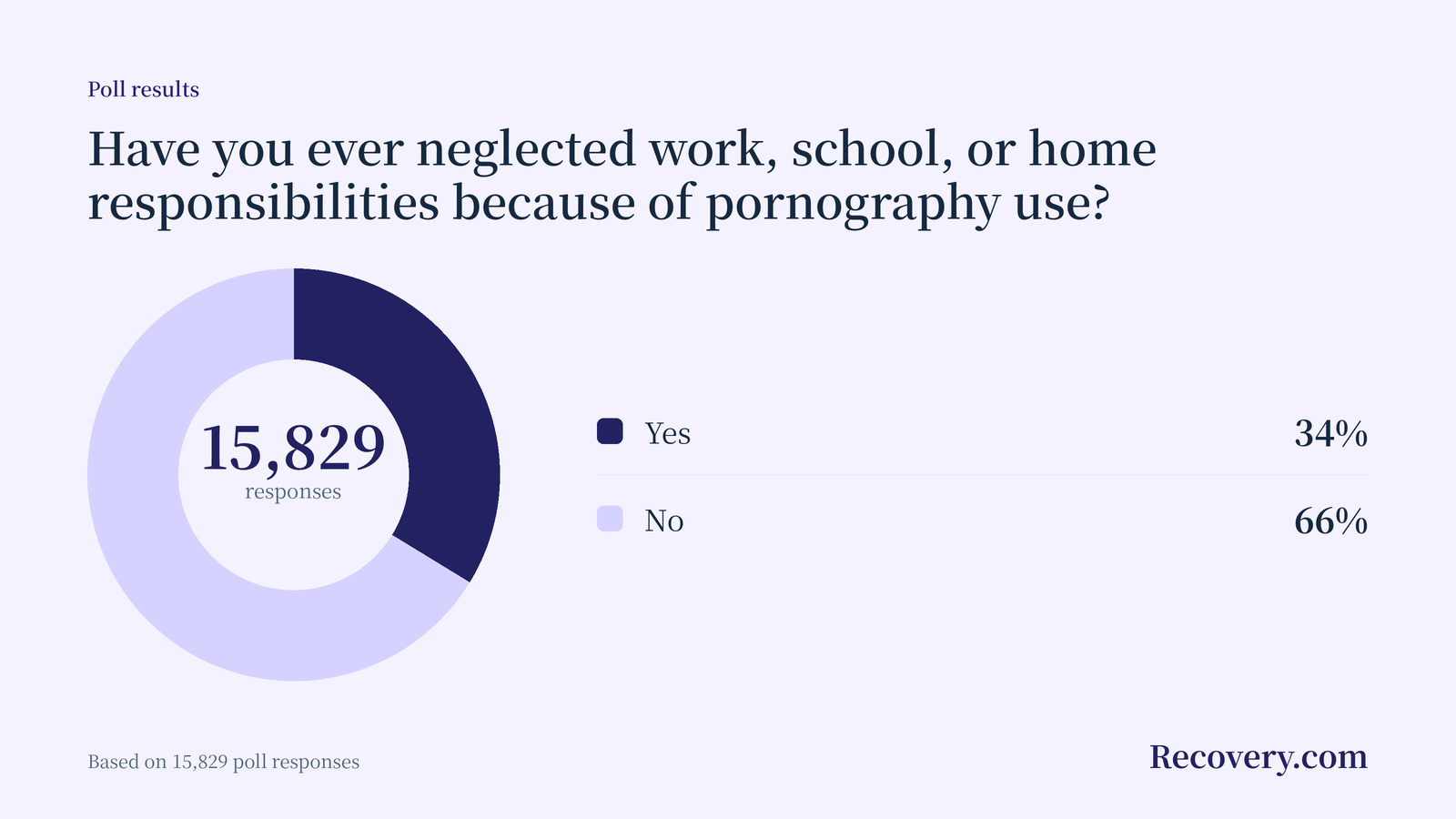
About a third of respondents (34%) said they’ve neglected work, school, or home responsibilities because of pornography use. When a behavior starts crowding out the basic responsibilities of daily life, it’s a strong signal that it has become a symptom of a disorder rather than a private habit.1
Secrecy and Shame
Hiding how much you watch can feel like a way to avoid judgment, but secrecy often deepens the shame it’s meant to protect against. About half of respondents said they’ve lied to a partner, friend, or therapist about their use, and those who did were also more likely to struggle with cutting back.
Lying About How Much They Watch
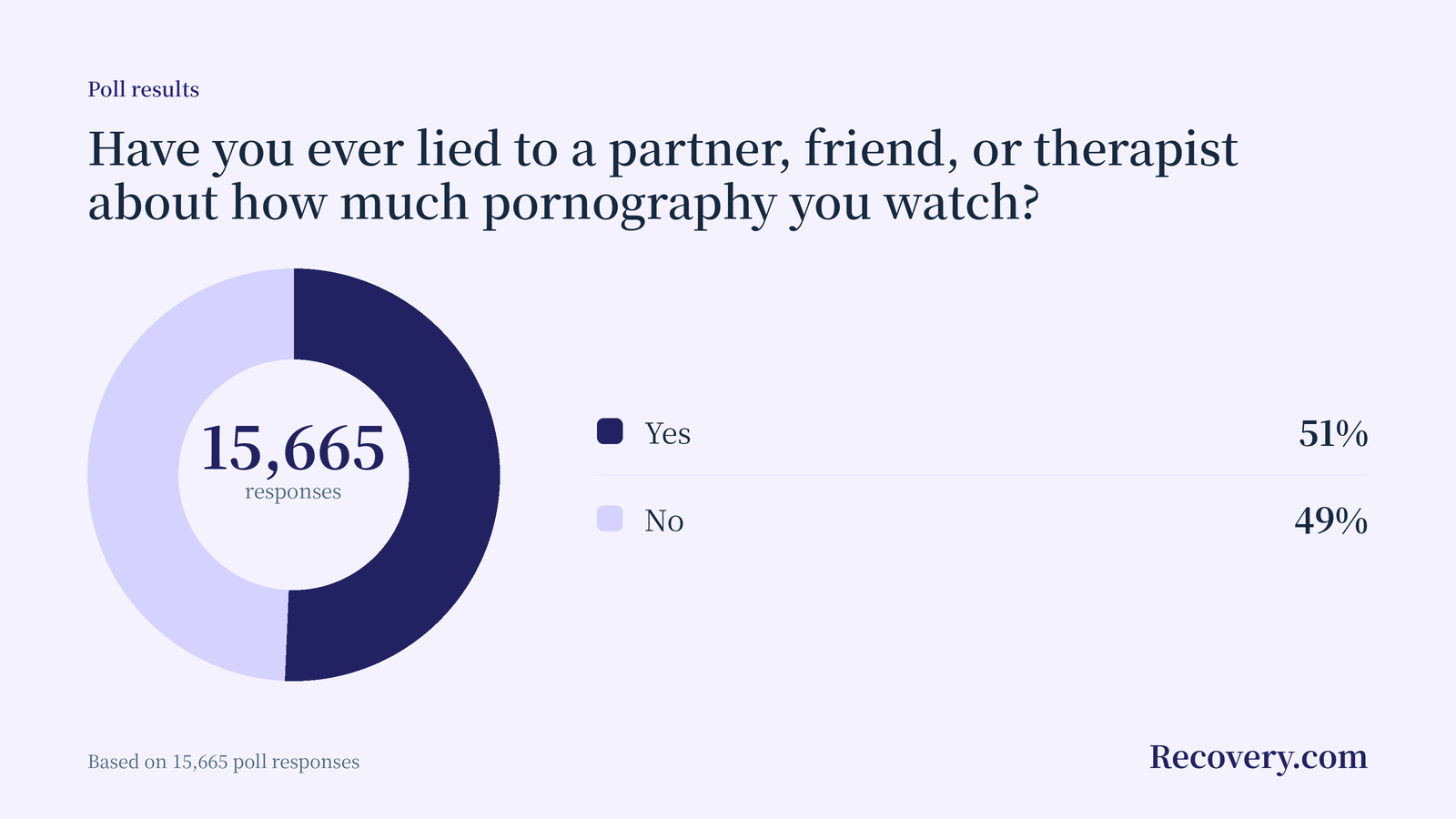
About half of respondents (51%) said they’ve lied to a partner, friend, or therapist about how much pornography they watch. Secrecy like this often contributes to more shame, which research links to more severe compulsive sexual behavior.6 Shame and stigma also tend to keep people from seeking the support that could help.7
Secrecy is also tracked closely with loss of control. Among respondents who said they’d lied about their use, 77% had tried and failed to cut back, compared with 59% of those who hadn’t lied.
Summary of Findings
- Loss of control is the most common experience in this data: 68% have tried and failed to cut down, 59% often think about pornography even when not watching, and 57% spend more time on it than they intend to.
- The overall picture has stayed consistent as the sample grew from 11,800 to more than 16,000 respondents, with every warning sign within about 3 percentage points of the original results.
- People who use pornography to cope are about twice as likely to report relationship problems, neglected responsibilities, and irritability when they can’t watch.
- Tolerance shows up for nearly half of respondents (48%), who say they need more, or more intense, content to get the same effect.
- A smaller but meaningful share report concrete consequences: 34% have neglected responsibilities, 36% continue despite relationship or social problems, and 27% say it has already hurt their relationships or social life.
- About half (51%) have lied to a partner, friend, or therapist about how much they watch, and 25% feel irritated or uncomfortable when they can’t.
- The typical respondent reported 4 of 10 warning signs, over 20% or 1 in 5 reported 7 or more.
Taken together, the pattern reflects several features clinicians use to identify compulsive sexual behavior disorder: impaired control, sexual activity becoming more important than basic responsibilities, repeated unsuccessful efforts to cut back, and continued use despite negative consequences.1
Implications for Treatment and Recovery
These findings offer several practical takeaways for clinicians, treatment providers, and organizations supporting people with compulsive pornography use.
Screen for Loss of Control, Not Just Frequency
The strongest signals in this data weren’t about how often people watch pornography; they were about whether people feel in control of it. Providers should prioritize questions about failed attempts to stop and preoccupation over frequency or hours per week, since diagnosis centers on loss of control and its consequences rather than how much someone watches.1
Treat Pornography Use as an Emotional Regulation Concern as Well as a Behavioral One
With 43% of respondents using pornography to escape difficult emotions, a share that has grown over the past year, treatment approaches that only target the behavior itself may miss the underlying driver. In this data, emotional coping was also linked with roughly double the rate of real-world consequences.
Therapies that build healthier coping skills, such as cognitive behavioral therapy and acceptance and commitment therapy, have reduced compulsive sexual behavior and pornography use in clinical trials.8,9 These approaches address the function pornography is serving, not just the behavior.
Address Shame Directly, and Early
Half of respondents have lied to someone close to them about their use. Shame and stigma are major barriers to treatment-seeking across addiction and mental health conditions.7 Clinicians and content creators alike can help by using non-judgmental, person-first language and by providing education that normalizes this as a common, treatable pattern rather than a moral failing.10
Watch for a Tolerance and Escalation Pattern
Nearly half of respondents reported needing more or more intense material for the same effect. Research suggests people with compulsive sexual behavior may seek out increasingly novel material, so treatment plans should account for this pattern directly.4 It may need to be addressed with the same care given to escalating use in substance-based addictions.
Don’t Overlook the Practical Fallout
About a third of respondents said pornography use has led them to neglect work, school, or home responsibilities. Recovery plans benefit from addressing these practical consequences directly, rebuilding routines, accountability structures, and trust, rather than focusing on the behavior in isolation.
Meet People Where They Already Are
More than 16,000 people have completed a free, anonymous self-assessment embedded in educational content, and the pace has picked up, with more than 4,000 completions in just the past 2 months. This shows that people are willing to engage with private, non-judgmental entry points. Treatment providers and resource sites can build on this by pairing self-assessments with clear next steps, whether that’s an educational article, sex addiction support groups, or a list of providers who specialize in compulsive sexual behavior.
If pornography use is something you’re concerned about for yourself or someone you care about, know that compulsive sexual behavior is a recognized, treatable condition, and reaching out for support is a sign of strength, not failure.
Concerned about your pornography use? Take the free, anonymous porn addiction self-assessment, or browse porn addiction treatment programs near you.
FAQs
In Recovery.com’s self-assessment data, loss of control was the most common warning sign. 68% of respondents said they had tried to cut down or stop and couldn’t. 59% said they often think about pornography when they aren’t watching it, and 57% said they spend more time watching than they intend to.
Yes, in a specific form. The World Health Organization’s ICD-11 includes compulsive sexual behavior disorder, which covers compulsive pornography use.1 The disorder centers on loss of control, repeated failed efforts to cut back, and continued use despite negative consequences. The DSM-5 does not list porn addiction as a separate diagnosis.
No. A self-assessment can help you reflect on your patterns and decide whether to seek support, but it isn’t a clinical diagnosis. A licensed mental health professional can evaluate your symptoms and recommend next steps.
Therapies that build healthier coping skills have reduced compulsive sexual behavior and pornography use in clinical trials. These include cognitive behavioral therapy and acceptance and commitment therapy.8,9 Many people also benefit from support groups, couples therapy, and structured outpatient or residential programs, depending on their needs.
About half of respondents (51%) said they had lied to a partner, friend, or therapist about how much they watch. Secrecy often feeds shame, which research links to more severe compulsive sexual behavior.6 Shame and stigma can also keep people from seeking support.7 Non-judgmental care can help break that cycle.
Our Promise
How Is Recovery.com Different?
We believe everyone deserves access to accurate, unbiased information about mental health and recovery. That's why we have a comprehensive set of treatment providers and don't charge for inclusion. Any center that meets our criteria can list for free. We do not and have never accepted fees for referring someone to a particular center. Providers who advertise with us must be verified by our Research Team and we clearly mark their status as advertisers.
Our goal is to help you choose the best path for your recovery. That begins with information you can trust.