Find Treatment By
Rehabs by Location


Learn
About Us
Recovery.com combines independent research with expert guidance on addiction and mental health treatment. Our mission is to help everyone find the best path to recovery through the most comprehensive, helpful network of treatment providers worldwide.
Advisory Council
Our advisory council brings together leaders in behavioral health, technology, and business. Their diverse expertise ensures our resources and product are innovative, evidence-based, and effective. They guide our mission as accomplished individuals dedicated to improving the landscape of addiction recovery and mental wellness.
Kratom Withdrawal: Symptoms, Timeline, & How to Get Help


- Kratom withdrawal usually begins within 12–24 hours after the last dose.
- Most people have mild to moderate symptoms that resolve within a few days, though some symptoms can last longer.
- Withdrawal severity depends on factors like how much and how long you use kratom, as well as whether you use other substances.
- Medical support can help manage withdrawal symptoms and make quitting kratom safer and more comfortable.
Kratom is a plant-derived substance that can produce both stimulant- and opioid-like effects, with many people reporting increasingly prominent opioid-like effects at higher doses.1 While there are no approved uses for kratom by the U.S. Food and Drug Administration (FDA), some people report using it to help manage cravings and withdrawal symptoms, especially related to opioids.1
But some research suggests regular kratom use can lead to physical dependence, meaning the body adapts to the substance and starts to rely on it to feel normal.1 When a person cuts back or stops using kratom after developing dependence, mild to moderate withdrawal symptoms can follow, though research on how often this happens and how severe it gets is still developing.1,2
If you or a loved one uses kratom, this page will help you learn what to expect, from common symptoms and a general timeline to when it's time to get medical support.
What Causes Kratom Withdrawal?
Kratom's main compounds, mitragynine and 7-hydroxymitragynine (7-OH), partially activate the same receptors in the brain as opioids like heroin and oxycodone. However, the effects are only partly similar to those of traditional opioids.1
With regular kratom use, the brain adapts to the constant presence of its active compounds. If someone suddenly cuts back or stops using kratom, they may experience distressing withdrawal symptoms, much like they do with certain other substances.1
Researchers are still learning how regular use leads to kratom dependence severe enough to cause withdrawal. The risk may depend in part on the type of product. For example, concentrated extracts and products with added 7-hydroxymitragynine may be more likely to cause dependence and withdrawal than traditional kratom leaf products.3
Find The Perfect Treatment For You
Answer a few questions and we'll match you with the best options.
What Are You Struggling With?
What Kind of Care Do You Need?
What Insurance Do You Have?
Kratom Withdrawal Symptoms
Kratom withdrawal can include both physical and psychological symptoms similar to opioid withdrawal. Symptoms can vary from person to person, depending on factors like how long someone has used kratom, how much they typically take, and the type of product they use.2
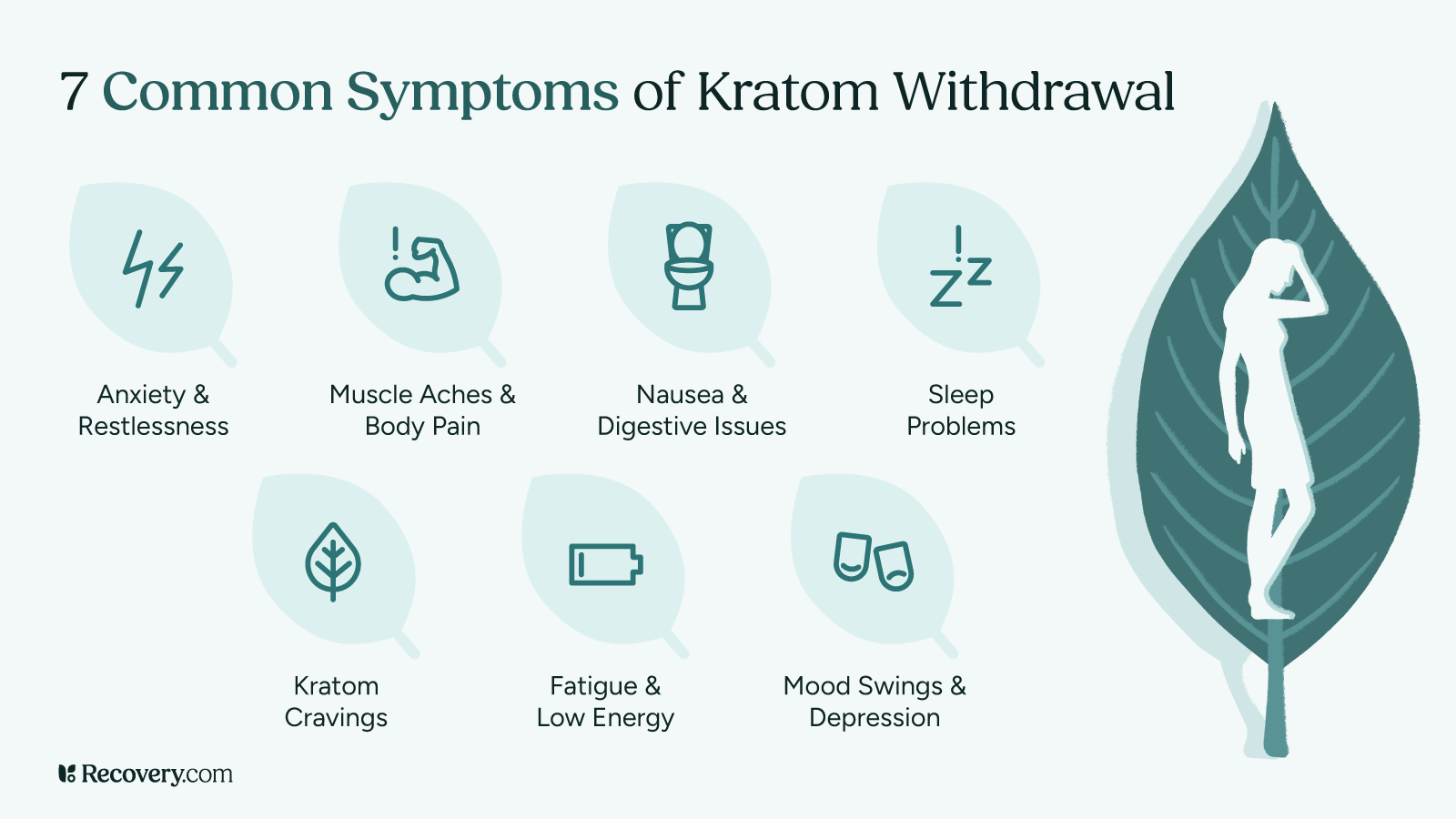
Physical symptoms of kratom withdrawal may include:2,4
- Muscle aches and joint pain.
- Watery eyes.
- Runny nose.
- Skin itching.
- Yawning.
- Insomnia.
- Nausea.
- Loss of appetite.
- Diarrhea.
- Chills or a fever.
- Sweating.
- Tremors or muscle twitches.
- Difficulty concentrating.
Psychological symptoms of kratom withdrawal may include:2,4
- Anxiety.
- Depressed mood.
- Restlessness.
- Irritability.
- Feeling tense.
- Fatigue.
- Cravings for kratom.
- In some cases, hallucinations.
Regular kratom use can also lead to tolerance, meaning larger amounts may be needed over time to produce the same effects. Some research suggests kratom can produce cross-tolerance with morphine, meaning tolerance to kratom may reduce a person's response to certain opioids.2
One study of regular kratom users found that pain and sleep problems were common during withdrawal. Most participants (84%) reported moderate pain, and 70% said the pain interfered with daily activities.5
Nearly half (46%) also experienced worsening sleep problems after stopping kratom, although the authors of the study indicated that these effects were relatively mild. People who used larger amounts of kratom each day were about twice as likely to report pain that disrupted daily life and sleep problems than those who used smaller amounts.5
Explore Drug Addiction Treatment Centers
Kratom Withdrawal Timeline
- 12–24 hours: Withdrawal symptoms often begin.2
- Days 1–4: Symptoms are typically at their most noticeable.2
- Up to 7 days: Some people continue experiencing acute withdrawal symptoms.2
- Weeks afterward: Fatigue, low mood, and cravings may persist for some people.2
Researchers haven’t established a definitive timeline for kratom withdrawal. However, available case reports and observational studies suggest that symptoms usually begin 12 to 24 hours after a person last uses kratom. In many reported cases, withdrawal lasts less than four days, although some reports describe symptoms lasting up to seven days.2
How severe kratom withdrawal becomes varies from person to person. Factors such as how much kratom someone uses, how often they use it, how long they've been using it, and whether they also use opioids or other substances can all affect the severity and duration of symptoms.2
Current research suggests that kratom withdrawal is generally milder than opioid withdrawal. An expert panel reviewing the available evidence concluded that withdrawal among U.S. kratom users is typically mild, and one national survey estimated that fewer than 10% of users experience withdrawal symptoms at all.3 The survey also found that withdrawal was more common among people with opioid use disorder (OUD).3
While observational studies generally characterize kratom withdrawal as mild to moderate, a small number of published case reports document more severe and prolonged withdrawal in some individuals.
Some people recover within a few days, while others report lingering symptoms, such as fatigue, low mood, or cravings, for weeks after the initial withdrawal period.2 If symptoms continue after the acute withdrawal phase, learning about post-acute withdrawal syndrome (PAWS) can help explain why recovery sometimes takes longer and what may help.














Can You Quit Kratom Cold Turkey?
Cutting back or stopping kratom suddenly, often called quitting “cold turkey,” can cause uncomfortable withdrawal symptoms and isn't the best approach for everyone.
Although kratom withdrawal doesn’t carry the same life-threatening withdrawal risks as suddenly stopping alcohol or benzodiazepines, it's still a good idea to talk to a healthcare professional before quitting.6
Research suggests that kratom withdrawal is generally mild to moderate for many people.1,3 Even so, even mild to moderate withdrawal can be uncomfortable, and cravings may make it difficult to quit without support.
Because researchers are still learning about kratom's long-term effects, it's a good idea to talk to a doctor or another healthcare professional before you stop using it.
They can help you decide whether tapering, gradually reducing your dose over time instead of stopping all at once, may be a better option based on your health, how much kratom you use, and how long you've been using it. They can also monitor you for complications and recommend treatments to help manage withdrawal symptoms.
Managing Kratom Withdrawal
Though many people manage mild kratom withdrawal without intensive medical intervention, others may benefit from a higher level of care, with more structured support and supervision from healthcare professionals. A doctor can assess your symptoms, recommend whether tapering is appropriate, monitor for complications, and discuss medications that may help manage withdrawal if needed.
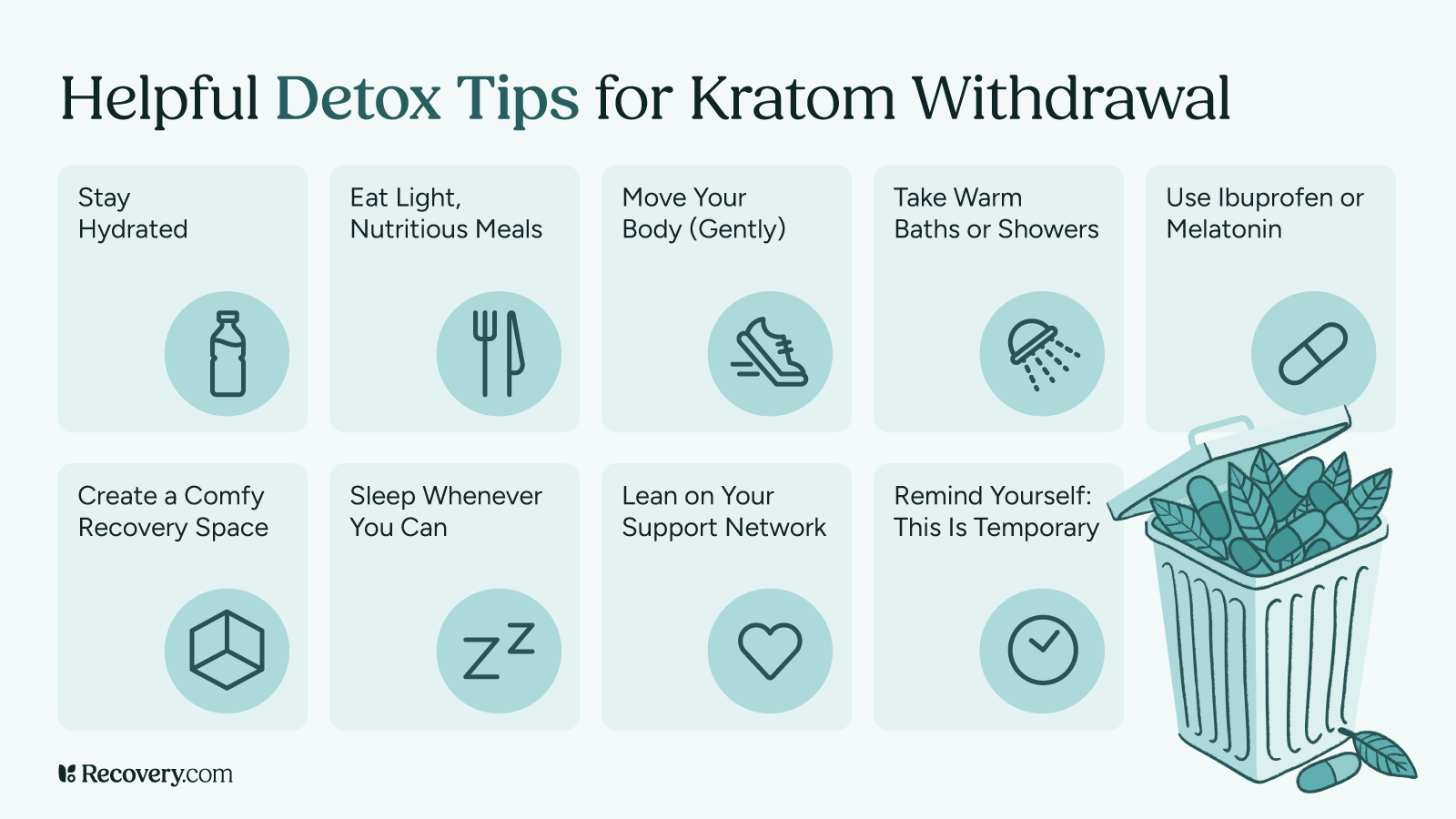
Alongside medical care, simple self-care measures, such as staying hydrated, eating regular meals, getting enough rest, and leaning on supportive friends or family, may help make the withdrawal process more comfortable.
If your symptoms become severe or you're worried about your ability to stop using kratom safely, seek medical advice rather than trying to manage withdrawal on your own.
When to Seek Professional Help
Most people who experience kratom withdrawal have mild to moderate symptoms.1 However, some symptoms may require prompt medical attention. Contact a healthcare professional or seek emergency care if you experience:
- Signs of severe dehydration, such as dizziness, confusion, or being unable to keep fluids down.
- Chest pain, an irregular heartbeat, or difficulty breathing.
- Seizures.
- Symptoms of withdrawal from another substance, especially alcohol, which can be life-threatening, or benzodiazepines, which can cause seizures if stopped abruptly.6
- Severe anxiety, agitation, hallucinations, or other symptoms that feel overwhelming or unsafe.
- Thoughts of suicide or self-harm.
Kratom Detox and Treatment Options
Because kratom affects some of the same brain receptors as illicit and prescription opioids, some clinicians treat kratom withdrawal similar to opioid withdrawal.2
For some people, this means treatment might start with medical detox, which provides supervised withdrawal in a dedicated treatment setting.7 This level of care may be appropriate for people with severe symptoms, co-occurring disorders, or withdrawal from multiple substances.7
There are currently no medications approved specifically to treat kratom withdrawal, but a person might receive medications for co-occurring disorders.1
Treatment often focuses not only on managing withdrawal symptoms but on creating a long-term plan to help prevent relapse.2
Once a person withdraws safely from kratom, they may transition to ongoing treatment to address the underlying causes of their substance misuse. The right level of care depends on factors like the severity of withdrawal symptoms, a person's overall health, and whether they're also using other substances.7
Treatment options may include:7
- Inpatient treatment: Inpatient rehab offers 24-hour medical and therapeutic support in a residential setting. It may benefit people who need a structured environment or ongoing support beyond the withdrawal period.
- Outpatient treatment: Outpatient programs allow people to live at home while attending scheduled therapy, medical appointments, and recovery support. These programs can be a good option for people with stable home environments and less intensive treatment needs.
- Aftercare: Recovery doesn't end when withdrawal symptoms improve. Ongoing support through aftercare services, peer support groups, therapy, or relapse prevention planning can help people maintain long-term recovery and reduce the risk of returning to kratom use.
A doctor experienced in substance use treatment can help you decide which level of care fits your situation, especially if you're also managing pain, anxiety, or opioid use that kratom has been masking.1,7
If You're Also Managing Opioid Use Disorder
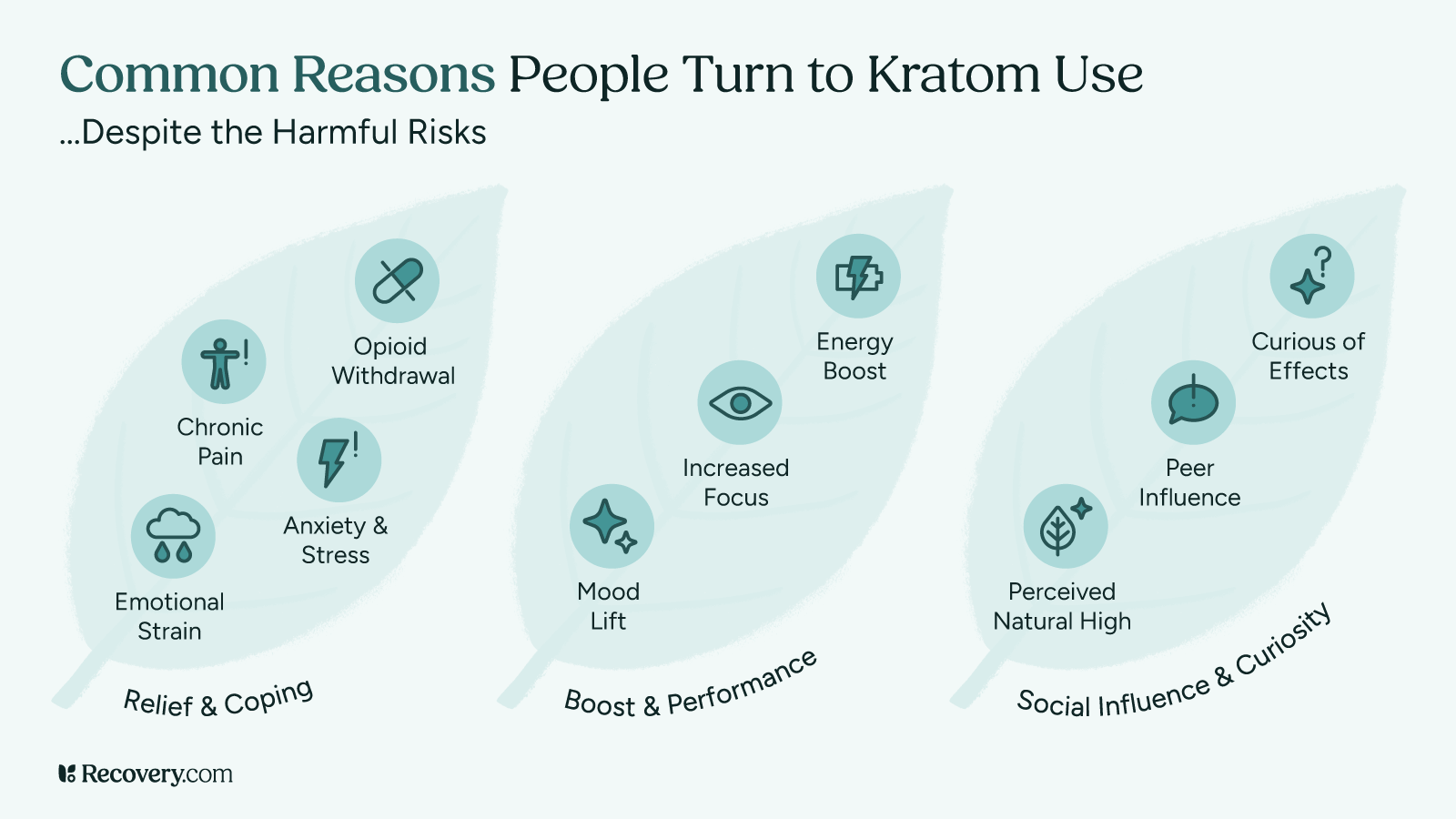
Some people use kratom to try to manage opioid withdrawal symptoms or reduce cravings on their own.1 If that's part of your experience, it's important to know that opioid use disorder (OUD) is a treatable medical condition, and effective, evidence-based treatments are available.8
Three medications for opioid use disorder (MOUD) (buprenorphine, methadone, and naltrexone) are FDA-approved to treat OUD in the U.S.8 These medications can help reduce cravings, prevent withdrawal symptoms, and support long-term recovery when used as part of a comprehensive treatment plan.8
Treatment may also include behavioral therapies, counseling, and peer support in an inpatient or outpatient setting, depending on a person's needs.8
If you've been using kratom to manage opioid withdrawal or cravings, a healthcare professional can help you explore opioid addiction treatment options that are supported by stronger evidence and designed for long-term recovery.
Find Treatment for Kratom Withdrawal
You don't have to manage kratom withdrawal on your own. Whether you need help with detox, ongoing treatment, or figuring out the right level of care, Recovery.com can help you find treatment for kratom withdrawal or a substance use disorder (SUD) near you.
Addiction recovery is possible, and support is available every step of the way.
FAQs
Researchers have not established a definitive timeline for kratom withdrawal, and available evidence is still limited.1 Case reports suggest symptoms often begin within 12 to 24 hours of the last dose and may improve within several days, though some people report symptoms lasting up to a week.2 A small number of people also experience lingering symptoms, such as fatigue, low mood, or cravings, after the initial withdrawal period
Kratom withdrawal can cause both physical and psychological symptoms. Commonly reported symptoms include muscle aches, joint pain, diarrhea, chills, insomnia, anxiety, depressed mood, irritability, and cravings.2,4 The type and severity of symptoms vary depending on factors such as how much kratom a person uses, how long they've used it, and whether they use other substances.2,4
Stopping kratom suddenly doesn’t appear to carry the same life-threatening withdrawal risks as suddenly stopping alcohol or benzodiazepines.6 However, withdrawal can still be uncomfortable, and some people may benefit from tapering instead of stopping all at once. Talk to a healthcare professional before quitting so they can help you choose the safest approach based on your situation.1,3
For most people, kratom withdrawal is mild to moderate and not life-threatening.1,3 However, you should seek medical care if you experience severe dehydration, chest pain, seizures, difficulty breathing, or symptoms of withdrawal from another substance, especially alcohol or benzodiazepines.6
The best approach depends on your symptoms and overall health. A healthcare professional can help determine whether medical detox or another level of care is appropriate. Alongside medical guidance, supportive measures such as staying hydrated, getting enough rest, eating regular meals, and relying on friends, family, or a support group may help make withdrawal more manageable.


Our Promise
How Is Recovery.com Different?
We believe everyone deserves access to accurate, unbiased information about mental health and recovery. That's why we have a comprehensive set of treatment providers and don't charge for inclusion. Any center that meets our criteria can list for free. We do not and have never accepted fees for referring someone to a particular center. Providers who advertise with us must be verified by our Research Team and we clearly mark their status as advertisers.
Our goal is to help you choose the best path for your recovery. That begins with information you can trust.