Find Treatment By
Rehabs by Location


Learn
About Us
Recovery.com combines independent research with expert guidance on addiction and mental health treatment. Our mission is to help everyone find the best path to recovery through the most comprehensive, helpful network of treatment providers worldwide.
Advisory Council
Our advisory council brings together leaders in behavioral health, technology, and business. Their diverse expertise ensures our resources and product are innovative, evidence-based, and effective. They guide our mission as accomplished individuals dedicated to improving the landscape of addiction recovery and mental wellness.
Can You Use FMLA for Rehab in Florida? What to Know



The Family and Medical Leave Act (FMLA) is a federal law that gives eligible employees up to 12 weeks of unpaid, job-protected leave in a 12-month period for a serious health condition, while allowing them to maintain their group health insurance during leave.1
Because it’s a federal law, the FMLA applies in every state, including Florida.1 That protection can cover time away for addiction or mental health treatment when the care is provided by, or on referral from, a health care provider.2,3
If you meet the eligibility requirements, FMLA may give you time to focus on treatment without having to choose between getting care and protecting your job.
What Is the FMLA?
The FMLA is a federal law, enforced by the U.S. Department of Labor (DOL), that protects your job when you need time off for a serious health condition.1 It lets eligible employees of covered employers take up to 12 weeks of unpaid leave in a 12-month period for a serious health condition, whether it's their own or a close family member's.1
When your FMLA leave ends, your employer must return you to the same job, or an equivalent one with the same pay, benefits, and other terms and conditions of employment.4
Your employer also has to keep your group health insurance active during your leave, on the same terms as if you had kept working.1 FMLA leave is unpaid, but you can often use accrued paid time off, such as vacation or sick days, at the same time.1
Find The Perfect Treatment For You
Answer a few questions and we'll match you with the best options.
What Are You Struggling With?
What Kind of Care Do You Need?
What Insurance Do You Have?
Does FMLA Apply to Rehab in Florida?
Yes. Because the FMLA is a federal law, the same rules apply in Florida as in every other state.1 Currently, Florida hasn't enacted its own broader family or medical leave law, so Florida workers rely on the federal FMLA for job-protected leave when they take time off for treatment.
Whether you can go to rehab and keep working through outpatient care, or you need to step away for a residential program, depends on the treatment your provider recommends and the kind of leave that fits it.
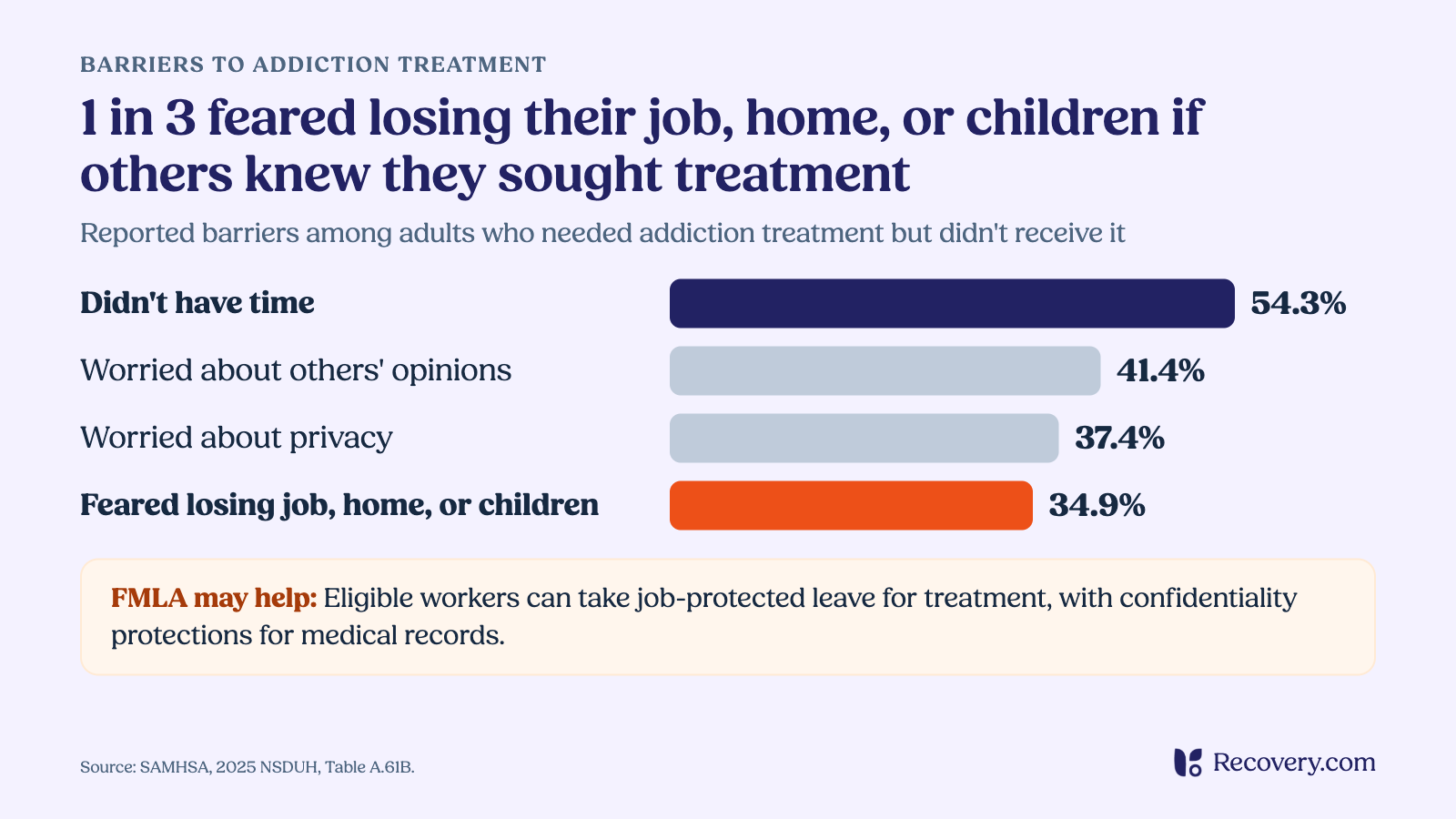
Concerns about job security and finding time for treatment can prevent people from seeking help for addiction. In a 2025 national survey, more than one in three adults who needed addiction treatment but didn't receive it worried about losing their job, home, or children if others learned they needed help. More than half said they couldn't find enough time to get treatment.5
For eligible employees, the Family and Medical Leave Act (FMLA) can help address these barriers by providing time off for treatment while protecting their job.
Explore Drug Addiction Treatment Centers
What FMLA Covers: Addiction and Mental Health Treatment
Under the FMLA, a serious health condition is an illness, injury, impairment, or physical or mental condition that involves inpatient treatment or continuing care by a health care provider.6 This can include conditions that leave you unable to work or perform other regular daily activities for a period of time, as well as chronic conditions that cause recurring periods of incapacity.6
Mental health conditions and substance use disorders, including alcohol addiction and drug addiction, can qualify as serious health conditions when they meet FMLA requirements.1
For example, FMLA may apply if a mental health condition periodically prevents you from working and requires ongoing treatment, or if you need time away from work to receive inpatient or outpatient care.3
For substance use disorders, FMLA leave is protected when it's used for treatment provided by a health care provider or by a provider they referred you to.2 However, time away because of substance use itself, rather than for treatment, isn't protected.2
Mental health conditions follow the same general FMLA requirements. Depending on your condition and treatment needs, leave may be available for ongoing appointments, periods when you're unable to work, or more intensive treatment.3
Inpatient, Outpatient, and Intermittent Leave
Depending on your treatment needs, FMLA leave may apply to care such as detox, inpatient or residential treatment, or outpatient treatment, as long as the care meets FMLA requirements.6
You can also take the leave all at once or, when it's medically necessary, in smaller blocks of time. This is an option called intermittent leave that often fits recurring therapy or medication appointments.1
Deciding between inpatient versus outpatient rehab is a conversation to have with your provider, who can document why the level of care you need is medically necessary.
Learn more: FMLA for Mental Health














Who Is Eligible for FMLA in Florida?
FMLA eligibility depends on both your employer and your employment history. Your employer must be covered by the FMLA, and you must meet certain requirements based on how long you've worked there, the hours you've worked, and where you work.1
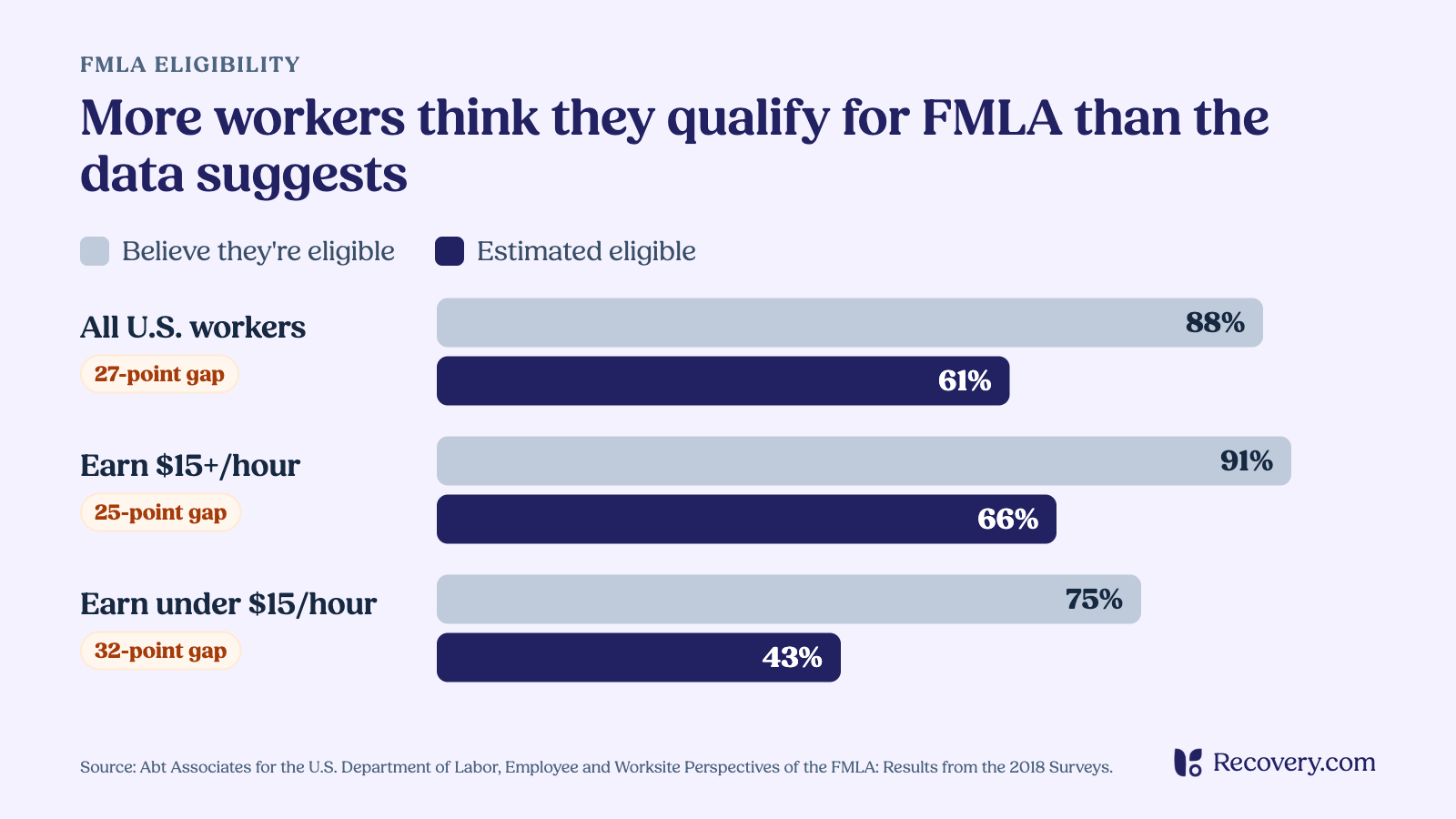
Not everyone who thinks they qualify for FMLA is actually eligible. A U.S. Department of Labor survey found that while 88% of employees believed they qualified for FMLA leave, only an estimated 61% met the eligibility requirements. This difference was especially pronounced among lower-wage workers.7 Before requesting time off for treatment, it's important to understand the requirements and confirm whether you're eligible.
Is My Employer Covered?
The FMLA applies to:
- Private-sector employers with 50 or more employees for at least 20 workweeks in the current or previous calendar year.1
- Public agencies, including federal, state, and local government employers, regardless of the number of employees.1
- Public and private elementary and secondary schools, regardless of the number of employees.1
Am I Eligible?
If you work for a covered employer, you generally must meet all three of these requirements to be eligible for FMLA leave:
- You've worked for your employer for at least 12 months. These months don't necessarily have to be consecutive.7
- You've worked at least 1,250 hours during the 12 months before your leave begins.1
- You work at a location where your employer has at least 50 employees within 75 miles.1
These requirements mean that working for an employer covered by the FMLA doesn't automatically make you eligible for leave. For example, you may work for a large company but not qualify if you haven't worked there long enough or don't have enough hours of service.
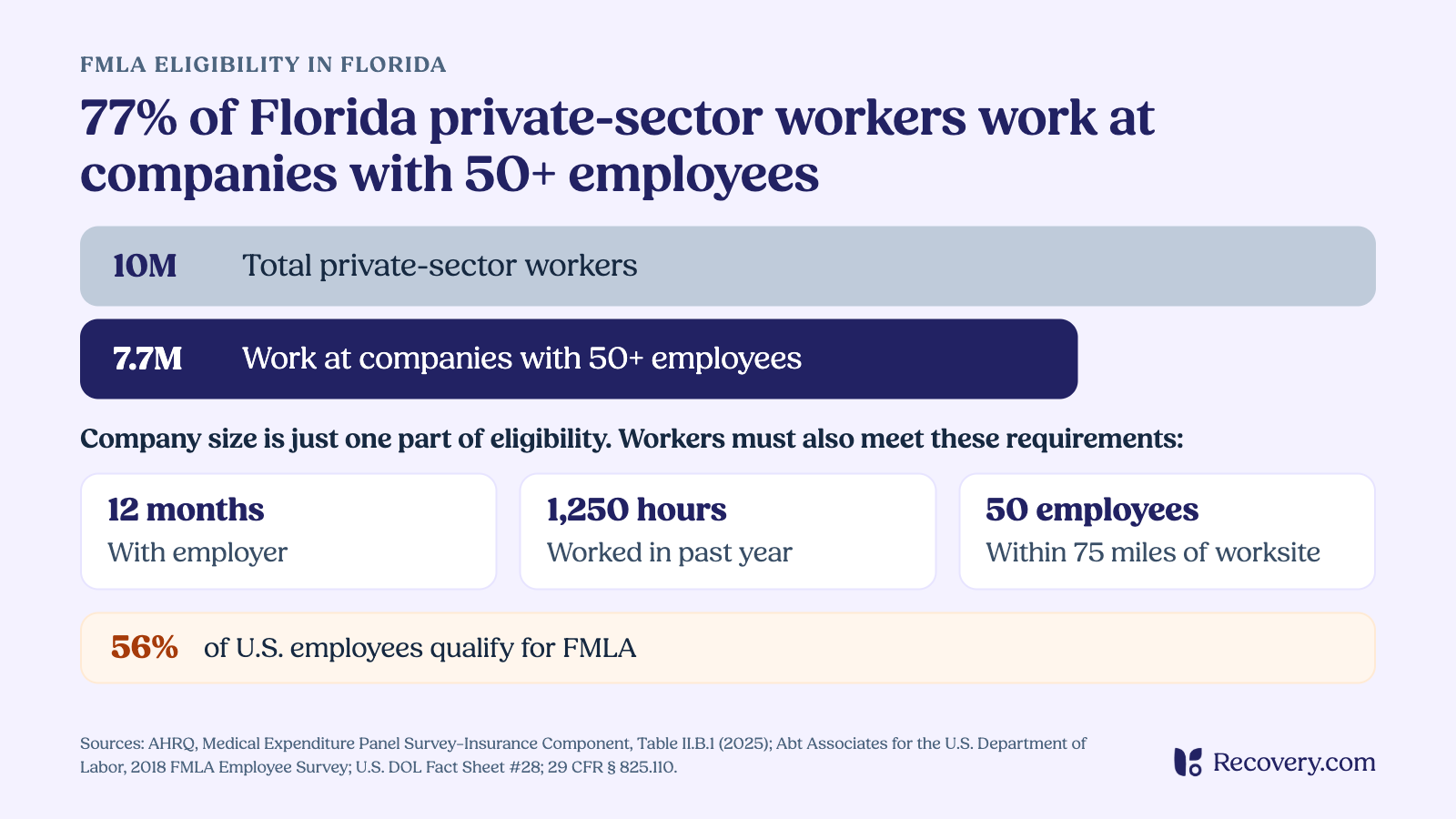
In Florida, about 77% of private-sector employees work for companies with at least 50 employees, meeting one of the key requirements for FMLA coverage.8 However, eligibility also depends on how long you've worked for your employer, how many hours you've worked, and the size of your worksite. Nationally, only about 56% of employees qualify for FMLA.7 If you're unsure whether you're eligible, your HR department can help you review the requirements before requesting leave.
What FMLA Does and Doesn't Protect
If you qualify for FMLA leave, your employer generally must:
- Return you to the same or an equivalent job when your leave ends, with equivalent pay, benefits, and other terms and conditions of employment.4
- Continue your group health insurance during your leave under the same conditions as if you were still working.4
- Protect your right to take FMLA leave without firing, suspending, threatening, or retaliating against you for using your FMLA rights.4
FMLA leave is unpaid, although you may be able to use accrued paid time off at the same time.1 FMLA also doesn't protect your job from an action that would have happened even if you hadn't taken leave, such as a layoff that eliminates your position.4
There’s also an important limitation for substance use. If your employer has an established, nondiscriminatory policy that allows employees to be terminated for substance use, FMLA doesn't prevent your employer from enforcing that policy simply because you're taking leave for treatment.2 However, your employer can't take action against you because you exercised your right to take FMLA leave.2
How to Request FMLA Leave for Rehab in Florida
Requesting FMLA leave generally involves letting your employer or human resources department know you need time away, completing any required paperwork or medical certification, coordinating available paid time off, and preparing to begin treatment.1
Learn more: How to Request Time Off for Rehab

What You Have to Tell Your Employer
When requesting FMLA leave, you'll need to let your employer know that you need time away from work for a reason that may qualify for FMLA protection.
You don't necessarily have to share a specific diagnosis. Instead, you need to provide enough information for your employer to understand that your leave may qualify for FMLA protection.10 Your employer may ask for additional information or medical certification to determine whether your leave qualifies.9
Medical Certification and Returning to Work
Your employer may require medical certification from a health care provider to support your need for FMLA leave. The certification can include information about your condition, when it began, how long it's expected to last, and why you need time away from work, but as mentioned, a specific diagnosis isn't required.9
Before you return, your employer may also require a fitness-for-duty certification confirming that you're able to resume work if certain FMLA requirements are met.9 Once your FMLA leave ends, you're generally entitled to return to the same job or an equivalent one with equivalent pay, benefits, and other terms and conditions of employment.9
What If You Aren't Eligible for FMLA?
If you don't qualify for FMLA leave, you may still have other options for taking time away from work. The Americans with Disabilities Act (ADA), for example, applies to employers with 15 or more employees.11
Depending on your circumstances, unpaid leave or another workplace adjustment may be considered a reasonable accommodation unless it would cause your employer undue hardship. The ADA may also provide protections when you return to work after FMLA leave.11
You can also ask your employer about its own leave policies, an employee assistance program (EAP), short-term disability benefits, or using accrued paid time off. Because FMLA leave itself is unpaid, checking whether insurance covers rehab can also help you plan for the cost of treatment.
If leaving your job or reducing your hours would cause you to lose your health insurance, you may be able to temporarily continue your employer-sponsored coverage through COBRA.12 COBRA generally applies to group health plans offered by employers with 20 or more employees, although eligibility depends on your circumstances.12
Florida doesn’t have a general state family and medical leave law that expands FMLA protections. Other state-specific leave protections may apply in limited circumstances, so you can also ask your employer about any additional leave available to you.
Find Addiction and Mental Health Treatment in Florida
Taking time off for treatment is a big step, and knowing your job may be protected can make it feel possible. When you're ready to look at your options, you can find addiction treatment centers in Florida and compare programs by level of care, location, and insurance coverage.
Treatment programs may also be able to help you understand what documentation you'll need for FMLA leave, including medical certification requested by your employer. Taking some time to understand your options can help you feel more prepared for what comes next.
FAQs
No. If you're eligible and follow the process, your employer can't fire you simply for taking FMLA leave to get treatment.4 There is an exception, however. If your employer has an established, consistently applied policy that allows termination for substance use, that policy can still be enforced whether or not you're on leave.2
No. FMLA leave is unpaid, job-protected leave.1 You can often use accrued paid time off, such as vacation or sick days, at the same time so that part of your leave is paid.1
Yes. A serious mental health condition that requires inpatient care or ongoing treatment by a health care provider can qualify for FMLA leave, the same way a physical condition can.3
You have to give enough information for your employer to see that the FMLA may cover the leave, but you don't have to share a specific medical diagnosis.9 A medical certification from your provider can support the leave without spelling out details you'd rather keep private.9
Florida hasn't enacted a broad state family or medical leave law of its own. Florida workers rely on the federal FMLA for job-protected medical leave.1
Yes. When it's medically necessary, you can take FMLA leave in smaller blocks of time rather than all at once, which can fit recurring outpatient therapy (such as an intensive outpatient program (IOP) or partial hospitalization program (PHP) or medication appointments.1
Your medical information has privacy protections, but HIPAA generally applies to health care providers and health plans, not your employer's employment records. Your employer may ask for medical certification to support FMLA leave, but you don't have to provide your full medical records or a specific diagnosis.9
The FMLA also has its own confidentiality requirements. Your employer must keep FMLA medical records confidential and separate from your regular personnel files. If your employer needs to contact your health care provider about your certification, HIPAA privacy requirements may also apply to that communication.9




Our Promise
How Is Recovery.com Different?
We believe everyone deserves access to accurate, unbiased information about mental health and recovery. That's why we have a comprehensive set of treatment providers and don't charge for inclusion. Any center that meets our criteria can list for free. We do not and have never accepted fees for referring someone to a particular center. Providers who advertise with us must be verified by our Research Team and we clearly mark their status as advertisers.
Our goal is to help you choose the best path for your recovery. That begins with information you can trust.