Find Treatment By
Rehabs by Location


Find Treatment By
Learn
About Us
Recovery.com combines independent research with expert guidance on addiction and mental health treatment. Our mission is to help everyone find the best path to recovery through the most comprehensive, helpful network of treatment providers worldwide.
Advisory Council
Our advisory council brings together leaders in behavioral health, technology, and business. Their diverse expertise ensures our resources and product are innovative, evidence-based, and effective. They guide our mission as accomplished individuals dedicated to improving the landscape of addiction recovery and mental wellness.
Edibles and THC Overdose: Signs, Effects, & Treatment

The editorial staff of Recovery.com is comprised of addiction content experts. Our editors and medical reviewers have over a decade of cumulative experience in medical content editing and have reviewed thousands of pages for accuracy and relevance.

Ryan Kelley is a nationally registered Emergency Medical Technician and the former managing editor of the Journal of Emergency Medical Services (JEMS).
The editorial staff of Recovery.com is comprised of addiction content experts. Our editors and medical reviewers have over a decade of cumulative experience in medical content editing and have reviewed thousands of pages for accuracy and relevance.
Ryan Kelley is a nationally registered Emergency Medical Technician and the former managing editor of the Journal of Emergency Medical Services (JEMS).
Edibles are food and drinks that are infused with marijuana extract (cannabis-infused oils and cannabutter) and contain varying amounts of the psychoactive ingredient THC (tetrahydrocannabinol).1
Edibles are sometimes considered to be a safe and effective way of experiencing the therapeutic or intoxicating effects of marijuana. However, many consumers do not understand that the duration of onset (how long it takes for effects to be felt) is often longer with edibles because they are ingested and therefore metabolized through the digestive tract.2,3
These unknown or highly variable factors can lead to unexpected adverse effects or accidentally ingesting more of the drug than expected, and may result in a THC overdose.1
What Are Edibles?
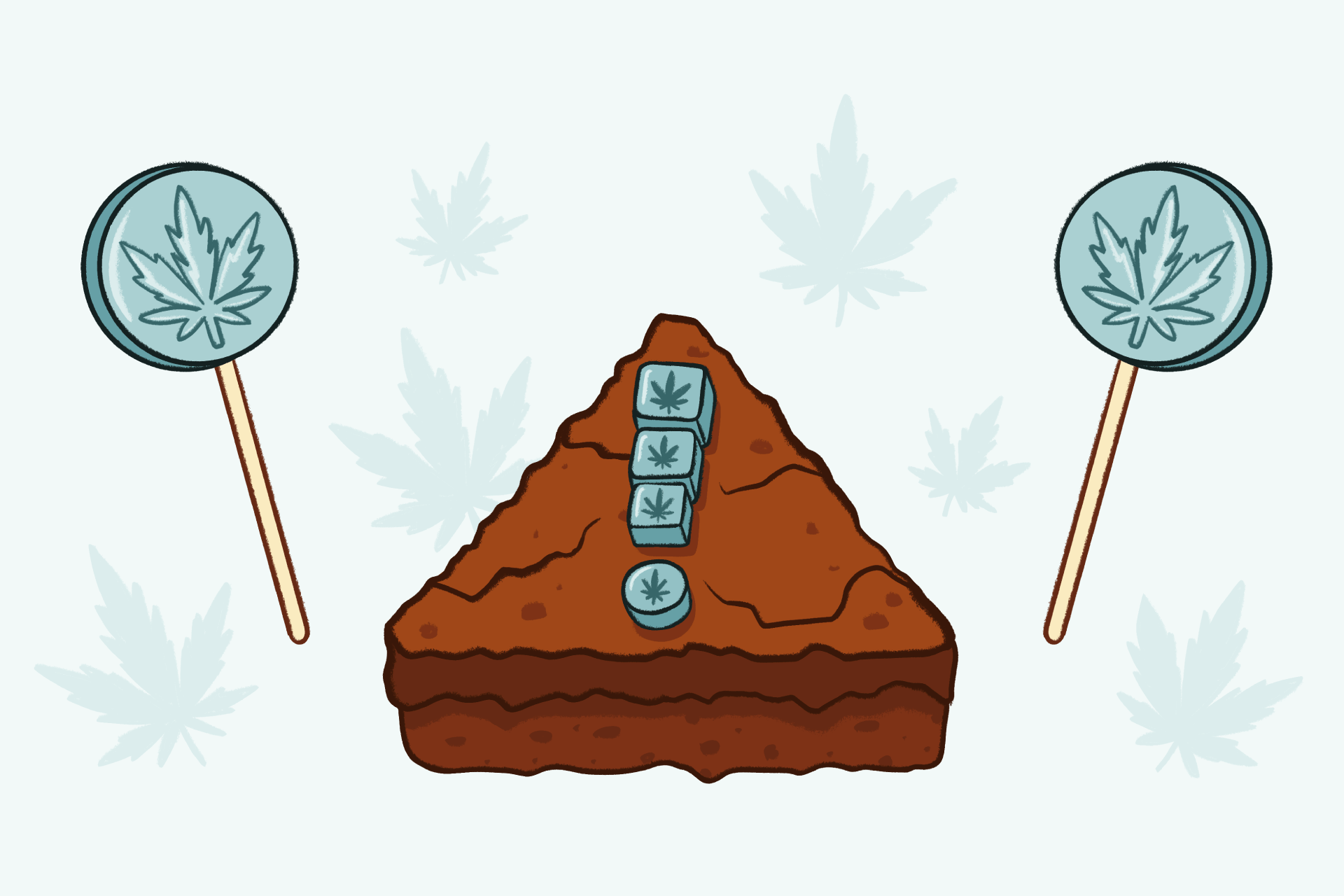
Edibles are food and drink products that are made with marijuana extract. Marijuana edibles come in various forms and can be commercially made or homemade, and can include:3,4
- Baked goods.
- Candies, chocolates, and gummies.
- Beverages.
- Lozenges.
- Cooking oils and butter.
There is an increased risk of marijuana toxicity, poisoning, or overdose when eating or drinking food and beverages infused with marijuana compared with smoking marijuana.1
Eating or drinking THC usually takes between 30 minutes to an hour, and as long as two hours before a person feels the psychoactive effects.2 The subjective “high” that’s produced (relaxation and/or euphoric feelings) can last anywhere from five to eight hours, much longer than other routes of marijuana administration.2
By contrast, when cannabis is smoked, THC is delivered to the brain almost immediately, with maximum effects present after 30 minutes and lasting one to three and a half hours.2
Ingesting edibles, rather than smoking marijuana, can delay the onset of the effects of marijuana, which can make it difficult for people to control how much of the drug they consume.1,2 Intoxicating effects can last longer than expected, depending on the amount ingested, the last food eaten, and medications or alcohol used at the same time.1
This may lead people to mistakenly consume higher amounts of THC than they intended because they don’t feel the effects of earlier doses, and can increase the risk of experiencing an unintentional THC overdose.1,3 An overdose on THC is not likely to be fatal, but it can be very uncomfortable and may cause symptoms of psychosis or lead to serious physical injury.2
Explore Marijuana Treatment Centers
Can You Overdose on THC or Edibles?
Yes, it is possible to overdose on THC, the psychoactive ingredient in marijuana.3 A limited amount of precise data exists on the association between cannabis use and overdose fatality or injury.4 However, the increased availability and potency of a wide variety of cannabis products create a potential for an increased risk of harm due to overdose.4
THC overdoses typically aren’t fatal but can lead to extreme discomfort, unpleasant experiences, accidental injury, and even death because of cannabis-induced behavioral impairment.3
Eating marijuana carries a higher risk of overdose than smoking it. Research suggests that this is because the amount of THC a person has consumed can be more difficult to predict when eating marijuana compared with smoking it. Eating an edible containing cannabis results in a slower onset and longer duration of psychoactive effects.1
Signs of a THC Overdose
A marijuana overdose is becoming increasingly common for a variety of reasons. An overdose of THC is dose-related, and the risk of overdose is higher when eating marijuana vs. smoking it.
Common symptoms of a THC overdose can include:3,5
- Poor cognitive functioning.
- Motor impairment.
- Anxiety.
- Panic and fear.
- Agitation.
- Extreme sedation.
- Cardiac stress.
- Vomiting.
- Psychotic symptoms (e.g., hallucinations, delusions).
THC Overdose Treatment
If you are experiencing an overdose of marijuana or any type of substance, call 911 and seek medical attention immediately.
Once stabilized, limiting your cannabis use and seeking further treatment for cannabis use disorder are both options to help prevent future overdoses.
THC Dosage Control in Edibles
The dosage of THC in an edible can vary and be difficult to control or even know.1,3,4 This is true for both commercially made products, homemade products created with commercially prepared oils or butters, and products made at home from homemade cannabis oil or cannabutter. Variability can be even greater in products that may contain synthetic cannabinoids, which can differ widely in potency and effects compared with naturally occurring THC.
The THC concentration in homemade edibles varies depending on the plant it’s extracted from, and the extraction process used to make the oil or butter in the edible.3
Commercial products are usually required by state law to include the amount of THC and the number of servings on the label. However, a single cookie or chocolate bar, for example, could contain many more servings than the maximum recommended dose.
Increasing Use of Edibles
Edible use is on the rise with the legalization of marijuana for recreational use in more and more states. Studies of adolescents show that edible use is increasing among high school seniors, while the number of students smoking marijuana is dropping.6
Teenage edible users are also more likely to use them daily opposed to those who smoke marijuana.7 Since edibles are often found in candy form, children may mistake them for regular snacks or candy, which can make them sick or lead to an edible overdose.1
Hazards of Edibles and THC Levels
The THC in edibles is metabolized differently than it is when smoking marijuana. A person’s individual metabolic rate can alter the way edibles affect them.3 A person’s age, gender, and weight are just a few factors that may impact when and for how long effects are felt.3 This can lead to more prolonged and intense side effects. The THC in edibles can also interact with other drugs, alcohol, or medications.2,3
People who use cannabis regularly for many years may be at risk for developing an episodic, cyclical vomiting syndrome called cannabinoid hyperemesis syndrome (CHS).8 Long-term cannabis use (including smoking and eating marijuana), especially at high regular doses, puts a person at increased risk of CHS. Severe abdominal pain, nausea and vomiting, and visits to the hospital are common in people experiencing this syndrome.8
Negative psychiatric side effects, such as anxiety, paranoia, and even a psychotic reaction involving agitation, hallucinations, and delusions, can occur with an overdose of eating or smoking marijuana.1,3
Over time, heavy or frequent use can also contribute to marijuana addiction (known as cannabis use disorder), which may involve strong marijuana cravings and difficulty cutting down or stopping use even when it causes problems. For some people, trying to quit after developing a cannabis use disorder can be challenging and may lead to marijuana relapse.
The availability of edibles has been associated with an increased rate of accidental ingestion of cannabis in children.2 Adults and pets, as well as children, can mistake marijuana edibles for food, candy, or treats.1 For this reason, the Centers for Disease Control and Prevention recommends that if you use marijuana products such as edibles, you keep them in childproof containers and out of reach of children or pets.1
How to Get Help for Marijuana or Edible Misuse
Treatment for cannabis use disorder varies from person to person. It may include inpatient or outpatient care, mutual support groups, therapy, and treatment for co-occurring mental health disorders. For some, support also focuses on managing marijuana withdrawal symptoms and preventing relapse.
If you or someone you love is struggling with marijuana or edible use, you’re not alone. Understanding the risks is an important first step. Professional support can help you or a loved one build a healthier life.
When you're ready to take the next step, you can explore trusted treatment options and connect with a program that meets your needs using Recovery.com. Browse medical detox centers, inpatient addiction treatment facilities, aftercare options, and more today.
FAQs
-
National Academies of Sciences, Engineering, and Medicine; Health and Medicine Division; Board on Population Health and Public Health Practice; Committee on the Health Effects of Marijuana. (2017, January 12). The Health Effects of Cannabis and Cannabinoids: The Current State of Evidence and Recommendations for Research. Cannabis. https://www.ncbi.nlm.nih.gov/books/NBK425762/#sec_000074
-
Barrus, D.G., Capogrossi, K.L., Cates, S.C., Gourdet, C.K., Peiper, N.C., Novak, S.P., Lefever, T.W., & Wiley, J.L. (2016, November). Tasty THC: Promises and Challenges of Cannabis Edibles. https://pmc.ncbi.nlm.nih.gov/articles/PMC5260817/
-
National Institute on Drug Abuse. (2020, April 6). Marijuana vaping and edible use increasing among high school seniors. https://web.archive.org/web/20220303082900/https://nida.nih.gov/news-events/science-highlight/marijuana-vaping-edible-use-increasing-among-high-school-seniors
-
Denver Public Heath. (n.d.). Facts About Marijuana Edibles and Your Health. https://web.archive.org/web/20210515150952/https://www.denverpublichealth.org/community-health-promotion/substance-misuse/marijuana-edible-facts
-
Hejazi, R.A., & McCallum, R.W., Pattathan, M.B. (2012, June 29). Association of Marijuana Use and Cyclic Vomiting Syndrome. https://pmc.ncbi.nlm.nih.gov/articles/PMC3763664/
-
Agrawal S., Spurling B.C., Turner A.R. (2023, July 21). Marijuana Toxicity. https://www.ncbi.nlm.nih.gov/books/NBK430823/
-
National Academies of Sciences, Engineering, and Medicine; Health and Medicine Division; Board on Population Health and Public Health Practice; Committee on the Health Effects of Marijuana. (2017, January 12). An Evidence Review and Research Agenda. The Health Effects of Cannabis and Cannabinoids: The Current State of Evidence and Recommendations for Research. Injury and Death. https://www.ncbi.nlm.nih.gov/books/NBK425742/
-
CNN. Lamotte, Sandee. (2020, February 24). Marijuana use is rising sharply among seniors over 65, study says, and there are serious risks. https://web.archive.org/web/20210627084657/https://www.cnn.com/2020/02/24/health/weed-marijuana-seniors-wellness/index.html










Our Promise
How Is Recovery.com Different?
We believe everyone deserves access to accurate, unbiased information about mental health and recovery. That's why we have a comprehensive set of treatment providers and don't charge for inclusion. Any center that meets our criteria can list for free. We do not and have never accepted fees for referring someone to a particular center. Providers who advertise with us must be verified by our Research Team and we clearly mark their status as advertisers.
Our goal is to help you choose the best path for your recovery. That begins with information you can trust.