Alsana Virtual PHP/IOP
Treatment Focus
You can get treatment for eating disorders at this center, helping you navigate symptoms, build coping tools, and restore your physical health under expert care.
Primary Level of Care
The delivery of therapeutic services utilizing technology such as video conferencing, online messaging or phone calls, allowing for flexibility, comfort and increased access to care
This provider hasn't verified their profile's information. Are you the owner of this center? Claim your listing to better manage your presence on Recovery.com.
Treatment Focus
You can get treatment for eating disorders at this center, helping you navigate symptoms, build coping tools, and restore your physical health under expert care.
Primary Level of Care
The delivery of therapeutic services utilizing technology such as video conferencing, online messaging or phone calls, allowing for flexibility, comfort and increased access to care
Provider's Policy
Alsana is a preferred in-network provider for all major insurance companies. They do not accept Medicaid or Medicare.
Alsana Virtual PHP/IOP
About Alsana Virtual PHP/IOP
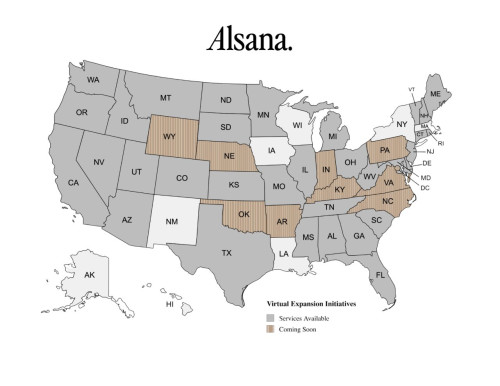
Serving adults and adolescents of all genders, Alsana offers a virtual PHP/IOP program in many states, treating anorexia, bulimia, binge eating, and other eating disorders. They also treat co-occurring mental health and substance use disorders. Clients participating in their virtual treatment can expect the same level of personalized care they would find in traditional, in-person treatment.
Build a Strong Foundation with Holistic Care
At the beginning of treatment, Alsana places all clients in a cohesive and consistent group that they stay with throughout their time in the virtual program. Clients receive a full clinical assessment along with group and individual therapy, nutrition counseling, and instruction in recovery-minded movement/yoga. Alsana uses the Adaptive Care Model, which combines caring for medical, nutritional, therapeutic, movement, and relational issues. This approach helps reduce eating disorder symptoms and helps clients attain long-lasting recovery by addressing all the dimensions of eating disorders. Alsana offers additional support for family members and supportive individuals of those in treatment.

Center Overview

Treatment Focus
You can get treatment for eating disorders at this center, helping you navigate symptoms, build coping tools, and restore your physical health under expert care.
Joint Commission Accredited
The Joint Commission accreditation is a voluntary, objective process that evaluates and accredits healthcare organizations (like treatment centers) based on performance standards designed to improve quality and safety for patients. To be accredited means the treatment center has been found to meet the Commission's standards for quality and safety in patient care.

Insurance Accepted
Cash Pay Rates
Estimated Cash Pay Rate
Center pricing can vary based on program and length of stay. Contact the center for more information. Recovery.com strives for price transparency so you can make an informed decision.
Meet Your Care Team

Katherine Jordan, MS, RDN, LDN, CEDS-C
Director of Virtual Nutrition Services
Kimberly Wynn
Program Coordinator

Rhea Grover
Lead Therapist

Kristen Tritt, LCSW
Primary Therapist

Lauren Foster, ALC, LPCC, LPCA, PLPC, NCC, ERYT
Primary Therapist

Elizabeth Beil, RD
Registered Dietitian

Hannah Fried, MS, RDN
Registered Dietitian
Levels of Care
Your Care Options
Specializations
Co-Occurring Disorders
A person with multiple mental health diagnoses, such as addiction and depression, has co-occurring disorders also called dual diagnosis.
Eating Disorders
An eating disorder is a long-term pattern of unhealthy behavior relating to food. Most people with eating disorders have a distorted self-image.
Trauma
Some traumatic events are so disturbing that they cause long-term mental health problems. Those ongoing issues can also be referred to as "trauma."
Who We Treat
Adolescents
Teens receive the treatment they need for mental health disorders and addiction, with the added support of educational and vocational services.
Men and Women
Men and women attend treatment for addiction in a co-ed setting, going to therapy groups together to share experiences, struggles, and successes.
Approaches
Evidence-Based
A combination of scientifically rooted therapies and treatments make up evidence-based care, defined by their measured and proven results.
Holistic
A non-medicinal, wellness-focused approach that aims to align the mind, body, and spirit for deep and lasting healing.
Individual Treatment
Individual care meets the needs of each patient, using personalized treatment to provide them the most relevant care and greatest chance of success.
Therapies
1-on-1 Counseling
Patient and therapist meet 1-on-1 to work through difficult emotions and behavioral challenges in a personal, private setting.
Nutrition Counseling
Nutritious food helps patients heal from within, setting them up for mental and bodily wellness as they learn about healthy eating.
Psychoeducation
This method combines treatment with education, teaching patients about different paths toward recovery. This empowers them to make more effective decisions.
Yoga
Yoga is both a physical and spiritual practice. It includes a flow of movement, breathing techniques, and meditation.
Languages
Conditions We Treat
Anxiety
Anxiety is a common mental health condition that can include excessive worry, panic attacks, physical tension, and increased blood pressure.
Depression
Symptoms of depression may include fatigue, a sense of numbness, and loss of interest in activities. This condition can range from mild to severe.
Eating Disorders
An eating disorder is a long-term pattern of unhealthy behavior relating to food. Most people with eating disorders have a distorted self-image.
Trauma
Some traumatic events are so disturbing that they cause long-term mental health problems. Those ongoing issues can also be referred to as "trauma."
Substances We Treat
Co-Occurring Disorders
A person with multiple mental health diagnoses, such as addiction and depression, has co-occurring disorders also called dual diagnosis.