Find Treatment By
Rehabs by Location


Learn
About Us
Recovery.com combines independent research with expert guidance on addiction and mental health treatment. Our mission is to help everyone find the best path to recovery through the most comprehensive, helpful network of treatment providers worldwide.
Advisory Council
Our advisory council brings together leaders in behavioral health, technology, and business. Their diverse expertise ensures our resources and product are innovative, evidence-based, and effective. They guide our mission as accomplished individuals dedicated to improving the landscape of addiction recovery and mental wellness.
How Do You Help Someone with an Addiction? 8 Actionable Steps to Support Recovery


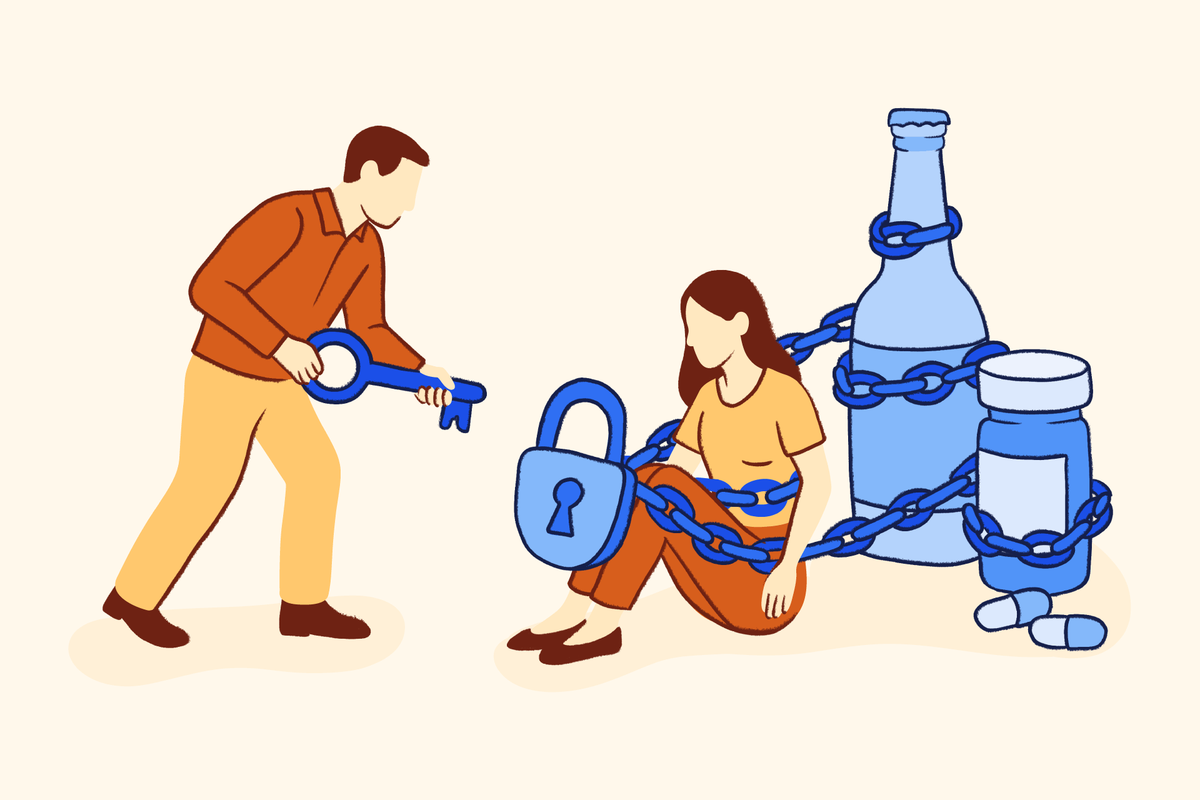
Recognizing when a loved one is struggling with substance use can be confusing, heartbreaking, and overwhelming. You may feel desperate to help, but unsure of how to do so without enabling their behavior or pushing them away.
Fortunately, with compassion, information, and evidence-based strategies, it’s possible to help someone with an addiction get the support they need during recovery process.
1. Recognize the Signs of Addiction in Others
Addiction isn’t always obvious. While some people display clear warning signs, others may mask their struggles with problematic drug use or addiction behind a facade of normalcy. Being aware of what to look for can help bring bring clarity to an already complex situation.
The signs of addiction, known clinically as substance use disorder (SUD), are outlined in the Diagnostic and Statistical Manual of Mental Disorders (DSM-5), the American Psychological Association’s publication that mental health professionals use to diagnose certain psychological conditions.1 These signs include the following:1
- Taking substances in larger amounts or over longer periods of time than intended
- Having persistent desire or unsuccessful attempts at cutting down or controlling substance
- Having cravings or strong urges to use substances
- Recurrent substance use that interferes with one’s ability to fulfill major obligations, such as those at work, home, or school
- Continued substance use despite persistent interpersonal problems causing by the use
- Giving up important activities because of substance use
- Recurrent substance use in situations where it is physically hazardous
- Continued use despite any physical or psychological problems caused or exacerbated by substance use
- Needing markedly increases amounts of substances to feel desired effects, known as tolerance
- Experiencing withdrawal symptoms or using substances to avoid them
In people with high-functioningaddiction, drug or alcohol use may be difficult to recognize due to career success or social engagement.2 However, you might still notice additional signs of substance misuse, including mood swings, secretive behavior, or decreased hygiene.
For children or young adults, you may recognize behavioral signs, such as changes in friend groups, a decrease in participation in school functions or extracurriculars, or changes in grades and academic performance.3
Find The Perfect Treatment For You
Answer a few questions and we'll match you with the best options.
What Are You Struggling With?
What Kind of Care Do You Need?
What Insurance Do You Have?
2. Understand There Is a Why Behind Substance Use
People don’t usually turn to drugs or alcohol just because they’re bored, but rather they use substances to cope with pain, trauma, or emotional overwhelm. Addiction often starts as a form of control of a seemingly uncontrollable situation.
Substances may offer short-term relief from anxiety, depression, loneliness, or past wounds. In the beginning, the ability to change how you feel with a drink or a pill can seem empowering. But over time, that temporary sense of control, however, can turn into a complete loss of control.
Understanding the “why” doesn’t mean that you are providing an excuse for the behavior. However, it does help you meet your loved one with greater compassion. It shifts the conversation from:
- “Why don’t you just stop?” to “What are you trying to escape or manage?”
- “What’s wrong with you?” to “What happened?”
It’s common for people struggling with substance use disorder to carry a significant emotional burden. Recognizing the underlying “why” behind their substance use can be an excellent start, as it can help you focus not just on the behavior or coping mechanism, but the pain beneath it, so you can offer more empathetic and effective support.4
Explore Drug Addiction Treatment Centers
3. Educate Yourself About the Science of Addiction
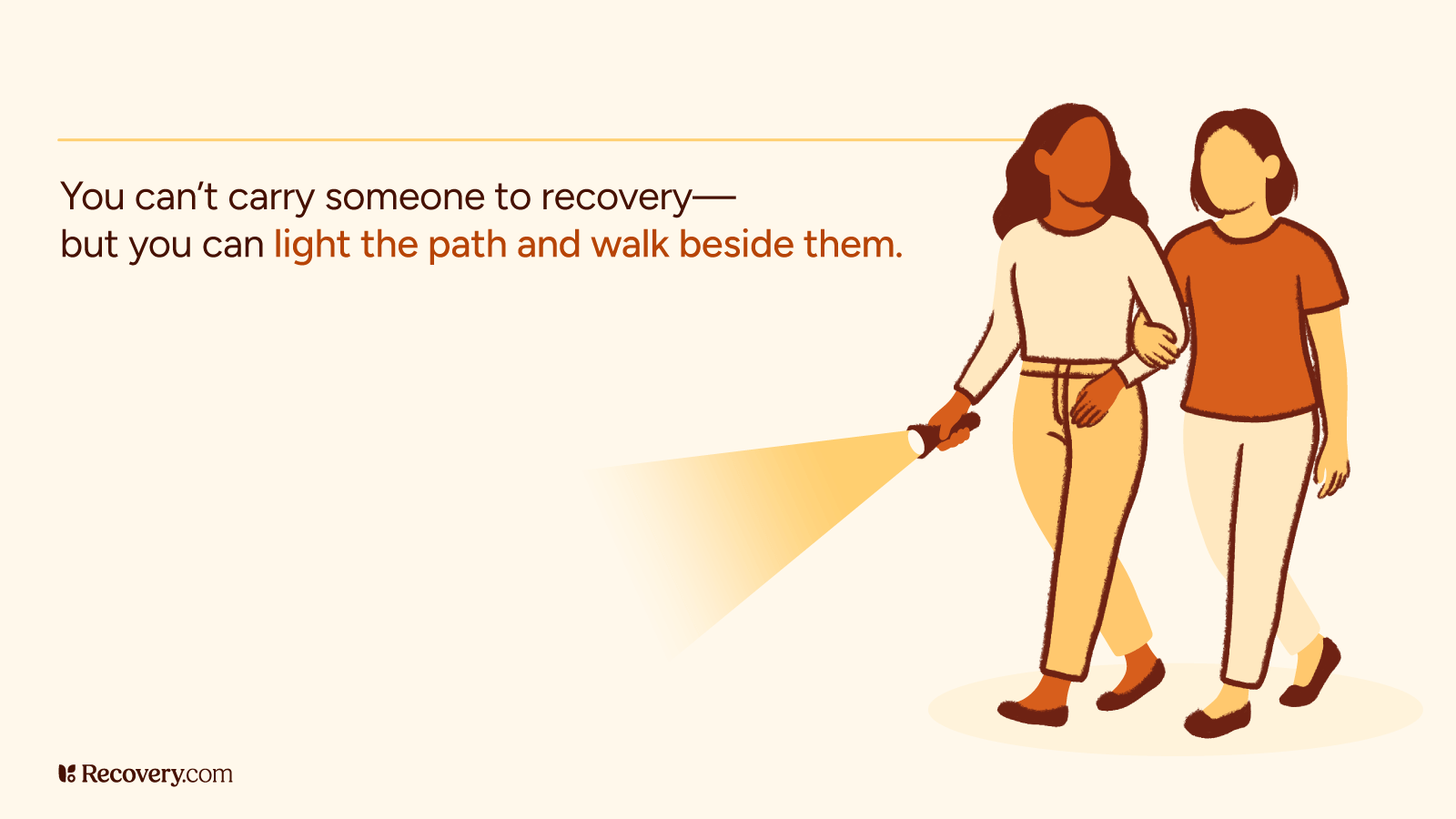
Being aware of the signs of addiction and understanding the common reasons why people turn to drugs and alcohol to cope is only just the beginning. One of the most empowering steps you can take is to understand what addiction really is. With the right knowledge and support, you can be better prepared to support a loved one.
So, what is addiction, exactly?
Addiction is a chronic, relapsing brain disease, not a moral failing or a lack of willpower as it is often misunderstood to be.5 Science shows that long-term substance use can change how the brain communicates, especially in areas related to reward, decision-making, and impulse control.6 This disruption often stems from changes in neurotransmitters like dopamine, which plays a major role in pleasure and motivation.7
In the beginning, it may appear that your loved one is choosing to use substances, but over time, the brain rewires itself, increasing cravings and tolerance while decreasing natural dopamine production. That’s when people often feel “trapped” both physically and mentally.
Understanding these biological realities can help reduce blame, anger, and resentment and instead increase the desire to offer compassion and support.7 It also reminds us that encouragement, grace, and education are crucial parts of the healing process.














4. Learn the Dos and Don’ts of Supporting Someone in Addiction
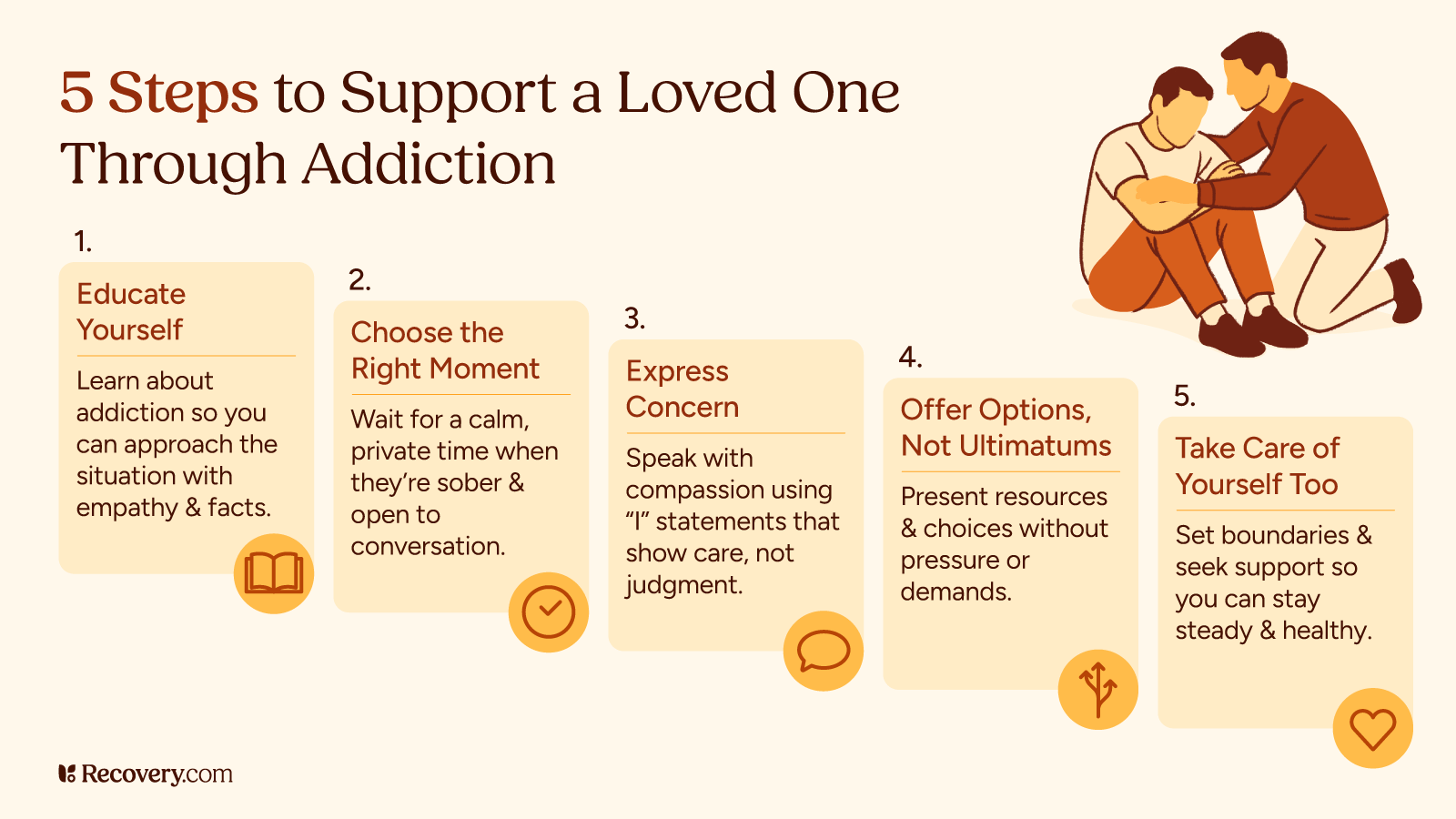
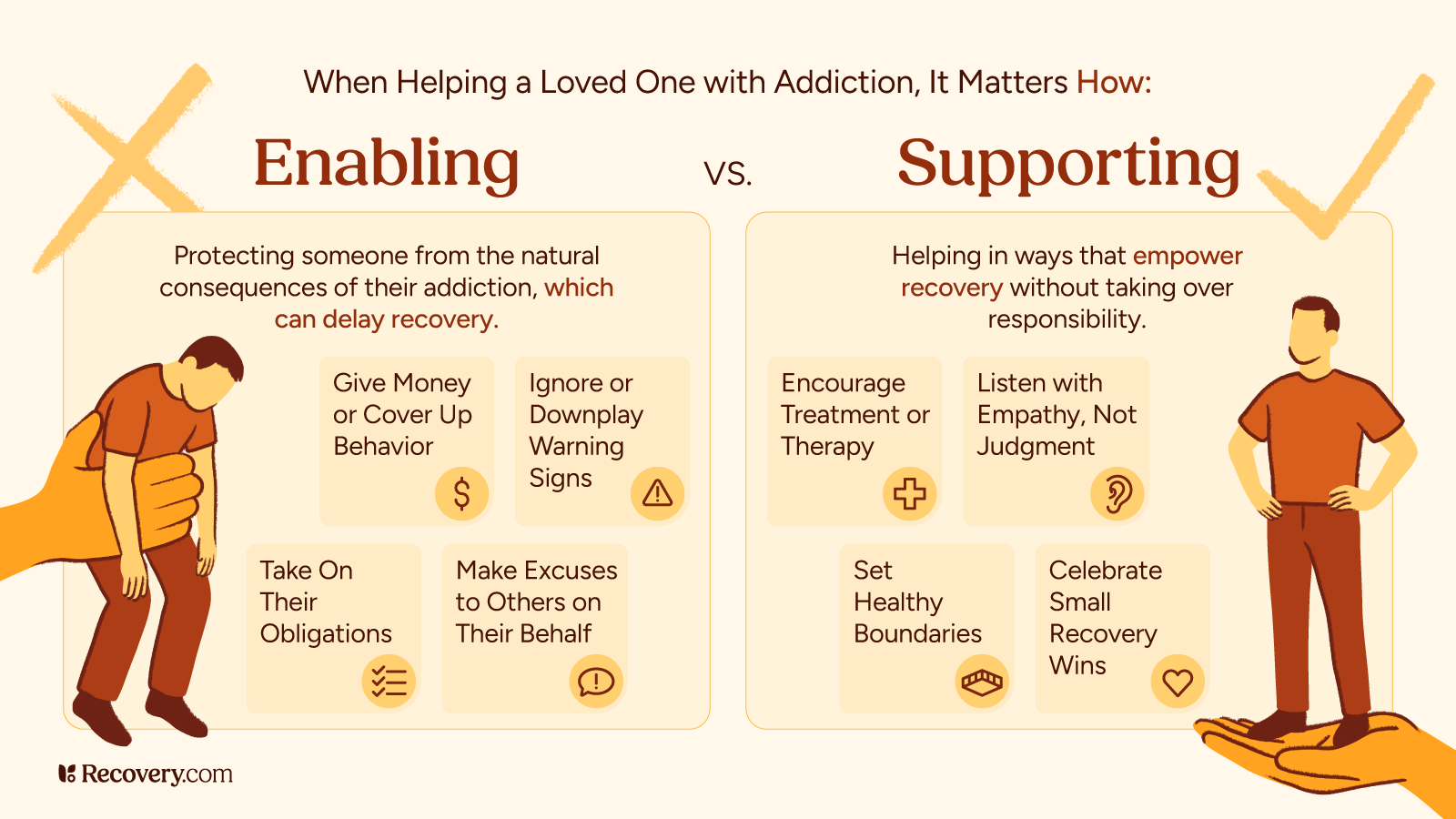
Loving someone with an addiction requires empathy, education, and strong boundaries. You might be feeling helpless, but there are things you can do. Here are some practical ways to offer support:
Do:
- Listen with compassion. Let them talk openly and acknowledge what they’re feeling without judgment.
- Set healthy boundaries. Set clear limits around what you’re able to offer and follow through.
- Learn about addiction and recovery. Understanding substance use, withdrawal, and treatment options can help you support them better.
- Celebrate progress. Encourage small steps forward and remind them that change takes time.
Don’t:
- Don’t enable or protect them from consequences. Covering up, making excuses, or giving money can unintentionally prolong the problem.
- Don’t give ultimatums before they’re ready. Lasting change usually starts with internal motivation, not outside pressure.
- Don’t blame yourself. Their choices are not your fault, even when it’s hard to watch.
- Don’t expect them to quit cold turkey. In some instances, this can be extremely dangerous and even deadly, especially when using alcohol or benzodiazepines. Always reach out to a professional first.
As you go through this process, It’s important to keep in mind that you matter, too. It’s important to care for your own heart and well-being as you walk alongside your loved one. You won’t be able to fix everything and that’s okay. Healing is a long road, and it’s not your job to carry it all.
Allow yourself to set boundaries that protect your peace. For example, if a conversation becomes too intense, give yourself permission to step away. A simple pause can make space for clarity, calm, and compassion. Come back when you’re ready with a clearer mind and a softer heart.
And remember: you don’t have to be involved in every part of their journey. Showing up consistently in small, healthy ways often speaks louder than trying to do it all.
5. Understand How to Talk to Someone About Their Addiction
Confronting someone about their substance use is difficult, but it can also be a turning point. To have the best outcome, choose a calm, private setting and use non-threatening language.

Here are a few brief conversation tips that can help you as you communicate with your loved one who may be struggling with an addiction.
Conversation Tips
- Start with an “I” statement: “I’ve noticed you seem stressed lately, and I’m worried about you.”
- Express concern, not control: “I care about your well-being and want to help.”
- Avoid labels like “addict” or “junkie,” which can cause shame or defensiveness.
Timing matters. Choose a moment when they’re sober and not in a state of crisis or withdrawal.
6. Decide When and How to Encourage Treatment
Suggesting treatment should be a compassionate invitation, not a demand. If the person is open to help, present options like:
- Speaking with a mental health professional or healthcare provider
- Considering inpatient or outpatient addiction treatment programs
- Exploring evidence-based options such as behavioral therapy, medication-assisted treatment, detox, or other types of medical treatment
- Encouraging holistic wellness and recovery support services
It’s normal for people to resist the idea at first. Ambivalence doesn’t mean they’re not willing—it often means they’re afraid or unsure of what recovery entails.
"How do people change? Over time. With stops and starts, along a crooked line. With practice. With ambivalence. More often than not, without formal help. When the trade-offs seem worth it. With a little help—sometimes a lot of help—from friends and family. With anguish. With effort. With joy."8
― Jeffrey Foote, PhD., Beyond Addiction: How Science and Kindness Help People Change
7. Know What to Do if They Refuse Help
Refusal doesn’t mean you should give up. Harm reduction strategies can keep your loved one safer, sometimes easing cravings, while leaving the door open for change.9 You can:
- Encourage safer practices (like not mixing substances and using clean supplies).
- Stay emotionally available without enabling.
- Know your limits and take care of yourself.
You might need to seek your own mental health support or attend family therapy to cope with feelings of guilt, anger, or helplessness. That’s okay. Recognizing that addiction impacts the entire family and not just the person struggling is key to a healthy recovery journey for everyone.
8. Get Familiar With Resources for Families and Friends
You are not alone. Support services exist for those affected by a loved one’s addiction.10 These include:
- Al-Anon and Nar-Anon: Peer-led groups for family and friends
- SMART Recovery Family & Friends: Offers tools based on cognitive behavioral therapy
- Books and podcasts that explore addiction and family dynamics
- Helplines that provide 24/7 support
- Therapy with a mental health professional familiar with substance use disorders
Helping someone with drug use, drug addiction, or alcohol use isn’t about fixing them—it’s about walking beside them, with compassion and hope. Whether they’re seeking professional help or resisting treatment options, your role matters. Take steps to protect your own well-being, stay informed, and know that recovery is possible for your family member—even when the road is long.
Get Help For Yourself or A Loved One Today
Recovery may seem daunting, but effective help is available. Explore residential drug rehabs or specialized alcohol addiction treatment programs to find the right environment for healing. Use our free tool to search for addiction treatment by insurance, location, and amenities now.
FAQs
Avoid blaming, shaming, or using stigmatizing terms like “junkie” or “addict” when talking to or about your family member. Phrases like “just stop” or “you’re ruining everything” often shut down communication. Focus instead on expressing care and concern while encouraging effective treatment options.
Helping without enabling means supporting their recovery, not their addiction. Avoid giving money, covering up consequences, or making excuses. Instead, offer emotional support, resources, and healthy boundaries.
You can help by listening without judgment, offering treatment options, and encouraging small steps toward change. Support groups, harm reduction strategies, and family therapy can also make a difference.
A substance use disorder is a medical condition characterized by an uncontrollable urge to use drugs or alcohol despite negative consequences. It affects brain function and behavior and often requires comprehensive treatment.
Use “I” statements to express concern, avoid confrontational language, and choose a calm moment to talk. Understand that denial is common and change takes time.
Offer encouragement, celebrate milestones, be patient during setbacks, and avoid substances around them. Attending support groups together and staying informed can strengthen your role in their recovery. Encouraging effective treatment plans that address not only substance use, but also co-occurring mental health conditions, is important..
Help research treatment options, provide transportation or childcare if needed, and support attendance in therapy or peer groups. Remind them that recovery is a journey, not a destination.



Our Promise
How Is Recovery.com Different?
We believe everyone deserves access to accurate, unbiased information about mental health and recovery. That's why we have a comprehensive set of treatment providers and don't charge for inclusion. Any center that meets our criteria can list for free. We do not and have never accepted fees for referring someone to a particular center. Providers who advertise with us must be verified by our Research Team and we clearly mark their status as advertisers.
Our goal is to help you choose the best path for your recovery. That begins with information you can trust.