Find Treatment By
Rehabs by Location


Find Treatment By
Learn
About Us
Recovery.com combines independent research with expert guidance on addiction and mental health treatment. Our mission is to help everyone find the best path to recovery through the most comprehensive, helpful network of treatment providers worldwide.
Advisory Council
Our advisory council brings together leaders in behavioral health, technology, and business. Their diverse expertise ensures our resources and product are innovative, evidence-based, and effective. They guide our mission as accomplished individuals dedicated to improving the landscape of addiction recovery and mental wellness.
Common High Risk Situations in Recovery and How to Manage Them

Rita Milios, LCSW, "The Mind Mentor," combines the science of neuro-biology, traditional psychotherapy techniques, and spiritual growth techniques gleaned from ancient wisdom traditions to help people re-program old, entrenched, self-defeating habits and attitudes and successfully treat anxiety, depression, addictions (substances, people, things), eating issues, relationship issues, trauma, life transition issues and grief.

Rita Milios, LCSW, "The Mind Mentor," combines the science of neuro-biology, traditional psychotherapy techniques, and spiritual growth techniques gleaned from ancient wisdom traditions to help people re-program old, entrenched, self-defeating habits and attitudes and successfully treat anxiety, depression, addictions (substances, people, things), eating issues, relationship issues, trauma, life transition issues and grief.
One of the most challenging aspects of recovery is that it is an ongoing process…it never really ends.
When a person struggling with addiction stops using and embraces abstinence, the real journey begins. Holding onto a substance-free lifestyle is seldom a straightforward path; rather, it is often marked with peaks and valleys where a return to drug or alcohol use for a time—a relapse—punctuates periods of abstinence.
The National Institute on Alcohol Abuse and Alcoholism (NIAAA) estimates that nearly 90% of people in recovery for alcohol use relapse at least once over four years. The National Institute on Drug Abuse (NIDA) reports that relapse rates for people in recovery for all types of substance use average around 40-60%.
These statistics, while alarming, are consistent with the relapse rates for other chronic illnesses. For instance, people with hypertension and asthma have about a 50-70% rate of failing to consistently maintain their treatment regimes, and people with diabetes have about a 30-50% rate of relapse from their treatment regimes.
To better manage the risks for potential relapse, the drug and alcohol treatment community has developed guidelines to help people in recovery recognize risky situations and develop proactive strategies to deal with them before they get out of hand.
Categories of Risk
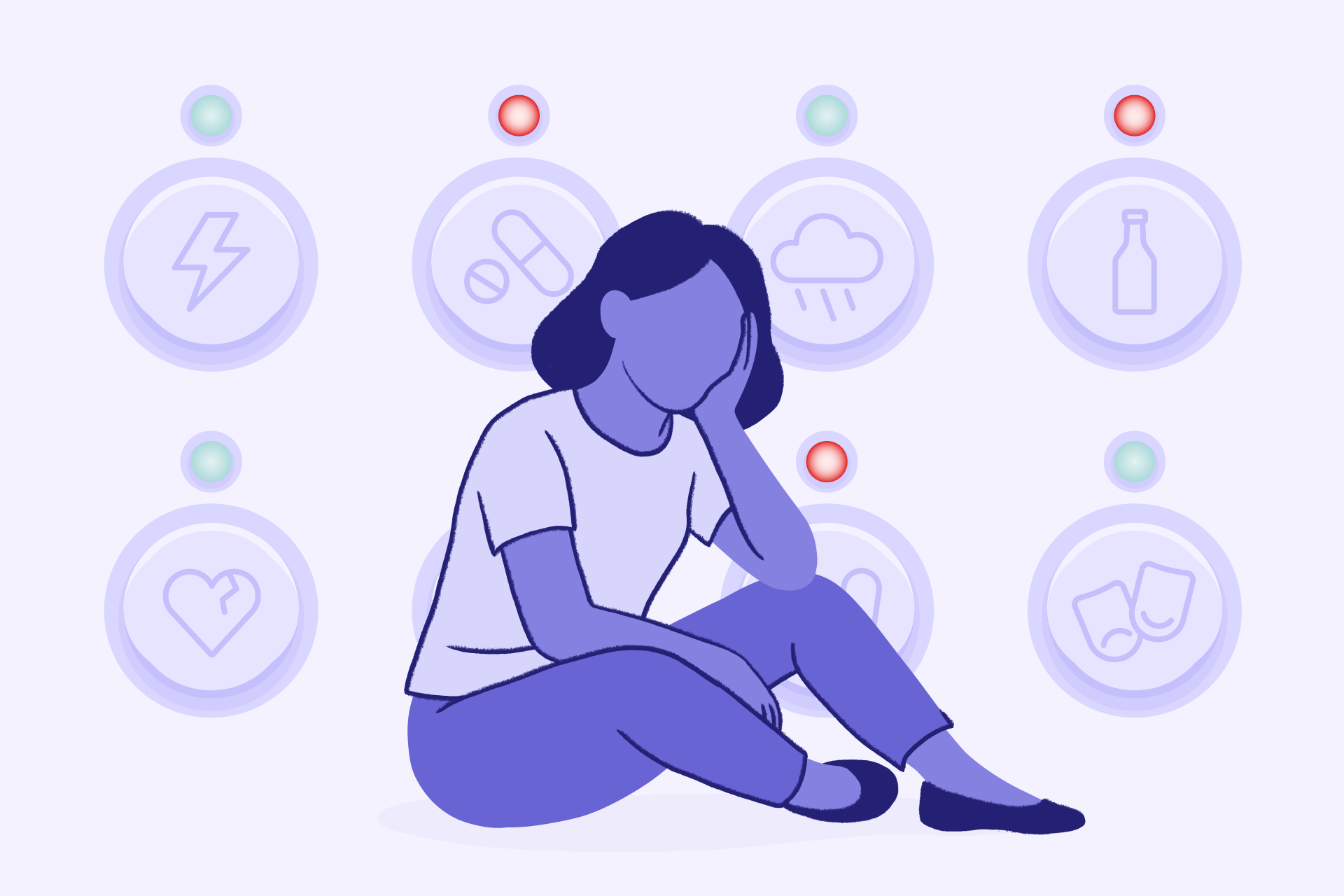
The risk for relapse falls into three general categories: high risk, moderate risk, and low risk.
- High-risk situations involve repeating circumstances under which you were most likely to use your substance of choice – circumstances similar to, or identical to, those where you may have often used before. It is very difficult to implement effective coping skills to avoid using them when you are in these circumstances.
- Moderate risk situations involve circumstances under which you could be triggered to use. You may feel confident that you can abstain in these environments, but you may not actually have sufficient practice or skills to follow through on your intentions.
- Low-risk situations involve circumstances under which you are not likely to use. Examples include revisiting times and places when, during your active addiction period, you did not consume your drug of choice.
Explore Drug Addiction Treatment Centers
Factors That Predispose You to Risky Behavior
You are most at risk for relapse when you stop following the strategies that support your recovery, and instead place yourself in situations that resemble the circumstances under which you used before. But relapse rarely happens out of nowhere.
Most people don’t simply “find” themselves back in old patterns. There are usually underlying reasons that lead to straying from the recovery path. Below are three common triggers that can increase relapse risk, along with ways to respond to them.
1. Difficulty Dealing With Emotions
Substance use is a common way people attempt to manage emotions—positive or negative—that feel too intense or overwhelming.
Many people use substances when they are angry, sad, frustrated, nervous, depressed, guilty, bored, or lonely. On the other hand, some people drink or use drugs in celebratory situations—such as parties, social gatherings, or nights out with friends.
If you feel unable to manage your emotions without a mood-altering substance, you would likely benefit from learning and practicing emotional coping skills. Tools such as mindfulness and other cognitive-behavioral strategies can help you build resilience and regulate your emotions in healthier ways. These skills can be developed through counseling or a self-help education program.
2. Testing Personal Control
At some point in recovery, you may begin to feel you’ve achieved your goal. You may believe you’ve arrested your addictive tendencies and no longer need to be so restrictive. You feel confident. You feel in control.
Unfortunately, letting go “just a bit” often escalates, and over time can lead someone right back to old habits. In many cases, the real test of control is not whether you can drink or use “normally.” The real test is whether you can resist the urge to test your control at all.
3. Feeling Deprived
Sometimes, recovery can feel like all the fun has been drained out of life. Your friends and coworkers celebrate with a drink, but you can’t. Old friends may no longer feel safe. You may feel as though the cost of being sober is simply too high. You might even find yourself wishing you could be like everyone else—free to have fun without the burden of constant vigilance and restraint.
But recovery does require exceptional self-discipline. The reward isn’t temporary relief—it’s a lifetime of freedom, clarity, meaningful relationships, and increasing self-fulfillment. In moments when you feel deprived, it can help to remind yourself of what sobriety is truly giving you: a future you don’t have to escape from.
Triggers for Risk and How to Manage Them
Certain situations are more likely to lead to risky behavior. The key is to recognize high-risk moments early and have a plan to remove yourself immediately. When you know what to watch for, you can protect your recovery before a situation escalates.
1. Being In a “Using” Environment
If for some reason, you inadvertently find yourself in a place or among people who are using, leave immediately. You may have to abruptly leave a party without saying goodbye if someone suddenly pulls out drugs or paraphernalia. Do not worry about being rude. Your sobriety, and perhaps your life, are on the line, so social graces are the least of your concerns.
2. Substituting One Addictive Substance for Another
If you are recovering from drug use and have the need for pain medication, perhaps following an accident or surgery, you and your doctor will need to be extra-diligent in monitoring your pain management needs. Relapse caused by the use of prescription opioid pain medications is one of the easiest ways that slips occur. Ask your doctor to suggest non-pharmacological forms of pain control (hypnosis, relaxation techniques, massage, acupuncture) when possible.
3. Giving In to Cravings
Physical cravings and the psychological desire for alcohol or drugs may take a long time to recede, and they can reoccur unexpectedly. Fortunately, they are often short-lived and give way easily to distraction and mental focus. Plan ahead for how you can best handle your type of cravings. Use a substitute (chew gum, drink an energy drink, exercise, etc.) and have mental and emotional resources available. You might create and use a personal mantra or affirmation, such as “It’s just a craving; I am stronger than this fleeting feeling.”
4. Not Having a Support System
Everyone needs a support system, especially when dealing with difficult tasks such as maintaining ongoing sobriety. Having sober friends to call on when urges to use come up is the best way to stay on track. Sober peers can talk you through a risky situation, reminding you of what is at risk and reminding you of your commitment to your goals. They can offer the cool head and sensible reasoning that you may temporarily lacking and can guide you back to your center of stability. Attending regular support group meetings can further your access to assistance. Don’t go it alone. Developing and using your support system is perhaps the most important thing you can do to manage your relapse risk.
Find Treatment Centers and Strengthen Your Recovery
Relapse risk often increases when emotions or self-doubt pull you away from your recovery plan. You don’t have to navigate those moments alone. Recovery.com can help you connect with drug and alcohol treatment centers that specialize in your specific needs, from holistic care to medication-assisted treatment. Don’t wait another day to get help; find a recovery program that works for you.
FAQs











Our Promise
How Is Recovery.com Different?
We believe everyone deserves access to accurate, unbiased information about mental health and recovery. That's why we have a comprehensive set of treatment providers and don't charge for inclusion. Any center that meets our criteria can list for free. We do not and have never accepted fees for referring someone to a particular center. Providers who advertise with us must be verified by our Research Team and we clearly mark their status as advertisers.
Our goal is to help you choose the best path for your recovery. That begins with information you can trust.