Find Treatment By
Rehabs by Location


Find Treatment By
Learn
About Us
Recovery.com combines independent research with expert guidance on addiction and mental health treatment. Our mission is to help everyone find the best path to recovery through the most comprehensive, helpful network of treatment providers worldwide.
Advisory Council
Our advisory council brings together leaders in behavioral health, technology, and business. Their diverse expertise ensures our resources and product are innovative, evidence-based, and effective. They guide our mission as accomplished individuals dedicated to improving the landscape of addiction recovery and mental wellness.
Behind Closed Doors: 5 Methods Teens Use to Mask the Smell of Marijuana


Raychelle Lohmann has been a counselor since 1998. She has done extensive research in the domain of anger management and careers. She is a published author, blogs for US News & World Report, and enjoys speaking and presenting at conferences and facilitating workshops.
Raychelle Lohmann has been a counselor since 1998. She has done extensive research in the domain of anger management and careers. She is a published author, blogs for US News & World Report, and enjoys speaking and presenting at conferences and facilitating workshops.
Many teens will try smoking marijuana at some point during their adolescent years.
With over half of 10th and 12th graders believing that smoking marijuana isn’t dangerous, more and more youth are lighting up, and some may even be doing so in the comforts of their own home.
Now, it may be hard to believe that the stench would go undetected, but where there’s a will, there’s a way. And teens have a knack for finding ways to cover their tracks, and it’s happening behind closed doors.
Explore Marijuana Treatment Centers
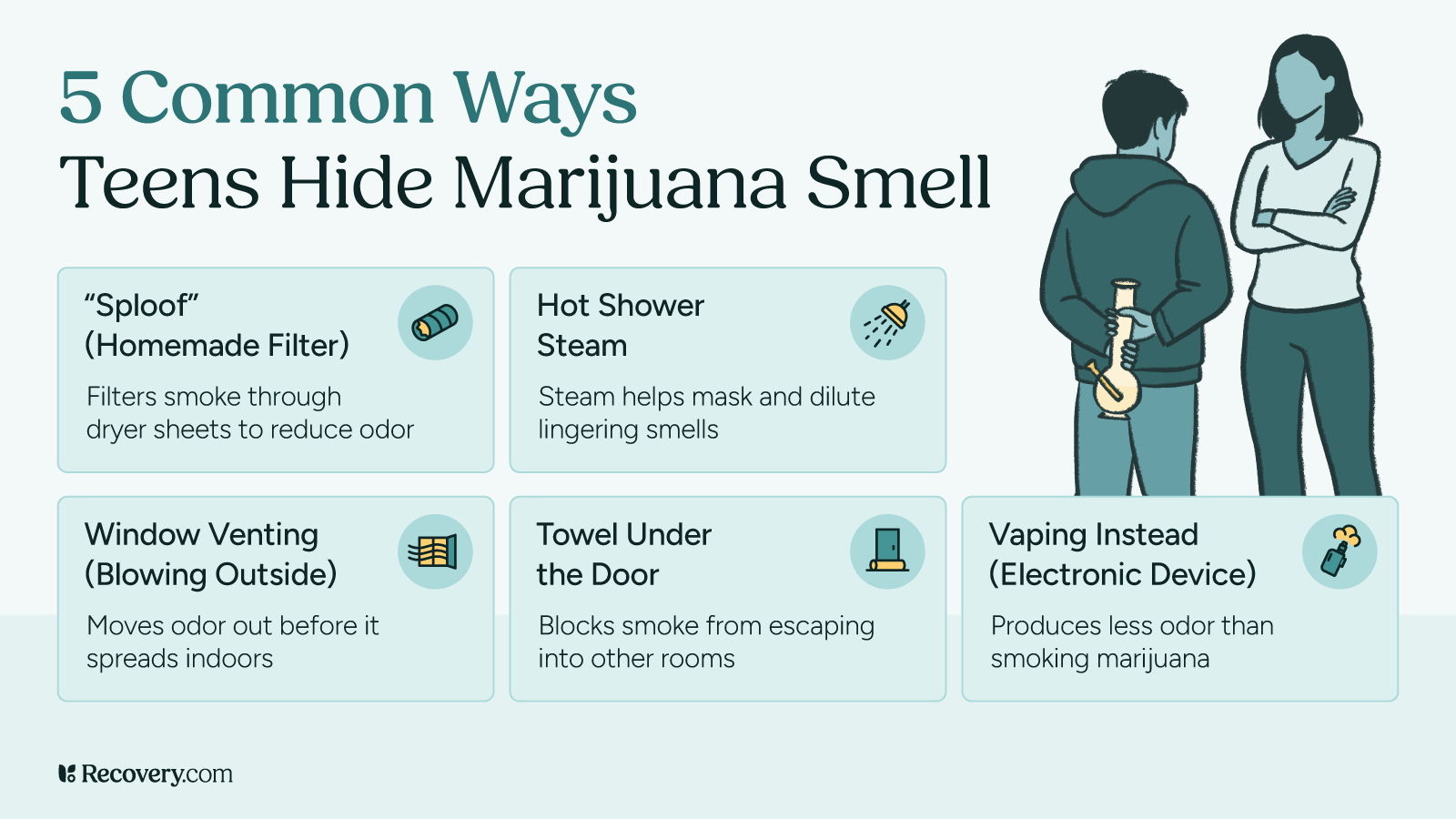
Method #1. Make a "Sploof"
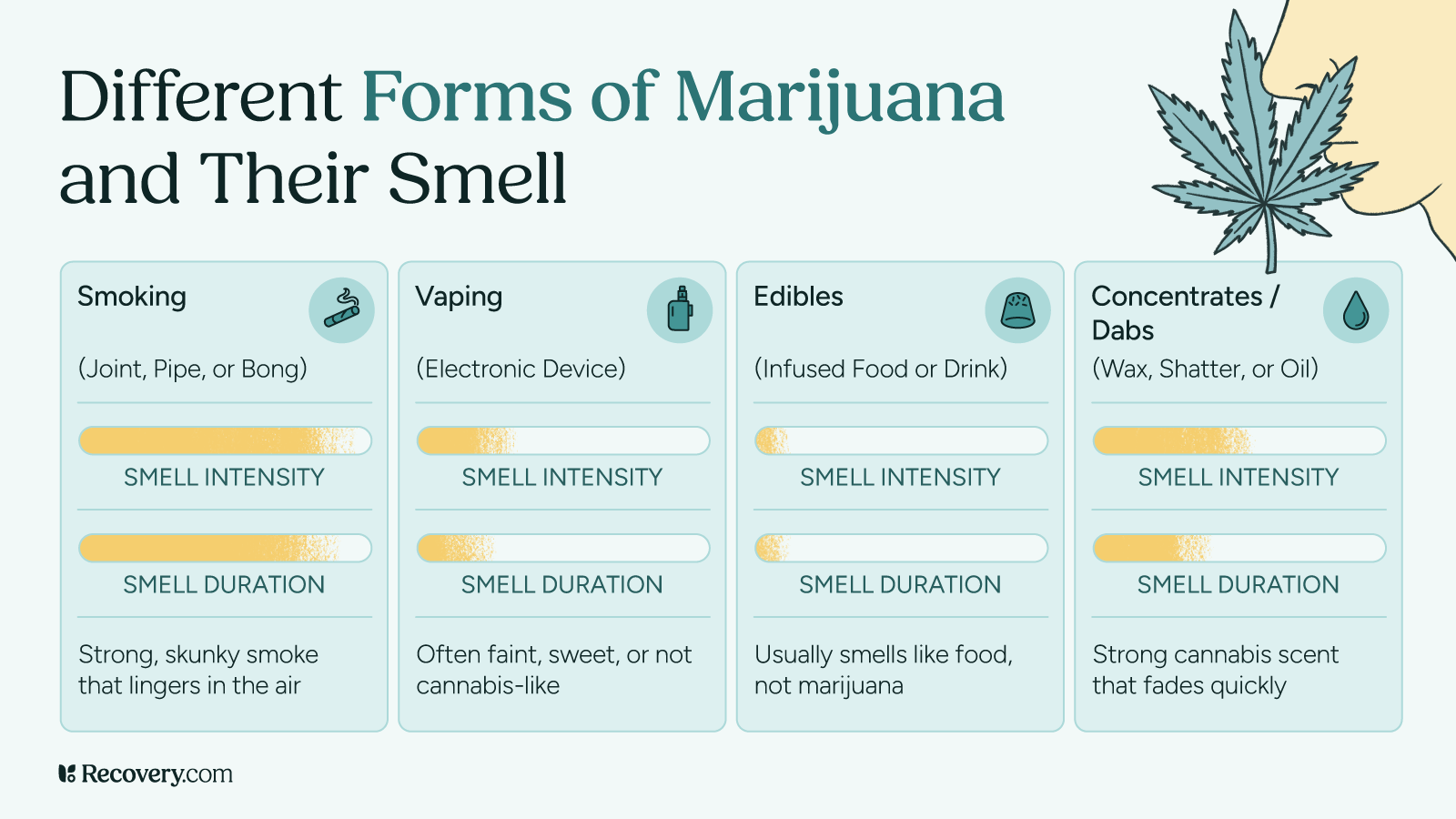
A sploof is a homemade filter that can be made with an empty paper towel roll or toilet paper tube. Teens stuff the tube with dryer sheets and then put another dryer sheet at the end, securing it with a rubber band.
When they take a hit, they push the filter to their mouth and exhale the smoke. As the smoke travels down the tube, the dryer sheets neutralize the odor.
Extra cautious teens take it up a notch and make an activated carbon sploof. To construct this filter, they poke small holes in the bottom of a small plastic bottle and cut a hole in the top that’s large enough to blow their smoke. Using a dryer sheet, they place some activated charcoal in the middle, wet it, and stuff it into their makeshift filter.
If you are wondering how easy it is to get activated charcoal, one trip to the pet store would answer your question. Activated charcoal is used in fish aquariums to help eliminate odor.
Method #2. Run a Hot Shower
This method is often used with pipes and bongs, as they create vapor, and the steam and vapor help offset the smell.
Before smoking, youth will make the bathroom a steam room by turning the water to the hottest setting. After smoking, youth usually hop in the shower, soap up, and wash off the lingering smell by using fragrant soap and shampoo.
Method #3. Blow the Smoke Out a Window
This method may seem like common sense, but parents should pay attention to whether windows are unlocked if they are usually locked, whether there are holes in the screen, or whether screens have been popped out of the window.
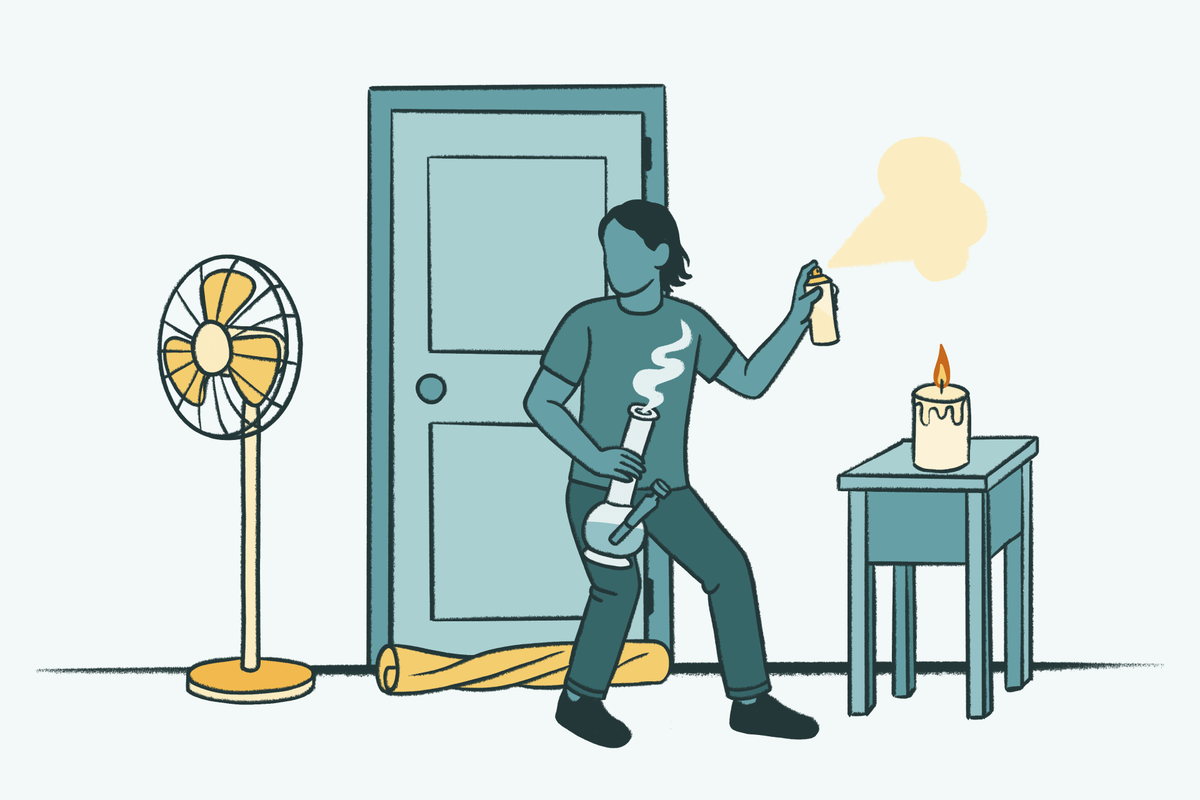
Many teens open their bedroom or bathroom window and blow smoke directly outside. To make this method more effective, teens may also place a fan on the outside sill. After taking a hit, they blow the smoke into the back of the fan, pushing the smoke outside.
To help disguise the smell even more, they may burn incense or spray an odor eliminator like Febreze.
Method #4. Put a Damp Towel at the Bottom of the Door
This method helps keep the smoke from escaping the room, but the smoke remains in the room. Teens dampen a towel and roll it up long ways to cover the crack at the bottom of the door. Along with covering the cracks, they may open a window and use a sploof to get the smoke out of the room.
Method #5. Vape It
Vaping is a popular, discreet way to inhale cannabis, plus it doesn’t produce as much odor as a joint. Vaporizers are becoming popular among adolescents.
According to a study from Yale University, nearly 28% of high school students reported using e-cigarettes, and about one in five had used their electronic smoking device for marijuana.
Rather than using a nicotine vape solution, they use hash oil. It’s been reported that inhaling hash oil from a vaporizer intensifies the high. Studies have shown that cannabis vape juice can be up to 30 times more concentrated than dry marijuana leaves.
A word of caution, very little research has been conducted on the effects of vaping hash oil, so the dangers associated with this method aren’t fully known.
Although these methods are listed separately, teens often combine them. For example, teens may wait until their parents are asleep to light up, then turn on the hot water and steam up the bathroom. They dampen a towel and place it under the door, while opening a window to allow fresh air in. After taking a toke, they blow into a sploof next to the window. Afterward, they hop into the shower to wash off any incriminating evidence and put on the final touches by spraying an odor eliminator before going on their merry way.
Other Signs Your Teen Might Be Using Marijuana
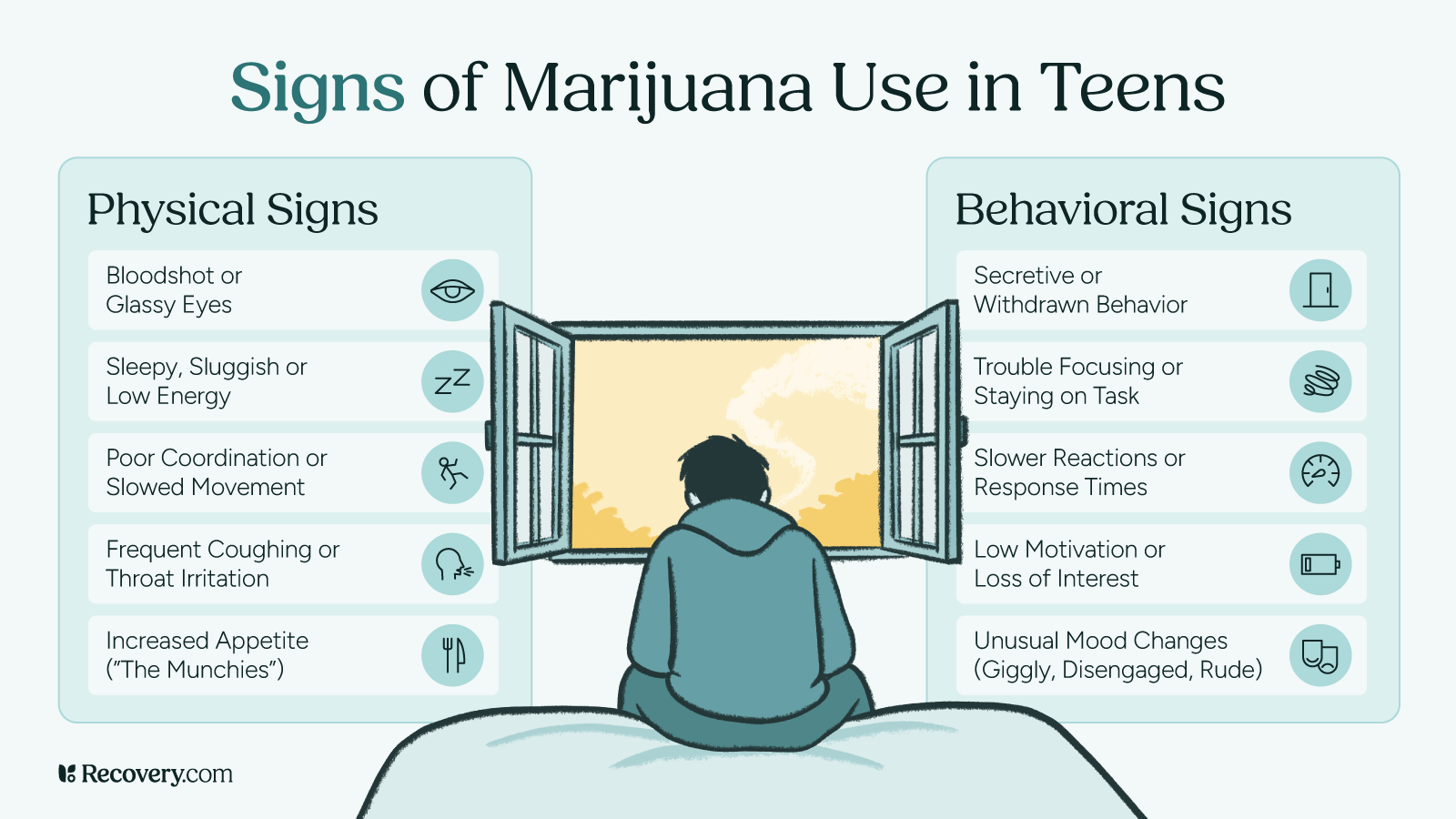
Aside from the stench, there are some other telltale signs that a teen may be using marijuana. Those include:
Physical changes:
- Bloodshot eyes
- Racing heart
- Sleepy, lethargic
- Poor coordination
- Hacking cough
- Intense food cravings aka “the munchies”
Behavioral changes:
- Disorientation or confusion
- Inability to focus
- Secretive
- Chatty or giggly
- Slow response times
- Poor motivation
Many teens will outwit their parents, so they’ll never know their kid smokes pot. But one thing that parents have going for them is their intuition. It’s that gut-gnawing feeling that something isn’t right. For parents, that instinctual feeling is their best defense in protecting their kid.
How Changing Marijuana Norms Influence Teens
As for marijuana, societal perceptions about marijuana are changing and teens are picking up on those changes. Pew Research Center conducted a survey that examined millennials beliefs about marijuana and their findings showed that more than two-thirds endorse the legalization of marijuana.
As more states legalize marijuana, the “it’s no big deal” mindset will continue to increase. With this in mind, parents have to take every precautionary measure to protect their child and that includes being on the lookout for suspicious behaviors.
Get Support for Your Teen
If you’re worried that your teen may be using marijuana, you’re not alone—and you don’t have to figure this out on your own. Trusting your instincts is an important first step. The next step is finding support that helps you understand what’s going on and what to do next.
Explore trusted treatment options, learn what effective care looks like, and connect with programs that support teens and families. Getting guidance now can make a real difference.
FAQs


















Our Promise
How Is Recovery.com Different?
We believe everyone deserves access to accurate, unbiased information about mental health and recovery. That's why we have a comprehensive set of treatment providers and don't charge for inclusion. Any center that meets our criteria can list for free. We do not and have never accepted fees for referring someone to a particular center. Providers who advertise with us must be verified by our Research Team and we clearly mark their status as advertisers.
Our goal is to help you choose the best path for your recovery. That begins with information you can trust.