Find Treatment By
Rehabs by Location


Learn
About Us
Recovery.com combines independent research with expert guidance on addiction and mental health treatment. Our mission is to help everyone find the best path to recovery through the most comprehensive, helpful network of treatment providers worldwide.
Advisory Council
Our advisory council brings together leaders in behavioral health, technology, and business. Their diverse expertise ensures our resources and product are innovative, evidence-based, and effective. They guide our mission as accomplished individuals dedicated to improving the landscape of addiction recovery and mental wellness.
The Road to Care: 5 Ways to Improve and Simplify Substance Use Disorder Treatment Referrals


More than a decade ago, Caroline Beidler was leading Wisconsin Voices for Recovery, a statewide advocacy organization. Almost every day, a call or email came in from a family member looking for treatment for someone they loved.
She remembers the weight of those messages. One person needed inpatient treatment for opioid use disorder, had no insurance, and had no reliable way to get to a program. Caroline searched Google, called number after number, and kept hearing no. The program didn't take that insurance. There was a waitlist. There was no trauma-informed care available.
Years later, working in recovery housing, it happened again.
If you make treatment referrals, you've probably lived some version of this. In a recent continuing education session, Caroline, now Director of Professional Engagement and Research at Recovery.com, walked through why the road to substance use disorder treatment is so hard to travel and what clinicians, peer support specialists, and recovery advocates can do to make it easier.
Here are five questions her session answered, and what they mean for anyone helping someone find care.
1. How Does Stigma Get in the Way of Treatment Referrals?
According to SAMHSA data Caroline shared, 84% of people who needed substance use treatment in 2025 did not receive it.1 That's tens of millions of Americans. Among adults with a substance use disorder who felt they needed treatment but didn't get it, 41% said they were worried about what people would think or say.1
The pattern shows up in young people too. Data from the National Survey on Drug Use and Health found that 62.8% of teens with depression who felt they needed care but didn't get it were worried about what people would think or say.1
So when a referral doesn't stick, or someone gets a list of programs and never calls, stigma can often be part of the reason. People worry about losing their jobs, losing custody of their kids, or being seen as weak for not handling it on their own. Caroline noted that research shows fear of losing children is an especially strong barrier for women.2,3
Does Stigma Come From Providers, Too?
Yes. A systematic review of 28 studies found that health professionals who work with people with substance use disorders may view them more negatively than patients with conditions like diabetes or other mental health conditions.4 Caroline has also seen stigma directed at peer support specialists working in the field.
How Can Language Reduce Stigma in the Referral Process?
Language is one of the easiest places to start. Caroline pointed to a randomized study, now more than 15 years old, which found that when a person was described as a "substance abuser," the person was seen as more to blame for their condition and more deserving of punishment.5 When the same person was described as "having a substance use disorder," people were less likely to take that punitive view.
To take stigma out of the referral conversation, Caroline recommends a few practices.
- Use person-first language, such as "a person with a substance use disorder."
- Explain privacy protections up front so the person knows what will and won't be shared.
- Make a warm handoff instead of handing over a list.
- Offer peer support.
2. What Can You Do When There's a Waitlist or No Provider Nearby?
According to HRSA's 2025 State of the Behavioral Health Workforce report, about 40% of the U.S. population, roughly 137 million people, lives in a federally designated mental health professional shortage area.6 Rural counties feel this the hardest.
Even when a provider exists, getting in can take a long time. The same report puts the average wait at 48 days.6 Caroline pointed out that the window when someone is ready for treatment can be small, and a wait that long can be dangerous.
She also noted that substance use and mental health care are often treated as separate systems, even though many people with substance use disorders have co-occurring mental health conditions.1 Finding a program that treats both can add another layer of difficulty.
What Happens When No One Answers the Phone?
Recovery.com's data added another barrier to the list. When people called a treatment provider through Recovery.com, they were asked whether they got help. Of those who responded, 47% said they didn't, and the top reason by a wide margin was that no one answered.7 Here is that report.
Grace Ogren, who led the research, connected this to a barrier many webinar attendees named in the chat, which was people not following through on referrals.
How Do You Help Someone While They Wait?
Caroline offered several practical options.
- Widen the search and look for telehealth programs.
- Call ahead to confirm availability before sharing a program.
- Connect the person with a peer support specialist or recovery coach who can stay in touch during the wait. Certified peer support can often be billed through Medicaid.
- Point them to community supports like recovery community centers, 12-step groups, or recovery ministries.
- Step down the level of care. If inpatient has a waitlist, try intensive outpatient (IOP) or outpatient, then move back up when a spot opens.
- Confirm insurance coverage early and look for programs that treat both substance use and mental health.
She encouraged attendees to look up the peer support resources in their state, whether through the state health department or a statewide recovery community organization.
3. What Is the Difference Between a Cold Referral and a Warm Handoff?
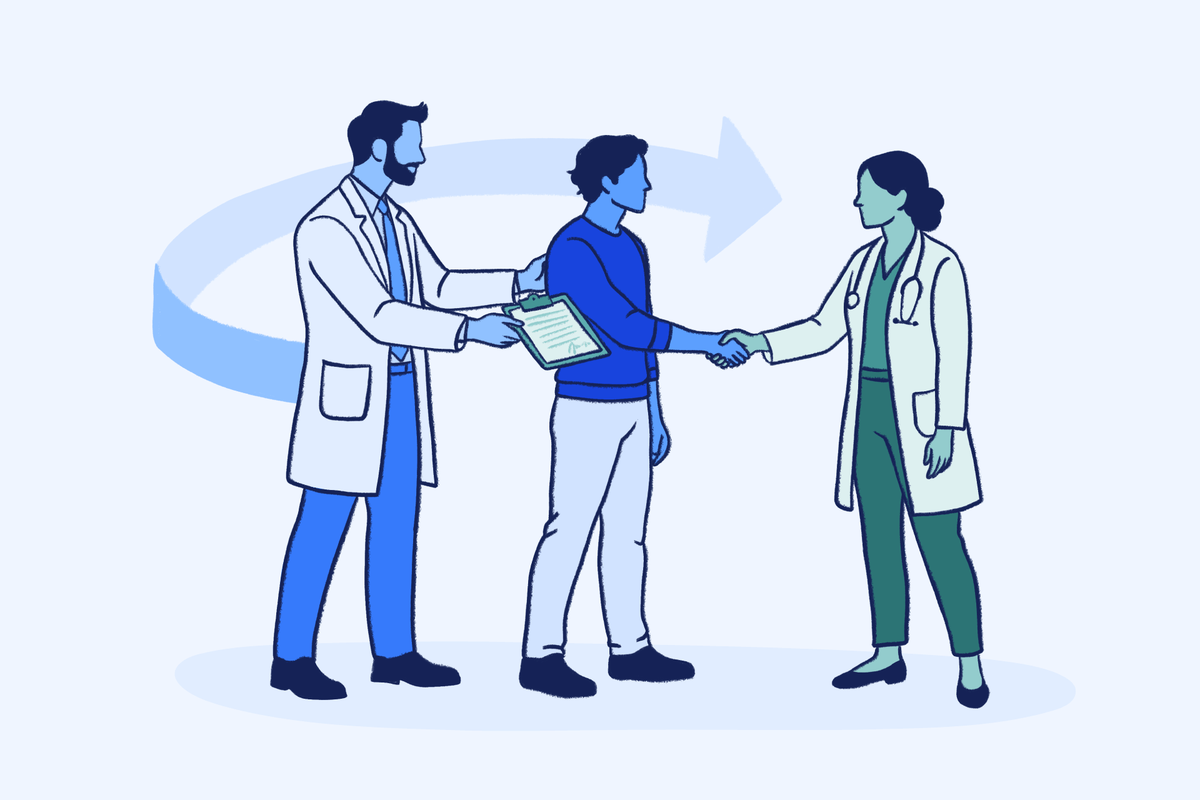
A cold referral gives someone a program name and a phone number and leaves the rest to them. A warm handoff connects the person to an actual human at the program and stays involved until that connection is made.
Caroline cited a 2023 study that found people who received a warm handoff had 42% higher odds of saying they'd accept a referral and 87% higher odds of saying they'd stay engaged in treatment, compared with people who got a standard referral.8
That lines up with what clinicians already know about therapy. The relationship and trust between a person and their provider is one of the most consistent predictors of outcomes, and that link holds across many different types of therapy.9 Caroline argued the referral process works the same way.
What Does a Warm Handoff Look Like When You're Short on Time?
Most people making referrals don't have an extra hour and a half for every person who needs help. Caroline encouraged attendees to think about warm handoffs more broadly.
- In person, by walking or driving someone to the program and introducing them face to face.
- Over a HIPAA-compliant video call that brings the provider into the conversation.
- Through a peer support specialist who facilitates the connection through intake and beyond.
- Through digital tools that share vetted options in a way that still feels personal, like Recovery.com Pro.
She also stressed keeping that connection going after treatment, especially when someone leaves inpatient care or steps down to a lower level of care.
A few other tools can strengthen the moment of referral. These include SBIRT (Screening, Brief Intervention, and Referral to Treatment) to help identify needs, motivational interviewing to draw out a person's own reasons for change, and talking with a provider about bridge medications, such as medications for opioid use disorder, during the gap before treatment starts.
4. Who Faces the Biggest Barriers to Treatment Access?
Barriers to substance use treatment don't fall evenly. Caroline highlighted groups who are often disproportionately affected.
- People of color, who were found to be less likely than white patients to complete outpatient treatment.10
- People who need care in another language, given shortages of interpreters.
- Older adults, who have fewer specialized providers and less research behind their care.
- People in rural areas, who face distance and transportation problems.
- Women, who face higher stigma and fears about losing their children.
- LGBTQ+ individuals, who may not find affirming programs nearby.
Caroline was open about her own experience here. "I've been to treatment. I've referred to treatment," she said, and she has had negative experiences on both sides. A bad experience makes the next referral harder to accept.
How Can You Make Care Feel Safer for Underserved Groups?
Start by understanding the person in front of you and the barriers they may be facing. Then tailor the search.
- Ask about past treatment experiences.
- Look for programs that describe themselves as culturally responsive.
- Confirm services are available in the person's preferred language.
- Check telehealth and transportation options.
- Ask whether a program is LGBTQ+ affirming, women-specific, or offers childcare.
5. How Can You Build a Referral System Before You Need It?
Caroline remembers keeping a notebook page pinned to her office wall with admissions contacts she knew by name. That old-school list did something important. When someone came to her for help, she didn't have to start from scratch. She could spend her time listening and connecting instead of searching.
Her advice is to build and maintain a living referral list. That means current contacts, programs you've already vetted, and direct numbers that reach a real person instead of a call center. Anyone who has Googled a business and gotten a number that goes nowhere knows why this matters.
How Can Recovery.com Pro Help With Referrals?
Recovery.com Pro is a free tool built for people who make treatment referrals. It uses the same search as Recovery.com, which lets you filter more than 22,000 treatment providers by location, level of care, insurance, condition, and approach. Pro accounts add the ability to save lists of programs and share them with clients, so you can sit down with someone and walk through options together.
Caroline uses the tool herself at least once a week, when people message her on social media asking for help.
Key Takeaways for Improving Substance Use Treatment Referrals
Barriers to treatment can complicate referrals, from stigma and workforce shortages to waitlists and unanswered phones. But the people making referrals have more influence than they might think.
Using person-first language, staying connected through a warm handoff, offering peer support during a wait, and keeping an updated list of trusted programs can all make the difference between a referral that gets lost and one that leads to care.
As Caroline put it, those barriers are easier to address together. Learning about them is the first step, and building better habits around referrals is the next.
FAQs
A warm handoff is a referral where the person making it directly connects the individual to someone at the treatment program, rather than just giving them a name and number. It can happen in person, by video, through a peer support specialist, or with digital tools that share vetted options.
Connect them with peer support or a recovery coach, point them to community resources like recovery community centers or mutual support groups, and consider a lower level of care that’s available now. Talking with a provider about bridge medications may also help, especially for opioid use disorder.
Stigma makes people less likely to accept or follow through on a referral. Among adults with a substance use disorder who felt they needed treatment but didn't get it, 41% were worried about what people would think or say.1 Stigmatizing language like "substance abuser" can also make people seem more to blame for their condition.
People of color, women, LGBTQ+ individuals, older adults, people who need services in another language, and people in rural areas often face more barriers. Many face several at once.
Yes. Recovery.com Pro is free for anyone who makes treatment referrals. You can search without an account, but signing up lets you save and share lists of treatment programs.
Our Promise
How Is Recovery.com Different?
We believe everyone deserves access to accurate, unbiased information about mental health and recovery. That's why we have a comprehensive set of treatment providers and don't charge for inclusion. Any center that meets our criteria can list for free. We do not and have never accepted fees for referring someone to a particular center. Providers who advertise with us must be verified by our Research Team and we clearly mark their status as advertisers.
Our goal is to help you choose the best path for your recovery. That begins with information you can trust.