Find Treatment By
Rehabs by Location


Learn
About Us
Recovery.com combines independent research with expert guidance on addiction and mental health treatment. Our mission is to help everyone find the best path to recovery through the most comprehensive, helpful network of treatment providers worldwide.
Advisory Council
Our advisory council brings together leaders in behavioral health, technology, and business. Their diverse expertise ensures our resources and product are innovative, evidence-based, and effective. They guide our mission as accomplished individuals dedicated to improving the landscape of addiction recovery and mental wellness.
What to Say to Someone With Depression: 14+ Simple Messages That Offer Hope


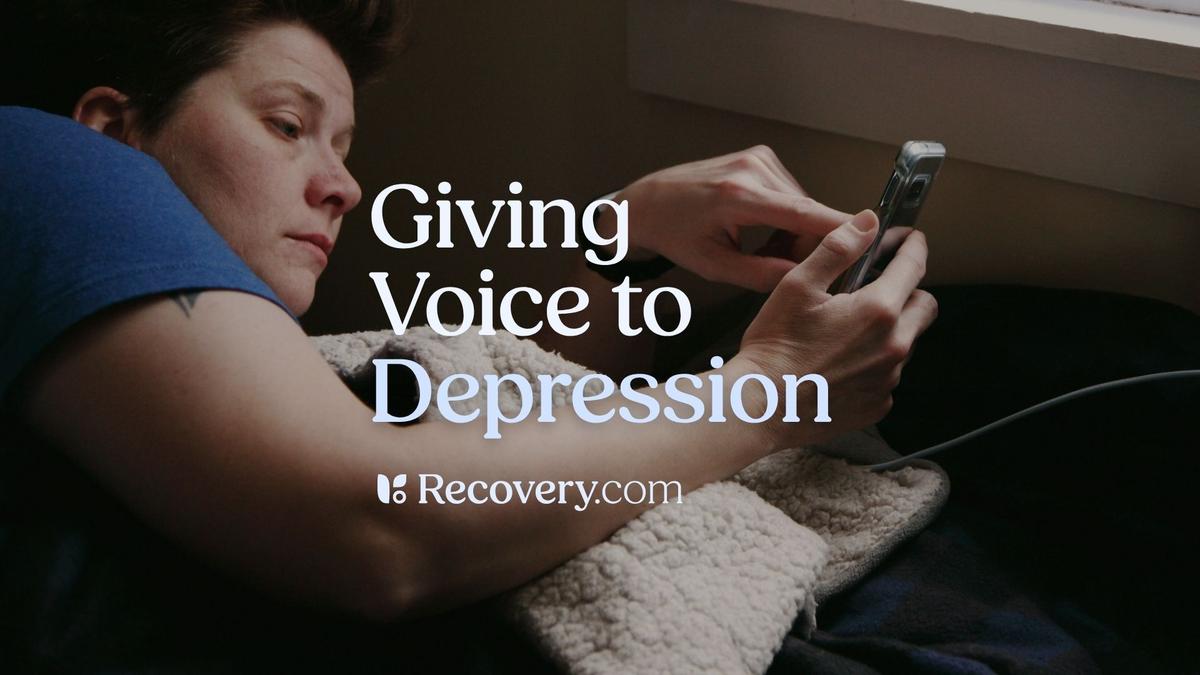
Depression can make a person feel profoundly alone—even when other people are nearby. It can convince someone that nobody understands, nobody cares, and nothing will change. In those moments, knowing what to say to someone with depression can feel almost impossible.
This article summarizes a conversation from the Giving Voice to Depression podcast hosted by Terry McGuire, featuring Terry's original co-host, licensed clinical psychologist Dr. Anita Sanz, and Rosaleen, a member of the podcast's Facebook community. Their conversation grew out of a night when Rosaleen was experiencing an overwhelming depressive episode and reached out to Terry. What happened next demonstrated how simple messages of compassion from people she had never met could make a profound difference.
1. Depression Doesn't Always Look Sad
When people picture depression, they often imagine someone who is withdrawn, quiet, or visibly sad. But Terry points out that depression can also appear as anger, negativity, aggression, or behavior that seems out of character.
Rosaleen's story began with an angry reaction to an episode of the podcast. She later recognized that her response was connected to how vulnerable and overwhelmed she was feeling at the time. She described feeling like the discussion had reinforced her sense that she had failed as a parent.
Recognizing these changes in behavior can create an opportunity to ask a simple question: "Are you okay?" Rather than responding only to the anger, a person can try to recognize the pain underneath it.
2. Don't Assume "No" Means No Help
When Terry asked Rosaleen if she could help, Rosaleen initially said no. At the time, she felt that nobody could help her.
She described the experience as being simultaneously completely numb and completely overwhelmed by pain:
As Rosaleen described that night:
I felt totally and completely, I just felt empty. I felt every time I try and get back, I get hit again. And I remember I lay down in my room and it was totally silent. And I usually love silence, but I hated the silence. I lay there and I remember thinking, please God, if it doesn't hurt, let me die. Let me not wake up.
That is an important distinction when supporting someone with depression. A person may reject help not because they don't need it, but because depression has temporarily made it impossible for them to imagine that help could work.
Gentle persistence can sometimes matter.
3. You Don't Need Perfect Words
One of the clearest lessons from Rosaleen's experience is that supporting someone with depression doesn't require an eloquent speech or a perfectly constructed piece of advice.
Terry and Anita emphasize that validation is often more helpful than fixing. Someone who is hurting may not need another person to solve the problem. They may simply need to know that someone sees them, believes them, and is willing to stay present.
For someone experiencing intense depression, simple messages can be easier to receive:
- "I'm thinking about you."
- "I'm here."
- "I understand."
- "You're not alone."
- "I'm sending you a hug."
- "I've been there."
- "You don't have to go through this by yourself."
Sometimes, less really is more.
4. Tell Them They Aren't Alone
After Terry received permission to contact the community, he posted a request asking members to send Rosaleen support and love.
Rosaleen later woke up to dozens of messages from people who had never met her but understood what it felt like to be alone. That recognition was enormously meaningful.
Rosaleen described what those messages gave her:
I can feel myself filling up just now, who understood what it was like to feel so alone. And so, in a way, so misunderstood.
The messages did not erase what had happened. They did something different: they changed the emotional environment around the pain.
5. Keep Messages Short and Simple
Rosaleen repeatedly returned to the simplicity of the messages she received.
She wasn't looking for long explanations. In fact, she said that lengthy messages might have been difficult to process because she was crying and emotionally overwhelmed.
As Rosaleen explained what resonated most:
These were all mostly short messages just saying things like, "Thinking of you. I understand, I am sending healing hugs." I think probably that was the most wonderful thing.
That offers a practical lesson for anyone wondering what to say to someone with depression: don't underestimate a few sincere words.
A person who is struggling may not have the energy to read, analyze, or debate a long message. A short expression of care can get through when a paragraph cannot.
6. Don't Argue With Their Pain
There's an important difference between offering hope and dismissing someone's experience.
Telling a depressed person, "You're fine," "It could be worse," or "Just think positively" can leave them feeling even more misunderstood. Rosaleen responded differently to messages that acknowledged her experience while offering companionship and hope.
The most meaningful messages communicated something closer to: I know this hurts. I've been there. You aren't alone. It can change.
The goal isn't to convince someone that their pain isn't real. It is to help them see that their pain isn't the whole story.
7. Let Lived Experience Add Credibility
Rosaleen said the messages carried particular weight because they came from people who understood depression themselves.
A stranger saying "it will get better" might be difficult to believe. But someone who has experienced the same darkness can communicate something different: I have been in that place, and I know there can be a way through it.
Rosaleen explained why those simple messages were so meaningful:
Most of the messages were "I understand and I'm sending hugs" or "I've been there and I know what it's like and I'm thinking about you," that probably was the best message. It was that you're not alone because that Monday night I felt totally alone.
Terry describes these people as "experts by experience." Their credibility came not from having perfect answers, but from having lived through something similar.
8. Never Underestimate A Virtual Hug
One of the most striking parts of the story is how ordinary some of the messages were.
There were hearts. There were virtual hugs. There were only a few words.
Yet Rosaleen said the hugs had one of the biggest impacts on her.
Rosaleen emphasized the impact of those simple gestures:
People just saying, "I'm sending hugs." That was probably one of the most beautiful comments, the number of people that sent hugs to someone they didn't know, but maybe to someone they understood.
A small gesture may seem insignificant to the person sending it. But when someone is desperate to feel connected, a small gesture can become evidence that somebody cares.
9. Help Them Remember That They Matter
Depression can tell a person a devastating story: You don't matter. Nobody cares. Your existence doesn't make a difference.
The community members surrounding Rosaleen gave her a different story.
As she read their messages, something began to shift. If all these people were willing to stop what they were doing and reach out to her, perhaps the story depression was telling her wasn't true.
She began thinking that she must matter because other people had taken the time to show that she mattered.
This is one of the most powerful things a supporter can communicate:
You matter. Your presence matters. I'm glad you're here.
10. Practice Gentle, Loving Persistence
Terry's persistence also played an important role.
Rosaleen initially didn't believe reaching out to the community would help. But Terry suggested trying anyway because similar support had helped other people.
Dr. Sanz describes this as "loving, gentle, kind persistence." Sometimes someone who is depressed may not be able to recognize what could help them in the moment. A little persistence—without pressure, judgment, or force—can create an opening.
That might sound like:
- "I know you don't think this will help, but can I stay with you anyway?"
- "You don't have to believe things will get better right now. I can hold that hope for you."
- "Would you let me try one small thing with you?"
11. Hope Doesn't Have To Be Believable Yet
Perhaps one of the most compassionate ideas in the conversation is that a person in the depths of depression doesn't necessarily have to believe that things will get better.
Dr. Sanz explains that sometimes a person can simply wait for small pieces of light to begin appearing. Someone else can carry the hope temporarily.
The messages Rosaleen received didn't demand that she suddenly become optimistic. They simply surrounded her with enough kindness and connection that depression's version of reality began to lose some of its authority.
12. Give Them A Different Story
Terry points out that Rosaleen later described her depression as telling her that she didn't matter and nobody cared whether she existed. The people who reached out interrupted that story.
They told her something different.
This idea can also be used outside a crisis. Terry recommends writing down things that a person knows to be true about themselves when they are well—that they are a good person, that they have worth, that they matter—and keeping those reminders available for harder days.
When depression changes the internal narrative, those reminders can provide another voice.
13. Supporting Others Can Help Too
Rosaleen's experience didn't only affect her.
Some of the people responding to her said that writing messages of support actually helped them feel calmer and less alone. Rosaleen noticed the same phenomenon: reaching out to someone who was hurting could lessen her own sense of isolation.
Rosaleen reflected on that reciprocal healing:
Sometimes when you read some of the posts and you realize, you know what, this person's in a worse position than me just now, a worse place, by trying to reach out to them, it heals you.
That is part of what makes community so powerful. Connection can move in both directions.
14. Remember What Kindness Can Do
Rosaleen eventually came to see that terrible night differently. The pain didn't disappear from her history, but it no longer carried the same power.
As Rosaleen reflected on how she now remembers that night:
I didn't want to live. I really didn't want to live. And now, I can relive that night, but it doesn't hurt now because of the people that pulled me out. They reached out with their hearts and their arms and their words. And they said, "Do you know what? You're not alone. Yes, it's silent. It's dark. It's scary. But we are all here."
She described those people as reaching out with their hearts, arms, and words, reminding her that she wasn't alone.
That may be the central lesson of this conversation: support doesn't have to be sophisticated to be profound.
A few words. A heart. A virtual hug. A message saying, "I've been there." A person who keeps showing up.
Those gestures may take seconds to send, but for someone in the middle of a dark night, they can become a reason to keep going.
And perhaps that's the reminder Terry and Anita most want listeners to carry forward: depression can tell a person that the world is dark, empty, and uncaring. Sometimes the most powerful response isn't an argument.
It's simply another human being saying:
"You're not alone. I'm here."
Our Promise
How Is Recovery.com Different?
We believe everyone deserves access to accurate, unbiased information about mental health and recovery. That's why we have a comprehensive set of treatment providers and don't charge for inclusion. Any center that meets our criteria can list for free. We do not and have never accepted fees for referring someone to a particular center. Providers who advertise with us must be verified by our Research Team and we clearly mark their status as advertisers.
Our goal is to help you choose the best path for your recovery. That begins with information you can trust.