Find Treatment By
Rehabs by Location


Learn
About Us
Recovery.com combines independent research with expert guidance on addiction and mental health treatment. Our mission is to help everyone find the best path to recovery through the most comprehensive, helpful network of treatment providers worldwide.
Advisory Council
Our advisory council brings together leaders in behavioral health, technology, and business. Their diverse expertise ensures our resources and product are innovative, evidence-based, and effective. They guide our mission as accomplished individuals dedicated to improving the landscape of addiction recovery and mental wellness.
What Is Perfectionism? 10 Expert Answers on the Internet's Most Searched Perfectionism Questions


From the outside, perfectionism can look like success. It's the employee who never misses a deadline, the parent who seems to have everything together, or the person who pushes themselves to achieve more, no matter how much they've already accomplished.
But behind those high standards, there may be a very different story, one filled with anxiety, self-criticism, exhaustion, and a persistent feeling of never being good enough. These are some of the signs of unhealthy perfectionism that can be easy to overlook.
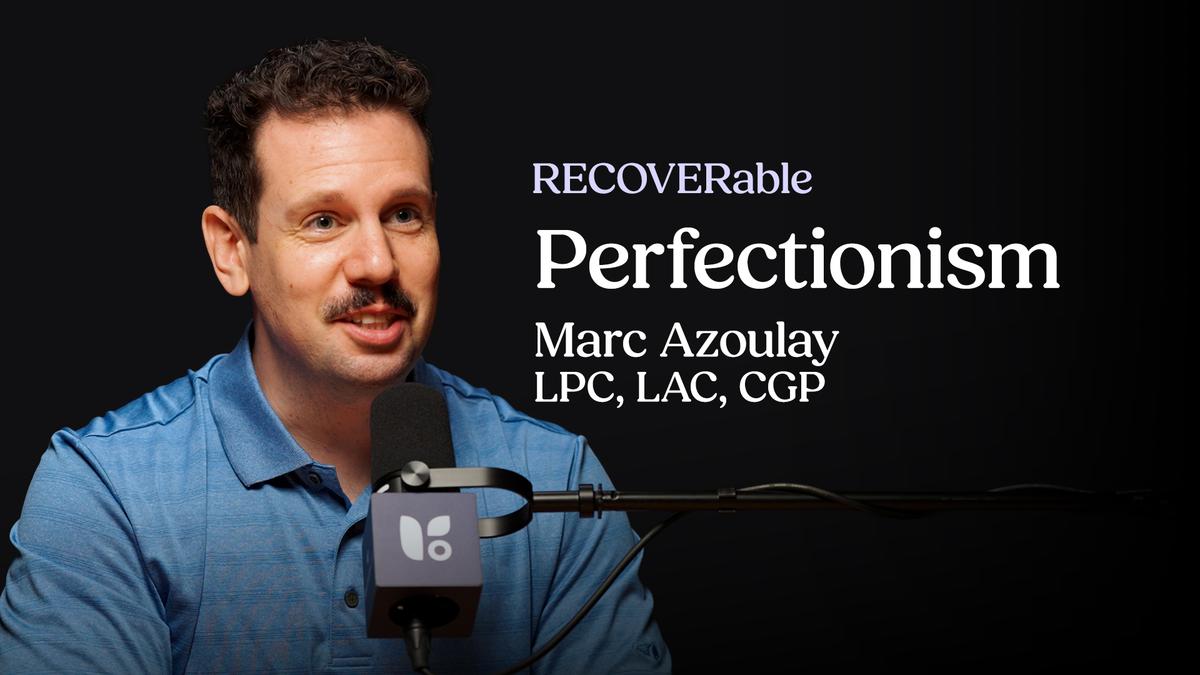
In this episode of Recoverable, host Terry McGuire sits down with psychotherapist Marc Azoulay to explore the psychology of perfectionism, why it develops, and how it can quietly undermine mental health, relationships, and personal fulfillment.
1. What Is Perfectionism?
Perfectionism is often less about doing your best and more about proving you're good enough.
Azoulay describes perfectionism as a behavioral coping strategy driven by fear and anxiety. Rather than simply wanting to succeed, someone struggling with perfectionism may feel compelled to achieve because their sense of self-worth depends on it.
For some, that means constantly pursuing promotions, financial success, physical fitness, or recognition from others. Yet even when they reach their goals, the satisfaction rarely lasts. There's always another achievement to chase, another expectation to meet, or another reason to feel inadequate.
Azoulay explains that perfectionism can develop when people believe they must continually prove their value to deserve acceptance, love, or belonging. Over time, their accomplishments become less about personal fulfillment and more about seeking reassurance from others.
2. Perfectionism vs. High Standards: What's the Difference?
High standards are driven by passion, while perfectionism is often driven by fear.
Azoulay makes an important distinction between pursuing excellence and demanding perfection. Having high standards means investing time and effort into things that genuinely matter to you, while accepting that other areas of life can be good enough.
Unhealthy perfectionism, however, can create unrealistic expectations across nearly every area of life. Someone may feel pressured to excel professionally, maintain an ideal appearance, be an exceptional parent, and never make mistakes.
The difference, Azoulay says, often comes down to motivation. Someone pursuing mastery enjoys learning, improving, and practicing their craft. A perfectionist may care more about the praise or approval that comes from the outcome than the experience itself.
3. What Causes Perfectionism?
Perfectionism can develop when achievement becomes tied to acceptance and self-worth.
According to Azoulay, family experiences, cultural expectations, and social pressures can all contribute to perfectionistic thinking and the development of perfectionism.
He points to childhood environments where success receives praise and positive attention, while mistakes or struggles create tension. Even without intending to, parents may communicate that life feels happier and more comfortable when their children perform well.
Over time, children may internalize the belief that achievement makes them more deserving of love or acceptance. Azoulay emphasizes that this doesn't necessarily mean parents are deliberately causing harm, but that emotional responses to success and failure can shape how children understand their worth and self-esteem.
4. Can Social Media Make Perfectionism Worse?
Constant comparison can make ordinary achievements feel inadequate.
Azoulay describes how social media repeatedly exposes people to extraordinary examples of success, often without showing the work, failures, or sacrifices behind them. This constant social comparison can reinforce perfectionistic expectations.
He shares a personal example involving his interest in CrossFit. After engaging with fitness content, his social media feed began showing increasingly impressive athletes. When he became a father, the algorithm started recommending exceptionally fit dads performing elaborate workouts while parenting.
The experience illustrated how easily someone can begin comparing themselves with people whose achievements represent only one carefully presented part of their lives.
Azoulay suggests that these comparisons can reinforce the unrealistic belief that people should be exceptional in every area, rather than recognizing that everyone has different priorities, strengths, and limitations.
5. Is Perfectionism a Mental Illness?
Perfectionism isn't a mental health diagnosis, but it can contribute to significant emotional distress.
Perfectionism exists on a spectrum. Many people occasionally struggle with unrealistic expectations, but for others, unhealthy perfectionism and persistent self-criticism become disruptive.
Azoulay explains that severe perfectionism often overlaps with anxiety, particularly when someone constantly worries about failure, judgment, or losing control. However, perfectionism itself is not classified as a standalone mental disorder.
He also discusses obsessive-compulsive disorder (OCD), noting that although perfectionism and OCD can share certain features, they are not interchangeable. OCD involves obsessions, compulsions, or both, and requires its own clinical assessment and treatment.
The distinction between perfectionism and OCD matters because someone can struggle with perfectionism without having OCD or an anxiety disorder. What deserves attention is whether these patterns are causing distress or interfering with everyday life.
6. How Are Perfectionism, Anxiety, and Depression Connected?
The pressure to keep achieving can leave people feeling exhausted, disconnected, and empty.
Azoulay describes how perfectionism can become a relentless cycle of striving for external validation. Someone may devote enormous energy to meeting expectations while gradually losing touch with their own interests, relationships, and emotional needs.
For some perfectionists, their lives can feel similar. Their careers, finances, and accomplishments appear impressive, but internally, they may experience emotional exhaustion, loneliness, or depressive symptoms.
Perfectionism is associated with anxiety and depression, although it doesn't mean everyone with perfectionistic tendencies will develop a mental health condition. The relationship between perfectionism and mental health can become especially concerning when fear of failure, negative self-talk, and unrealistic expectations begin interfering with daily life.
7. Why Are Perfectionism and Procrastination Connected?
Sometimes the fear of doing something imperfectly prevents you from doing it at all.
Procrastination might seem like the opposite of perfectionism, but Azoulay explains that perfectionism and procrastination can stem from the same underlying fear of failure.
While some perfectionists respond to anxiety by constantly working, others become overwhelmed by expectations so high that getting started feels impossible. They may delay tasks because they believe they won't be able to complete them perfectly.
Azoulay uses the example of a student who postpones writing a paper until the last minute. When the student receives a disappointing grade, they can reassure themselves that they would have done better if they'd started earlier.
This creates a cycle in which procrastination protects the belief that perfection was possible under different circumstances. Rather than confronting unrealistic expectations, the person continues avoiding situations where their abilities might be tested.
8. Can Perfectionism Lead to Burnout?
Being constantly productive doesn't mean you're emotionally or physically well.
Azoulay explains that perfectionism can affect more than someone's thoughts. The chronic stress associated with constantly striving, overcommitting, and fearing failure can also take a physical toll and eventually contribute to burnout.
He describes people experiencing sleep difficulties, muscle tension, gastrointestinal discomfort, and exhaustion. Others may neglect relationships, exercise, work-life balance, or basic self-care because so much of their energy goes toward meeting expectations.
In his therapy practice, Azoulay says clients often seek help because they're depleted, irritable, or disconnected rather than because they recognize perfectionism as the underlying issue.
One example he shares is a person receiving a major promotion and feeling nothing. The achievement that once seemed so important brings little satisfaction because the individual has become emotionally exhausted by the pursuit.
9. How Do You Overcome Perfectionism?
Breaking free from perfectionism starts with addressing what you're trying to prove.
Azoulay challenges the idea that overcoming perfectionism simply means lowering expectations or telling yourself to relax. Instead, he encourages people to examine the deeper insecurities, fear of failure, and patterns of self-criticism that may be driving their behavior.
He compares these insecurities to holes in a bucket. Someone might repeatedly pour more money, status, or accomplishments into the bucket, hoping to feel fulfilled. But if the underlying concerns remain unaddressed, that sense of satisfaction continues slipping away.
For example, someone who feels insecure about their relationships may respond by working harder and pursuing financial success, even though additional accomplishments do little to improve their emotional connections.
Azoulay encourages people to identify the areas of life they may be avoiding and begin addressing them directly. That might involve rebuilding relationships, confronting difficult experiences, or reconsidering goals that no longer reflect their values. Learning how to overcome perfectionism involves recognizing these underlying patterns and developing healthier ways to approach achievement and self-worth.
10. What Types of Therapy Help With Perfectionism?
Therapy can help people challenge self-criticism and develop healthier ways to pursue success.
Azoulay discusses several therapeutic approaches that may help people struggling with perfectionism.
Cognitive behavioral therapy (CBT) for perfectionism can help people recognize unhelpful thinking patterns, challenge unrealistic expectations, and develop more flexible responses to mistakes and setbacks.
Azoulay also describes his use of psychodynamic and psychoanalytic therapies, which explore underlying emotional experiences, relationships, and longstanding patterns that may contribute to perfectionism.
He emphasizes that people don't need to wait until their lives reach a breaking point before seeking support. In his experience, many clients begin therapy only after experiencing serious burnout, relationship problems, or other significant consequences.
Seeking help earlier may provide an opportunity to recognize harmful patterns, develop healthier coping strategies, and make meaningful changes before they become more disruptive.
Final Thoughts
One of the biggest lessons from Azoulay's conversation is that overcoming perfectionism doesn't require abandoning ambition, lowering every standard, or giving up on success. Instead, it means reconsidering what motivates you to achieve.
The goal is to find a different source of motivation, one rooted in personal values, genuine interests, and meaningful connections rather than fear and self-criticism.
As Azoulay reminds listeners, it's possible to continue accomplishing remarkable things without allowing the pursuit of perfection to damage your life along the way.
Our Promise
How Is Recovery.com Different?
We believe everyone deserves access to accurate, unbiased information about mental health and recovery. That's why we have a comprehensive set of treatment providers and don't charge for inclusion. Any center that meets our criteria can list for free. We do not and have never accepted fees for referring someone to a particular center. Providers who advertise with us must be verified by our Research Team and we clearly mark their status as advertisers.
Our goal is to help you choose the best path for your recovery. That begins with information you can trust.