Find Treatment By
Rehabs by Location


Learn
About Us
Recovery.com combines independent research with expert guidance on addiction and mental health treatment. Our mission is to help everyone find the best path to recovery through the most comprehensive, helpful network of treatment providers worldwide.
Advisory Council
Our advisory council brings together leaders in behavioral health, technology, and business. Their diverse expertise ensures our resources and product are innovative, evidence-based, and effective. They guide our mission as accomplished individuals dedicated to improving the landscape of addiction recovery and mental wellness.
What Is ERP Therapy for OCD? 10 Expert Answers On the Internet’s Most Searched OCD Questions


Obsessive compulsive disorder, or OCD, can make everyday life feel like a series of urgent problems that have to be solved right now. A scary thought appears, and anxiety rises. You check, ask for reassurance, avoid something, replay a conversation, or try to figure out what the thought means. For a little while, you might find some relief, but the fear eventually comes back, sometimes louder than before.
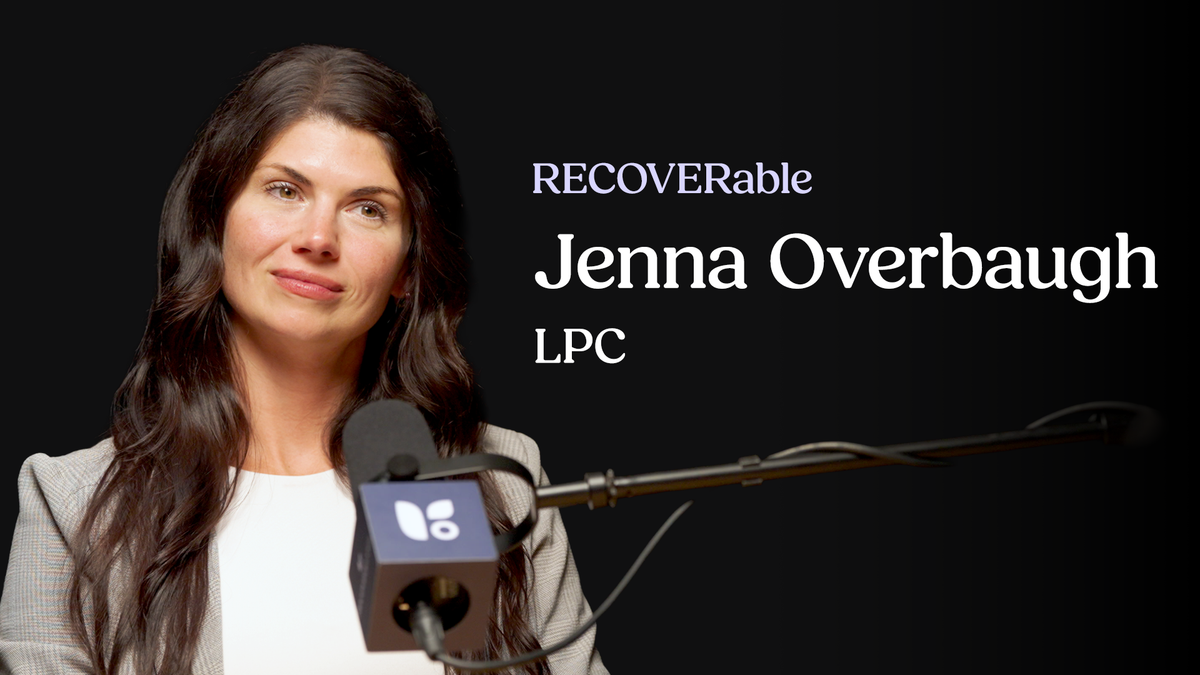
In this episode of RECOVERable, host Terry McGuire talks with OCD specialist Jenna Overbaugh about exposure and response prevention, commonly called ERP. This therapy is a specific type of cognitive behavioral therapy and a first-line psychological treatment for OCD. It involves gradually facing triggers while resisting the compulsions or avoidance behaviors that keep the OCD cycle going.1
Through this conversation, Jenna Overbaugh provides answers to some of the most commonly asked questions about ERP therapy for OCD.
1. What Is ERP Therapy for OCD?
ERP helps you make room for discomfort instead of letting OCD run your life.
Overbaugh describes OCD as a two-part problem that involves both obsessions and compulsions. However, ERP offers a two-part solution with exposure and response prevention.
The exposure part of ERP refers to gradually approaching a thought, situation, or feeling that triggers anxiety. Response prevention means choosing not to do the ritual, reassurance-seeking, or avoidance that usually follows.
For example, a person with contamination OCD might touch something they consider dirty. The exposure is touching it, and the response prevention is not immediately washing their hands in the usual ritualized way. Instead, the goal of this type of therapeutic exercise is not to prove that nothing bad will ever happen, but instead help the brain learn that anxiety can be present without requiring an emergency response.
2. Is ERP the Same as Exposure Therapy or CBT?
The “response prevention” part is not optional.
ERP falls under the larger umbrella of cognitive behavioral therapy (CBT). But Overbaugh explains that simply calling it “exposure therapy” doesn’t fully encompass the point.
“The ritual prevention piece is actually the most important piece.”
She explains that someone can do something scary, then immediately complete all their usual rituals. In that case, OCD still gets the same message of “This was dangerous, and I needed my compulsion to survive it.”
She also gives the example of a person afraid of having a panic attack while driving. Driving on the freeway is the exposure, but if the person believes they can only do it with a specific medication, candy, essential oil, or escape plan, those safety behaviors may still be part of the cycle.
3. Does ERP Mean Facing Your Worst Fear Right Away?
Good ERP is challenging, but it should also be manageable.
One of the biggest myths about ERP is that a therapist will immediately push someone into their most terrifying scenario. That is not how Overbaugh describes the process. She says that ERP should be collaborative, paced, and connected to the life a person wants to live.
Rather than jumping into one’s biggest fear, a therapist and client often begin with something that isn’t as upsetting, but uncomfortable enough to practice a new response. Whatever it is isn’t so overwhelming that the person feels defeated or abandons treatment.
ERP does not try to make people do scary things for their own sake, but instead tries to help make a person’s life bigger. That might mean going to a movie with your children, driving again, leaving home, enjoying art, or wearing a shirt that OCD has labeled emotionally “contaminated”.
4. What Is an ERP Hierarchy?
Think of it as a personalized ladder back toward your values.
An exposure hierarchy is a list of feared or avoided situations, organized from less difficult to more difficult. Overbaugh uses a zero-to-10 scale, with zero representing little anxiety and 10 representing the highest imaginable anxiety.
The person and therapist identify practical steps that build confidence and flexibility over time. For someone who avoids using knives because of unwanted harm-related thoughts, an early step might be using a regular butter knife at dinner instead of plastic utensils. It would not mean starting with the most intense possible trigger.
Overbaugh’s advice is simple: aim for “challenging but manageable.” As a person practices smaller exposures and resists compulsions, later steps may become less intimidating.
5. Can ERP Help With Mental Compulsions and Intrusive Thoughts?
You cannot always stop a thought from arriving, but you can stop feeding it.
Many people picture OCD compulsions as visible actions, such as washing, checking locks, arranging, or asking for reassurance. But mental compulsions can be just as consuming. A person may replay a conversation, mentally review whether they turned off the stove, search for certainty, pray repeatedly, or try to prove they are a good person.
Overbaugh makes an important distinction between a thought and “thinking.” A thought may pop into your mind automatically. The compulsion often begins when you try to answer, solve, neutralize, or get certainty about it.
“Your only job is to not answer the question.”
That can sound impossible at first, but ERP does not require someone to force a thought away. Instead, it asks them to notice the question OCD is asking and let uncertainty exist without beginning the familiar mental investigation.
6. What Should You Do When Anxiety Spikes During ERP?
Let the wave rise without immediately giving OCD what it wants.
When someone stops performing a compulsion, anxiety may initially become louder. Overbaugh compares this to a child who has always received a toy at a store and suddenly hears “no.” The child may protest more intensely before eventually learning that the old pattern no longer works.
In behavioral terms, this can be called an extinction burst. It does not mean the exposure failed. It can mean the brain is adjusting to a new response. Therefore, instead of arguing with the anxious thought, Overbaugh suggests brief, non-engaging responses such as “Yes, I am anxious right now.” “Maybe.” “Maybe not.” “I do not know.”
Then comes the more difficult action of allowing time to pass. Anxiety often feels urgent, but the goal is to learn that an intrusive thought is not automatically an emergency.
7. Does ERP Work for Every Type of OCD?
OCD can latch onto nearly anything, but the cycle is often familiar.
OCD themes can involve contamination, harm, health, relationships, religion, morality, false memories, real events, perfectionism, or countless other concerns. A person may not recognize themselves in the most commonly discussed examples, especially if their compulsions are mostly internal or their main strategy is avoidance.
“If I didn’t say exactly your compulsion, but you still resonate with everything else, know there’s a place for you.”
Overbaugh emphasizes that OCD is not limited to a neat checklist of subtypes. What matters is whether obsessions and compulsions are taking over time, freedom, or daily functioning. OCD symptoms can involve intrusive, unwanted thoughts and repetitive behaviors or mental acts that cause distress or interfere with daily life.2
She offers reassurance to listeners who may not hear their exact experience named.
8. Can You Do ERP at Home by Yourself?
Small, values-based steps can be meaningful, but expert support matters.
Overbaugh recommends working with a licensed clinician trained specifically in ERP therapy for OCD whenever possible. OCD specialists can help identify subtle compulsions, build a manageable hierarchy, and make sure the work is paced safely and effectively.
She also acknowledges that access, cost, and a shortage of specialists can make treatment difficult to obtain. For people without immediate access to care, she suggests beginning with curiosity: What am I avoiding because of fear? What small action would move me closer to the life I want?
The biggest self-directed mistake, she says, is doing an exposure while keeping all the rituals in place. Another is jumping immediately to a 10-out-of-10 fear. Starting small and practicing response prevention is far more aligned with ERP than trying to overwhelm yourself.
9. Is ERP a Cure for OCD, and How Long Does It Take?
Progress is not a life without thoughts or anxiety. It is a life with more freedom.
Overbaugh is careful with the word “cure.” Intrusive thoughts and anxiety are human experiences. Improvement does not necessarily mean never feeling afraid, uncertain, or uncomfortable again.
Instead, she defines progress by what someone can do in their life. Can they drive even while anxious? Spend time with family? Go to work? Stop organizing every decision around OCD? Can they experience uncertainty without immediately checking, confessing, or asking someone else to make the feeling go away?
“People are making choices to make their lives bigger, and as a result, OCD gets smaller.”
10. Does ERP Work Better With Medication?
Treatment should be individualized, not treated as an all-or-nothing choice.
The episode discusses ERP both on its own and alongside medication. Psychotherapy, medication, or a combination of both may help people manage OCD symptoms, and a qualified clinician can help someone consider the benefits and risks of their options.2
Overbaugh’s central point is that medication cannot do the behavioral work for someone. It may help some people get to the starting line, but ERP teaches the skills of approaching triggers and reducing compulsions.
There is no universal timeline. Some people feel relief early simply from understanding that OCD is a cycle, not proof that they are broken or alone. Lasting change, though, comes through practice. As Overbaugh says, “Everything that you do is either a vote for OCD or a vote for your life.”
Final Thoughts
ERP is not about forcing yourself through your worst fear or becoming fearless, but instead about slowly taking back the activities, relationships, choices, and values that OCD has crowded out. The next time OCD demands certainty, the most powerful response may not be an answer. It may be a small, meaningful action in the direction of your life.
If OCD symptoms are making daily life feel smaller, you do not have to figure it out alone. A therapist with training in ERP therapy for OCD can help you understand your symptoms, build a manageable plan, and take steps toward the things that matter most to you.
Our Promise
How Is Recovery.com Different?
We believe everyone deserves access to accurate, unbiased information about mental health and recovery. That's why we have a comprehensive set of treatment providers and don't charge for inclusion. Any center that meets our criteria can list for free. We do not and have never accepted fees for referring someone to a particular center. Providers who advertise with us must be verified by our Research Team and we clearly mark their status as advertisers.
Our goal is to help you choose the best path for your recovery. That begins with information you can trust.