Find Treatment By
Rehabs by Location


Find Treatment By
Learn
About Us
Recovery.com combines independent research with expert guidance on addiction and mental health treatment. Our mission is to help everyone find the best path to recovery through the most comprehensive, helpful network of treatment providers worldwide.
Advisory Council
Our advisory council brings together leaders in behavioral health, technology, and business. Their diverse expertise ensures our resources and product are innovative, evidence-based, and effective. They guide our mission as accomplished individuals dedicated to improving the landscape of addiction recovery and mental wellness.
Suicidal Thoughts and Depression: 12 Reasons You Must Tell Someone


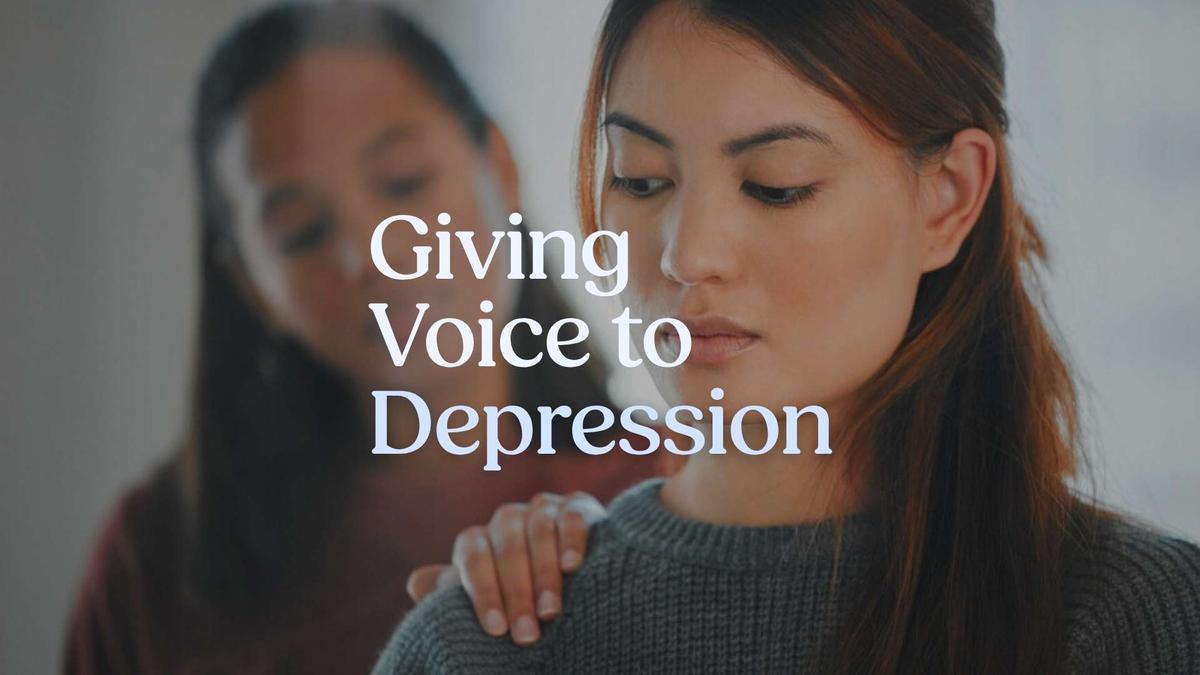
Terry McGuire is an award-winning journalist and news anchor turned mental health and hope advocate. The Giving Voice to Depression podcast that she created and cohosts has been downloaded more than 2.5 million times, and ranks in the top 1% of global podcasts.
Terry McGuire is an award-winning journalist and news anchor turned mental health and hope advocate. The Giving Voice to Depression podcast that she created and cohosts has been downloaded more than 2.5 million times, and ranks in the top 1% of global podcasts.
Table of Contents
- 1. Suicidal Thoughts Are Symptoms of a Serious Illness
- 2. Telling Someone Can Save Your Life
- 3. Depression Makes You Feel Like an Exception—But You’re Not
- 4. Hiding Your Pain Doesn’t Make It Go Away
- 5. “I’m a Burden” Is a Dangerous Thought—And a Lie
- 6. Suicidal Ideation Doesn’t Always Feel Selfish
- 7. Hospitalization Can Be Scary—But It’s Often Lifesaving
- 8. Depression Distorts Identity and Self-Worth
- 9. Anger and Irritability Are Also Symptoms
- 10. Help Only Helps If You Ask for It
- 11. Most People Want to Help—But You Have to Tell Them
- 12. You Are Not a Bad Person—You Are a Person in Pain
- Final Thoughts: Silence Protects Depression—But Connection Heals
- Key Takeaways
This article summarizes a powerful and deeply honest conversation from the Giving Voice to Depression podcast, hosted by Terry McGuire and featuring licensed clinical psychologist Dr. Anita Sanz and guest Katie, known online as “Katie the Bipolar Therapist.” In this vulnerable episode, Katie shares the darkest period of her life—when depression convinced her that ending her life might be a gift to her loved ones.
Her story, paired with Dr. Sanz’s clinical insights, offers a compassionate and practical guide to recognizing suicidal thoughts as symptoms of a treatable illness—and a life-saving reminder that no one should face these thoughts alone.
1. Suicidal Thoughts Are Symptoms of a Serious Illness
Depression doesn’t just make life hard—it rewrites reality. And when it becomes severe, it whispers lies that sound like truth: that we’re burdens, that we’re unlovable, and that people would be better off without us.
As Dr. Anita Sanz explained:
That false idea, that thought that people who know you and love you would be better off without you, is probably one of the most dangerous lies that depression can tell you.
Recognizing these thoughts as symptoms—not truths—is the first step toward safety and healing.
2. Telling Someone Can Save Your Life
Katie was actively planning her suicide. What changed the outcome was a single, courageous moment—when she told her sister what was really going on.
As Katie recalled:
Yeah, I think that that’s definitely safe to say that if I had reached out to my husband … as I said, I did eventually tell my sister everything and that was kind of this big explosion of feelings. And she took the proper precautions immediately.
Speaking your truth, even when it’s hard, opens the door to the help you need—and deserve.
3. Depression Makes You Feel Like an Exception—But You’re Not
One of depression’s cruelest tricks is convincing you that you are the exception. Even if you can believe others deserve love, support, and life, depression whispers that you don’t.
Dr. Sanz described it this way:
Depression makes you feel like none of the rules apply to you. Like, no, of course it wouldn’t be beneficial if a friend of mine thought that ending their life would be beneficial for everyone around them. But in my case, it would.
This mindset isolates people even further. That’s why hearing others speak openly—and telling someone what’s going on—is so essential.
4. Hiding Your Pain Doesn’t Make It Go Away
For 10 months, Katie went through the motions. She got up, went to work, and came home. But inside, she was drowning.
As Katie revealed:
I wasn’t doing anything besides getting up and going to work and then coming home and masking my depression. And I masked that depression for 10 months because I thought I was creating such a burden.
Many people hide their depression due to shame or fear. But silence feeds the illness. Speaking up interrupts it.
5. “I’m a Burden” Is a Dangerous Thought—And a Lie
If you’ve ever thought your loved ones would be better off without you, you’re not alone—but that doesn’t make the thought true. In fact, it’s a major warning sign.
Dr. Sanz urged:
If you start hearing this, if you start thinking or believing this, then you need to run, not walk, to get help immediately, meaning you have to tell someone you’re thinking this way.
This isn’t just another thought—it’s a flashing red light.
6. Suicidal Ideation Doesn’t Always Feel Selfish
Many people considering suicide genuinely believe they are acting out of love—trying to protect the people they care about.
As Katie reflected:
I did start to make preparations to do so and I just want to add that everything I was doing was to not be selfish, in my mind, because I was trying to spare people any extra trauma or grief associated with my death.
This heartbreaking distortion shows how depression can manipulate good intentions into fatal outcomes. Again: it’s the illness talking.
7. Hospitalization Can Be Scary—But It’s Often Lifesaving
Katie hesitated to reach out partly due to her fear of being hospitalized. That fear is understandable—but misplaced.
Dr. Sanz explained:
We can heal from bad experiences, but we would need you to be here to heal from that. And I put the emphasis on you deserve to be here and be feeling better, and healing from this and recovering from this. That’s why we’re even thinking about a step like hospitalization.
Hospitalization isn’t about punishment—it’s about protection.
8. Depression Distorts Identity and Self-Worth
Katie shared how her depression made her doubt every part of herself:
The theme of not being enough ran through my mind constantly. So I thought I was a terrible wife because I was experiencing depression very close to after I got married… I felt extremely guilty because I kept thinking there’s no reason for me to feel this way.
These distorted thoughts are a hallmark of severe depression. Recognizing them as lies can help break their hold.
9. Anger and Irritability Are Also Symptoms
Depression doesn’t always look like sadness. For some, it shows up as rage, detachment, or numbness.
As Terry eloquently put it:
If your reaction to the depression isn’t shut down and sad… If yours is that angry, that’d be even easier to believe [depression’s lies that you’re a burden]. Because now you’re like, look, I’m causing a disruption in my home.
Whatever form it takes, depression’s real danger lies in its ability to turn emotional pain into shame.
10. Help Only Helps If You Ask for It
During her darkest time, Katie said that nothing could have helped—because she wasn’t sharing what was really happening. Once she did, everything changed.
As Terry summarized:
When she did [reach out], her psychiatrist helped. Her sister helped. Her husband helped. The hospitalization helped. The therapist helped.
Depression silences us. Speaking up reclaims your voice—and your life.
11. Most People Want to Help—But You Have to Tell Them
Many people stay quiet because they think no one wants to hear their pain. But that belief, too, is another lie depression tells.
As Dr. Sanz reassured:
People want to be helpful, but they need to know that you need it. You use your last ounce of energy to just say to anybody, I’m really struggling, I think I need help.
Help is closer than you think. But you have to let someone know you need it.
12. You Are Not a Bad Person—You Are a Person in Pain
Perhaps the most insidious lie of depression is that it’s not just something you have—it’s something you are.
As Terry reflected:
Think of the difference between ‘There’s something wrong with you,’ and ‘YOU are what’s wrong.’ And note those land really…
Depression convinces people they are fundamentally flawed. But that’s not true. You are not broken. You are in pain—and pain deserves compassion.
Final Thoughts: Silence Protects Depression—But Connection Heals
Throughout the episode, one message rises above the rest: nothing helps if no one knows. When depression is at its worst, it isolates and convinces you that speaking up will make things worse. But time and again, both Katie’s story and Dr. Sanz’s expertise showed that speaking up changes everything.
As Terry reminded listeners:
We hope you are hearing this: this is when you need to get help. You know, it’s when the whatever symptom, right? When your COVID is making it hard for you to breathe, you know, you’ve got to get some help at that point, because it’s not going to get better by itself.
There is no shame in being in pain. There is no weakness in needing help. But there is very real danger in silence. If you’re hearing thoughts like “I’m a burden” or “People would be better off without me,” recognize those not as truths—but as emergency signals. Like chest pain for a heart attack, those thoughts signal that you are in crisis and need support.
Dr. Sanz put it plainly:
Nobody can heal from death. Whatever happens, I’m going to be here with you. We’re going to get through this.
There is always time to course-correct. There is always hope for healing. And there is always someone—often more than one—willing to listen and help.
Key Takeaways
- Suicidal thoughts are symptoms, not truths. Just like a fever is a symptom of infection, suicidal ideation is a sign of severe depression that needs immediate attention.
- Telling someone can save your life. Silence isolates. Speaking up—whether to a friend, family member, therapist, or hotline—opens a door to connection and care.
- The idea that you are a burden is a dangerous lie. Depression lies convincingly. Trust someone else to help you see the truth.
- You don’t have to feel like you deserve help to receive it. Even if you believe you’re the exception, reach out anyway. Let others remind you that you are worthy of support.
- You don’t have to go through this alone. The right people—trained professionals, supportive friends, strangers on a crisis line—are there. But they can only help if you let them know you need it.
If You’re in Crisis
If you are experiencing suicidal thoughts, please seek immediate support. In the U.S., dial or text 988 for the Suicide & Crisis Lifeline. Help is free, available 24/7, and confidential.
Our Promise
How Is Recovery.com Different?
We believe everyone deserves access to accurate, unbiased information about mental health and recovery. That's why we have a comprehensive set of treatment providers and don't charge for inclusion. Any center that meets our criteria can list for free. We do not and have never accepted fees for referring someone to a particular center. Providers who advertise with us must be verified by our Research Team and we clearly mark their status as advertisers.
Our goal is to help you choose the best path for your recovery. That begins with information you can trust.