Find Treatment By
Rehabs by Location


Learn
About Us
Recovery.com combines independent research with expert guidance on addiction and mental health treatment. Our mission is to help everyone find the best path to recovery through the most comprehensive, helpful network of treatment providers worldwide.
Advisory Council
Our advisory council brings together leaders in behavioral health, technology, and business. Their diverse expertise ensures our resources and product are innovative, evidence-based, and effective. They guide our mission as accomplished individuals dedicated to improving the landscape of addiction recovery and mental wellness.
OCD Explained: 10 Expert Answers About Intrusive Thoughts, Symptoms & Treatment


Imagine having a frightening thought about someone you love, then spending hours wondering why you had it, what it means, or whether something terrible might happen. You know the thought doesn't make sense, but you can't seem to let it go.
For people living with obsessive-compulsive disorder (OCD), these experiences can be exhausting, frightening, and deeply isolating. And despite common misconceptions, OCD involves much more than excessive cleaning, organizing, or perfectionism.
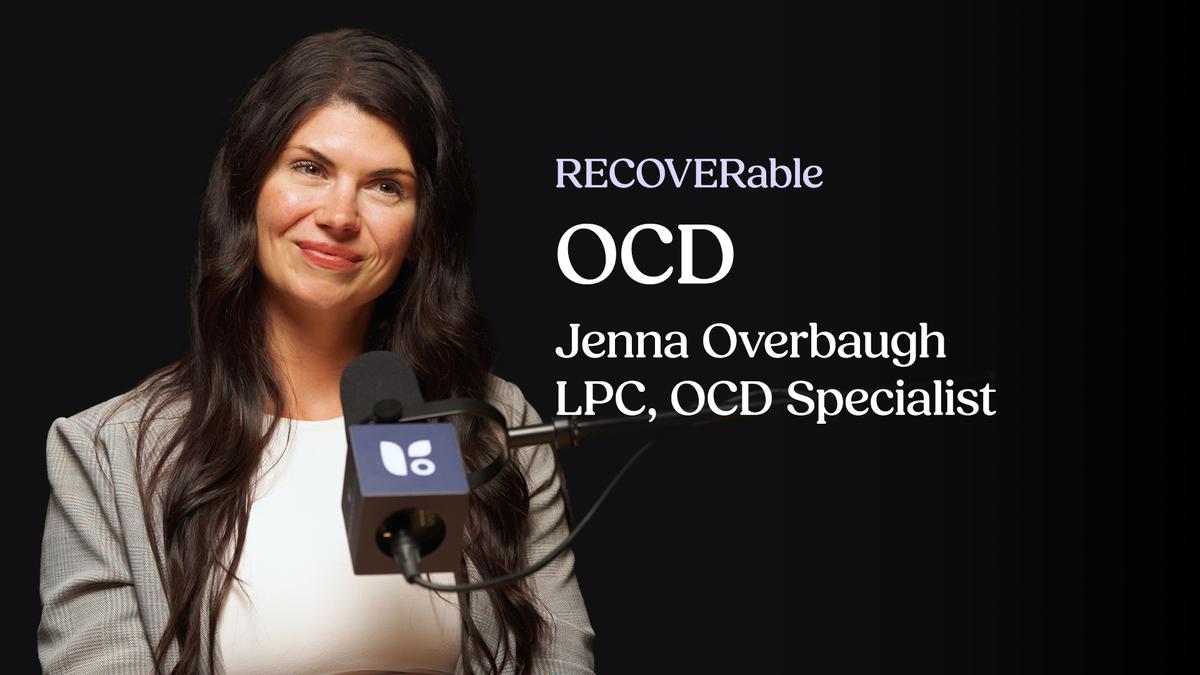
In this episode of Recoverable, host Terry McGuire sits down with OCD specialist Jenna Overbaugh, who brings nearly a decade of experience treating severe OCD, along with her own personal experience living with the condition. Together, they explore what OCD really looks like, why intrusive thoughts can feel so convincing, how compulsive behaviors develop, and what effective treatment can accomplish.
Whether you're wondering if you have OCD, supporting someone who does, or simply hoping to better understand the condition, Overbaugh offers something valuable: practical guidance, greater understanding, and hope for a life less controlled by fear.
1. What Is OCD, and What Are the Symptoms?
OCD is more than a preference for perfection.
Obsessive-compulsive disorder is a mental health condition involving recurring, unwanted thoughts or experiences called obsessions, along with repetitive behaviors or mental rituals called compulsions. These symptoms can cause significant distress and interfere with relationships, work, and daily activities.1
Overbaugh describes OCD as a two-part problem. First, intrusive thoughts, images, feelings, or urges appear without warning. Then, a person may respond with compulsions intended to relieve the distress those experiences create.
Compulsions might involve repeatedly checking locks, washing hands, seeking reassurance, avoiding certain situations, or mentally reviewing past events. Although these behaviors can temporarily reduce anxiety, they often reinforce the cycle of OCD.
Having worked with patients whose symptoms made everyday activities nearly impossible, Overbaugh emphasizes that OCD can range in severity. Even when symptoms are less visible, they deserve attention when they interfere with someone's quality of life. Learning more about managing OCD through treatment can help people understand their options.
2. Isn't Everyone a Little OCD?
Experiencing intrusive thoughts doesn't mean you have OCD.
Most people experience occasional unwanted thoughts, worries, or impulses. However, having these experiences is different from having a disorder.
Overbaugh explains that the distinction lies in the distress, time, and disruption the symptoms cause. Someone without OCD may briefly worry about leaving the stove on, check once, and continue their day.
Someone with OCD might repeatedly check the stove, replay the experience mentally, seek reassurance, and remain anxious despite knowing they already checked.
The difference isn't simply how unusual a thought seems. It's the difficulty moving past it and the extent to which obsessions and compulsions interfere with everyday life.2
3. What Are the Different Types of OCD?
OCD can attach itself to almost anything you care about.
While contamination fears and excessive handwashing are familiar examples, OCD can involve many different themes. These may include unwanted thoughts about harm, religious or moral concerns, relationships, sexuality, or the need for things to feel exactly right.2
Overbaugh explains that OCD often focuses on what someone values most. A loving parent might experience unwanted thoughts about harming their child, while someone who deeply values their relationship might repeatedly question whether they're with the right partner.
These thoughts are often ego-dystonic, meaning they conflict with the person's values, beliefs, or desires. The person finds them upsetting precisely because they don't reflect what they want.
Overbaugh experienced this herself after her son was born in 2018. While putting socks on her newborn, she suddenly imagined accidentally breaking his ankles. The thought frightened her so deeply that she began avoiding everyday caregiving activities.
Her experience demonstrates how OCD can transform ordinary moments into sources of overwhelming fear.
4. What Is Pure O OCD, and Why Is It Hard to Recognize?
Not all compulsions are visible.
Pure O, sometimes called purely obsessional OCD, describes OCD presentations in which compulsions are primarily mental rather than outwardly observable. Despite the name, people experiencing Pure O still have compulsions.2
Overbaugh explains that these hidden rituals may include:
- Mentally replaying conversations to check whether something offensive was said.
- Repeatedly analyzing disturbing thoughts to determine what they mean.
- Silently reassuring yourself that nothing bad will happen.
- Trying to replace unwanted thoughts with acceptable ones.
Because these behaviors happen internally, people may spend years struggling without realizing they're experiencing symptoms of OCD.
Overbaugh notes that some patients have spent much of their lives engaging in mental rituals, assuming that's simply how their minds work. Recognizing these patterns can be an important first step toward getting appropriate treatment.
5. Why Do People With OCD Have Intrusive Thoughts?
An unwanted thought isn't the same as an intention.
Intrusive thoughts are a natural part of human thinking. The brain constantly processes information, imagines possibilities, and evaluates potential threats. Sometimes, that produces thoughts that feel strange, disturbing, or completely disconnected from our values.
Overbaugh uses the phrase "weird mental spam" to describe these experiences.
The problem with OCD isn't necessarily having an intrusive thought. It's the meaning someone assigns to it and their response to the discomfort it creates.
Consider a parent who suddenly imagines something terrible happening to their child. One parent may recognize the thought as unpleasant and move on. Another may worry that the thought predicts danger, question why it appeared, or repeatedly seek reassurance.
OCD can make someone feel personally responsible for preventing an imagined possibility, even when there's no evidence that the thought reflects a real threat.
6. Why Do OCD Intrusive Thoughts Feel So Real?
OCD can turn uncertainty into an urgent need for answers.
Overbaugh frequently describes OCD as the "doubt disorder." A person may know intellectually that their fear is unlikely, yet still feel compelled to eliminate every possibility that something could go wrong.
That need for certainty can make intrusive thoughts feel unusually convincing. Rather than accepting that absolute certainty isn't possible, someone might repeatedly question their memories, intentions, safety, or relationships.
Overbaugh explains that trying to force unwanted thoughts away can make them feel even more persistent. The more attention someone gives the thought, even by arguing against it, the harder it may become to disengage.
Learning that a thought doesn't require an immediate response can gradually change someone's relationship with uncertainty.
For people struggling with persistent anxiety, understanding available anxiety treatment options may also help them take steps toward managing their symptoms.
7. How Does the OCD Cycle Work?
Compulsions provide temporary relief but can strengthen the fear.
The OCD cycle often begins with an intrusive thought that someone interprets as threatening or significant. That interpretation creates anxiety, prompting a compulsion intended to reduce the discomfort.
For example, someone might fear they've accidentally struck a pedestrian while driving. They return to check the road, feel briefly reassured, then question whether they checked thoroughly enough.
Overbaugh compares compulsions to throwing logs onto a fire. Each ritual may provide temporary comfort, but it also teaches the brain that the original fear required action.
Breaking the cycle means gradually learning to experience uncertainty without automatically performing compulsions. This is a central focus of evidence-based OCD treatment.3
8. How Can You Manage Intrusive Thoughts From OCD?
You don't have to respond to every thought your brain produces.
When a frightening thought appears, Overbaugh recommends creating some distance from it rather than immediately trying to eliminate it.
One strategy is to replace a statement such as "I offended someone" with "I'm having the thought that I offended someone."
This subtle change helps separate the experience of having a thought from accepting that thought as fact. It can create space to observe the thought without immediately reacting.
Overbaugh encourages patients to practice allowing unwanted thoughts to exist while continuing with their normal activities. This doesn't mean enjoying, endorsing, or agreeing with a disturbing thought.
Instead, it means gradually becoming more comfortable with discomfort and resisting the urge to perform rituals. Working with an OCD-trained therapist can help patients develop these skills safely and consistently.
9. What Is the Most Effective Treatment for OCD?
Recovery means learning to respond differently, not eliminating every unwanted thought.
Exposure and response prevention (ERP), a specialized form of cognitive behavioral therapy (CBT), is a first-line psychological treatment for OCD. Research supports its effectiveness in reducing symptoms and improving daily functioning.3
Overbaugh describes ERP through three goals: gradually stepping outside your comfort zone, reducing compulsions and safety behaviors, and decreasing avoidance.
A trained therapist helps patients identify feared situations and develop manageable exercises that allow them to confront uncertainty without performing their usual rituals.
Depending on individual needs, OCD treatment may also involve medication, particularly selective serotonin reuptake inhibitors (SSRIs). Understanding the different types of therapy available can help people make informed decisions about their mental health care.
For Overbaugh, successful treatment isn't defined by never experiencing another intrusive thought. It's about spending less time performing compulsions and regaining the freedom to participate in everyday life.
10. How Can You Help Someone With OCD Without Making Symptoms Worse?
Support the person without feeding the compulsion.
Watching someone struggle with OCD can be painful. Naturally, loved ones may want to help by offering reassurance, checking things repeatedly, or helping the person avoid uncomfortable situations.
However, these actions can become what clinicians call family accommodation, when loved ones unintentionally reinforce OCD symptoms by participating in rituals or making changes around them.4
Overbaugh explains that effective support combines compassion with boundaries. Rather than repeatedly answering reassurance-seeking questions, families can acknowledge the person's distress while encouraging them to use skills developed in treatment.
The goal isn't to withdraw affection or force someone to face fears alone. It's to work collaboratively, ideally with guidance from an OCD specialist, to reduce behaviors that keep the cycle going.
Final Thoughts
One of the most powerful messages from Overbaugh's conversation is that OCD doesn't have to define your life.
Intrusive thoughts may feel frightening, convincing, and deeply personal, but having them doesn't mean they reflect your character or desires. And while compulsions can offer temporary relief, learning to respond differently can make a lasting difference.
Overbaugh leaves listeners with a message of hope:
If OCD symptoms are interfering with your life, you don't have to navigate them alone. Learn more about managing OCD through treatment, explore cognitive behavioral therapy, or review treatment options for anxiety and related conditions.
Our Promise
How Is Recovery.com Different?
We believe everyone deserves access to accurate, unbiased information about mental health and recovery. That's why we have a comprehensive set of treatment providers and don't charge for inclusion. Any center that meets our criteria can list for free. We do not and have never accepted fees for referring someone to a particular center. Providers who advertise with us must be verified by our Research Team and we clearly mark their status as advertisers.
Our goal is to help you choose the best path for your recovery. That begins with information you can trust.