Find Treatment By
Rehabs by Location


Learn
About Us
Recovery.com combines independent research with expert guidance on addiction and mental health treatment. Our mission is to help everyone find the best path to recovery through the most comprehensive, helpful network of treatment providers worldwide.
Advisory Council
Our advisory council brings together leaders in behavioral health, technology, and business. Their diverse expertise ensures our resources and product are innovative, evidence-based, and effective. They guide our mission as accomplished individuals dedicated to improving the landscape of addiction recovery and mental wellness.
Life After Suicide Loss: 8 Ways to Find Hope, Healing, and Joy Again


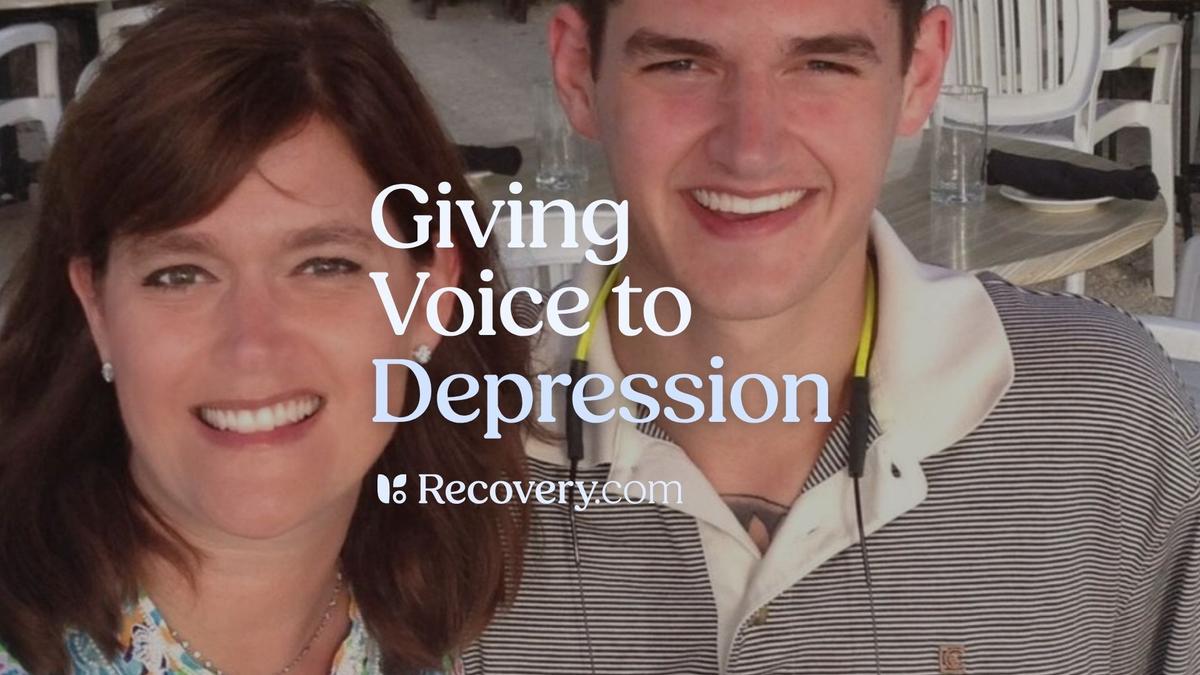
After losing someone to suicide, the idea of feeling joy again can seem impossible. And for some survivors, it can even feel wrong. How can you laugh, celebrate, dance, or enjoy your life when someone you love so deeply is no longer here?
Those questions are at the heart of a conversation from the Giving Voice to Depression podcast, hosted by Terry McGuire, with Ann Marie Farino, a mother who lost her 24-year-old son Richard to suicide. Ann Marie is also the author of Chronic Chaos: A Son's Addiction, A Mother's Love, and Her Quest to Find Joy.
Her story isn't about "getting over" suicide loss or leaving grief behind. It is about learning that grief and joy don't have to cancel each other out. With specialized support, small steps, meaningful connections, and time, Ann Marie discovered that she could continue loving and missing her son while also allowing herself to live.
Here are eight lessons from her journey.
1. Let Grief and Joy Exist Together
One of the most complicated emotions after suicide loss can be guilt about feeling good.
A laugh can suddenly feel inappropriate. Enjoying a gathering can trigger the thought that you should be grieving instead. Even a brief moment of happiness can feel like a betrayal of the person who died.
Ann Marie explained what she eventually came to understand:
We can have grief and joy in the same space, like I have both, which a lot of people look at me like I am a Martian when I say that, but it can live in the same place.
This doesn't mean grief disappears. Ann Marie still misses Richard terribly and carries that loss with her. But continuing to live does not diminish the love that remains.
Some days may contain more grief. Others may contain more joy. And sometimes both emotions may show up together.
There is room for all of it.
2. Find Support That Understands Suicide Loss
Ann Marie credits much of her healing to what she calls a strong "infrastructure" of support.
Friends and family showed up. But she also worked with a grief therapist who understood the unique challenges surrounding suicide loss. At first, Ann Marie saw her therapist twice a week before eventually moving to weekly sessions.
Her therapist didn't simply tell her that healing would take time. She helped Ann Marie understand what was happening emotionally and gave her practical steps to begin functioning again.
Reflecting on the importance of that relationship, Ann Marie shared:
She was my guide. She really was my guide. And I just pray that other people like me can find a really great guide like that because she was critical in healing and also in my growth in grief.
That distinction matters. Grief after suicide can include sadness alongside guilt, anger, confusion, unanswered questions, trauma, and isolation. Finding a professional experienced with suicide bereavement can provide a space where those complicated emotions don't need to be explained or defended.
Healing doesn't require doing everything alone.
3. Make Your Next Step Very Small
After the initial rush of support following Richard's death, people understandably began returning to their own lives.
Ann Marie was left confronting a painfully simple question: What do I do now?
Her therapist helped her answer that question by making life very small.
Ann Marie recalled:
Okay, what do I do now? Like how do I function? So very small little steps like, Okay, starting tomorrow, I'm going to get up at this time. Starting the next day, I'm gonna take a shower every day after I get up ... just baby steps of functioning again.
When grief makes an entire day feel impossible, thinking about rebuilding a life can be overwhelming. Instead of focusing on everything that needs to happen, Ann Marie concentrated on the smallest actions directly in front of her.
That might mean:
- Getting out of bed.
- Taking a shower.
- Eating something.
- Stepping outside.
- Walking for a few minutes.
- Completing one necessary task.
Those actions may sound ordinary from the outside. During catastrophic grief, they can be significant accomplishments.
Sometimes healing begins not with figuring out how to live the rest of your life, but with figuring out how to live the next hour.
4. Connect With People Who Understand Grief
In addition to individual therapy, Ann Marie joined a grief group.
There she met people at different points in their journeys. Some had been living with their losses for five or ten years. They understood something Ann Marie couldn't yet imagine: life could eventually contain happiness again.
Ann Marie remembered the reassurance they gave her:
They promised — they promised — that I would be able to go to a wedding and dance and not feel guilty about like having fun and laughing.
During the first two years after Richard's death, Ann Marie struggled with exactly that guilt. If she laughed, part of her felt she wasn't honoring her son because she believed she was supposed to be sad.
Six years after Richard's death, she did dance and laugh at a wedding without shame.
That isn't a timetable anyone else needs to follow. There is no deadline for grief and no correct moment to feel joy again.
As Carly McCollow reflected during the episode, grief moves differently from the calendar the rest of the world follows. Holidays arrive, school years begin, New Year's resolutions are made, and everyday life continues while someone who is grieving may still be trying to understand a profoundly changed world.
Being around people who have survived a similar loss can therefore offer something powerful: evidence that whatever you're feeling isn't yours alone.
5. Create Structure and Meaningful New Goals
One of Ann Marie's first major goals came through the American Foundation for Suicide Prevention's Overnight Walk.
The event happened to fall during Richard's birth month, and Ann Marie decided to participate. She gathered friends and family and began preparing for the 18-mile walk.
At first, the goal wasn't 18 miles. It was one. Then two.
Ann Marie described what the process gave her:
That was my first really big goal: first one mile, then two miles. And it's just, for me, it was setting up sort of like I was a little kid, like I had to have structure in my day, which was huge.
Walking provided structure, fresh air, movement, connection, and eventually a larger purpose. It gave Ann Marie somewhere to direct her energy while honoring Richard.
A meaningful goal after loss doesn't need to be an 18-mile walk. It could be gardening, volunteering, returning to a hobby, creating something, caring for an animal, or simply walking around the block.
The size of the goal matters less than having something that gently pulls you toward life.
6. Let Other People Show Up Fully
Support isn't always about saying exactly the right thing. Sometimes it means knowing when to sit quietly. Other times, it means knowing when to lovingly encourage someone forward.
Ann Marie experienced that with her friend Mark.
When she began working part time at his interior design boutique, there were days she couldn't bring herself to leave home. One day she called to say she wasn't coming in. Mark told her he'd be at her house in 30 minutes.
He arrived and encouraged her to come with him. She did.
The day that had begun in deep sadness became a good day spent with a friend.
Reflecting on what that friendship taught her, Ann Marie said:
You don't have to have a lot of friends, just one good friend or a family member that really goes the extra mile for you.
Support doesn't require a huge network. One person willing to keep showing up can matter enormously.
And as Terry pointed out during their conversation, Ann Marie deserves credit too. Mark showed up at the door, but she still had to walk through it.
7. Find Purpose Through Helping Other People
Eventually, Ann Marie noticed another change.
She had received Healing After Loss by Martha Hickman and found it meaningful enough that she began giving copies to people experiencing their own losses.
First she gave the book to friends. Then she began sending it to people she heard about through others. Eventually, she ordered an entire case.
Ann Marie called it her "circle of giving."
The thank-you messages she received reminded her that something she had learned through her own grief could help someone else.
Looking back on how gradually that change happened, Ann Marie explained:
I didn't think I was really healing because you don't say, Oh, it's six months, it's two years, I'm really healing now. You just kind of, it just, it grows.
Healing can be difficult to see while you're inside it.
Sometimes it becomes visible only in retrospect: you're doing something you couldn't do before, helping someone else, making plans, laughing without immediately feeling guilty, or realizing the grief no longer occupies every inch of emotional space.
Ann Marie also found that giving to others created purpose. It wasn't about turning tragedy into something positive or finding a reason for what happened. It was simply one way she could use what had helped her to make another grieving person's path a little less lonely.
8. Start By Finding Molecules of Joy
Perhaps the most powerful image from Ann Marie's story is also the smallest.
She didn't begin by trying to "be happy again."
She looked for tiny pieces of something good.
As Ann Marie beautifully described it:
Finding a purpose, finding pieces of, in the beginning, molecules of joy. Molecules are good. I took whatever I could get.
That might be a moment in the sunshine. A conversation. A walk. A song. A cup of coffee. A genuine laugh that surprises you.
A molecule is enough.
There is no suggestion here that someone experiencing devastating grief should simply "look on the bright side." Grief has its own timeline, and nobody gets to decide when another person should be ready for anything.
Ann Marie's experience offers something gentler: permission.
- Permission to grieve.
- Permission to miss someone forever.
- Permission to accept help.
- Permission to have a terrible day.
- Permission to experience something good without believing that joy erases love.
Ann Marie still carries Richard with her. Healing didn't require leaving him behind. Instead, she gradually learned how to carry both her grief and the rest of her life.
As Ann Marie shared near the end of the conversation:
It can be very, very hard to walk with your grief, but it's possible. And if I can do it — I couldn't move or get out of bed — if I can do it, anybody can do it.
Her story isn't a prescription for how anyone else should grieve. It is evidence that grief can change shape, that love can endure, and that moments of joy don't erase the person who is missing.
Ann Marie misses Richard terribly and continues to love him deeply. But she has also learned that continuing to live — and allowing herself to experience laughter, purpose, connection, and joy — does not betray that love.
At the end of their conversation, Terry offered Ann Marie a simple reminder: she gets to be okay, too.
Ann Marie agreed:
And I get to be okay too.
For someone in the earliest and darkest stages of suicide grief, being "okay" may feel impossibly far away. That's okay too. Ann Marie's experience doesn't establish a schedule or destination for anyone else's grief.
It simply offers hope that deep grief and deep love can remain while life slowly expands around them. There can be room for purpose, connection, laughter, and eventually even joy.
Sometimes it starts with nothing more than a molecule.
Our Promise
How Is Recovery.com Different?
We believe everyone deserves access to accurate, unbiased information about mental health and recovery. That's why we have a comprehensive set of treatment providers and don't charge for inclusion. Any center that meets our criteria can list for free. We do not and have never accepted fees for referring someone to a particular center. Providers who advertise with us must be verified by our Research Team and we clearly mark their status as advertisers.
Our goal is to help you choose the best path for your recovery. That begins with information you can trust.