Find Treatment By
Rehabs by Location


Learn
About Us
Recovery.com combines independent research with expert guidance on addiction and mental health treatment. Our mission is to help everyone find the best path to recovery through the most comprehensive, helpful network of treatment providers worldwide.
Advisory Council
Our advisory council brings together leaders in behavioral health, technology, and business. Their diverse expertise ensures our resources and product are innovative, evidence-based, and effective. They guide our mission as accomplished individuals dedicated to improving the landscape of addiction recovery and mental wellness.
Hidden Depression: 11+ Signs, Struggles, and Ways to Break the Mask


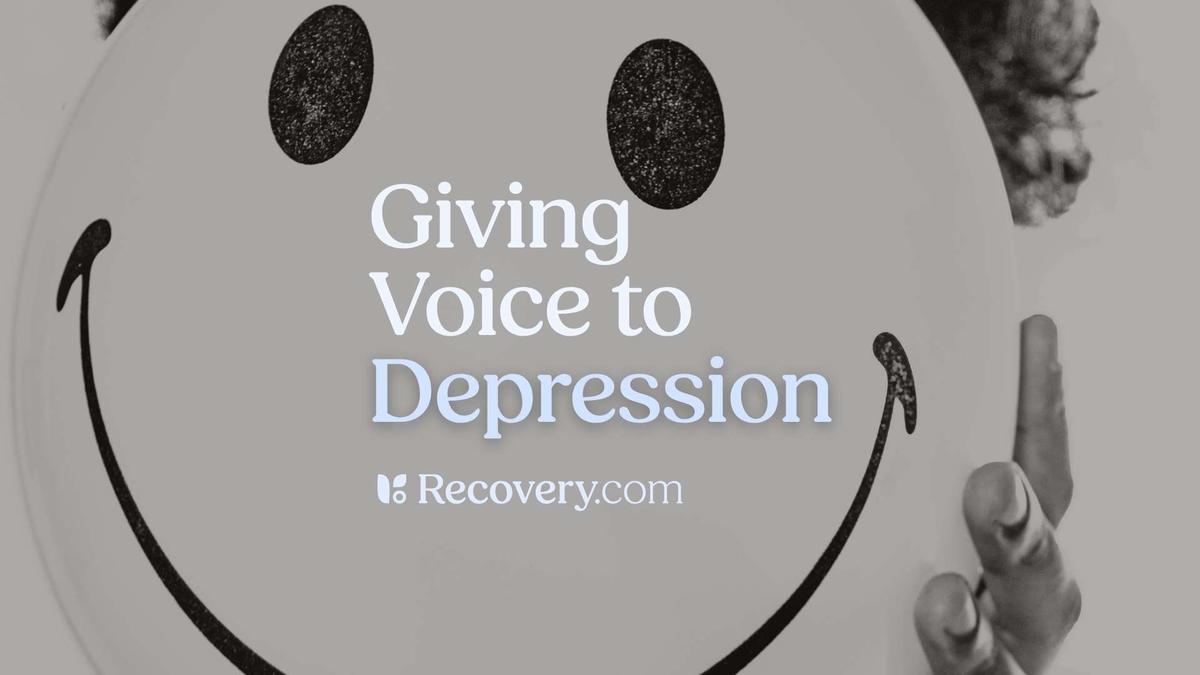
This article is a summary of a conversation from the Giving Voice to Depression podcast, hosted by Terry McGuire. In this episode, Terry and her co-host Bridget speak with Andrew, a guest with lived experience of depression, about the concept of “masking” — the often invisible way people hide their pain while appearing fine on the outside.
What emerges from this conversation is a deeply honest look at hidden depression — what it feels like, why people hide it, and how that mask can both protect and harm. Through Andrew’s lived experience, the episode brings language to something many people feel but struggle to describe.
Below are the most powerful insights from this conversation — lessons about the mask we wear, why we wear it, and how we can begin to take it off.
1. Depression Often Hides Behind A Mask
Depression is not always visible. In fact, for many people, it is deliberately hidden behind a carefully constructed version of themselves that the world sees.
Terry introduces this concept as something nearly universal among people aware of their depression — the idea that there is a “mask” they put on to function in daily life. It allows them to show up, to perform, to engage — even when internally, they are struggling.
Andrew described this experience with striking honesty:
And there have been smiling, throwing jokes out, interacting with the customer. In the back of my head, it's just this loop: I want to die. I wanna die. I wanna die. I wanna die.
This contrast — between external behavior and internal reality — defines hidden depression.
Key insight:
- You can look “fine” and still be struggling deeply
- The mask doesn’t remove pain — it conceals it
2. The Mask Can Be Both Helpful And Harmful
One of the most nuanced takeaways from this conversation is that the mask is not purely negative. It can serve a purpose — especially in the short term.
It helps people:
- Get through workdays
- Maintain relationships
- Fulfill responsibilities
But that same tool can become dangerous when relied on too heavily.
As Andrew explained:
The mask can be both. Because if you rely on the short term, yeah, it can save you, it can pull you up. But the danger — you lean on that long term and that's when it turns on you. It starts to suck you down because you know you're living this falsehood.
This is where the tension lies — the mask is both survival tool and silent burden.
3. Hidden Depression Often Delays Diagnosis
Andrew experienced symptoms of depression in his early 20s — but wasn’t formally diagnosed until nearly 20 years later.
That gap is not unusual.
Terry points out that many people live with depression for years — even decades — before seeking help. During that time, the mask plays a significant role in delaying recognition.
Why this happens:
- Symptoms are normalized or minimized
- People don’t recognize what they’re experiencing
- The ability to function creates a false sense of control
This delay can deepen the condition over time, making recovery more complex.
4. Depression Can Intensify Without Intervention
Andrew describes how his depressive episodes gradually worsened over time — becoming deeper, longer, and harder to escape.
Andrew shared how the pattern escalated:
I would say 2013-2014, I started to really struggle with suicidal thoughts, several weeks at a time and at least twice a year. And it was kind of getting worse every time. Every bout of depression would be a little bit deeper, a little bit longer, and a little harder to climb out of.
This progression is important to understand. Depression is not always static — it can evolve, especially without treatment.
Eventually, Andrew reached a breaking point:
I made a decision, I called the local crisis line, told them I needed help, that I wanted counseling, I wanted to get set up with a psychiatrist, soup to nuts because it became very clear it was either I make that call or that sooner or later this illness was going to take my life.
This moment — recognizing the need for help — can be life-saving.
5. Suicidal Thoughts Can Exist Alongside Functioning
One of the most sobering realities shared in this episode is that someone can be actively suicidal — and still appear fully functional.
Andrew describes working, interacting, and even joking with customers while internally experiencing persistent thoughts of death.
This highlights a critical truth:
Functioning does not equal wellness.
Warning signs may not look obvious:
- Someone shows up to work
- Maintains relationships
- Appears engaged or upbeat
But internally, they may be struggling intensely.
6. Social Expectations Reinforce The Mask
Andrew explains that masking is not just personal — it’s social.
We live in a culture that encourages:
- Positivity
- Performance
- Curated versions of reality
Andrew described this dynamic:
I think everyone — and when I say everyone, I'm including normal, the average citizen — everyone puts up a good front. You know, the filters, the staged pictures, the smiling family pictures or the vacation, right? But everyone thinks that they're the only one who does it as much as they do. And they think everyone else's life is much more, you know, the social media is much closer to reality than theirs.
This creates a dangerous illusion:
- Everyone else is doing better
- You are the only one struggling
And that belief reinforces silence.
7. Stigma Makes It Hard To Be Honest
Beyond social norms, stigma plays a major role in why people hide depression.
Andrew points out that many people’s understanding of mental illness comes from exaggerated or inaccurate portrayals in media — leading to fear of judgment.
Common fears include:
- Being seen as unstable
- Being labeled or misunderstood
- Being treated differently
As Andrew put it:
Those of us who struggle with mental illness fight against not wanting to hang out with Eeyore. You know, the depressed that everyone suddenly thinks of when they hear mental illness is depression: the Eeyore. And then on top of that, you've got the fear of what will people think of me.
When honesty feels risky, hiding becomes the safer option.
8. Avoidance Can Strengthen Depression Over Time
One of the most powerful insights Andrew shares is that avoiding depression — hiding it, ignoring it — can actually make it stronger.
Terry notes that masking might seem protective. But Andrew reframes it entirely.
Andrew explained through metaphor:
When you're young, your bedroom is dark and you hear a scary noise. That noise is frightening because you can't see what's causing it. Well, there's two things you can do then. You can either jump up, turn on the lights, rip open the closet doors and see what's in there, or you can just throw the blankets over your head, stuff a pillow in each ear and hope it goes away.
He then connected that image directly to his own healing:
I think the biggest reason I've come as far as I have in the last two years is because somewhere I got the crazy idea that I'm not gonna fake it. I'm gonna look what I'm struggling with in the eyes as often and as long and as much as possible because I don't want it to ruin my life, but I don't want to run from it either.
Facing depression — even when it’s uncomfortable — reduces its power. Avoiding it gives it room to grow.
9. Authenticity Creates Opportunity For Healing
Andrew made a conscious decision to stop pretending — to face his depression directly instead of constantly performing wellness.
That shift did not make life instantly easy, but it did change the direction of his recovery. Honesty created a path toward understanding, support, and self-respect.
As Andrew shared:
I think anyone who's dealt with a mask has felt that tension of wanting to just rip the mask off and throw it away and just be authentic and screw what the world thinks. And then retreating behind the mask and then pulling it down going, No, I want to be authentic! And then putting the mask up again.
This push and pull is deeply human. It reflects how hard it can be to choose authenticity when protection has become a habit.
10. Expression Can Give Pain A Shape
Andrew found healing not just through medication and professional help, but through expression — specifically writing.
Putting words to his experience helped him process what otherwise felt chaotic and shapeless. That act of expression became a way to understand what was happening inside him.
Andrew explained why writing matters to him:
Part of it is therapeutic for me when I can finally give shape and give words to these thoughts that bounce around between my ears. You know, writing helps me.
He also described why sharing those words publicly mattered:
If I put that out there and one post changes one person's life, and that's all my blog ever does: fantastic. I hate thinking that somebody else would feel as alone and low as I did with nobody to connect to.
Creative outlets can include:
- Writing
- Music
- Art
- Journaling
The goal is not perfection — it’s expression.
11. Connection Begins When We Stop Hiding
At the heart of this episode is a simple but profound truth: connection requires visibility.
When people hide their struggle completely, they also hide the chance for someone else to recognize it, respond to it, or say, “Me too.” That is one reason this episode feels so resonant.
Andrew offered this encouragement to listeners:
I would encourage your audience, even if it doesn't make sense to you, grab a pen, grab a notebook, grab your laptop, whatever. Find a way to give shape or form to the thoughts and the voices in your head and I guarantee you it'll be helpful.
Later in the episode, Bridget shared a line she had read that captured what compassion can do:
As you speak words of empathy and compassion, I can feel the edges of my mask loosen, curling up ever so slightly.
That image says so much. The mask does not always come off all at once. Sometimes it loosens because someone listens, responds gently, or makes it feel safe enough to be a little more real.
Final Thoughts
Hidden depression is exactly that — hidden. It often exists behind smiles, productivity, and seemingly normal lives.
But this conversation reminds listeners that what they see is not always what someone is experiencing. The mask can help a person survive, especially in the short term, but it can also deepen loneliness when it becomes the only way they know how to move through the world.
As Terry read near the end of the episode:
If we keep forcing the bad to go unseen, the good will also go unseen.
That line captures the risk of concealment. When pain stays hidden, so do the opportunities for connection, understanding, treatment, and hope.
The first step toward change is not always dramatic. Sometimes it is simply:
- Naming what is happening
- Letting someone see a little more of the truth
- Finding a way to give that truth language
And that, this episode makes clear, is where healing can begin.
Our Promise
How Is Recovery.com Different?
We believe everyone deserves access to accurate, unbiased information about mental health and recovery. That's why we have a comprehensive set of treatment providers and don't charge for inclusion. Any center that meets our criteria can list for free. We do not and have never accepted fees for referring someone to a particular center. Providers who advertise with us must be verified by our Research Team and we clearly mark their status as advertisers.
Our goal is to help you choose the best path for your recovery. That begins with information you can trust.