Find Treatment By
Rehabs by Location


Find Treatment By
Learn
About Us
Recovery.com combines independent research with expert guidance on addiction and mental health treatment. Our mission is to help everyone find the best path to recovery through the most comprehensive, helpful network of treatment providers worldwide.
Advisory Council
Our advisory council brings together leaders in behavioral health, technology, and business. Their diverse expertise ensures our resources and product are innovative, evidence-based, and effective. They guide our mission as accomplished individuals dedicated to improving the landscape of addiction recovery and mental wellness.
Coping With Depression: 11+ Depression Support Strategies Learned As Co-Host of a Mental Heath Podcast

Terry McGuire is an award-winning journalist and news anchor turned mental health and hope advocate. The Giving Voice to Depression podcast that she created and cohosts has been downloaded more than 2.5 million times, and ranks in the top 1% of global podcasts.
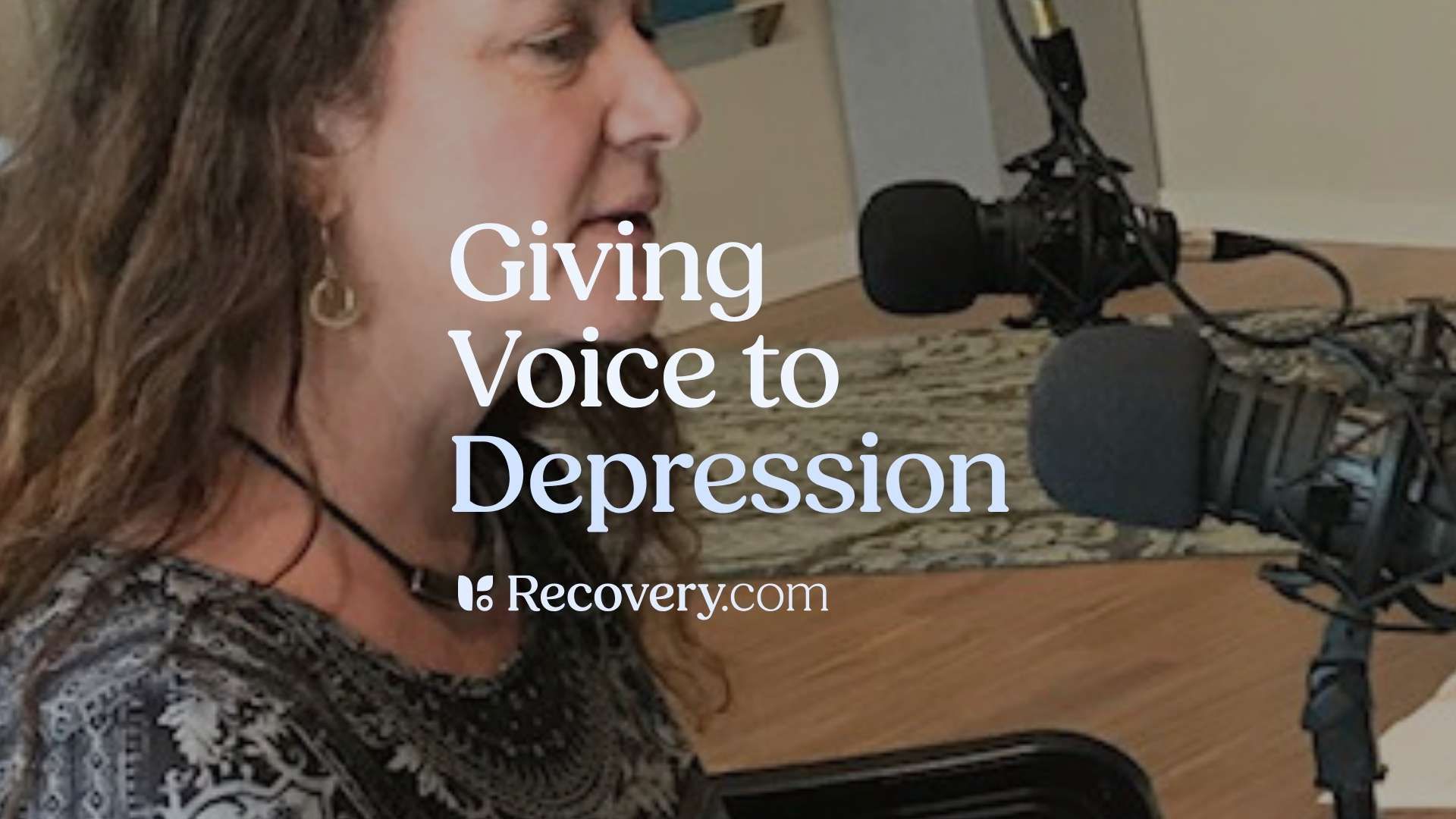
Terry McGuire is an award-winning journalist and news anchor turned mental health and hope advocate. The Giving Voice to Depression podcast that she created and cohosts has been downloaded more than 2.5 million times, and ranks in the top 1% of global podcasts.
Table of Contents
- 1. Journaling Helps Process Internal Thoughts
- 2. Structure And Routine Support Stability
- 3. Monitoring Thoughts Signals Early Changes
- 4. Sleep Is Critical For Mental Health
- 5. Distraction Helps Interrupt Thought Spirals
- 6. Not Every Tool Needs To Work
- 7. Create A Personal Support Box
- 8. Safety Planning Provides Essential Support Structure
- 9. Write Down What You Know Is True
- 10. Even Doing Everything May Not Be Enough
- 11. Shared Stories Show You’re Not Alone
- 12. Being Heard Matters As Much As Speaking
- Key Takeaways From This Conversation
- Final Thoughts
This article is a summary of a conversation from the Giving Voice to Depression podcast, hosted by Terry McGuire. In this episode, Terry continues a reflective conversation with her sister Bridget — the podcast’s original co-host — exploring the real-world tools, strategies, and insights they’ve gathered from hundreds of guests over more than five years.
What makes this episode especially meaningful is its grounding in lived experience. These are not hypothetical strategies or clinical checklists. These are tools shared by people who have lived through depression, navigated suicidal thoughts, and found ways — sometimes small, sometimes significant — to keep going.
Across more than 300 episodes, patterns emerge. Not perfect solutions, but recurring ideas. Not guarantees, but possibilities. And in this conversation, Bridget helps surface the tools that have stood out most — not just because they were mentioned, but because they resonated.
1. Journaling Helps Process Internal Thoughts
One of the most accessible and widely shared tools is journaling. It offers a way to move thoughts from the mind onto something tangible.
Bridget explained how writing creates clarity and memory:
Bridget shared:
I think journaling is really good because you can look back on it. Sometimes, you know, when I talk, I don't have recollection of what I said. Whereas if it's written, I can refer back to that. And that ability to go back and see what I was thinking or feeling at a different time can be really grounding.
Writing slows things down. It captures what can otherwise feel fleeting or overwhelming.
Benefits of journaling include:
- Creating distance from intrusive thoughts
- Tracking emotional patterns over time
- Providing a safe space for expression without judgment
2. Structure And Routine Support Stability
When depression disrupts motivation and energy, routine becomes an anchor.
Bridget described how structure provides accountability and direction:
Bridget noted:
Just by giving some structure and kind of accountability in a given day, I'm kind of committing to doing X, Y, and Z. Even if it's small things, there's something about having that structure that gives the day a little bit more shape.
Routine doesn’t need to be rigid. In fact, flexibility is key.
3. Monitoring Thoughts Signals Early Changes
Awareness of internal dialogue can be one of the most powerful early indicators of change.
Bridget highlighted how noticing a shift in thoughts can prompt action:
Bridget shared:
The big one for me is just paying attention to what the incessant thoughts in my head are saying and when they flip. When they shift in tone or intensity, that's something I try to notice, because that's usually a signal that something's changing.
4. Sleep Is Critical For Mental Health
Sleep is one of the most important — and most difficult — components of mental health.
Terry emphasized its importance:
As Terry explained:
Sleep is just the key key key for me. And you know, the drag is it's hard sometimes when you're depressed to get enough sleep. And then sometimes it's hard not to sleep. But it plays such a big role in everything else.
5. Distraction Helps Interrupt Thought Spirals
Sometimes, the goal is not to solve depression — but to interrupt it.
As Terry described:
We've had people say comedy, YouTube videos, crossword puzzles, games. Anything that gets you out of your head or something else in your head that can distract you.
Bridget added:
Just anything. Whatever works in that moment to shift your focus even a little bit.
6. Not Every Tool Needs To Work
A major takeaway is that no single tool works universally.
Bridget emphasized flexibility:
Bridget explained:
The list is long and the good news is you can probably find something on it or some things on it that will help and you don't have to use them all. They don't all have to work. And the same thing doesn't have to work every time either.
7. Create A Personal Support Box
Preparing for difficult moments ahead of time can make a meaningful difference.
Bridget described creating a personal “support box”:
Bridget shared:
One of my favorite is the one where you kind of make yourself a little box, you know, with little reminders, little notes to yourself, little things that make you happy to remember. Like I can't access this for myself right now but I know I can walk to my closet and pull out that box and there'll be some things in there that nourish me.
8. Safety Planning Provides Essential Support Structure
Safety plans are essential tools, especially when suicidal thoughts are present.
As Terry explained:
It's hard "in it" to access the things you need sometimes. And those reminders can be a part of your safety plan, as can who my doctor is and where I want to go if I need to be hospitalized and what friend can actually have this conversation with me.
9. Write Down What You Know Is True
One powerful tool is writing affirmations when not depressed.
As Terry shared:
I know that I have value. I know I am a good mother, sister, whatever. I know that I have a good sense of humor. I know that I am creative. I don't know any of those things when I'm depressed. And if I saw it written down in my own handwriting, maybe I would believe it more.
10. Even Doing Everything May Not Be Enough
One of the hardest truths shared in the episode:
Bridget reflected:
The reality, the painful, painful reality, that you can have money and resources and connections and live in a community where there are relatively esteemed institutions that you would know and you took action and you got your child into something that you were hoping would help. And that sometimes that's just not enough.
11. Shared Stories Show You’re Not Alone
Shared experiences create powerful connection.
Bridget explained:
When you hear somebody say something that you haven't even maybe admitted out loud to yourself or anyone else, you can't deny that you're not alone because they feel exactly the same way that you do or did.
As Terry clarified:
We may in fact be going through it alone. We may be physically alone in our homes or in our rooms or in our beds. But we are not the only people going through this experience.
12. Being Heard Matters As Much As Speaking
Bridget emphasized the importance of being heard:
Bridget reflected:
The power of shared story and the power of talking about one's lived experience and the power and importance of being heard. To say your story is one thing that's huge, and then to be heard is a separate and distinct thing that is huge. That being heard piece is what really connects people.
Key Takeaways From This Conversation
- No single tool works for everyone
- Awareness and early recognition matter
- Preparation (like safety plans) is critical
- Connection reduces isolation
- Flexibility is essential
Final Thoughts
What emerges from this conversation is not a formula — but a framework.
A way of approaching depression with:
- Compassion
- Curiosity
- Patience
Depression can feel isolating in a way that is difficult to explain.
But through shared stories, language, and connection, that isolation can begin to soften.
Not disappear. Not resolve instantly.
But shift — just enough.
And sometimes, that small shift is what helps someone take the next step forward.
Our Promise
How Is Recovery.com Different?
We believe everyone deserves access to accurate, unbiased information about mental health and recovery. That's why we have a comprehensive set of treatment providers and don't charge for inclusion. Any center that meets our criteria can list for free. We do not and have never accepted fees for referring someone to a particular center. Providers who advertise with us must be verified by our Research Team and we clearly mark their status as advertisers.
Our goal is to help you choose the best path for your recovery. That begins with information you can trust.