Find Treatment By
Rehabs by Location


Find Treatment By
Learn
About Us
Recovery.com combines independent research with expert guidance on addiction and mental health treatment. Our mission is to help everyone find the best path to recovery through the most comprehensive, helpful network of treatment providers worldwide.
Advisory Council
Our advisory council brings together leaders in behavioral health, technology, and business. Their diverse expertise ensures our resources and product are innovative, evidence-based, and effective. They guide our mission as accomplished individuals dedicated to improving the landscape of addiction recovery and mental wellness.
Coping with Depression: 10+ Real-World Lessons from 500 Episodes of Shared Experience

Terry McGuire is an award-winning journalist and news anchor turned mental health and hope advocate. The Giving Voice to Depression podcast that she created and cohosts has been downloaded more than 2.5 million times, and ranks in the top 1% of global podcasts.
Terry McGuire is an award-winning journalist and news anchor turned mental health and hope advocate. The Giving Voice to Depression podcast that she created and cohosts has been downloaded more than 2.5 million times, and ranks in the top 1% of global podcasts.
Table of Contents
- 1. The Numbers Matter Because People Matter
- 2. Real Stories Keep The Podcast Alive
- 3. Vulnerability Helps Other People Open Up
- 4. Language Gives People A Way In
- 5. Everyday Language Can Be Most Powerful
- 6. Practical Tools Need To Be Doable
- 7. Connection Interrupts Depression’s Lies
- 8. Small Steps Still Count As Progress
- Final Thoughts
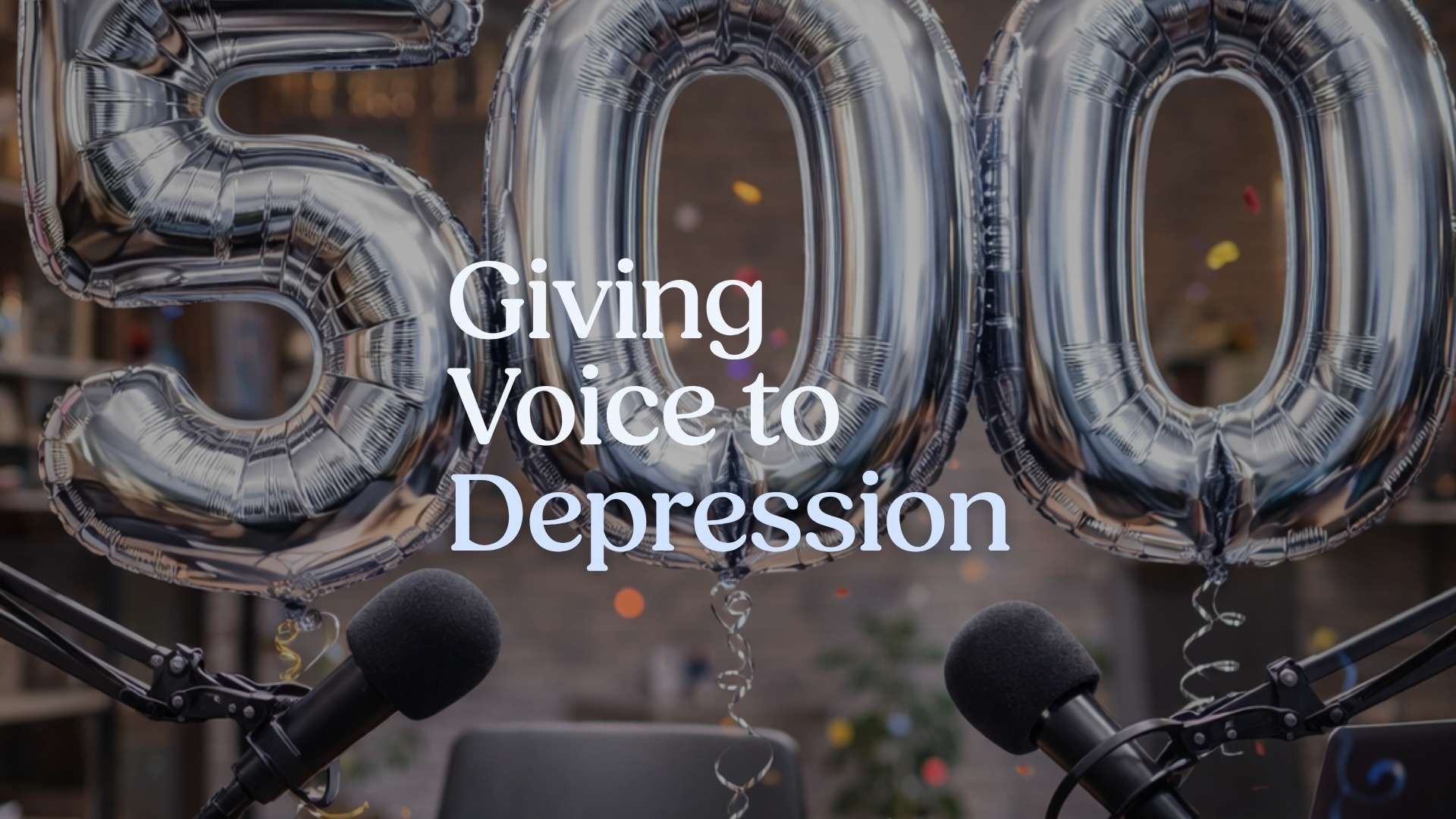
This article is a summary of a conversation from the Giving Voice to Depression podcast hosted by Terry McGuire. In this 500th episode, Terry is joined by current co-host Carly McCollow and former co-host Dr. Anita Sanz for a thoughtful look back at what the show has learned about depression, language, stigma, and survival.
The conversation is reflective, but it never becomes self-congratulatory. Instead, it stays focused on what the podcast has always been about: the people listening in pain, the guests brave enough to tell the truth, and the practical wisdom that can make depression feel a little less isolating. That tone matters. Terry has always approached this subject with honesty, compassion, and respect for how hard it can be to put suffering into words.
What emerges from this milestone episode is a clearer picture of why the podcast has lasted. It is not because depression is easy to discuss. It is because people need language for what they are feeling, examples of how others cope, and repeated reminders that they are not strange, broken, or alone. After 500 episodes, that mission still feels urgent.
Below are some of the biggest lessons this episode offers.
1. The Numbers Matter Because People Matter
A 500th episode is an impressive milestone. So is the fact that people in 171 countries and territories have listened. But Terry immediately redirects attention away from the raw numbers and back to what those numbers represent.
For her, the podcast has never been about charts, reach, or milestones for their own sake. It has been about the person listening from bed, the person barely holding it together at work, and the person wondering why they are not “better by now.” That is the emotional center of the episode.
As Terry explained:
But it has never been about the numbers. It's always been about you. It's been about the person listening while lying in bed, not sure how they're going to get through the day, and the person driving home from work, holding it together until they can safely fall apart. It's for the person who feels like they should be better by now and doesn't understand why they're not.
That is what gives the podcast its staying power. The show does not speak about depression from a distance. It speaks directly to the people living inside it.
Why this matters:
- Milestones are meaningful because they represent lives touched
- The show remains grounded in service, not self-importance
- Listeners hear that their pain is being taken seriously
2. Real Stories Keep The Podcast Alive
Dr. Anita Sanz opens the conversation by acknowledging how extraordinary it is that a podcast about depression has reached 500 episodes. But she quickly identifies the reason it has worked: the show is built on stories.
Not theories. Not polished advice disconnected from everyday struggle. Stories.
Dr. Anita Sanz explained:
Probably one of the main reasons why the podcast has been so successful, it's because it's been about the stories, the authentic reality of living with depression, managing it, and treating it. And I think that's important to acknowledge.
That phrase — the authentic reality — captures the show’s strength. Guests do not arrive as case studies. They come as full human beings trying to describe hopelessness, heaviness, shame, fear, and the small things that help them keep going.
That makes the podcast useful in a special way. It gives listeners more than information. It gives them recognition.
3. Vulnerability Helps Other People Open Up
One of the episode’s clearest themes is that Terry’s willingness to share her own lived experience helped create a space where guests could be honest. Dr. Sanz points out that the podcast would not feel the same if Terry had relied only on her professional communication skills and stayed personally detached.
Instead, Terry brought herself into the work. She let guests know that she understood depression from the inside, not just as an interviewer asking questions from the outside.
As Dr. Anita Sanz put it:
You brought yourself as a whole person, and were very, very real. And I remember one of the episodes that we taped together was right after you had lost your mom. And you brought that in. You know, you brought that in in terms of where you were at and how things were hitting you. And so, just in real time, being real, I think is one of the reasons why this podcast stands out.
That phrase — in real time, being real — feels like a summary of the show’s tone. Terry does not ask guests to be vulnerable from behind a protective wall. She meets them in the open.
That makes a difference because people often disclose more honestly when they feel understood rather than studied.
4. Language Gives People A Way In
Terry says one of the most valuable things the podcast has provided is language. That may sound simple, but it is one of the episode’s deepest insights.
Many people know they are suffering long before they know how to explain it. They may not have words for the heaviness, the self-hatred, the numbness, or the fear. When they hear another person describe it clearly, something shifts. They can bring those words to a doctor. They can use them with a child, a partner, or a friend.
As Terry shared:
We've been told that people literally ... "I wrote down what you said exactly how you said it, and I brought it to my doctor." And somebody else said, "Because of listening to that episode, I had the words to sit down with my kid and say, 'Hey, I don't think you're okay. I'm seeing this.'"
That is a powerful reminder that language is not just descriptive. It is relational. It creates bridges.
Language helps people:
- Explain symptoms more clearly
- Start conversations that once felt impossible
- Feel less alone in what they are experiencing
- Borrow words until they can find their own
In a condition defined by silence and misunderstanding, that is no small thing.
5. Everyday Language Can Be Most Powerful
Dr. Sanz builds on that point by saying that while expert language can help, the most moving language often comes from ordinary people trying to tell the truth about what depression feels like.
Those descriptions are often imperfect, but that is part of what makes them powerful. They sound human. They feel reachable.
Dr. Anita Sanz reflected:
I got the most out of people just, honestly sometimes even struggling, but just saying, "This is what it was like for me" — that language.
The episode gives examples of memorable phrases from past guests that have stayed with Terry over the years. One guest described depression as a physical “weighted blanket.” Another compared it to a spreadsheet that auto-fills every flaw and auto-deletes everything good. These images linger because they make the invisible visible.
That matters for listeners who have struggled to explain their own minds. A well-placed metaphor can help someone feel recognized in seconds.
6. Practical Tools Need To Be Doable
The episode then turns toward one of the most useful parts of the podcast: coping tools. Terry is clear that what listeners often need is not just someone else’s story, but something practical they can take from that story.
The key is realism. Vague advice can be frustrating when depression makes basic tasks feel impossible. That is why the episode celebrates tools that are concrete and specific, not aspirational and abstract.
Some examples mentioned include:
- “Writing the ugly out” in a way that becomes unreadable and private
- A support menu or bingo card of grounding options
- Humor as a way to reduce dread
- Tiny changes that make life more manageable
Dr. Sanz emphasizes that the best tools are the ones that answer how. Not just “take care of yourself,” but how to do that when motivation is gone and shame is loud.
That practical focus is one reason the show remains so useful. It keeps asking not only what helps, but what helps in real life.
7. Connection Interrupts Depression’s Lies
One of Dr. Sanz’s strongest points is that depression distorts thinking, and those distortions become dangerous when they go unchallenged. She stresses that people cannot always trust their depressive thought process, especially when it escalates into beliefs that others would be better off without them.
That is where connection becomes urgent. Another person may need to step in, help investigate the thoughts, and interrupt the logic depression is building.
As Dr. Anita Sanz explained:
You cannot trust your depressive thought process. If you can't stop it, if you can't interrupt it, If it starts getting to that point where you're thinking the world or the people you love are better off without you ... we've got to get somebody else to come in.
This is one of the episode’s most important lessons. Depression isolates first, then persuades. Reaching out — or being reached for — can interrupt that progression.
The episode highlights tools like:
- Safety planning ahead of time
- Identifying trusted contacts
- Letting others help evaluate the thoughts
- Treating suicidal thinking as something that needs interruption, not secrecy
8. Small Steps Still Count As Progress
The final major lesson in this conversation is one the podcast has repeated in many forms: small steps matter. Depression often makes people feel that if they cannot do everything, they may as well do nothing. This episode pushes hard against that lie.
Dr. Sanz offers one of the clearest examples when she talks about moving from the bed to the couch. That may sound minor, but she reframes it as meaningful change: a shift in location, light, and sensory input.
As Dr. Anita Sanz said:
Go from the bed to the couch. That's actually incredible change right there. Change of location, change of light, change of sensory stimulation that your brain so needs: gentle but novel stimulation to be able to start healing.
That reframe is powerful because it removes shame and makes progress feel possible. The same logic applies to cereal for dinner, medication by the bed, a bottle of water within reach, or a snack cart nearby. These are not failures of discipline. They are compassionate adaptations.
Small steps can include:
- Changing the pillowcase instead of all the sheets
- Eating something easy
- Moving to a different room
- Taking medication on time
- Doing the smallest doable thing
That is not lowering the bar in a hopeless way. It is lowering the bar enough that someone can actually clear it.
Final Thoughts
This 500th episode makes clear that Giving Voice to Depression has never simply been a podcast about depression. It has been a place where people hear their own experiences reflected back to them with honesty and care.
Across 500 episodes, the lessons add up: stories matter, language matters, tools matter, and connection matters. Depression becomes less powerful when it is named, shared, interrupted, and met with compassion instead of shame.
That is what Terry, Carly, and Dr. Anita Sanz celebrate here. Not the number alone, but what 500 episodes have made possible: more language, more honesty, more practical help, and more people feeling a little less alone.
Our Promise
How Is Recovery.com Different?
We believe everyone deserves access to accurate, unbiased information about mental health and recovery. That's why we have a comprehensive set of treatment providers and don't charge for inclusion. Any center that meets our criteria can list for free. We do not and have never accepted fees for referring someone to a particular center. Providers who advertise with us must be verified by our Research Team and we clearly mark their status as advertisers.
Our goal is to help you choose the best path for your recovery. That begins with information you can trust.