Find Treatment By
Rehabs by Location


Learn
About Us
Recovery.com combines independent research with expert guidance on addiction and mental health treatment. Our mission is to help everyone find the best path to recovery through the most comprehensive, helpful network of treatment providers worldwide.
Advisory Council
Our advisory council brings together leaders in behavioral health, technology, and business. Their diverse expertise ensures our resources and product are innovative, evidence-based, and effective. They guide our mission as accomplished individuals dedicated to improving the landscape of addiction recovery and mental wellness.
Healing from Childhood Trauma: 9 Lessons About CPTSD, Depression, and Self-Worth


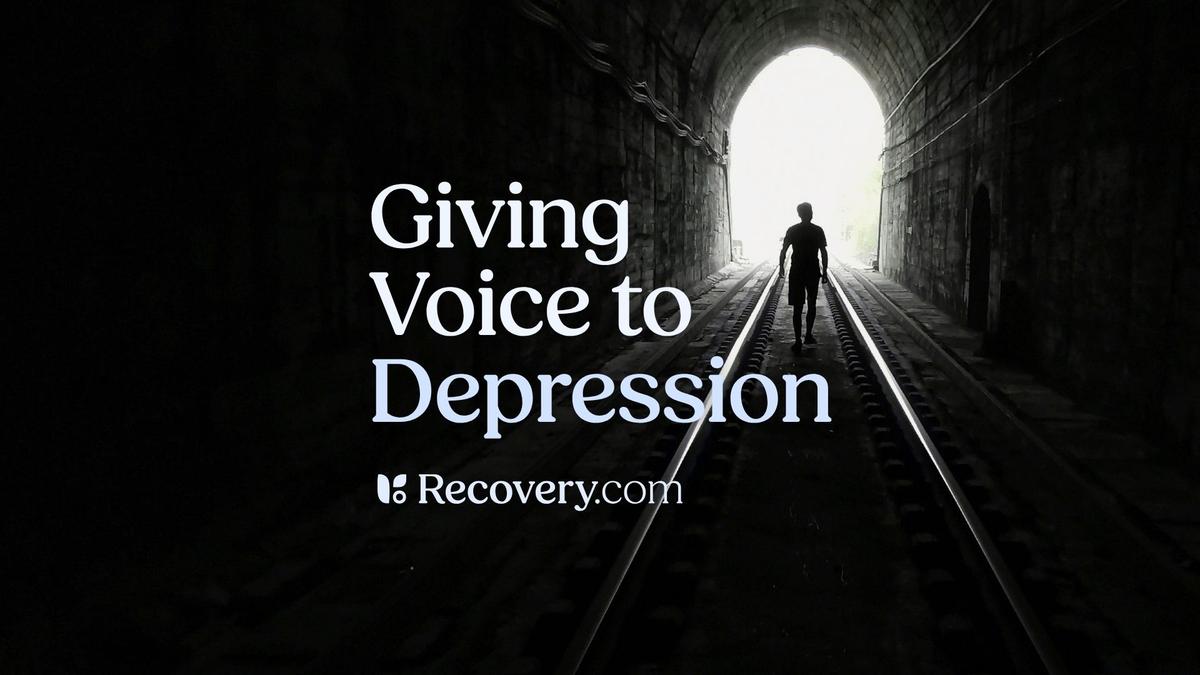
For years, depression can feel like proof that something is fundamentally wrong with a person. But when depression is understood through the lens of trauma, that story can begin to change. What once looked like weakness, failure, or brokenness may instead be recognized as a response to experiences the mind and body were never meant to carry alone.
This article summarizes a conversation from the Giving Voice to Depression podcast, hosted by Terry McGuire, with returning guest Davey. Nearly a decade after first sharing the darkest period of his depression, Davey returned to explain how learning about complex post-traumatic stress disorder, or CPTSD, helped him understand his childhood, rebuild his self-worth, and find a life he once believed was impossible.
His experience does not represent every person living with depression or trauma. It does, however, offer a powerful reminder: Understanding why a person struggles can open new paths toward healing.
1. Complex Trauma Can Develop Over Time
Post-traumatic stress disorder is often associated with a single frightening event. CPTSD is more commonly connected to repeated or prolonged trauma, especially when someone feels trapped, powerless, or unable to escape.
Experiences associated with complex trauma may include:
- Childhood abuse or neglect
- Ongoing emotional abuse
- Domestic violence
- Captivity or coercive control
- Repeated exposure to unsafe environments
- Chronic discrimination, instability, or fear
For Davey, the trauma began in childhood. He described physical punishment, constant fear of his father’s changing moods, the loss of a sister without counseling, and growing up without affection or emotional safety.
What made the experience especially difficult to recognize was that his basic physical needs had been met. As Davey reflected:
I always thought I had a good childhood. I was fed. I was clothed, I was sheltered. But I wasn’t loved. I never knew love — and it’s so vital.
A child can have food, clothing, and shelter while still experiencing profound emotional neglect. Davey’s story shows why trauma cannot always be measured only by what was provided. It must also be understood through what was missing.
2. Depression May Be Rooted in Trauma
When Davey first appeared on the podcast, he understood his condition primarily as major depressive disorder. He had lived for years with severe depression, frequent suicidal thoughts, and a belief that he was not meant for life.
Three years before his follow-up interview, he opened up to his doctor about his childhood. Within minutes, she wrote “CPTSD” on a piece of paper and encouraged him to learn more.
That moment did not erase his pain, but it gave him a new framework for understanding it. Davey explained:
The last three years I’ve understood that there’s nothing wrong with me. I just came to understand my value as a human being.
For Davey, depression was not proof that he was defective. It was connected to the fear, abuse, grief, and emotional deprivation he had endured.
This shift matters because self-blame often deepens depression. When people begin to understand that their symptoms may have developed as adaptations to unsafe circumstances, they can begin replacing judgment with curiosity and compassion.
Instead of asking, “What is wrong with me?” they may begin asking:
- What happened to me?
- What did I learn to believe?
- How did I learn to stay safe?
- Are those survival strategies still helping?
- What support might help me heal?
3. A Diagnosis Can Bring Needed Clarity
Mental health diagnoses affect people differently. Some find labels limiting or stigmatizing. Others experience them as validating because they finally have language for patterns they have struggled to explain.
For Davey, the CPTSD diagnosis brought relief. He began reading about complex trauma and recognized how his childhood experiences had shaped his perfectionism, fear, low self-esteem, and depression.
The diagnosis helped connect experiences that had previously seemed unrelated. He could see that his reactions had causes, and more importantly, that he could begin learning new ways to respond.
A diagnosis should never reduce someone to a condition. At its best, it can provide:
- A starting point for treatment
- Shared language with providers
- An explanation for confusing symptoms
- Access to helpful resources
- Confirmation that others experience similar patterns
As Terry and Carly discussed, there is no single correct path to healing. The value of a diagnosis depends on whether it helps the individual better understand and support themselves.
4. Childhood Fear Can Fuel Perfectionism
Davey came to understand that his perfectionism was not simply a personality trait. It was rooted in fear.
As a child, mistakes could bring unpredictable punishment. He learned that getting everything right might help him avoid anger, rejection, or harm.
In adulthood, that survival strategy became exhausting. Describing what changed after his diagnosis, Davey said:
When I was diagnosed with the CPTSD, that’s what put me on that road: that I don’t have to abuse my mind and self like that anymore. I didn’t deserve it.
Trauma-related perfectionism is not always about wanting admiration or believing oneself superior. It may be driven by beliefs such as:
- Mistakes are dangerous.
- I must perform perfectly to stay safe.
- If I disappoint someone, I will be rejected.
- My worth depends on what I accomplish.
- Rest must be earned.
These beliefs may once have helped a child anticipate danger. Over time, however, constant vigilance and self-criticism can contribute to anxiety, burnout, shame, and depression.
Healing may involve learning that mistakes are part of being human—and that love and safety should not depend on flawless performance.
5. Trauma Can Distort Personal Self-Worth
Terry asked Davey whether his value had come from what he did rather than who he was. His answer was immediate: “Yes. One hundred percent.”
Without consistent love during childhood, Davey learned to see himself as someone whose purpose was to work, fulfill obligations, and meet other people’s expectations. He continued functioning as a husband, father, and community member while privately believing he was unworthy of love.
That distinction—doing versus being—became central to his recovery. Davey shared:
I deserve to be loved just for who I am and not for what I do. And that’s not easy. I’m not going to say that I have a real handle on that yet. But I have to keep working on it every day.
Many trauma survivors carry similar beliefs. They may become productive, accommodating, dependable, or endlessly giving while feeling empty or undeserving underneath.
Rebuilding self-worth may require practicing new truths:
- A person’s value is not determined by productivity.
- Love does not have to be earned.
- Rest is not a moral failure.
- Boundaries do not make someone selfish.
- Imperfection does not erase worth.
- Every person deserves care and dignity.
6. Healing Still Includes Difficult Days
Davey did not describe recovery as a permanent state in which pain disappears. He called it a healing journey and emphasized that he still has work to do.
What changed was his resilience.
In the past, a difficult event could pull him into a prolonged period of darkness. Now, he can experience a bad day, recognize it as temporary, and recover more quickly.
He no longer treats every hardship as evidence that something is wrong with him. Instead, he reminds himself that painful events are part of life, are not always personal, and can be survived.
Healing may look like:
- Recovering faster after setbacks
- Recognizing triggers earlier
- Responding with less self-judgment
- Asking for support sooner
- Believing painful feelings will pass
- Remaining connected to personal worth
The goal is not a life without sadness, stress, or disappointment. It is developing the ability to experience those emotions without being completely consumed by them.
7. Boundaries Can Protect Trauma Recovery
As Davey’s self-worth grew, his relationships changed. He became more aware of people who were toxic, exploitative, or invested in keeping him in a diminished role.
Learning that he deserved love also meant learning what he would no longer tolerate.
People with low self-esteem may become vulnerable to relationships in which they are expected to give endlessly while receiving little care in return. Because mistreatment can feel familiar, harmful dynamics may initially seem normal.
Healthy boundaries may include:
- Limiting contact with consistently hurtful people
- Saying no without excessive explanation
- Refusing humiliation or manipulation
- Recognizing relationships built on self-abandonment
- Choosing relationships based on mutual respect
Leaving unhealthy relationships can still be painful, particularly when those relationships are longstanding. But Davey discovered that letting go of toxic connections also created room for healthier ones.
8. Suicidal Thoughts Need Safer Conversations
Davey’s earlier depression included frequent suicidal thoughts, a plan, and what he described as a trial run. His story therefore demonstrates why people need places where they can speak honestly about suicidality.
Suicidal thoughts exist on a spectrum. Some people experience passive thoughts, such as wishing they would not wake up. Others develop more active thoughts, plans, or intentions.
Every disclosure deserves to be taken seriously, but panic, shame, or judgment can make people less likely to speak openly. Carly emphasized that safer conversations can help people receive support before their thoughts intensify.
Davey later got a semicolon tattoo, a symbol associated with suicide prevention and continuing one’s story. He wanted others to know that he was a safe person to talk to.
Supporting someone may involve:
- Listening without shaming them.
- Asking whether they are in immediate danger.
- Helping them connect with professional support.
- Staying present rather than minimizing their pain.
- Treating suicidal thoughts as something discussable.
As Carly emphasized, keeping people safe requires families, friends, neighbors, doctors, therapists, schools, and communities. It takes all of us.
9. A Different Life Can Become Possible
The most striking part of Davey’s update was not simply that he was functioning better. It was that he had come to love being alive.
He sleeps well. He enjoys waking up. He experiences happiness and believes he has developed enough resilience that he will not return to the darkest place he once occupied.
Describing how dramatically his life has changed, Davey said:
I’m thankful that I didn’t put myself in the ground because I enjoy life now. Every day I am happy.
When asked what he would tell his earlier self, Davey offered the reassurance he once could not believe. Davey reflected:
There’s light at the end of that tunnel. I’m not in the tunnel. I’m through the tunnel, and it’s sunshine.
His story does not promise that every person will heal in the same way, through the same diagnosis, or without medication. It does show that current pain cannot reliably predict the rest of someone’s life.
Speaking directly to people who may still be questioning their worth, Davey emphasized:
You’re valuable. You’re as valuable as anybody else. And you deserve to be loved just for who you are.
Davey’s message to anyone still in the tunnel is simple but powerful: You deserve love because of who you are, not because of what you accomplish. Your current pain is not the final chapter of your story.
Our Promise
How Is Recovery.com Different?
We believe everyone deserves access to accurate, unbiased information about mental health and recovery. That's why we have a comprehensive set of treatment providers and don't charge for inclusion. Any center that meets our criteria can list for free. We do not and have never accepted fees for referring someone to a particular center. Providers who advertise with us must be verified by our Research Team and we clearly mark their status as advertisers.
Our goal is to help you choose the best path for your recovery. That begins with information you can trust.