Find Treatment By
Rehabs by Location


Learn
About Us
Recovery.com combines independent research with expert guidance on addiction and mental health treatment. Our mission is to help everyone find the best path to recovery through the most comprehensive, helpful network of treatment providers worldwide.
Advisory Council
Our advisory council brings together leaders in behavioral health, technology, and business. Their diverse expertise ensures our resources and product are innovative, evidence-based, and effective. They guide our mission as accomplished individuals dedicated to improving the landscape of addiction recovery and mental wellness.
Am I Depressed?: 14 Signs Depression May Be Hiding in Plain Sight


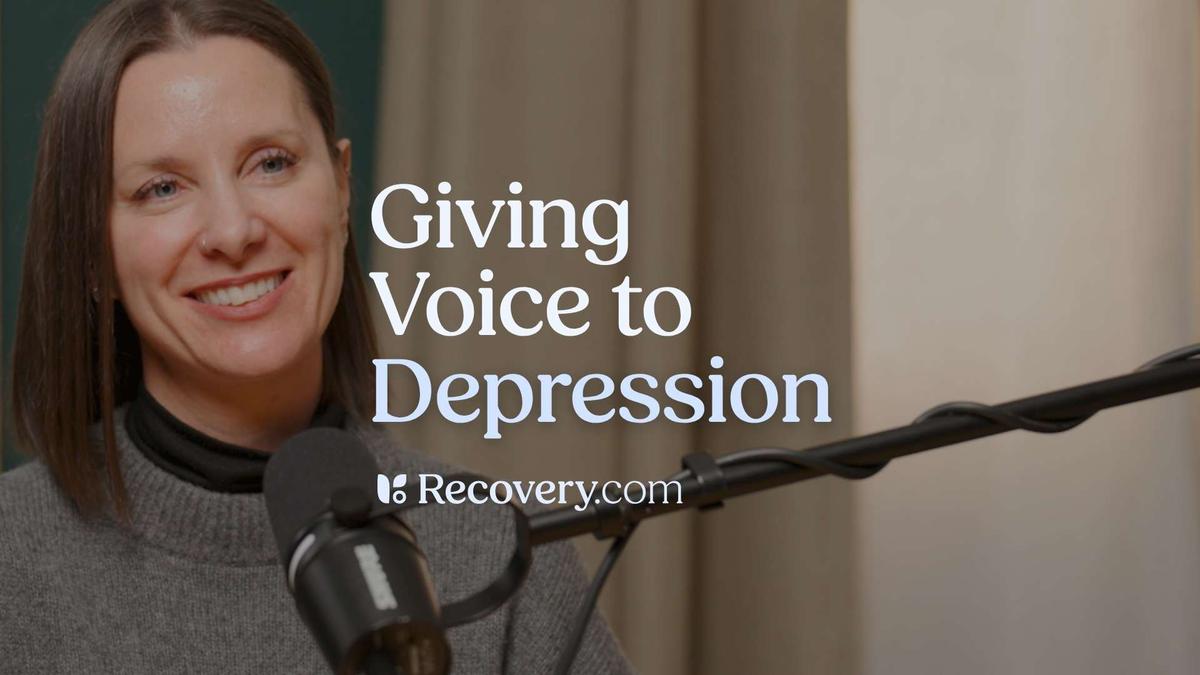
This article is a summary of a conversation from the Giving Voice to Depression podcast, hosted by Terry McGuire. In this episode, Terry shares an interview from her other podcast, Recoverable, with therapist and suicide attempt survivor Aja Chavez. Together, they unpack one of the most misunderstood mental health conditions people live with every day: depression that does not always look like depression.
Because for many people, depression does not arrive as visible collapse. It arrives as fatigue, numbness, irritability, disconnection, loss of joy, or a growing inability to do things that once felt simple. And sometimes it does all of that while the person still goes to work, pays bills, smiles at coworkers, and appears to have life under control.
That disconnect between what depression feels like internally and what it looks like externally is at the heart of this conversation. Aja brings the dual lens of clinician and survivor, while Terry brings years of lived experience and years of asking the questions people are often too ashamed or confused to ask out loud.
Together, they offer not just symptoms, but understanding.
1. Depression Rarely Feels Just One Way
One of the most validating parts of this conversation is Aja’s immediate clarification that depression is not one single sensation. It shifts. It changes. It evolves over time.
For some people, that means heaviness. For others, it means emptiness. For others still, it means a constant low-grade sense that everything has become harder than it should be.
Aja described what depression has felt like for her:
Depression feels like, well, it evolves. It can feel like a very warm, heavy weighted blanket. It can feel like moving through mud. It can feel like pure and utter hopelessness. It can feel like there is just a little lingering dark cloud that's kind of hovering around. It, for me, has felt in times just like the world's a little fuzzy and I can't quite fully emerge and focus and concentrate.
That range matters because many people disqualify themselves from concern if they are not “sad enough.” But depression is often broader — and sneakier — than sadness.
2. Losing Interest Is Often An Early Clue
Depression often begins not with dramatic despair, but with quiet disengagement.
Aja explains that one of the first things loved ones may notice is that the person simply stops caring about what used to matter. Activities become burdens. Joy feels inaccessible. Even basic participation in life starts to erode.
This may look like:
- Pulling away from hobbies
- Avoiding social interaction
- Skipping routines
- Feeling indifferent toward once-loved plans
This is not laziness or attitude. It is often one of the earliest outward signs that depression is beginning to take hold.
3. Depression Often Masquerades As Laziness
This is one of the most important distinctions in the entire episode because it speaks directly to the shame so many people carry.
Aja admits she did not initially ask herself if she was depressed. She asked herself if she was lazy.
Aja explained the false comparison many people make:
I don't love the word lazy, first of all. I think many times exhaustion and tiredness shows up as a cue that we need to rest and recharge. The difference is with depression, when we rest and recharge, like when we step away, we don't actually feel rested and recharged. It just continues and continues and continues and takes us down even further.
That is the difference many people miss.
Ordinary fatigue says: take a break and feel better.
Depression says: take a break and sink deeper.
Which means the shame spiral starts quickly:
- “Why can’t I do this?”
- “Why is everyone else functioning?”
- “What’s wrong with me?”
And depression is more than happy to answer those questions cruelly.
4. Rest Does Not Always Restore You
Terry jumps in here with a detail many listeners with depression will instantly recognize: sleep and withdrawal often become the only relief from the constant internal noise.
But even after hours in bed, the person does not wake feeling renewed. They wake feeling dread.
As Terry candidly shared:
I never woke feeling rested. Or like, now I can do this. Now I can take on this day. I was just like, I don't want to do this again. I knew what it was going to be like, you know what it's going to feel like, you know what the thoughts are going to be.
This is where depression differs from burnout or simple exhaustion. The body may rest, but the mind remains trapped in the same dark loop.
5. Depression Is A Medical Condition
Terry and Aja repeatedly return to this point because they know how much damage is done when people think depression is a personal weakness.
Aja is emphatic that depression must be viewed as a real medical condition — one that can involve biology, mood regulation, trauma, life experiences, and internal thought patterns all intersecting.
When people move away from that understanding, they often move toward blame:
- blaming themselves,
- blaming motivation,
- blaming gratitude,
- blaming character.
But illness deserves treatment, not accusation.
This reframing can be the first step toward someone finally allowing themselves to seek help.
6. High Achievement Does Not Protect You
One of the strongest myths this episode dismantles is the idea that successful people cannot be depressed.
Aja describes living at one of the pinnacles of her career while simultaneously existing at the depths of her depression.
Aja shared how invisible that struggle was:
I was very high functioning when I was at the depths of my depression. I was at one of probably the pinnacles of my career. Everything externally looked good. And so there was this, how on earth? I'm not an Eeyore. I'm not what was being portrayed in movies, in TV.
This is why high-functioning depression can go undetected for years.
From the outside:
- the person works,
- the person parents,
- the person performs,
- the person smiles.
Inside, they may be barely holding on.
7. Depression Can Remove Your Ability To Feel Joy
Terry brings up anhedonia — the inability to connect with pleasure — and it becomes one of the most haunting descriptions in the discussion.
This symptom can make favorite music sound flat. Favorite food feel pointless. Favorite people seem distant. Things the person knows they love become emotionally inaccessible.
That is what makes depression so disorienting.
The person often thinks:
- “Why don’t I care?”
- “Why can’t I feel this?”
- “Why am I so disconnected?”
The answer is not lack of gratitude. It is that depression can temporarily shut down the pathways that make joy reachable.
8. Isolation Can Feel Like The Safest Option
Aja’s description of childhood and teenage depression is especially striking because she explains that isolation did not initially feel destructive — it felt relieving.
Being alone meant she did not have to absorb everyone else’s emotions. Being numb meant she did not have to feel.
Aja described the deceptive comfort depression offered:
Depression stepped in and was like, I have a solution for that. I know a way to take that all away. I'll help you. All we have to do is just kind of not feel. There's a numbness, there's a checking out, right? And that might sound kind of negative or bad, but it was a relief.
That is why depression can become self-reinforcing.
What helps short-term:
- withdrawal,
- silence,
- disconnection,
often harms long-term by removing belonging, support, and perspective.
9. Hopelessness Can Grow In A Good Life
One of the most sobering realities in Aja’s story is that suicidal despair did not emerge because her life visibly fell apart.
She had:
- loving parents,
- a career,
- a home,
- friends,
- external markers of success.
And yet the hopelessness still deepened.
That is a critical reminder: depression does not require a “good enough reason” that other people can see. Sometimes the life looks fine while the mind has become unbearable.
This is why “But you have so much to be grateful for” rarely helps. Gratitude and despair can coexist.
10. Dropping The Facade Can Be A Turning Point
After Aja’s suicide attempt, one of the first things she felt was not joy — it was relief that she no longer had to pretend.
The polished version of herself was no longer sustainable, and strangely, there was freedom in that.
Aja reflected on that release:
I remember feeling for the first time in years, this like, oh, I don't have to pretend anymore. Oh, I don't have to keep the facade up. I could be as in deep struggle as I needed to be.
That honesty became the doorway to:
- accepting treatment,
- taking medication,
- entering intensive therapy,
- beginning to challenge depression’s lies.
Sometimes healing starts not when a person feels stronger, but when they stop performing strength.
11. Depression Feeds On Shame
Aja explains that depression’s internal dialogue is often built on one repeated strategy: shame.
It tells people they are:
- lazy,
- weak,
- failing,
- different,
- less than everyone else.
And when those thoughts are believed, depression gains more territory.
Aja notes that one of the biggest shifts in her recovery was learning to disagree with that dialogue rather than automatically accepting it as truth.
That does not mean the thoughts vanish.
It means they stop being the unquestioned narrator.
12. Your Earliest Warning Signs Matter
Terry emphasizes that one of the only practical advantages people can gain over depression is learning what its earliest whisper sounds like in their own life.
For Aja, it is not sadness. It is waking up unrested, wanting to cancel connection, not wanting to eat, and hearing the subtle invitation to go back to bed and disappear a little.
Aja described those subtle warning signs:
When it is, I don't want to get out of bed, I am not looking forward to going to the yoga class that I absolutely adore with people that I absolutely love because I actually don't wanna be seen by people that love and adore — ooh, warning sign. Isolation, when that whisper starts to show up, I need to pay attention.
That “whisper” is crucial.
Because depression rarely announces itself all at once. It usually starts by quietly asking us to disconnect.
13. Contrary Action Can Interrupt The Slide
Once those warning signs appear, Aja says the next step is not waiting to feel motivated.
It is doing the opposite of what depression wants.
Aja explained her wellness plan this way:
I treat it like it's an illness. I know what my medicine is. My wellness plan is contrary action. It's doing all the things that I absolutely do not want to do when I am depressed.
That may include:
- getting up,
- hydrating,
- moving,
- meditating,
- reaching out,
- telling the truth to a trusted person.
None of these are magic cures. But they can keep the slope from becoming steeper.
14. High-Functioning Depression Can Turn Deadly Fast
The final and perhaps most urgent lesson is Terry’s concern that high-functioning depression may be among the most dangerous because it hides so well.
When someone looks disheveled and visibly struggling, others may notice. When someone is smiling at work and checking tasks off a list, people assume they are okay.
Aja warned about how deceptive that can be:
I think about it, right, it's that illness that no one can see if we don't want others to see it. And many times, and this has been my experience and we see this certainly with teens, it is deadly.
That is why visible productivity should never be mistaken for emotional safety.
People can be succeeding publicly while collapsing privately.
Final Thoughts
This conversation does what the best mental health conversations do: it replaces vague fear with recognizable language.
Depression may look like:
- exhaustion,
- numbness,
- irritability,
- withdrawal,
- scrolling,
- overworking,
- smiling through the day while quietly feeling absent from your own life.
And because it can look so ordinary, many people dismiss it until it becomes overwhelming.
Terry and Aja offer a gentler but firmer message: if something feels persistently off, heavy, joyless, or disconnected, it deserves attention. You do not have to wait until you are in crisis to call it what it is.
Depression is real. It is treatable. And understanding its quieter signs may be what helps someone get support before the crash.
Our Promise
How Is Recovery.com Different?
We believe everyone deserves access to accurate, unbiased information about mental health and recovery. That's why we have a comprehensive set of treatment providers and don't charge for inclusion. Any center that meets our criteria can list for free. We do not and have never accepted fees for referring someone to a particular center. Providers who advertise with us must be verified by our Research Team and we clearly mark their status as advertisers.
Our goal is to help you choose the best path for your recovery. That begins with information you can trust.