Find Treatment By
Rehabs by Location


Learn
About Us
Recovery.com combines independent research with expert guidance on addiction and mental health treatment. Our mission is to help everyone find the best path to recovery through the most comprehensive, helpful network of treatment providers worldwide.
Advisory Council
Our advisory council brings together leaders in behavioral health, technology, and business. Their diverse expertise ensures our resources and product are innovative, evidence-based, and effective. They guide our mission as accomplished individuals dedicated to improving the landscape of addiction recovery and mental wellness.
AJ Banuelos’ 7 Lessons on Addiction Recovery, Breaking Generational Cycles, and Saving Lives


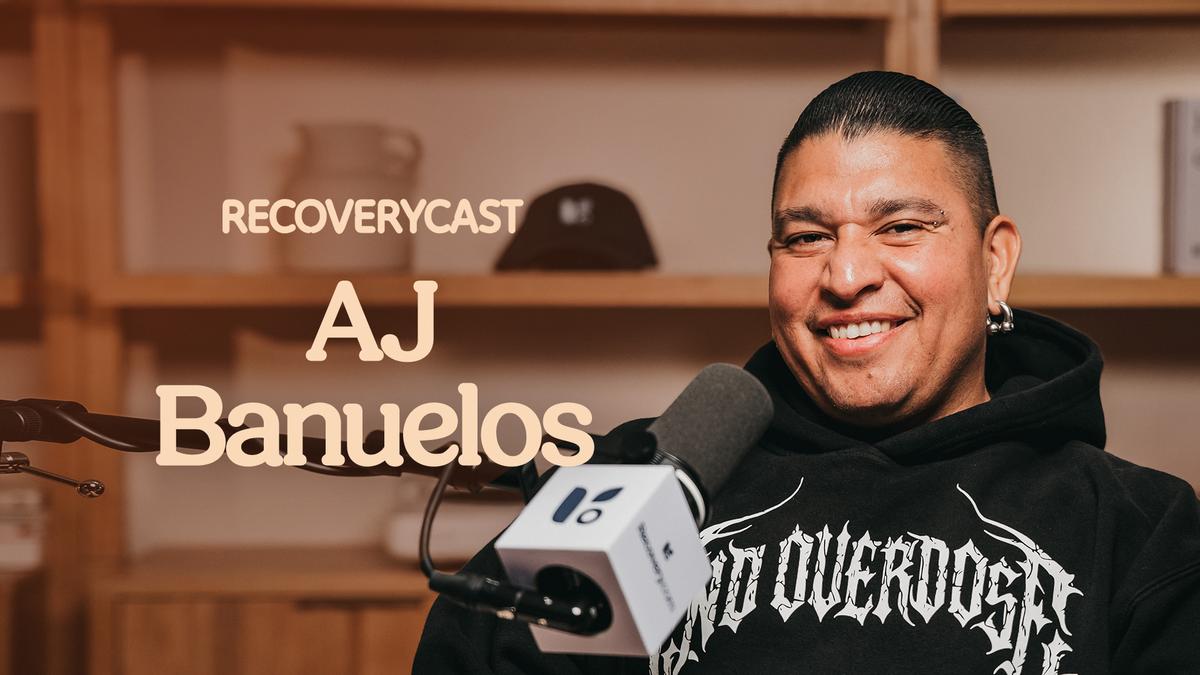
AJ Banuelos spent much of his early life searching for a place to belong. Growing up around substance use, violence, and generational gang involvement, he learned to hide difficult emotions and look outside himself for connection. Drugs, alcohol, gangs, and eventually incarceration became part of that search.
Today, that life looks very different. AJ is a recovery advocate and works with End Overdose, helping educate communities and provide resources that can save lives. His recovery has also given him something he once struggled to imagine: the opportunity to be present for his son, build genuine relationships, and experience a life he wants to keep living.
On this episode of Recoverycast, AJ traces that transformation from childhood through addiction, incarceration, treatment, and five years in recovery. Along the way, his story offers lessons about belonging, identity, asking for help, and what can happen when someone begins to believe another life is possible.
1. Sometimes the Search for Belonging Can Lead You in the Wrong Direction
Long before drugs became a major part of AJ’s life, he remembers searching for connection.
At home, expressing emotions was difficult. He describes growing up around substance use, domestic violence, and a culture where being a man meant keeping feelings inside. Outside the house, things felt different. Being with friends brought laughter, freedom, and a sense of belonging.
When asked what he was looking for during those years, his answer was simple: love.
That need for connection eventually became intertwined with gang involvement. The people around him often came from similar circumstances, and the group offered camaraderie and validation. Getting recognition from others helped fill something that AJ didn’t yet know how to find within himself.
That pattern followed him for years. Even incarceration could become tangled up with belonging. After his first stay in juvenile hall, his friends threw him a party. There was a keg, weed, and even a new Slayer shirt waiting for him. What had frightened him while he was locked up suddenly became something people celebrated when he came home.
Looking back, AJ can see how much of his behavior was tied to outside validation. Recovery eventually offered him another kind of connection, one built around honesty, support, and becoming the person he wanted to be.
2. Addiction Became a Way to Escape What He Didn’t Know How to Process
AJ first tried marijuana around fifth or sixth grade. He remembers more than the experience itself. He remembers the relief.
For a young person carrying emotions he had learned to suppress, getting high seemed to quiet everything. Problems at home temporarily stopped mattering. He felt comfortable in his own skin.
Substance use escalated as he got older. Alcohol became increasingly frequent. He tried meth at 16. By young adulthood, he was cycling through addiction, gang involvement, and incarceration. He became a father at 20 while still using alcohol and meth.
AJ loved his son, but addiction repeatedly pulled him away. He missed birthdays and spent stretches of his son's childhood incarcerated or using. Each time he was locked up, he promised that things would change. But each time he returned to the same behaviors and environment, those promises became harder to keep.
His story illustrates one of the painful realities of addiction: wanting a different life and knowing how to build one aren’t the same thing.
3. Change Can Start Before Someone Feels Completely Ready
AJ can point to several moments when he began questioning the life he was living.
After one frightening encounter involving the police, he remembers thinking, “Do I really want to do this?” He was tired. He began praying for help changing his life, even though his behavior didn’t immediately change with it.
The eventual turning point involved several people.
His brother gave him the number for a treatment program. His probation officer required him to enter a halfway house. Then AJ spoke with his son and admitted that he had a problem. AJ tried to explain his options, including that entering another program could mean they wouldn’t see each other for months.
His son responded, “Dad, I want you to work on your problem.”
Something began to break through.
AJ still took off for a couple of days. He still arrived for treatment while under the influence. He almost walked away again. Standing at intake, however, he had a brief moment of clarity. Leaving meant knowing where his life was headed. Staying meant there was at least a chance for something else.
So he stayed.
Explore Drug Addiction Treatment Centers
4. Recovery Meant Learning Who He Was Without Drugs, Alcohol, and Gangs
Treatment did more than remove AJ from substances. It gave him space to ask a question he had rarely had the opportunity to consider: Who am I?
For years, his identity had revolved around drugs, alcohol, and gangs. Once those pieces started falling away, AJ realized he didn’t really know who AJ was.
Treatment gave him room to begin finding out.
He worked a 12-Step program, found a sponsor, learned about service, and began trusting other people. He also started talking openly about emotions. In one gathering space at the treatment center, residents would simply sit together and talk about what they were going through.
That kind of openness was new for someone who had learned as a child to keep everything inside.
AJ remembers those early days of recovery as some of the best days of his life. He could laugh again. He could experience emotions without immediately escaping them. He began believing in himself and discovering what it felt like to live with a clear mind.
Recovery didn’t instantly provide all the answers. AJ says he’s still figuring out who he is. The difference is that he now gets to do that exploration as himself.
5. Rebuilding a Life Happens Through Small, Ordinary Steps
Leaving treatment brought another challenge. AJ had spent months in an environment designed around recovery. Outside that “bubble,” everyday life was waiting.
His next steps weren’t dramatic, but practical.
Get an ID. Get a Social Security card. Find a part-time job. Continue outpatient treatment. Stay in sober living. Go to meetings. Talk to a sponsor.
Those tasks might sound ordinary, but for AJ they represented an entirely new way of living. He remembers getting his first job and realizing, “I’m employable.” He could show up. He could be responsible. Someone trusted him to do what he said he would do.
Community made those steps easier. Other people in recovery helped him find work, drove him to meetings, and understood the shame and uncertainty that could come with rebuilding a life.
Eventually, life started to feel manageable. Not perfect or free from difficult days, but manageable.
Those small successes also offered a different kind of validation. People were showing up for AJ because he was working toward something better, not because he had survived another jail or prison sentence.
6. Helping Other People Became Part of His Own Recovery
AJ’s path to End Overdose began with another small opportunity.
Someone asked whether he would help pack Narcan kits. He said yes.
He remembers packing hundreds of kits with a sense of urgency. Each one could potentially help save someone's life. He came back the next week, then learned customer service and outreach. Eventually, he was asked whether he wanted to become an End Overdose trainer.
Again, he said yes.
That willingness gradually grew into a career in overdose prevention and community education.
For AJ, the work is deeply personal. “Somebody did their part to save my life,” he says. Now he gets to do his part for someone else. Through trainings, he helps people become more comfortable recognizing and responding to an opioid overdose and accessing potentially lifesaving resources.
Service also reinforces his own recovery.
“My recovery is the reason why I get to do this,” AJ says. Recovery allows him to be responsible, hold himself accountable, and show up for other people.
It’s the same principle he experienced when people drove him to meetings, helped him find work, and walked beside him through early recovery. Someone helped him. Now he gets to keep that cycle going in a different direction.
7. Recovery Gave Him More Than Sobriety, It Gave Him a Life He Wants to Live
Near the end of the conversation, AJ is asked what staying sober has ultimately given back to him.
His answer is immediate: “It’s given me a life.”
Before recovery, AJ describes reaching places where he no longer wanted to live. Today, he wants the opposite. He wants to travel, meet people, have conversations, experience new things, and continue showing up for the people around him.
Most importantly, he gets to be a present father.
“It’s given me that spark to live again,” he says.
There is a striking symmetry to his story. As a child, AJ went outside his home searching for love, connection, and somewhere he could feel like himself. Decades later, he has found those things through recovery, family, friendship, and service.
The connection is still there. Now, as one of the hosts points out, it is genuine.
Change Is Possible
AJ doesn’t frame recovery as an instant transformation. His story is full of hesitation, setbacks, fear, small decisions, and people who kept showing up.
That may be what makes his final message so meaningful.
For someone struggling with addiction or feeling desperate, AJ wants them to know that “change is possible.” Help exists, and a life that feels impossible to imagine today can still be waiting on the other side of asking for it.
Listen to the full Recoverycast episode to hear AJ share his story in his own words, from his early experiences with addiction and incarceration to finding recovery, rebuilding his relationship with his son, and helping others through End Overdose.
If you or someone you love is struggling with substance use, you can find addiction treatment and explore treatment options, resources, and support through Recovery.com. The right next step looks different for everyone, and learning what’s available can be a good place to start.
Our Promise
How Is Recovery.com Different?
We believe everyone deserves access to accurate, unbiased information about mental health and recovery. That's why we have a comprehensive set of treatment providers and don't charge for inclusion. Any center that meets our criteria can list for free. We do not and have never accepted fees for referring someone to a particular center. Providers who advertise with us must be verified by our Research Team and we clearly mark their status as advertisers.
Our goal is to help you choose the best path for your recovery. That begins with information you can trust.