Find Treatment By
Rehabs by Location


Find Treatment By
Learn
About Us
Recovery.com combines independent research with expert guidance on addiction and mental health treatment. Our mission is to help everyone find the best path to recovery through the most comprehensive, helpful network of treatment providers worldwide.
Advisory Council
Our advisory council brings together leaders in behavioral health, technology, and business. Their diverse expertise ensures our resources and product are innovative, evidence-based, and effective. They guide our mission as accomplished individuals dedicated to improving the landscape of addiction recovery and mental wellness.
History of Methamphetamine (Meth)

The editorial staff of Recovery.com is comprised of addiction content experts. Our editors and medical reviewers have over a decade of cumulative experience in medical content editing and have reviewed thousands of pages for accuracy and relevance.

Dr. Scot Thomas received his medical degree from the University of California, San Diego School of Medicine. During his medical studies, Dr. Thomas saw firsthand the multitude of lives impacted by struggles with substance abuse and addiction, motivating him to seek a clinical psychiatry preceptorship at the San Diego VA Hospital’s Inpatient Alcohol and Drug Treatment Program.

The editorial staff of Recovery.com is comprised of addiction content experts. Our editors and medical reviewers have over a decade of cumulative experience in medical content editing and have reviewed thousands of pages for accuracy and relevance.
Dr. Scot Thomas received his medical degree from the University of California, San Diego School of Medicine. During his medical studies, Dr. Thomas saw firsthand the multitude of lives impacted by struggles with substance abuse and addiction, motivating him to seek a clinical psychiatry preceptorship at the San Diego VA Hospital’s Inpatient Alcohol and Drug Treatment Program.
Methamphetamine, also known as crystal meth or meth, is a powerful and addictive stimulant. The history of meth use began in wartime and with medical treatments. But meth has since turned into an illicit phenomenon of mom-and-pop meth labs, full-blown addiction, and an array of physical and psychological side effects.
What Is Meth?
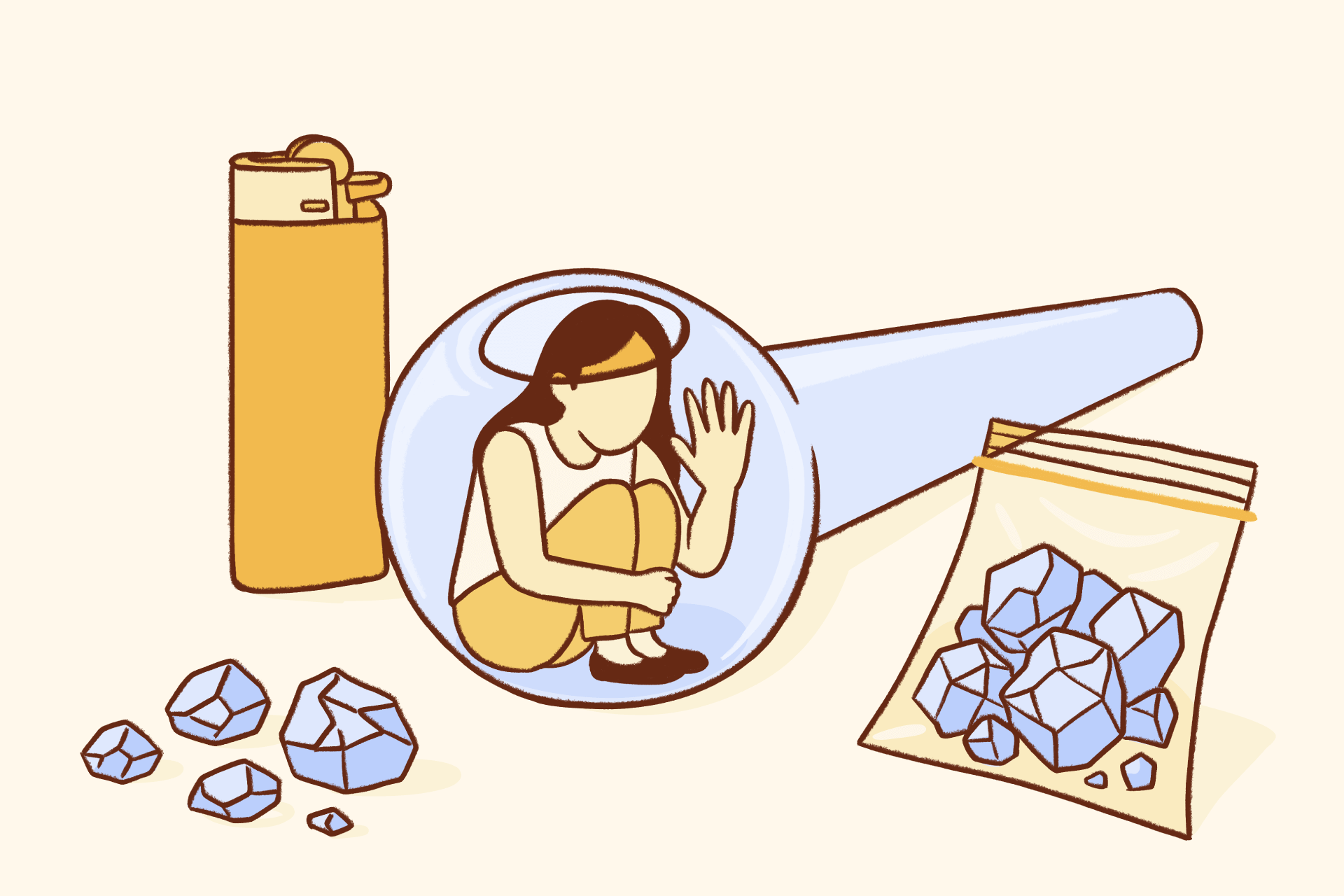
Methamphetamine is a stimulant most commonly encountered as either a powder or in pill form.1 It goes by several street names, including crystal, crank, ice, glass, meth, speed, and zoom.2 Up close, crystal meth may resemble glass fragments or shiny, off-white rocks.
Users may smoke meth, swallow it as a pill, crush and snort it, or inject it. The effects of meth include increased wakefulness, physical activity, and alertness; a sense of euphoria and excitement; decreased appetite; increased blood pressure and temperature; and fast, shallow breathing.1
Because of its potential to cause intensely rewarding or pleasurable experiences, meth can be very addictive and difficult to quit. Long-term abuse of meth is associated with health and cognitive problems.1
Explore Methamphetamine Treatment Centers
Early Amphetamine Use
In 1887, a Romanian chemist named Lazar Edeleanu first synthesized amphetamine at the University of Berlin. However, amphetamine was not used therapeutically until the 1920s, when Gordon A. Alles re-synthesized the substance for treatment of asthma, hay fever, and the common cold.2
In 1932, Smith, Kline, and French Laboratories began marketing Benzedrine, an amphetamine-based inhaler that treated nasal congestion. This was the first amphetamine product available on the mainstream market. In the years following, major U.S pharmaceutical companies promoted amphetamine treatment for conditions such as asthma and rhinitis.2
Creation of Meth and Use in World War II
Although Nagayoshi Nagai synthesized methamphetamine from the precursor chemical ephedrine in Japan in 1893, it was not commonly used until the 1940s in World War II. During the war, the German, English, American, and Japanese governments promoted methamphetamine use for endurance, wakefulness, and energy for military personnel.2
In Germany, army physiologist Otto Ranke considered meth to be a miracle drug, as it could keep his armies awake and even euphoric. In World War II, the German Army consumed millions of meth tablets (Pervitin, known as “tank chocolate”). However, Pervitin’s side effects and addictive properties reared their ugly head, with some soldiers dying from heart failure or suicide.3
German doctor Theodor Morell may have prescribed methamphetamine to Adolf Hitler,4 and some believe Hitler was under the influence of meth when he held his last meeting with Italian dictator Benito Mussolini in July 1943. Historians suggest that Hitler took a cocktail of up to 74 different drugs during World War II, including tranquilizers, morphine, and crystal meth.4
The first mainstream methamphetamine epidemic occurred in Japan. In fact, Japanese kamikaze pilots were documented to be high on meth during World War II.5 Additionally, Japanese factory workers took methamphetamine to work longer hours and ward off fatigue. After World War II, military warehouses had a surplus of methamphetamine, and as a result, pharmaceutical companies began producing methamphetamine pills for mainstream consumption.2
American soldiers also relied on amphetamines during the Korean War. In fact, some military personnel began creating their own “speed balls” of both heroin and amphetamine. Additionally, in the Vietnam War, research shows that the military administered 225 million dextroamphetamine tablets, and up to 50% of military personnel were taking drugs. By 1973, as America began to withdraw from the war, that percentage had jumped to 70%.6
Meth in the U.S.
Americans needed medical prescriptions to receive amphetamines, so stimulant use was not common in the early 20th century. However, by the 1950s, amphetamine use increased among several civilian groups, including truck drivers, athletes, housewives, factory workers, and college students.2
In 1959, the Food and Drug Administration (FDA) banned amphetamine-based inhalers due to an increase in abuse. However, at the same time, amphetamines were promoted as a treatment option for obesity, hyperactivity, narcolepsy, and even depression. Around this time, intravenous use also increased in popularity, especially among populations who had histories of using illicit street drugs.2
In the 1960s, “speed freaks” became a common term referring to compulsive, high-dose amphetamine or methamphetamine users who ingested up to a half gram in one IV injection or up to 2-4 10 mg capsules at once orally.7 The slogan of “speed kills” became popular soon after this phenomenon began.
The Controlled Substances Act of 1970 classified all forms of amphetamines as Schedule II substances, meaning that while they had acceptable and legal medical uses, they also had a high risk for abuse and dependence.2
In 1980, the government placed amphetamine’s key chemical, phenyl-2-propanone (P2P), under federal control. However, ephedrine and pseudoephedrine, ingredients that boost meth’s potency beyond that of amphetamine, were not regulated.8
As a result, despite government efforts to reduce amphetamine use and raise preventative awareness, meth use rose in the 1980s. Cooks discovered meth could be easily made using ephedrine in conjunction with household products like paint thinner, battery acid, and acetone.8
In the early 1980s, the Mexican cartels began supplying ephedrine to West Coast biker gangs’ cooks, and homemade local meth labs surged.8
Small toxic labs (STLs) refer to the “mom-and-pop” operations where meth is produced cheaply and easily. In fact, the Drug Enforcement Administration (DEA) estimates that, with just about $100 of raw materials, a meth cook can produce up to $1,000 worth of the substance in just a few hours. Because of this, there are probably thousands of these local operations spread around the country.7
Larger operations (superlabs) produce up to 10 pounds of meth per production cycle, and they depend on large quantities of the pharmaceutical ephedrine. Currently, California is the primary state where production reaches superlab levels.7 Although there are far more STLs than superlabs, the superlabs produce the most meth.Efforts to Curb Meth Use and Production
In 1986, the DEA attempted to regulate both ephedrine and pseudoephedrine. But the pharmaceutical industry opposed this legislation because it would dramatically affect producers of cold medicines (a $3 billion market). They reached a compromise: Raw ephedrine and pseudoephedrine powder would be regulated, but finished pills would not be.8
However, by the early 1990s, meth cooks simply switched to using pills, as they were still unregulated, and the Amezcua cartel in Mexico continued to supply bulk ephedrine from overseas. During this time, the potency of meth continued to increase throughout America. Yet eventually the DEA exposed the cartel, and the U.S. asked foreign manufacturers to stop ephedrine exports.8
In 1993, legislation passed requiring that sellers of ephedrine pills register with the DEA. As a result, meth cooks switched to using unregulated pseudoephedrine pills. Because these pills must be broken down to remove and obtain the key ingredients, cooks added hazardous, flammable chemicals to their lab processes. The Meth Task Force estimates that up to 60% of labs had explosions and fires during this time.8
By 1996, legislation passed requiring that pseudoephedrine pill sellers also register with the DEA. At this time, the law exempted cold remedies sold in traditional “blister packs” under the assumption that this would be harder for meth cooks to open and distribute at large volumes. Regardless, within 3 years 47% of seized meth labs showed evidence of blister pack pseudoephedrine.8
Despite these new regulations, several other major Mexican cartels continued trafficking meth, and Canada also began supplying meth cooks in California with pseudoephedrine until 2003.8
In 2004, Oklahoma passed legislation requiring that customers purchasing products containing pseudoephedrine show identification and sign a register. By 2005, more than 35 other states followed suit. That same year, Congress passed the Combat Methamphetamine Epidemic of 2005 mandating that store retailers and pharmacies keep pseudoephedrine under lock and key.8
In 2006, the U.N World Drug Report listed meth as the most abused drug in the world, indicating that 26 million people had meth addictions, which was equal to the number of heroin and cocaine addictions combined.8
In 2009, the Mexican government banned the import of pseudoephedrine, and meth availability plummeted there. However, California began increasing meth production in small labs spread across several locations, becoming the biggest producer of meth in the country.8
In the 1980s, San Diego became known as the methamphetamine capital of the nation.9 This was around the time the federal government began regulating P2P, and labs started using ephedrine and other precursors for production.
San Diego, due to its proximity to Mexico and San Bernardino County, where the Hells Angels motorcycle club resided, exploded with methamphetamine production. In 1989, over 100 meth cooks and 29 labs were shut down during the biggest meth bust in history.9
Meth Use Today
Meth use continues to be a problem. According to the Substance Abuse and Mental Health Services Administration (SAMHSA), 1.4 million Americans over age 12 reported using meth in 2016, and 32,000 adolescents ages 12-17 reported using meth during this time, as well. The use among adolescents and adults remained relatively stable between 2002 and 2014.10,15
That said, meth-related emergency department visits rose from 68,000 in 2007 to 103,000 in 2011. Over 60% of these hospital visits resulted from the combined use of meth and another substance.11 These statistics suggest that dangerous polysubstance use is likely on the rise, and dangerous practices such as “goofballing” (using meth and heroin together) can be fatal.
Treating Meth Addiction
Meth addiction can be very difficult to treat due to the intense withdrawal symptoms that occur during the initial stages of abstinence. The effects of methamphetamine withdrawal can include:
- Increased dysphoric mood.
- Severe, withdrawal-related depression.
- Suicidal thoughts.
- Persistent, intense cravings for meth.
- Irritability.
- Anxiety.
- Vivid and intense drug-related dreams.
- Anhedonia (lack of pleasure).12
The combination of these unpleasant withdrawal effects can make treatment difficult, and users are at high risk for relapse in the early stages of sobriety. To date, current treatment approaches include:
- Case management.
- Relapse prevention education.
- Cognitive behavioral therapy.
- Family therapy.
- The Matrix Model.
- 12-Step programs.
- Motivational Incentives for Enhancing Drug Abuse Recovery (MIEDAR).13
In 1994, Bill C., a recovering crystal meth addict with 16 years of sobriety obtained in Alcoholics Anonymous (AA), founded Crystal Meth Anonymous (CMA). CMA is a 12-Step approach for crystal meth addicts to receive appropriate support and fellowship in recovery.14
Concerned About Meth Use? We Can Help
Meth has a long and troubling history, but your story doesn’t have to follow the same path. If you or someone you love is struggling with meth use, help is available and recovery is possible. The right treatment can provide medical support, structure, and long-term tools for healing. Visit Recovery.com to find trusted drug and alcohol treatment centers, compare programs, and take the first step toward lasting recovery today.
FAQs
-
National Institute on Drug Abuse. (2017). What is Methamphetamine? . https://www.drugabuse.gov/publications/drugfacts/methamphetamine
-
The University of Arizona: Family & Community Medicine. (N.D.) Methamphetamine and Other Illicit Drug Education: Origin and History. https://methoide.fcm.arizona.edu/infocenter/index.cfm?stid=164
-
Spiegel Online. (2014). WWII Drug: The German Granddaddy of Crystal Meth. https://www.spiegel.de/international/germany/crystal-meth-origins-link-back-to-nazi-germany-and-world-war-ii-a-901755.html
-
Tharoor, I. (2014). High Hitler: Nazi Leader Was a Meth Addict, Says New Documentary. The Washington Post. https://www.washingtonpost.com/news/worldviews/wp/2014/10/14/high-hitler-nazi-leader-was-a-crystal-meth-addict-says-new-documentary/?utm_term=.a07460e6950d
-
University of Pittsburgh Graduate. (N.D.) Methamphetamines. http://www.pitt.edu/~super7/29011-30001/29471.ppt
-
Military History Now. (2017). Combat High – A Sobering History of Drug Use in Wartime. https://militaryhistorynow.com/2018/05/08/combat-high-a-sobering-history-of-drug-use-in-wartime/
-
Hunt, D., Kuck, S., Truitt, L. (2006). Methamphetamine Use: Lessons Learned. U.S. Department of Justice. https://www.ncjrs.gov/pdffiles1/nij/grants/209730.pdf
-
Public Broadcasting Service. (2011). Meth Timeline. https://www.pbs.org/wgbh/pages/frontline/meth/etc/cron.html
-
Warth, G. (2007). 1980s: Meth Explodes in San Diego. The San Diego Union-Tribune. https://www.sandiegouniontribune.com/sdut-1980s-meth-explodes-in-san-diego-2007sep16-story.html
-
Substance Abuse and Mental Health Services Administration. (2015). Behavioral Health Trends in the United States: Results from the 2014 National Survey on Drug Use and Health. https://www.samhsa.gov/data/sites/default/files/NSDUH-FRR1-2014/NSDUH-FRR1-2014.pdf
-
Substance Abuse and Mental Health Services Administration. (2016). Stimulants. https://www.samhsa.gov/find-help/atod
-
Substance Abuse and Mental Health Services Administration. (2001). Quick Guide for Clinicians: Treatment for Stimulant Use Disorders. https://store.samhsa.gov/shin/content/QGCT33/QGCT33.pdf
-
National Institute on Drug Abuse. (2013). What Treatments Are Effective for People Who Abuse Methamphetamine? . https://www.drugabuse.gov/publications/methamphetamine/what-treatments-are-effective-people-who-misuse-methamphetamine
-
Crystal Meth Anonymous. (2017). The CMA History of Service. https://crystalmeth.org/for-the-public/for-the-media/cmas-history-of-service.html
-
Substance Abuse and Mental Health Services Administration. (2017). Results From the 2016 National Survey on Drug Use and Health: Detailed Tables. https://www.samhsa.gov/data/sites/default/files/NSDUH-DetTabs-2016/NSDUH-DetTabs-2016.pdf














Our Promise
How Is Recovery.com Different?
We believe everyone deserves access to accurate, unbiased information about mental health and recovery. That's why we have a comprehensive set of treatment providers and don't charge for inclusion. Any center that meets our criteria can list for free. We do not and have never accepted fees for referring someone to a particular center. Providers who advertise with us must be verified by our Research Team and we clearly mark their status as advertisers.
Our goal is to help you choose the best path for your recovery. That begins with information you can trust.