Find Treatment By
Rehabs by Location


Learn
About Us
Recovery.com combines independent research with expert guidance on addiction and mental health treatment. Our mission is to help everyone find the best path to recovery through the most comprehensive, helpful network of treatment providers worldwide.
Advisory Council
Our advisory council brings together leaders in behavioral health, technology, and business. Their diverse expertise ensures our resources and product are innovative, evidence-based, and effective. They guide our mission as accomplished individuals dedicated to improving the landscape of addiction recovery and mental wellness.
CBT-E for Eating Disorders: How It Works and What to Expect



- CBT-E is an evidence-based treatment for eating disorders that helps people change unhelpful thoughts and behaviors related to food, eating, weight, and body image.
- CBT-E can treat several eating disorders, including bulimia nervosa, binge eating disorder, anorexia nervosa, and OSFED, with treatment tailored to individual needs.
- CBT-E typically follows four stages, helping people establish regular eating patterns, address underlying challenges, and develop strategies to maintain recovery.
- Research supports CBT-E's effectiveness, particularly for adults with bulimia nervosa and binge eating disorder, although treatment outcomes vary and some people may benefit from additional medical or nutritional support.
Cognitive behavioral therapy (CBT) is one of the most extensively studied evidence-based treatments for eating disorders. It helps people recognize and change patterns of thinking and behavior that can make eating disorders difficult to overcome.1
Specialized approaches, including enhanced CBT (CBT-E) and CBT for avoidant/restrictive food intake disorder (CBT-AR), address different challenges related to food, eating, and body image.2,3
Understanding how these therapies work, what treatment involves, and who may benefit can help you make informed decisions about eating disorder care.
What Is CBT-E for Eating Disorders?
Cognitive behavioral therapy (CBT) is a type of talk therapy that helps people recognize and change unhelpful patterns of thinking and behavior.4 When used to treat eating disorders, CBT focuses on patterns that contribute to disordered eating, such as restrictive eating, binge eating, or negative beliefs about food and body image.1
Several forms of CBT have been adapted specifically for eating disorders. Enhanced cognitive behavioral therapy (CBT-E) is used to treat a range of eating disorders, including anorexia nervosa, bulimia nervosa, binge eating disorder, and other specified feeding or eating disorder (OSFED).2,3 CBT-E is considered transdiagnostic, meaning it addresses underlying patterns that can occur across different eating disorders.2
Another approach, CBT-AR, was developed specifically for people with avoidant/restrictive food intake disorder (ARFID). It focuses on challenges such as sensory sensitivities, fears related to eating, and a lack of interest in food.5
How CBT-E Differs From Standard CBT
CBT-E builds on the principles of traditional CBT but is specifically designed to treat eating disorders. It follows a structured treatment plan tailored to each person's needs. Early in treatment, you and your therapist work together to identify the specific thoughts and behaviors contributing to your eating disorder. This understanding helps guide treatment and is revisited as you make progress.2
A key focus of CBT-E is helping people who judge their self-worth primarily by their body shape, weight, or ability to control their eating develop a more balanced sense of self-worth.6 This is central to focused CBT-E, which concentrates on the core thoughts and behaviors contributing to eating disorder symptoms.2
For people who also experience challenges such as perfectionism, persistent low self-esteem, difficulty managing emotions, or relationship difficulties that contribute to their eating disorder and interfere with treatment, therapists may use broad CBT-E. This approach includes additional strategies to address these challenges alongside eating disorder symptoms.2
How CBT-AR Treats ARFID
CBT for avoidant/restrictive food intake disorder (CBT-AR) is a specialized form of cognitive behavioral therapy developed for people with ARFID. Unlike eating disorders involving concerns about weight or body shape, ARFID involves avoiding or restricting food for other reasons, such as sensory issues, fear of negative experiences like choking or vomiting, or a lack of interest in eating.5
CBT-AR helps people gradually expand the variety of foods they eat, increase their nutritional intake when needed, and become more comfortable with eating. Treatment is tailored to the specific challenges someone experiences. For example, a person who avoids certain textures may gradually practice trying unfamiliar foods, while someone who fears choking may work with their therapist to reduce that fear through carefully planned exercises.5
Treatment generally progresses from establishing more consistent eating patterns to gradually addressing the specific fears or sensitivities contributing to food avoidance. Family members may also be involved, particularly when treating children and adolescents.5
Find The Perfect Treatment For You
Answer a few questions and we'll match you with the best options.
What Are You Struggling With?
What Kind of Care Do You Need?
What Insurance Do You Have?
Which Eating Disorders CBT-E Can Treat
CBT-E can be used to treat several eating disorders, including anorexia nervosa, bulimia nervosa, binge eating disorder, and OSFED. Because CBT-E addresses thoughts and behaviors that can occur across different eating disorders, treatment can be adapted to each person's symptoms and needs.2
- Anorexia nervosa: CBT-E can help people with anorexia nervosa address restrictive eating, fears about weight gain, and negative beliefs about food and body image. It can also support weight restoration when needed. CBT-E is one of several treatment options for adults, while family-based treatment is generally recommended for adolescents when appropriate.2,6
- Bulimia nervosa: CBT is a recommended treatment for adults with bulimia nervosa and is commonly delivered using the CBT-E approach. Treatment focuses on reducing binge eating and purging behaviors, establishing regular eating patterns, and addressing concerns about food, weight, and body image.2
- Binge eating disorder: CBT is one of the most extensively studied treatments for binge eating disorder. It helps people reduce binge eating episodes, establish more consistent eating patterns, and develop healthier ways to respond to difficult thoughts and emotions.2
- Other specified feeding or eating disorder (OSFED): CBT-E may also help people whose eating disorder symptoms don't meet the full criteria for anorexia, bulimia, or binge eating disorder. Treatment is adapted to address their specific eating patterns, behaviors, and concerns.7
CBT-E is not generally the approach used for avoidant/restrictive food intake disorder (ARFID). As mentioned, a separate treatment called CBT-AR was developed specifically for ARFID. CBT-AR helps people address challenges such as sensory sensitivities, fear of negative consequences from eating, or a lack of interest in food.5
Explore Eating Disorders Treatment Centers
Who Is a Good Candidate for CBT-E?
CBT-E can be a good option for adults and adolescents with eating disorders, including people who struggle with restrictive eating, binge eating, purging, or concerns about food, weight, and body image.2
Although CBT-E was originally developed for adults receiving outpatient treatment, it has since been adapted for adolescents and people who need more intensive care.2,6
Whether CBT-E is right for you depends on your symptoms, physical and mental health, and treatment needs. Some people may benefit from more intensive support, such as residential or inpatient care, particularly if they have serious medical complications or safety concerns.8
A healthcare professional can help determine which level of care is most appropriate and how CBT-E or another type of therapy might fit into your treatment plan.
You also don't need to feel completely ready to make changes before seeking treatment. Building motivation and confidence in recovery can be an important part of the treatment process.2





How CBT-E Works: The Stages of Treatment
CBT-E is a structured treatment, but it isn't one-size-fits-all. The approach can be tailored to your specific symptoms and needs. Treatment typically follows four stages, although this framework may be adapted to accommodate different clinical circumstances. Each stage is designed to help you understand your eating disorder and build skills to support lasting recovery.2,3
Stage 1: Understanding Your Eating Disorder and Making Early Changes
Treatment typically begins with you and your therapist working together to understand your eating disorder and identify the thoughts and behaviors contributing to it. Early sessions often focus on making changes to your eating patterns, addressing rigid dietary restraint with an emphasis on establishing regular eating habits. This stage may also include learning more about eating disorders and addressing concerns about weight.2,3
Stage 2: Reviewing Your Progress
In this brief stage, you and your therapist typically review the progress you've made so far, discuss any challenges, and identify areas that may need more attention. This helps guide the next stage of treatment.2,3
Stage 3: Changing Underlying Patterns
This stage focuses on addressing the thoughts and behaviors that contribute to your eating disorder. Depending on your needs, you might work on eating foods you've been avoiding, reducing frequent body checking, or finding new ways to cope with difficult emotions without relying on eating disorder behaviors.2,3
Stage 4: Maintaining Progress and Preventing Relapse
As treatment comes to an end, the focus typically shifts to maintaining the changes you've made and preparing for future challenges. This may involve recognizing potential setbacks, developing strategies to manage them, and building confidence in your ability to continue using what you've learned. A follow-up session may also be scheduled a few months after treatment to review your progress and address any new challenges.2,3
What to Expect in CBT-E Sessions
CBT-E is an active, collaborative treatment, meaning you'll work closely with your therapist both during and between sessions.9
Rather than simply talking about your eating disorder, you'll practice making changes to your eating patterns, thoughts, and behaviors. Your therapist will help you identify manageable steps to try in everyday life, and you'll review your experiences together.9
Sessions typically involve reviewing your progress, discussing challenges, and deciding what to work on next.2,9 You and your therapist may review records of your eating patterns, thoughts, and feelings, along with activities you've practiced between appointments.2,9 Regular weight monitoring is also a standard part of CBT-E, with you and your therapist checking your weight together during sessions.2,9
CBT-E uses several techniques to help you recognize and change patterns that contribute to your eating disorder.2,9 These may include:2,9
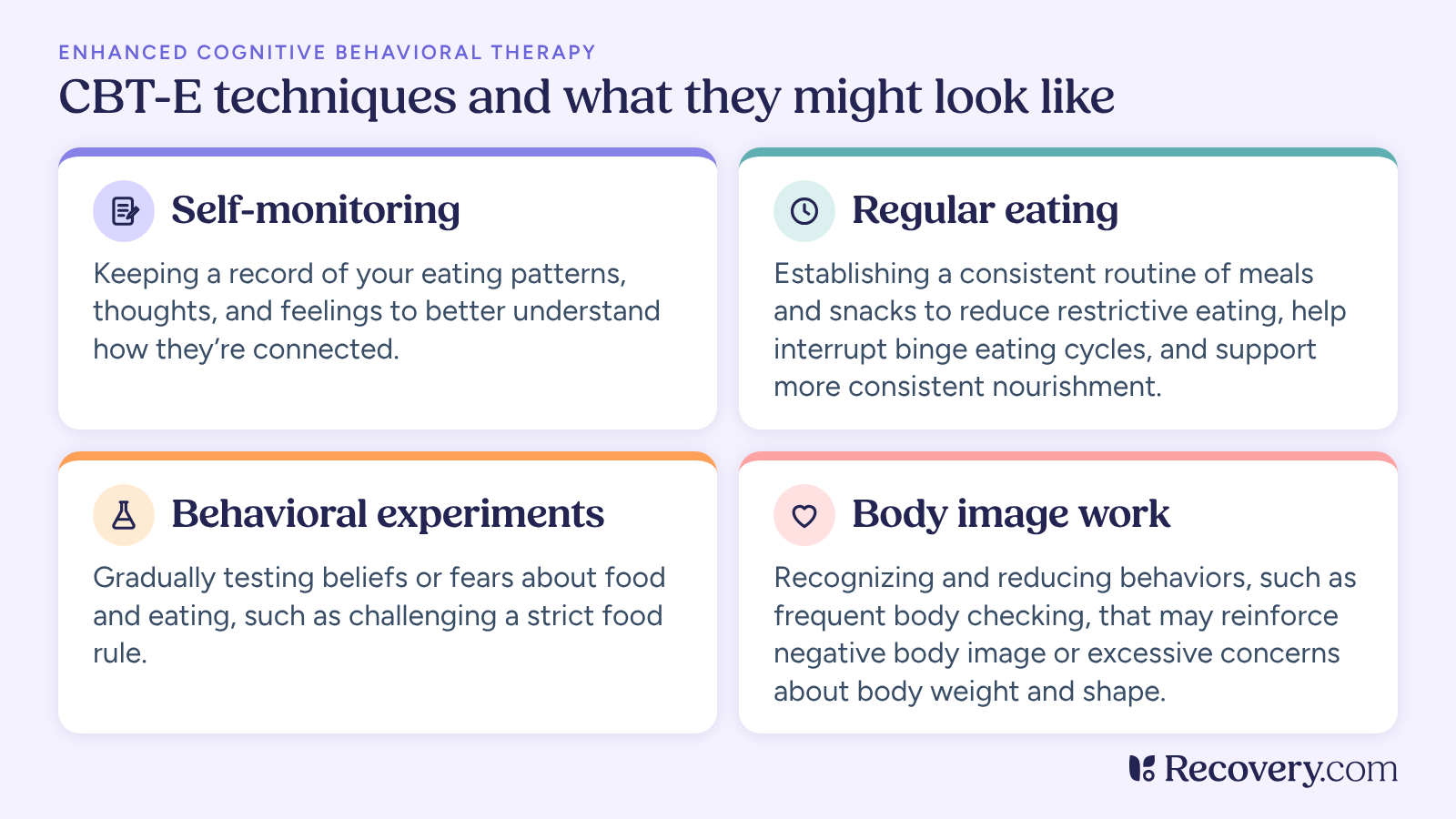
Your therapist will tailor these techniques to your needs, so you may not use every approach during treatment.2,9
How Long Does CBT-E Last?
The length of CBT-E depends on your individual needs. For people who aren’t significantly underweight, treatment typically involves around 20 sessions over 20 weeks.2 People who are underweight and need weight restoration may receive a longer course, often around 40 sessions over 40 weeks.2
Sessions generally last about one hour.9 Appointments may be more frequent at the beginning of treatment, then become less frequent as you progress.9 A follow-up appointment may also be scheduled a few months after treatment ends to review your progress and address any challenges.9
How CBT-E Fits With Nutrition and Medical Care
CBT-E focuses on the psychological and behavioral aspects of eating disorder recovery, including making changes to unhealthy eating patterns. Treatment may also incorporate additional nutritional support and medical care.10
Depending on your needs, your care team may include a therapist, registered dietitian, physician, or psychiatrist.10 These professionals can work together to address both the emotional and physical effects of an eating disorder. For example, a dietitian may help you meet your nutritional needs, while a physician monitors your physical health and any medical complications.10 CBT-E can be an important part of recovery, but it doesn't replace medical or nutritional care when those services are needed.10
How Effective Is CBT-E?
Research shows that CBT-E can help people reduce eating disorder symptoms and make meaningful progress in recovery. It’s particularly well-supported for adults with bulimia nervosa, binge eating disorder, and OSFED.11 CBT-E may also help people with anorexia nervosa, although the evidence for its effectiveness is less established.11
In a 2020 study of 143 adults with eating disorders, about 58% of those receiving CBT-E met the study's criteria for recovery after 20 weeks, compared with 36% of those receiving usual treatment.11 CBT-E was also associated with faster improvements and required less time overall. However, by the 80-week follow-up, recovery rates between the two groups were no longer clearly different, although both groups continued to show improvements.11
CBT-E may also be helpful when delivered online. A 2025 study of 1,629 adults receiving virtual CBT-E as part of a multidisciplinary treatment program found improvements in eating disorder symptoms, depression, and anxiety. Researchers estimated that 48% had reached a level of eating disorder symptoms below the study's clinical threshold by 40 weeks.12 However, because the study did not include a comparison group and patients received additional forms of support, the findings cannot establish how much of the improvement was due to CBT-E itself.12
While CBT-E can be an important part of recovery, eating disorder treatment often involves more than one approach. Depending on a person's needs, a treatment plan may also include other forms of therapy, such as family-based treatment, medication, nutritional counseling, and medical monitoring.13 The right combination of care depends on the eating disorder, its severity, and the person's overall health.
Finding a CBT-E Provider for Eating Disorders
If you're considering CBT-E, look for a therapist who has specific training in the approach and experience treating eating disorders. You can ask about their qualifications, whether they offer CBT-E for your particular eating disorder, and what treatment typically involves.
Depending on your needs, your care may also include support from a registered dietitian, physician, or other healthcare professionals.10 When comparing eating disorder treatment options, consider the therapies offered, available levels of care, and whether a program provides coordinated medical and nutritional support.
CBT-E can help people make meaningful changes in their relationship with food, eating, and body image, but finding the right treatment is an individual process. Recovery.com can help you find and compare eating disorder treatment centers, explore their approaches, and filter options by insurance to find care that fits your needs.
FAQs
Not always, but many people benefit from nutritional support alongside therapy. Eating disorder treatment programs often combine psychotherapy with nutritional counseling and medical monitoring. Depending on your needs, your care team may include a registered dietitian who can help you address nutritional concerns and establish eating patterns that support recovery.10,13
Yes. CBT-E has been adapted for adolescents with eating disorders. However, the most appropriate treatment depends on the teenager's diagnosis, medical needs, and family circumstances. Family-based treatment is often recommended for adolescents with anorexia nervosa when appropriate, while CBT-E may be considered in certain situations.2,6
Both are specialized forms of CBT, but they address different eating disorder symptoms. CBT-E focuses on patterns such as restrictive eating, binge eating, purging, and concerns about weight and body image. CBT-AR was developed specifically for avoidant/restrictive food intake disorder (ARFID) and addresses challenges such as sensory sensitivities, fear of eating-related consequences, and limited interest in food.5
Recovery isn't always a straightforward process, and progress can take time. CBT-E includes regular reviews to assess what's working and identify any challenges that may be affecting treatment. If you're not seeing the improvements you'd hoped for, talk with your therapist about your concerns. They can work with you to reassess your needs, adjust your treatment plan, or explore other approaches. Depending on your symptoms and overall health, you may also benefit from additional support or a higher level of care.8
Many health insurance plans cover psychotherapy for eating disorders, which may include CBT-E. However, coverage depends on your specific plan, provider network, and whether treatment is considered medically necessary. CBT-E may be covered under outpatient mental health benefits even if it isn't listed by name. Contact your insurer to verify your benefits, including any out-of-pocket costs or prior authorization requirements.




Our Promise
How Is Recovery.com Different?
We believe everyone deserves access to accurate, unbiased information about mental health and recovery. That's why we have a comprehensive set of treatment providers and don't charge for inclusion. Any center that meets our criteria can list for free. We do not and have never accepted fees for referring someone to a particular center. Providers who advertise with us must be verified by our Research Team and we clearly mark their status as advertisers.
Our goal is to help you choose the best path for your recovery. That begins with information you can trust.