Find Treatment By
Rehabs by Location


Learn
About Us
Recovery.com combines independent research with expert guidance on addiction and mental health treatment. Our mission is to help everyone find the best path to recovery through the most comprehensive, helpful network of treatment providers worldwide.
Advisory Council
Our advisory council brings together leaders in behavioral health, technology, and business. Their diverse expertise ensures our resources and product are innovative, evidence-based, and effective. They guide our mission as accomplished individuals dedicated to improving the landscape of addiction recovery and mental wellness.
Addiction Rituals: How Awareness Can Help Break the Cycle


Here's how the story goes.
When Danny* gets home from work and his wife, Lynn*, isn't there, he heads straight to the kitchen cabinet where he keeps his bag of accessories: rolling papers, a joint-rolling machine, a magazine to collect stray bits of marijuana, tobacco, and a lighter.
He sits on the couch, in the same spot every time. He begins what his wife calls his weed projects: pours himself a glass of wine, rolls a tight joint along with some tobacco and a cardboard filter, smokes it on his back porch, plays a video game, watches a movie, and gets in bed by 10 p.m. Danny, a smoker for 15 years, is loyal to this routine, staying true to these exact steps four days per week.
The act of rolling a joint is important to Danny's marijuana use, and the ritual itself fulfills a sort of creative urge for him.
"Joints are more fun to smoke than a bowl," he says. "It's creating something with my hands; it's a small challenge to make a great joint."
*Names have been changed to protect privacy.
What Are Addiction Rituals?
Using substances is often closely associated with deeply ingrained rituals. Time of day, location, and tools can become almost as important as the substance use itself, carrying significant symbolism and meaning.
Some ritualized behavior is emotional. For example, a person may work themselves into a state of anger or anxiety just so they feel they have a reason to use.
In many cases, ritualized behaviors happen outside of conscious awareness. A person may have no idea why they do things a certain way or even realize that these patterns exist. Mindfulness, a technique used in addiction treatment and recovery, can help bring these automatic behaviors to light.
Find The Perfect Treatment For You
Answer a few questions and we'll match you with the best options.
What Are You Struggling With?
What Kind of Care Do You Need?
What Insurance Do You Have?
How Mindfulness Can Bring Addiction Rituals Into Awareness
Don Sheeley, a facilitator with SMART Recovery, a mutual support program for addiction recovery describes a sensory awareness exercise he uses in his groups to build awareness called Dropping Anchor. Participants are instructed to pay attention to their feet on the floor, the position of their arms, and the feeling of their hands on the table in front of them. Then they notice their surroundings. His groups meet in a bagel shop, so participants might notice the lighting in the restaurant, the sounds of people talking around them, and the smell of bagels baking.
This and other awareness exercises can help ground you in the concrete details of the present moment rather than becoming automatically swept up in thoughts or feelings. Mindfulness doesn't mean thoughts and feelings aren't real. Instead, it can help you notice them without immediately reacting to them.
Mindfulness can also disrupt rituals by slowing the time between a feeling or thought and acting out through habit. Tools like Dropping Anchor can create more time for awareness before acting. During that pause, you may be more likely to make a deliberate decision rather than automatically following urges to use.
Explore Drug Addiction Treatment Centers
What Research Says About Mindfulness and Relapse
A 2014 randomized clinical trial in JAMA Psychiatry followed 286 people who had completed initial treatment for substance use disorders. Researchers compared mindfulness-based relapse prevention, standard relapse prevention, and treatment as usual, which included 12-Step programming and psychoeducation. Both relapse-prevention approaches, including CBT-based strategies, reduced relapse risk compared with treatment as usual.1
At the 12-month follow-up, participants in the mindfulness-based relapse prevention group reported fewer days of drug use and a lower likelihood of heavy drinking than those in the standard relapse-prevention group.1
Mindfulness and 12-Step programs aren't necessarily at odds with each other. Step 11 of the 12 Steps focuses on prayer and meditation, which can overlap with elements of mindfulness practice.
More recent research is promising but still limited. A 2023 systematic review and meta-analysis of 17 randomized controlled trials involving 1,228 participants found that mindfulness-based interventions reduced cravings overall. However, the researchers noted substantial variation among the studies and rated the quality of the evidence as low.2
Since mindfulness techniques can be practiced in many settings, they may complement different addiction treatment and recovery approaches.
Fundamental to mindfulness is the principle of non-judgment. When looking at rituals through a mindful lens, you don't have to label them as "bad" or "wrong." Instead, mindfulness encourages awareness of behaviors, thoughts, and feelings as they occur, along with curiosity about the patterns you're noticing.














Try This Breath Awareness Exercise
One of the most basic tools in mindfulness is the breath. Try this breath awareness exercise:
- Take a moment to become aware of your posture. If you are sitting, feel yourself being supported by your chair or the floor.
- If you are standing, feel the floor beneath you.
- Start to notice your breath. Is it shallow or full? Slow or fast? Are you breathing through your nose or through your mouth?
- Notice the temperature of the air as it moves in and out, and how the air becomes warmer as it leaves your body.
- Pay attention to where you feel your breath the most. You might notice it in your throat, your chest, your belly, or elsewhere.
- Become aware of your lungs and rib cage as you inhale and exhale. If you are sitting in a chair or against a wall, you might feel your back ribs pressing into whatever is supporting you. Feel the movement from side to side and from back to front.
- Imagine your diaphragm, the dome-shaped muscle at the bottom of your rib cage, pressing down as you inhale and rising as you exhale.
- Between your inhalation and exhalation, take a brief pause. Notice what happens in your soft palate and jaw.
Awareness Is the First Step Toward Change
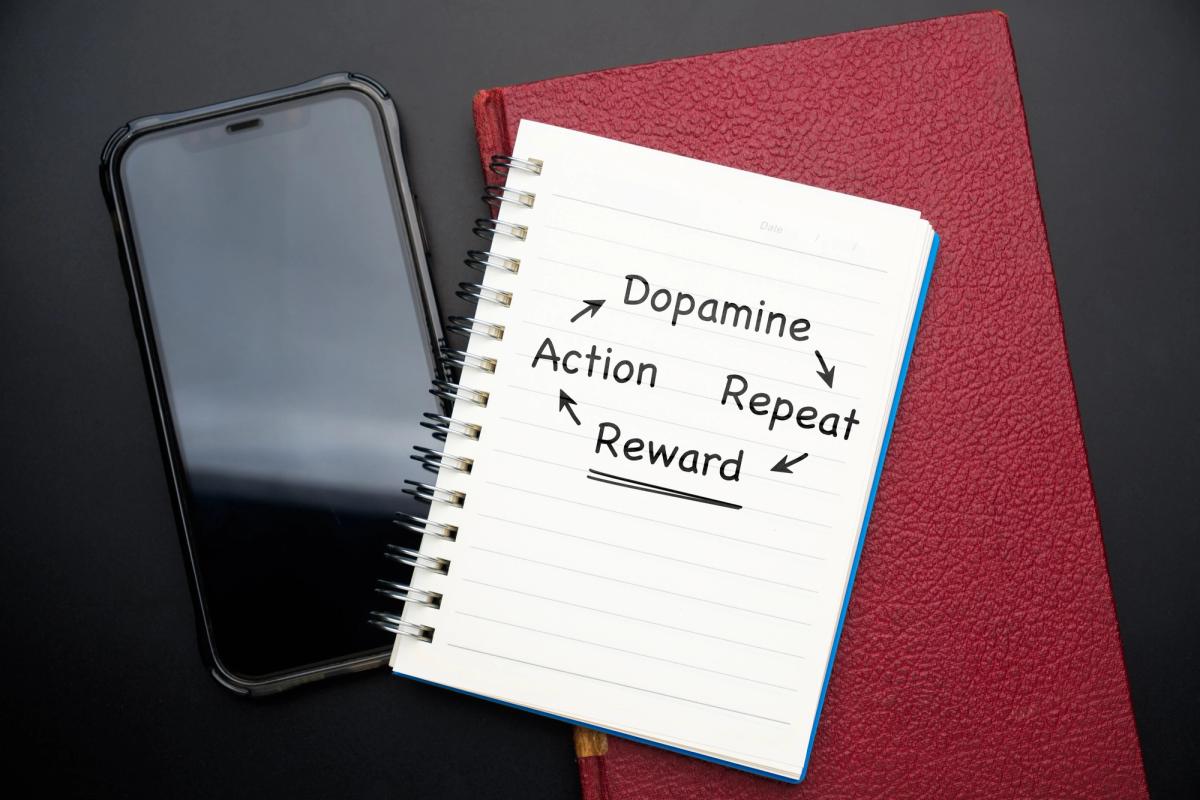
Addiction rituals often feel automatic, but they aren't random. They develop over time as the brain links certain places, emotions, objects, and routines with substance use. Understanding these patterns can be a powerful step toward change.
Mindfulness helps slow the space between an urge and an action. By paying attention without judgment to what's happening in your body, emotions, and environment, you can begin to see your rituals clearly instead of being pulled along by them. That awareness creates choice.
Recovery doesn't require eliminating habits overnight. It starts with noticing them. With practice, support, and tools like mindfulness or EMDR, you can interrupt old patterns and build healthier routines that support long-term recovery.
Find Treatment Today
Addiction is treatable, and lasting recovery is possible. Connect with drug and alcohol treatment centers that specialize in your specific needs, from holistic care to medication-assisted treatment. When you're ready, find a recovery program that works for you and your recovery journey.
FAQs
Addiction rituals are repeated behaviors that surround substance use, such as using at the same time of day, in the same place, or with the same objects. These routines can become strongly associated with substance use over time.3
Over time, the brain can learn to associate certain cues, such as stress, specific locations, or routines, with substance use. These cues may trigger cravings or urges before you're consciously aware of them, making the behavior feel automatic.3
Mindfulness brings attention to the present moment. By noticing thoughts, emotions, and physical sensations as they arise, you can slow down automatic reactions and create space to choose a different response. Research suggests mindfulness-based interventions may also help reduce cravings.2
No. Rituals develop through learning and repetition, not personal failure. Recognizing these patterns is a skill that can be strengthened with awareness, practice, and support.3
Yes. Mindfulness can complement many treatment and recovery models, including 12-Step programs and non-12-Step approaches such as SMART Recovery. The best combination of tools and support depends on your needs and recovery goals.




Our Promise
How Is Recovery.com Different?
We believe everyone deserves access to accurate, unbiased information about mental health and recovery. That's why we have a comprehensive set of treatment providers and don't charge for inclusion. Any center that meets our criteria can list for free. We do not and have never accepted fees for referring someone to a particular center. Providers who advertise with us must be verified by our Research Team and we clearly mark their status as advertisers.
Our goal is to help you choose the best path for your recovery. That begins with information you can trust.