Find Treatment By
Rehabs by Location


Learn
About Us
Recovery.com combines independent research with expert guidance on addiction and mental health treatment. Our mission is to help everyone find the best path to recovery through the most comprehensive, helpful network of treatment providers worldwide.
Advisory Council
Our advisory council brings together leaders in behavioral health, technology, and business. Their diverse expertise ensures our resources and product are innovative, evidence-based, and effective. They guide our mission as accomplished individuals dedicated to improving the landscape of addiction recovery and mental wellness.
How to Pay for Rehab: Insurance, Payment Plans & Help



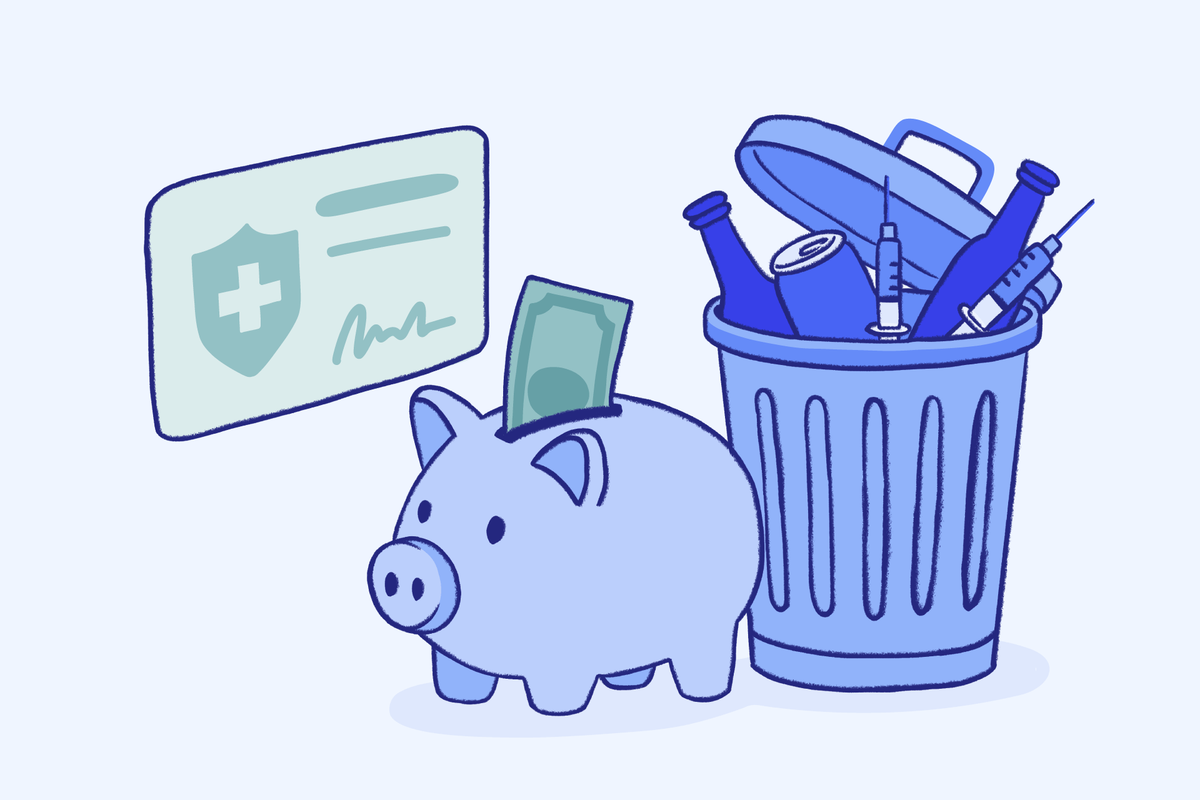
Figuring out how to pay for rehab can feel complicated, but there are several ways to make addiction treatment more affordable. Depending on your situation, rehab payment options may include private health insurance, Medicaid, Medicare, self-pay discounts, payment plans, sliding-scale fees, scholarships, grants, employer benefits, and state-funded treatment.1
If you have health insurance, checking your behavioral health benefits is usually a good first step. If you don't have insurance—or insurance won't cover the full cost—free and low-cost treatment and other forms of financial assistance for rehab may still be available.1,2,3
You can also find treatment centers that accept your insurance or compare facilities based on price and payment options.
What Are the Main Ways to Pay for Rehab?
There is no single best way of paying for rehab. The right approach depends on your health insurance, income, treatment needs, location, and available resources.
Common ways to cover addiction treatment costs include:
- Private health insurance: May pay some or much of the cost of covered addiction treatment
- Medicaid: May cover substance use disorder treatment for eligible members
- Medicare: Covers certain inpatient, outpatient, PHP, IOP, and substance use disorder services
- Self-pay or private pay: Some treatment centers offer reduced cash-pay rates
- Rehab payment plans: May allow treatment costs to be divided into smaller payments
- Sliding scale fees: Adjust costs based on income or ability to pay
- Scholarships and grants: May cover some or all treatment expenses for qualifying individuals
- State-funded rehab: May provide free or low-cost treatment
- Employer Assistance: An EAP or employer-sponsored insurance may help you access care
- Rehab financing: Loans or other financing may spread treatment expenses over time
SAMHSA recommends asking treatment programs directly about payment plans, sliding-fee scales, scholarships, grants, charity care, insurance, and other ways to reduce treatment costs.1,3
Find The Perfect Treatment For You
Answer a few questions and we'll match you with the best options.
What Are You Struggling With?
What Kind of Care Do You Need?
What Insurance Do You Have?
1. Use Health Insurance to Pay for Rehab
Health insurance is one of the most important options to explore when determining how to afford rehab.
All health insurance Marketplace plans cover mental health and substance use disorder services as essential health benefits.4 However, the exact services covered—and how much you pay—depend on factors like your state, health plan, network, and specific benefits.4
Federal mental health parity protections also apply to certain health plans. This means that there are protections in place to prevent plans from imposing more restrictive financial requirements or treatment limitations on mental health and substance use disorder benefits than on comparable medical and surgical benefits.5
Insurance may help pay for services such as:
- Medical detox.
- Residential or inpatient treatment.
- Partial hospitalization programs (PHPs).
- Intensive outpatient programs (IOPs).
- Standard outpatient treatment.
- Therapy and counseling.
- Medications.
Coverage varies, so verify your specific benefits before entering treatment.
If you're comparing different levels of addiction treatment, your insurance company or treatment provider can also help determine which level of care your plan may cover. Call the number on the back of your insurance card or reach out to your primary care physician.
How to Verify Your Rehab Insurance Coverage
Verifying your insurance, meaning determining exactly what your specific plan will cover, is extremely important. Contact your insurer using the phone number on your insurance card or ask the treatment center whether they can verify your benefits for you.
It is highly recommended to confirm the types of care your plan covers and your expected financial responsibility before beginning treatment.6
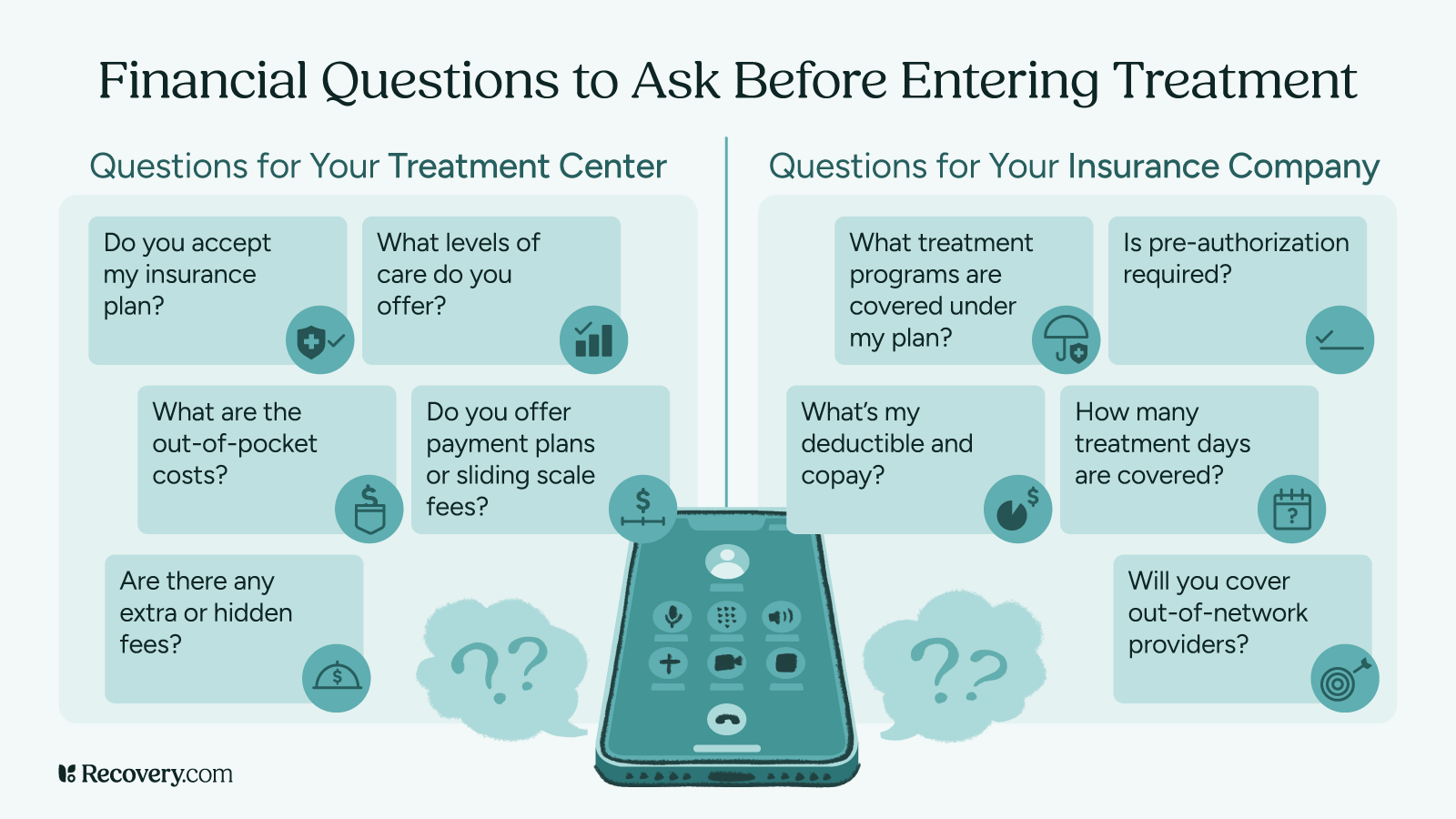
When speaking with a representative of your insurance company, ask questions that will inform you of all the details of your plan, such as:
- Does my plan cover substance use disorder treatment?
- Is medical detox covered?
- Is residential or inpatient rehab covered?
- Does my plan cover PHP, IOP, and outpatient treatment?
- Is this treatment center in-network?
- Do I need prior authorization?
- What is my deductible?
- What copay or coinsurance will I owe?
- Is there an out-of-pocket maximum?
- Are there limits on treatment days or visits?
- Are medications covered?
You can browse treatment centers that accept insurance or learn more about whether insurance covers rehab.
In-Network vs. Out-of-Network Rehab
Network status can significantly affect your out-of-pocket costs.
An in-network treatment provider has a contractual relationship with your insurer and agreed-upon rates. An out-of-network provider does not have the same arrangement, therefore your share of the cost may be higher depending on your plan.
To be absolutely clear on this, be sure to ask whether the center is in-network for your specific insurance plan, rather than only asking whether it “accepts” your insurance.
What If Insurance Denies Rehab?
An insurance denial does not necessarily mean you have no other options.
Depending on your plan and situation, you may be able to file an internal appeal. HealthCare.gov explains that certain insurance decisions (including denials based on medical necessity or network status) can be appealed, and an external review may be available following an unsuccessful internal appeal.7
If treatment is denied, there are still things you can do, including:7
- Asking your insurance company for the reason in writing.
- Finding out which medical-necessity criteria were used.
- Asking how to submit an internal appeal.
- Asking your treatment provider whether it can submit additional clinical documentation.
- Keeping copies of your denial, Explanation of Benefits, and appeal documents.
- Asking whether an external review is available if the internal appeal is unsuccessful.
Mental health and substance use disorder parity protections may also be relevant if your plan treats covered behavioral health benefits more restrictively than comparable medical benefits.5
Explore Drug Addiction Treatment Centers
2. Use Medicaid to Pay for Rehab
If you have limited income or meet other eligibility requirements, Medicaid may help cover substance use disorder treatment.
Many states provide behavioral health and substance use disorder services through Medicaid State Plans, managed-care programs, waivers, or other arrangements.5 The exact services covered vary by state.
Depending on the state and program, Medicaid rehab coverage may include treatment such as counseling, medication, outpatient services, and other substance use disorder care.8
If you have Medicaid, here’s what you can do:
- Contact a Medicaid representative to confirm the specific benefits of your plan.
- Ask which treatment centers accept your plan, not just your insurance.
- Confirm whether authorization is required.
- Ask the treatment center to verify coverage before admission.
Not every treatment center accepts Medicaid, so always verify participation before enrolling.














3. Use Medicare to Pay for Addiction Treatment
Medicare rehab coverage may also help eligible beneficiaries pay for addiction treatment.
Medicare covers certain mental health and substance use disorder screenings, treatments, and recovery services. Depending on the service and eligibility, coverage can include inpatient and outpatient behavioral health care.9
Medicare also covers certain intensive outpatient, partial hospitalization, and opioid use disorder treatment services.9
Your final cost depends on your Medicare coverage, the services you receive, and the providers involved.
4. Ask About Rehab Payment Plans
A rehab payment plan may help if insurance does not cover the entire cost of care or if you're paying for treatment yourself.
Some treatment programs allow eligible clients to divide costs into smaller payments instead of paying the entire amount upfront. It is often recommended to ask providers whether payment plans are available and understand the repayment terms before agreeing to one.3
In addition, you can ask:
- How much is required before admission?
- What will the monthly payment be?
- How long is the repayment period?
- Is interest charged?
- Are there administrative or financing fees?
- What happens if a payment is late?
- Can I pay the balance off early?
A payment plan may also be combined with insurance or another form of payment assistance, so speak with a staff member at the rehab to find out all of your options.
5. Ask About Sliding-Scale Fees
Some treatment providers offer sliding-scale fees, sometimes called income-based fees.
With a sliding-fee scale, the price you pay is adjusted according to your income or financial circumstances. Sliding-scale fees are one way people can access lower-cost behavioral health and substance use treatment.3
In the event a sliding-scale fee is the right choice for you, make sure you are prepared, as a provider may ask for documentation such as:
- Household income.
- Household size.
- Employment information.
- Insurance status.
Sliding-scale treatment can be particularly useful for someone who is uninsured or underinsured.
6. Look for Rehab Scholarships, Grants, and Charity Care
Rehab scholarships, grants, and charity-care programs may provide additional financial assistance for rehab.
SAMHSA notes that some healthcare professionals, hospitals, and treatment programs offer grants, scholarships, or charity-care programs for people who cannot otherwise afford treatment.3
Availability is not guaranteed, and funding may be limited.
Ask:
- Do you currently offer treatment scholarships?
- Do I qualify for financial assistance?
- Does the scholarship cover all or only part of treatment?
- Are medications included?
- Does the assistance cover the full recommended length of stay?
- Are there repayment requirements?
Some people may combine a scholarship with insurance, self-pay, a payment plan, or other funding.
7. Consider State-Funded, Free, or Low-Cost Rehab
If you have little or no ability to pay, state-funded rehab, free rehab, or low-cost rehab may be available.
It is advised that people without insurance contact their state or county mental health and substance use agency, search for free or reduced-cost health services, and explore programs that offer financial assistance.2
Free and low-cost treatment resources can include:2,3
- State-funded addiction programs.
- Community health centers.
- Nonprofit treatment programs.
- Sliding-scale facilities.
- Medicaid-supported programs.
- Grants and scholarships.
- Other publicly funded services.
Availability and eligibility vary by location.
You can also browse treatment centers by price to compare treatment options based on your budget.
8. Use Employer Benefits or an Employee Assistance Program
Some employers offer benefits that can help employees access addiction treatment.
An Employee Assistance Program (EAP) is an employer-paid resource that may provide confidential support, counseling, or referrals for issues including mental health and drug or alcohol use.2
If you have a job, consider asking your human resources or benefits department the following:
- Do we have an EAP?
- Does my employer-sponsored health plan cover substance use disorder treatment?
- How do I access behavioral health benefits?
- Are there confidential treatment-referral services?
Your employer's health plan and EAP are separate benefits, so it may be worth investigating both.
9. Ask About Self-Pay or Private-Pay Rehab
Self-pay rehab, also called private pay or cash pay, means paying for treatment without having an insurer pay the claim.
If you're considering self-pay, ask whether the treatment center offers:
- A cash-pay discount.
- Reduced private-pay pricing.
- A payment plan.
- Sliding-scale fees.
- Scholarships.
- Financial assistance.
Also ask exactly what the quoted price includes. For example:
- Is detox included?
- Are medications included?
- Is psychiatric care included?
- Are there additional testing fees?
- Are individual therapy sessions included?
- Is continuing care included?
- What happens financially if treatment lasts longer than expected?
For detailed pricing by treatment type, see How Much Does Rehab Cost?.
10. Consider Rehab Financing Carefully
Rehab financing may be an option when insurance and other payment assistance do not cover your full treatment expenses.
Financing options might include:
- Treatment-center financing.
- Third-party healthcare financing.
- Personal loans.
- Credit cards.
- Financial help from family members.
Borrowing can make treatment accessible sooner, but interest and fees may increase the total amount you ultimately pay.
Before borrowing money:
- Ask about scholarships first.
- Ask whether a payment plan is available.
- Check for sliding-scale pricing.
- Compare the total repayment amount, not only the monthly payment.
- Review interest rates and fees.
- Make sure the payments fit realistically into your budget.
Financing does not have to be an all-or-nothing solution. Some people use it only for the portion of treatment that remains after insurance or other assistance.
How to Pay for Rehab Without Insurance
If you're researching how to pay for rehab without insurance, you may have more options than you initially expect.
People without insurance may be able to access free or low-cost care through community health centers, state mental health and substance use agencies, publicly funded programs, and other resources.2
Options can include:2,3
- Medicaid, if eligible.
- State-funded treatment.
- Sliding-scale fees.
- Rehab scholarships.
- Grants or charity care.
- Self-pay discounts.
- Rehab payment plans.
- Free or low-cost community programs.
Before assuming you must pay the full private cost of rehab, ask each treatment center about its financial-assistance policies.
For more detail, see Paying for Rehab Without Insurance.
How Much Does Rehab Cost?
The cost of addiction treatment varies based on the level of care, treatment duration, location, services, insurance, and facility.
Residential or inpatient rehab centers generally provide more intensive services and 24-hour support, while outpatient treatment programs allow clients to live outside the facility.
Other levels of care can include partial hospitalization programs and intensive outpatient programs.
The amount a facility charges and the amount you personally pay may be different once insurance, negotiated rates, discounts, scholarships, or financial assistance are applied.
Questions to Ask Before Paying for Rehab
Before committing to a treatment center, ask for a clear explanation of your expected financial responsibility.
Consider asking:
- What is the estimated total cost of treatment?
- What does that price include?
- Does the facility accept my insurance?
- Is it in-network for my specific plan?
- What does the facility estimate I will owe after insurance?
- Is prior authorization required?
- Is detox billed separately?
- Are medications included?
- Are psychiatric services included?
- Do you offer self-pay discounts?
- Do you offer rehab payment plans?
- Is there a sliding-fee scale?
- Are scholarships, grants, or charity care available?
- What happens to the cost if I need a longer stay?
- Are there additional costs for continuing care?
Discussing costs directly with treatment providers and asking what insurance, public benefits, payment assistance, or low-cost options are available is considered best practice.1,3
Find Rehab You Can Afford
Understanding how to afford rehab is an important part of choosing treatment, but cost should be considered alongside clinical needs, level of care, treatment approach, staff qualifications, and the services a program provides.
If you're still learning how addiction treatment works, read What Is Rehab? before comparing programs.
Recovery.com also lets you narrow treatment options based on insurance, price, location, level of care, and other preferences.
If you have insurance:
Find Treatment Centers That Accept Your Insurance
If cost is your primary concern:
Browse Treatment Centers by Price
You may need to combine more than one rehab payment option, such as insurance plus a payment plan or financial assistance. Exploring your options before assuming treatment is unaffordable can give you a clearer picture of what care may actually cost.
Take the Next Step Toward Recovery
You don’t have to have every detail figured out before asking for help. If you’re ready to explore treatment, find a rehab program that fits your needs, budget, and insurance. Taking that first step can connect you with the support and care you need to move forward.
FAQs
People may pay for rehab using private health insurance, Medicaid, Medicare, self-pay, rehab payment plans, sliding-scale fees, grants, scholarships, employer benefits, state-funded treatment, financing, or a combination of these options.1,3
Marketplace plans cover mental health and substance use disorder services as essential health benefits, but the specific services covered and the amount you pay depend on your plan.4 Other types of health plans may also cover addiction treatment, and certain plans are subject to federal mental health parity protections.5
Options for paying for rehab without insurance can include Medicaid if you're eligible, state-funded treatment, free or low-cost programs, sliding-scale fees, scholarships, grants, charity care, self-pay discounts, and payment plans.2,3
Medicaid may cover substance use disorder treatment for eligible members. Covered services and participating treatment providers vary by state and Medicaid program.8
Medicare covers certain mental health and substance use disorder services, including qualifying inpatient and outpatient behavioral health services and other treatment programs for eligible beneficiaries.9
Some treatment providers offer payment plans that allow eligible clients to repay treatment costs over time. SAMHSA recommends asking programs directly about available payment plans and understanding the repayment terms.3
Ask your insurer why coverage was denied and how to appeal the decision. Certain health-plan denials can go through an internal appeal process, and external review may be available if the appeal is unsuccessful.7
Free or low-cost addiction treatment may be available through public programs, community health centers, state agencies, nonprofits, Medicaid, sliding-scale providers, and other resources.2,3
Some treatment centers, hospitals, and organizations offer rehab scholarships, grants, or charity-care programs. Availability and eligibility vary, and assistance may cover all or only part of treatment.3




Our Promise
How Is Recovery.com Different?
We believe everyone deserves access to accurate, unbiased information about mental health and recovery. That's why we have a comprehensive set of treatment providers and don't charge for inclusion. Any center that meets our criteria can list for free. We do not and have never accepted fees for referring someone to a particular center. Providers who advertise with us must be verified by our Research Team and we clearly mark their status as advertisers.
Our goal is to help you choose the best path for your recovery. That begins with information you can trust.