Find Treatment By
Rehabs by Location


Learn
About Us
Recovery.com combines independent research with expert guidance on addiction and mental health treatment. Our mission is to help everyone find the best path to recovery through the most comprehensive, helpful network of treatment providers worldwide.
Advisory Council
Our advisory council brings together leaders in behavioral health, technology, and business. Their diverse expertise ensures our resources and product are innovative, evidence-based, and effective. They guide our mission as accomplished individuals dedicated to improving the landscape of addiction recovery and mental wellness.
How to Fight Mental Health Insurance Denials: 5 Tools Clinicians Can Use Now



It’s unfortunately common: a patient finally agrees to residential treatment, their clinician knows it’s the right level of care, but then insurance says no.
For many families, that denial is where the fight ends. Joe Feldman knows the feeling. He came to insurance advocacy as a parent after an insurer stood in the way of his child’s care.
He pushed back against the denial, and it worked. Now, as President of the nonprofit Cover My Mental Health, he helps clinicians, patients, and families do the same.
In a recent Recovery.com CE webinar, Feldman walked through the free resources clinicians can use to overcome barriers to insurance coverage. His core message is simple: you don't have to take no for an answer.

Here are 5 questions the session answered, and what clinicians can start doing right away.
1. What Does "Medical Necessity" Actually Mean?
It's a contract term, not a clinical one.
Medical necessity sounds clinical, but Feldman says it's a legal standard. It appears in every health insurance policy he's reviewed, buried somewhere in 100 to 200 pages of fine print. The insurer agrees to pay for care that is medically necessary.
Clinicians aren't often trained in legal standards, though. We ran a poll in the live CE session and captured responses from attendees, including this glimpse of their confidence in writing a solid medical necessity letter.
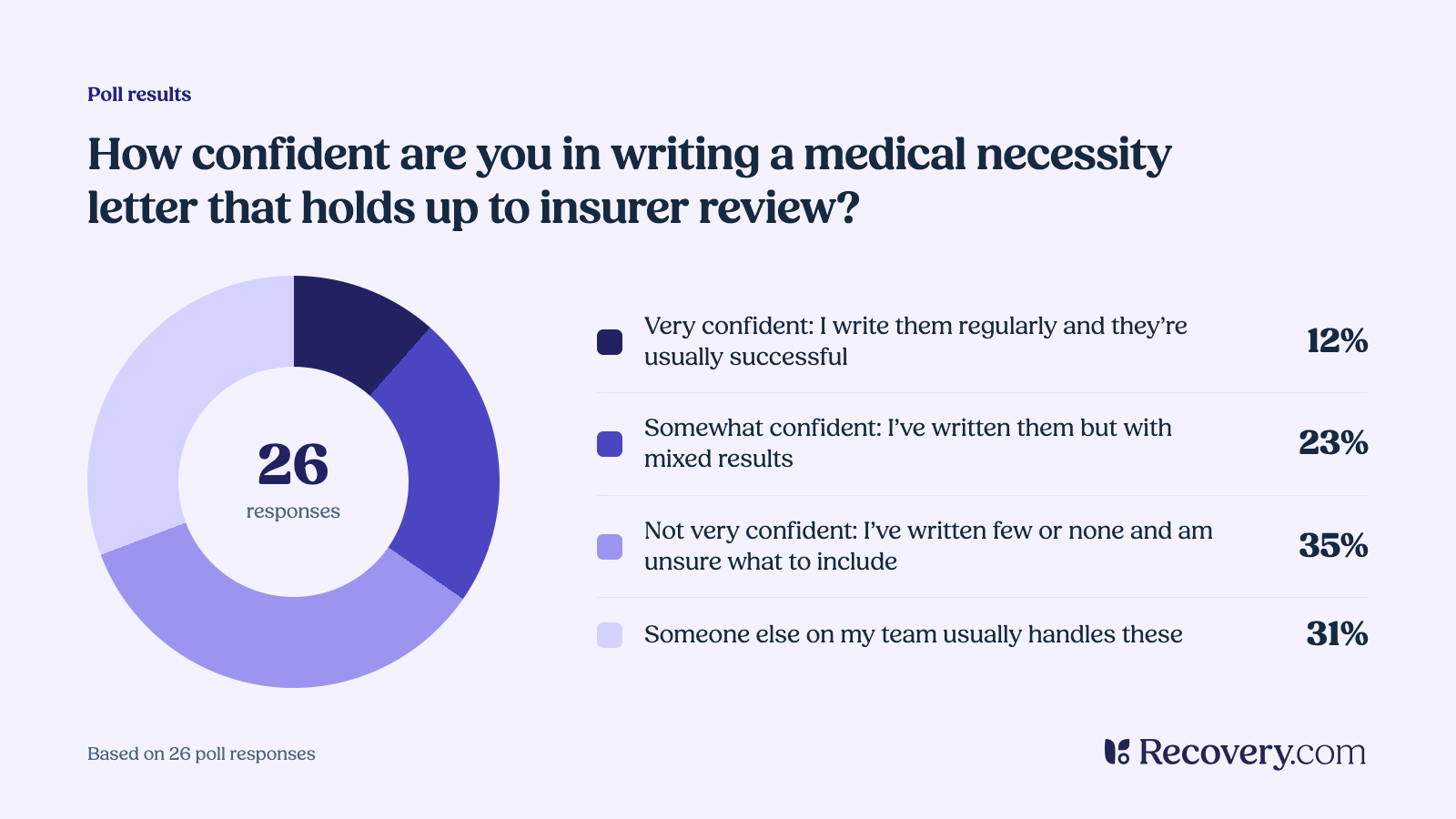
When there's a gap between standard of care and an insurer's definition of medical necessity, Feldman says, "that's when insurance company mischief can be most confounding."
Why Do Insurers and Clinicians Disagree About Care?
Often, they're aiming at different goals. Clinicians often want full recovery and whatever continuum it takes to get there. Insurers sometimes set the bar at crisis stabilization.
Feldman shared an analogy from one of his advisors: when a house is on fire, putting the fire out stabilizes the crisis, but it doesn't give the family a place to live. Clinicians are focused on that place to live.
He also shared examples of denials that made little clinical sense:
- An insurer told a residential program it never covers residential care beyond 30 days, regardless of what standard of care calls for.
- Another insurer denied residential care because the patient was in active withdrawal.
Find The Perfect Treatment For You
Answer a few questions and we'll match you with the best options.
What Are You Struggling With?
What Kind of Care Do You Need?
What Insurance Do You Have?
2. How Can a Medical Necessity Letter Overturn a Denial?
Highlight need in writing.
A medical necessity letter is a written conversation between the clinician and the insurer. Feldman, lead author of a 2021 Journal of Psychiatric Practice article on these letters, says a strong one follows a clear arc:
- Introduce yourself. Share your training, credentials, and specialty.
- Summarize the patient. Describe your relationship, how long you've treated them, and their clinical presentation.
- Name the standards of care. Identify the specific, generally accepted standards you're applying.
- Describe the risks. Explain what could happen with a different treatment or if current care ends too soon.
- Assert medical necessity. State that the recommended care is medically necessary.
One tip: don't lean on your own expertise alone. As a clinician once told Feldman, if it's up to the treating clinician's opinion, "then it really can be up to the opinion of anyone, including the insurance company." Pointing to generally accepted standards gives the insurer nothing to dispute.
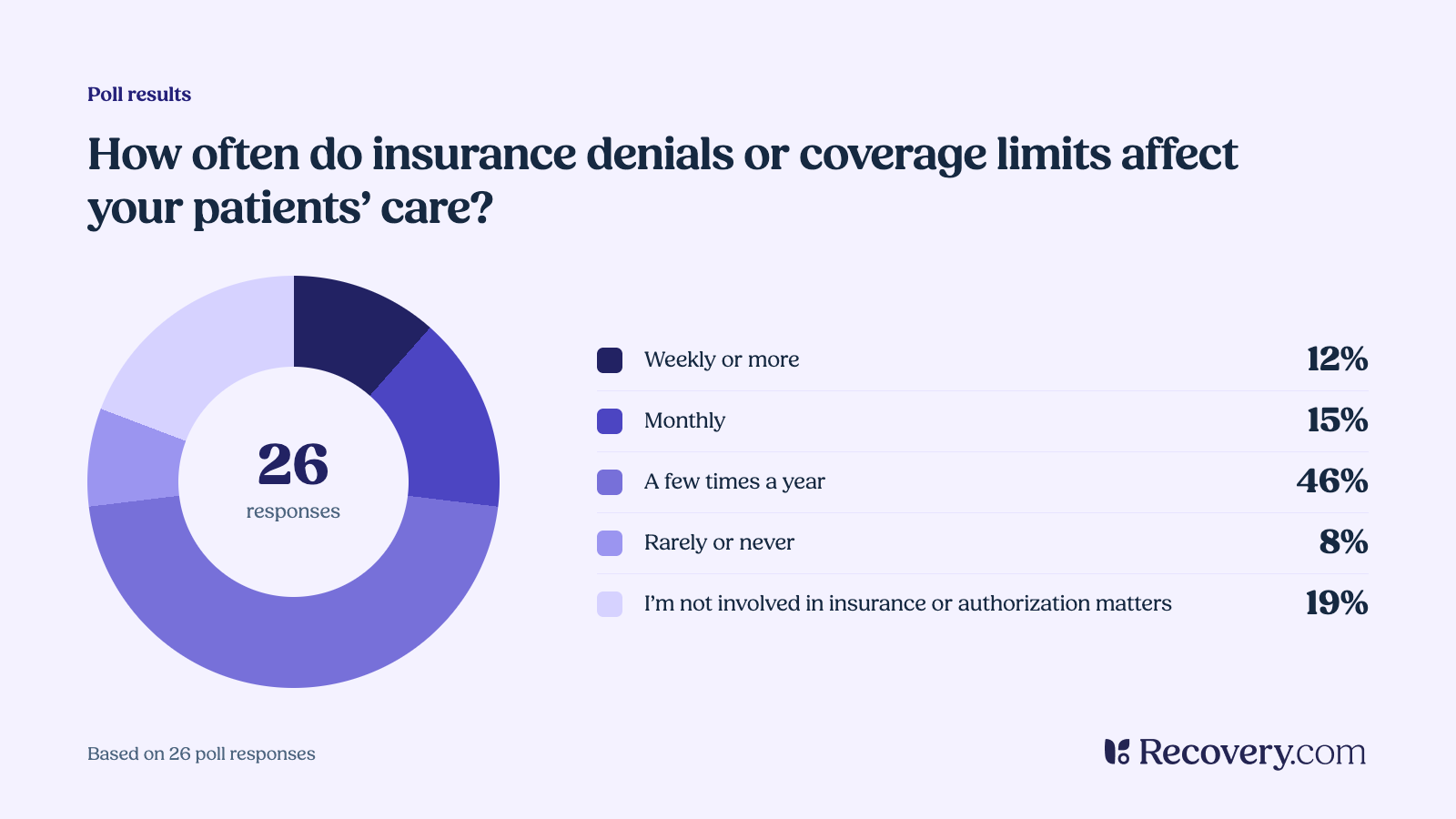
When Should Clinicians Send a Medical Necessity Letter?
Feldman recommends a letter in three situations:
- After a denial, to document why the decision conflicts with standard of care.
- At a level-of-care transition, whether moving up from outpatient to residential or stepping down from inpatient.
- During prior authorization, even when it's approved. The team that approves prior authorization is often separate from the team that pays claims. A letter on file protects care that's later denied.
What Does Success Look Like?
Feldman shared a case where the patient started the process herself. A woman with severe anxiety tied to car travel was in a second car accident. Her insurer covered her physical injuries but refused to pay for additional anxiety treatment.
A friend pointed her to Cover My Mental Health. She downloaded the letter template and the journal article, then asked her clinician to write a letter explaining how the accident had worsened her anxiety. After receiving it, the insurer withdrew the denial.
Cover My Mental Health also offers disorder-specific letter language, starting with eating disorders, with OCD resources in progress.
3. How Should Clinicians Handle a Peer-to-Peer Review?
Start by asking who's on the other end of the line.
Feldman uses "peer-to-peer review" to cover any conversation between a clinician and an insurer's reviewer. The story that pushed him to build training for these calls involved a psychiatrist seeking approval for transcranial magnetic stimulation (TMS) for a patient with OCD.
The reviewer didn't seem to follow the clinical reasoning. So the psychiatrist asked about their training. The answer: "Well, I'm a dermatologist."
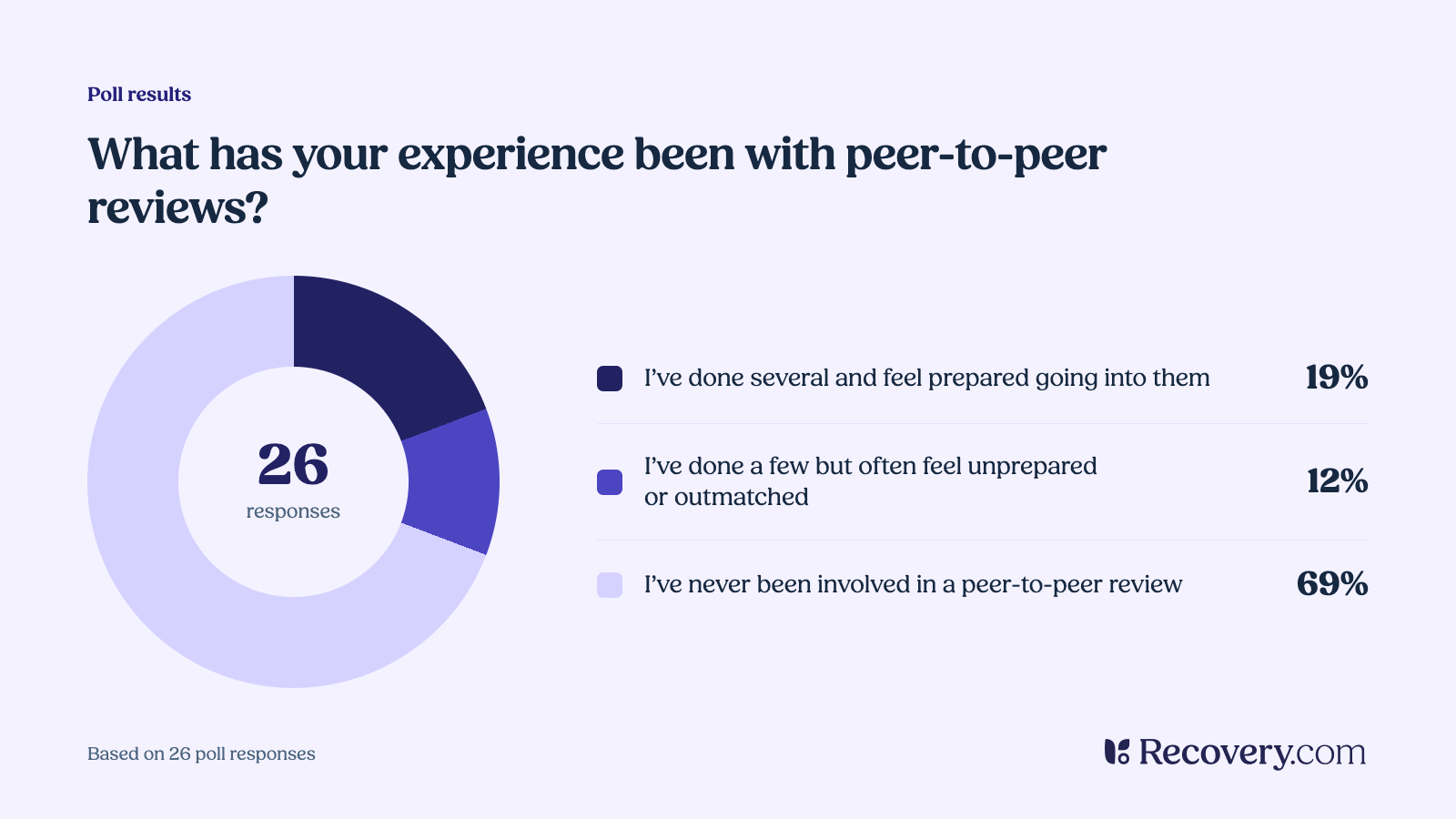
Feldman also learned that most clinicians never receive training on how to run these calls, as our poll results showed. Working with former insurance executives, clinicians, and accreditation organizations, Cover My Mental Health built a simple structure:
- Introductions. Ask about the reviewer's background, training, and whether they've read the file.
- The patient. Discuss clinical history, past treatment, and generally accepted standards of care. Aim to agree on the right course of treatment.
- Coverage. Only after discussing treatment, address whether that care is covered.
Separating "what's the right treatment?" from "is it covered?" keeps the conversation clinical first.
What Qualifies Someone as a "Peer"?
You can expect a reviewer with relevant clinical experience, and so do the accreditation bodies that review insurers. Feldman points to standards from NCQA and URAC, which call for reviewers to have the training and experience needed to make the determination. Insurers agree to these policies to keep their accreditation.
In another example, a nurse case manager's PTSD case was reviewed by a peer who said they were excited to "learn a lot" because they didn't know much about PTSD.














4. What Can Patients and Families Do to Help?
Bring in backup and ask for the paper trail.
When a letter or call doesn't work the first time, Feldman suggests several next steps. Two are especially useful advice clinicians can pass along to patients.
Can a Family Member Deal with The Insurer for a Patient?
Yes. Most insurers have an authorization form on their website that lets a friend or family member act alongside the insured person. That person can file paperwork, submit a medical necessity letter, or call to check on a claim.
Patients in treatment are often already stretched thin by work, family, and their own recovery. Feldman says many clinicians have told him this tip is some of the most practical advice they can give.
How Do You Get a Copy of Your Insurance Claim File?
Patients can request their complete claim file from the insurer, a right Feldman says is protected under HIPAA. Cover My Mental Health offers a downloadable request template.
When Feldman requested his own family's files, he received call logs and internal medical necessity notes, not just the policy and denial letters he already had. In one case, a third-party psychiatrist's review didn't match the therapist's detailed call notes at all. In another, the denial said care wasn't medically necessary, while every internal report said it was.
He used both findings to overturn the denials.
5. What Is a Formal Insurer Complaint, and When Should You File One?
Say these magic words.
Feldman calls this the step he most wishes he'd known about early on. A formal insurer complaint is not an appeal, and it's not a regulatory complaint. It's a complaint made directly to the insurance company about a quality of care failure.
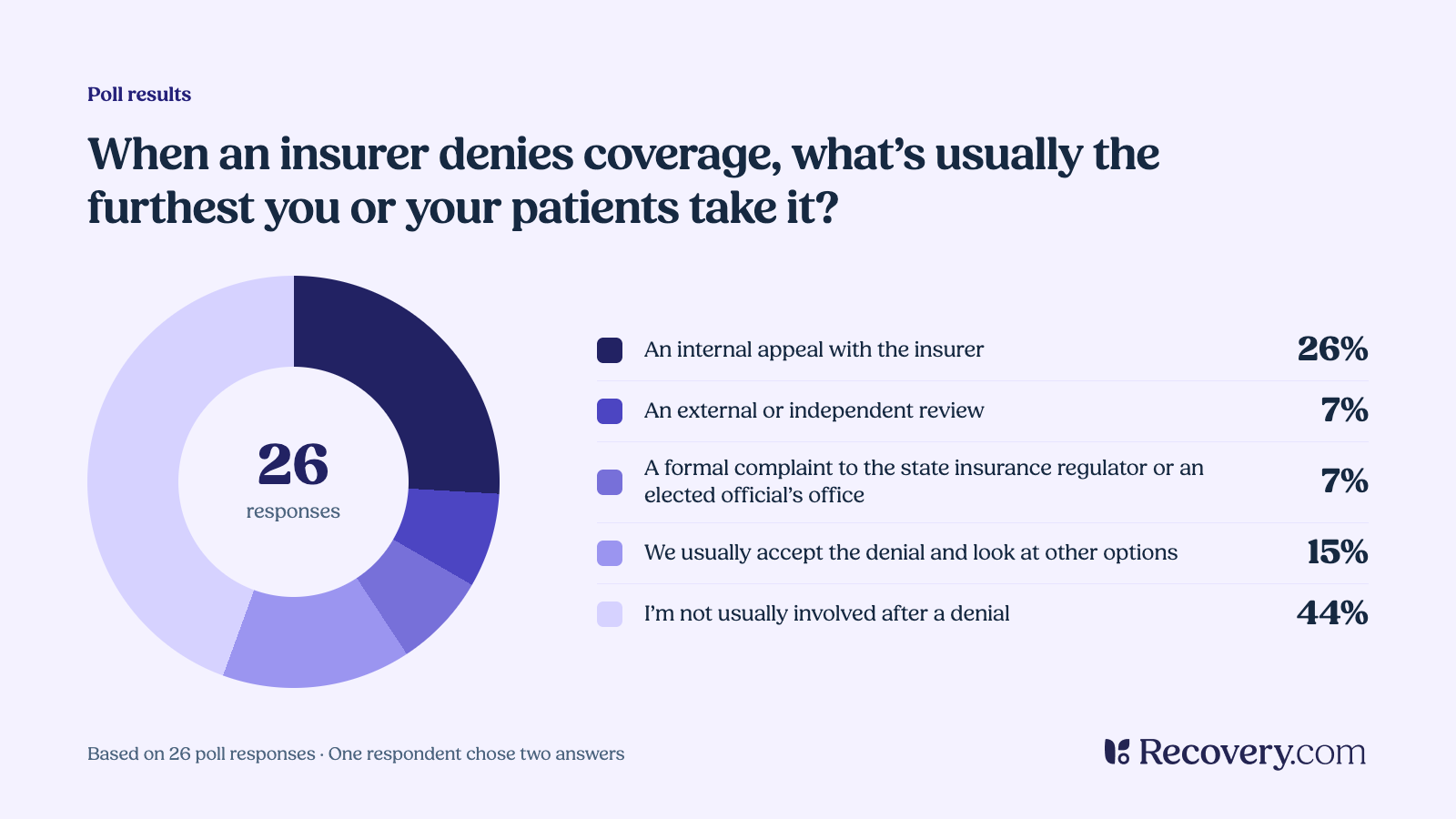
The patient, or potentially the clinician, can file it by phone and follow up in writing. The key phrase: "I want to file a formal complaint for a quality of care failure." Then describe the failure, such as a medical necessity letter that went unanswered.
Once those words are said, Feldman explains, the insurer must document the complaint and report it to its regulators and accreditation body. Insurers don't like doing that, which is what makes it effective.
Does a Formal Complaint Actually Work?
Feldman shared a case from an out-of-network OCD and anxiety clinic in Texas. The clinic had a single case agreement with a patient's insurer, but the insurer never paid. Calls went nowhere.
After hearing Feldman speak, a staff member called the insurer and gave it one more chance to pay. When it refused, they said they wanted to file a formal complaint for a quality of care failure. The insurer's response: "No need to do that. The check's in the mail."
Conclusion
Insurance denials for mental health and addiction treatment often come down to a gap between what clinicians are trained to provide and what a policy says it will pay for. Feldman's resources are built to close that gap, empower families, and bring hope to situations that can feel bleak.
If you take one step this week, he suggests writing your first medical necessity letter. Clinicians tell him the template gets them about 80% of the way there the first time and closer to 95% the second. And remember his broader point: the skills from your clinical training are enough to hold insurers accountable.
Looking for treatment options that fit a patient's insurance, or lack of it? Recovery.com Pro is a free tool that lets professionals search treatment by insurance and build shareable referral lists. Sign up now to get started.
Our Promise
How Is Recovery.com Different?
We believe everyone deserves access to accurate, unbiased information about mental health and recovery. That's why we have a comprehensive set of treatment providers and don't charge for inclusion. Any center that meets our criteria can list for free. We do not and have never accepted fees for referring someone to a particular center. Providers who advertise with us must be verified by our Research Team and we clearly mark their status as advertisers.
Our goal is to help you choose the best path for your recovery. That begins with information you can trust.