Find Treatment By
Rehabs by Location


Learn
About Us
Recovery.com combines independent research with expert guidance on addiction and mental health treatment. Our mission is to help everyone find the best path to recovery through the most comprehensive, helpful network of treatment providers worldwide.
Advisory Council
Our advisory council brings together leaders in behavioral health, technology, and business. Their diverse expertise ensures our resources and product are innovative, evidence-based, and effective. They guide our mission as accomplished individuals dedicated to improving the landscape of addiction recovery and mental wellness.
From Patients to Policy: 5 Ways Healthcare Professionals Can Put Health Advocacy Into Action


About 20 years ago, Dr. Katherine Kennedy found out that an energy company planned to run a natural gas pipeline across Long Island Sound. Federal regulators had already approved it.
People told her she had "a snowball's chance in hell" of stopping it. She organized a statewide grassroots campaign anyway.
She wrote a newspaper column, met with legislators, and worked with the state until Connecticut's Attorney General won the case in the Second Circuit Court of Appeals. The pipeline company took it to the U.S. Supreme Court, which declined to hear it. The ruling stood, and the pipeline was never built.

Dr. Kennedy is now a clinical professor of psychiatry at the Yale School of Medicine, where she directs the Yale Legislative Advocacy Program. In a recent Recovery.com CE webinar, she explained how therapists, physicians, counselors, and other behavioral health professionals can take what they already do for individual patients and apply it to policy. Her main point is that most healthcare workers are already advocates. They just need a few more tools.
Here are the five biggest questions the session answered, plus responses to audience polling from Dr. Kennedy’s live CE webinar, which you can also watch here and earn a free CE credit.
1. What Is Health Advocacy, and Are You Already Doing It?
If you've fought for a patient, you're already an advocate.
Dr. Kennedy defines health advocacy as working outside direct medical care to improve the health of individuals or communities. That can mean speaking publicly in support of policies that help patients, or working to change the systems they have to navigate. Most clinicians do this already. For example, she says,

One thing health advocacy is not: a platform for personal political opinions. If an action doesn't benefit patients, communities, or populations, Dr. Kennedy says it isn’t health advocacy.
Do Healthcare Professionals Have a Duty to Advocate?
For many professions, yes.
In 2001, the American Medical Association stated that physicians should "advocate for the social, economic, educational, and political changes that ameliorate suffering and contribute to human well-being." Psychologists, pharmacists, PAs, and many other professions have similar ethical commitments, though each defines the scope a little differently.
The reason is simple. Patients come from different zip codes, have different insurance, get care in different systems, and live under different state laws. All of that affects their access to care and their health outcomes. Advocacy is how clinicians reach those upstream factors.
What's the Difference Between Advocacy and Activism?
Advocacy works within institutions using approved tools to change minds, laws, and culture. Activism works both inside and outside institutions, using approved and unapproved tools. The two sometimes overlap, but knowing the difference helps if someone ever questions what you're doing.
Advocacy also happens at different levels, from self-advocacy (taking care of your own well-being first) to patient, institutional, community, state, federal, and global advocacy.
Find The Perfect Treatment For You
Answer a few questions and we'll match you with the best options.
What Are You Struggling With?
What Kind of Care Do You Need?
What Insurance Do You Have?
2. What Stops Healthcare Professionals From Advocating?
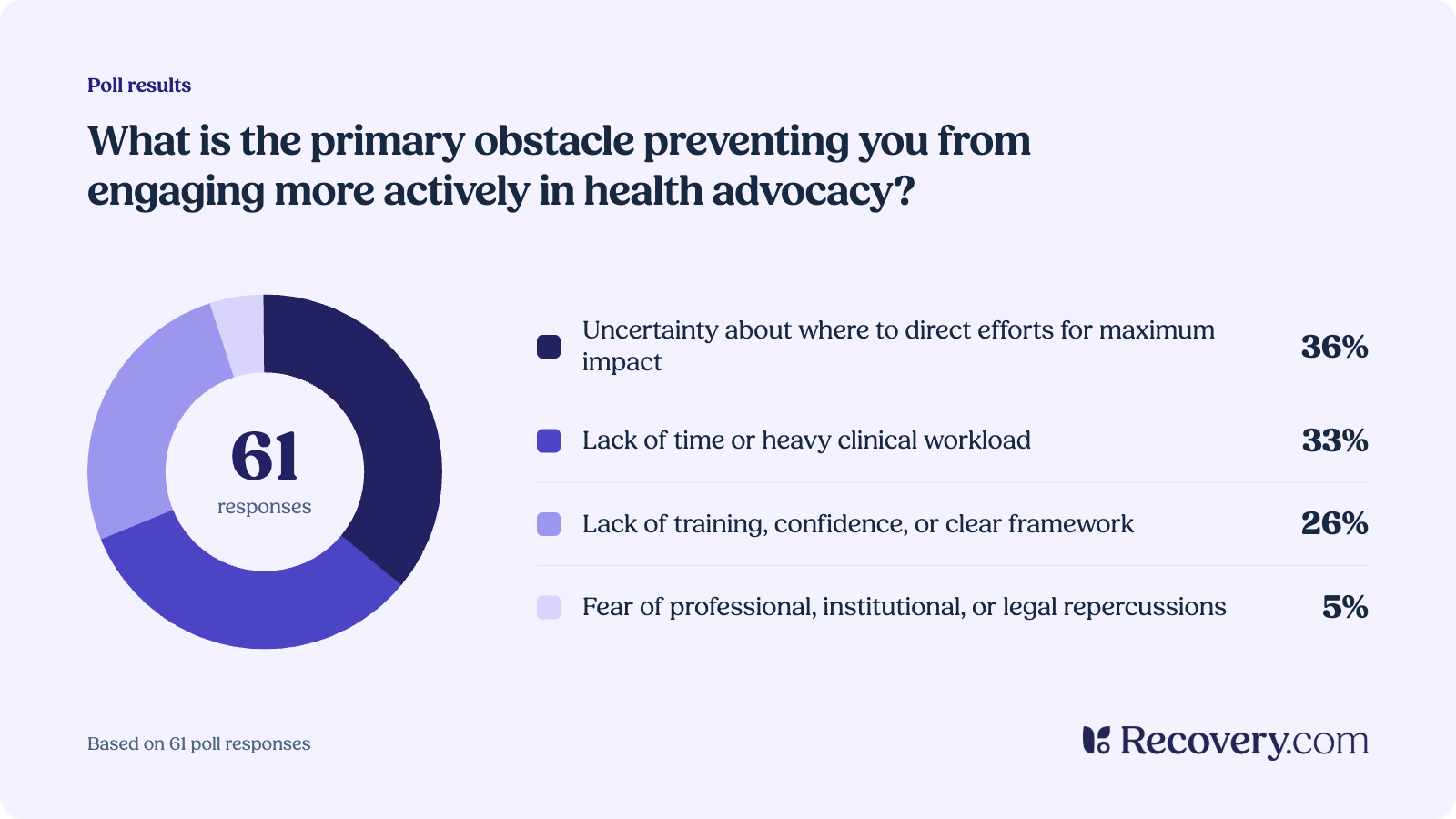
The most common barrier Dr. Kennedy hears about is time. Clinicians are busy, and advocacy can feel like one more thing on the list.
A newer concern has become one of the biggest: fear of retaliation.
Other barriers include not knowing where to start, burnout, vague goals, imposter syndrome, and a lack of academic credit for advocacy work.
Her advice is to acknowledge these obstacles instead of blaming yourself. If you meant to sign a petition and forgot, don't beat yourself up. Do what you can.
What Skills Does Health Advocacy Require?
Dr. Kennedy breaks advocacy into three skills: collaboration, negotiation, and communication.
Clinicians use all three every day. You collaborate with care teams, negotiate with patients about medications and behavior changes, and communicate with patients, families, and colleagues constantly.
Healthcare professionals also have two big advantages with policymakers. They have clinical stories that are memorable and persuasive, and they're comfortable with evidence. That combination makes them credible voices on health policy.
Explore Alcohol Treatment Centers
3. What's the Simplest Way to Start Advocating?
Vote, and help others make a plan to vote.
Dr. Kennedy calls voting "probably the number one advocacy action you can take."
Even in big election years, a large share of eligible voters don't turn out. In off-cycle years, like this November, turnout drops further.
The way you encourage others matters too. Asking someone "Are you voting?" doesn't do much, according to research she cited. Asking "What's your plan to vote?" works better because it gets people to picture the specifics. Will they go before work? After picking up the kids? With a plan in place, following through becomes easier.














4. How Should You Respond to Health Misinformation?
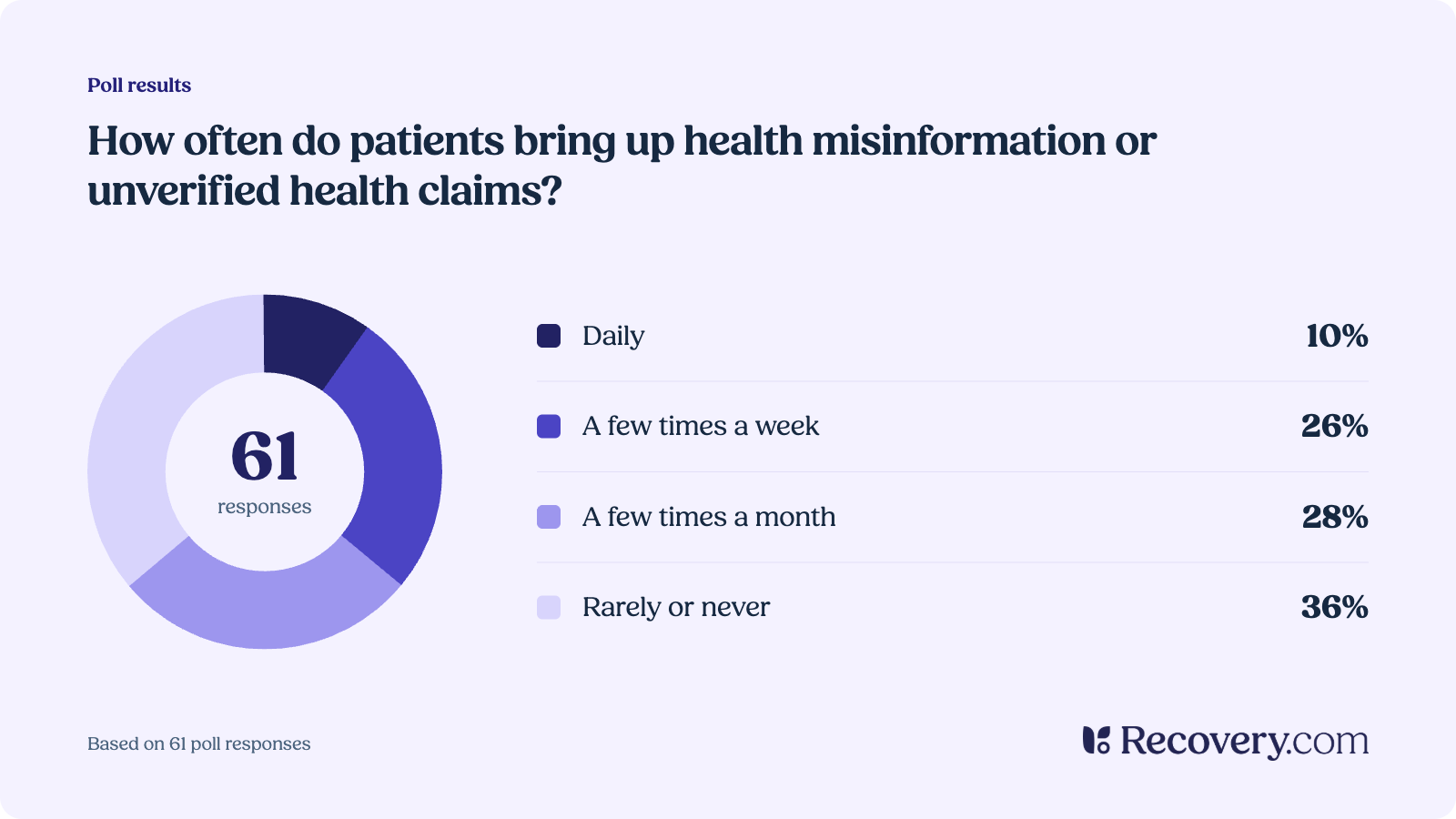
Many webinar attendees said their patients are running into false health information. Claims like "antidepressants are dangerous" or "the keto diet can cure schizophrenia" spread fast, and Dr. Kennedy believes vague or restricted language in public health communication makes it worse.
Health misinformation isn't new. She points to the eugenics movement, doctors appearing in cigarette ads before the 1964 Surgeon General's report, the Laetrile cancer cure myth, HIV/AIDS myths in the '80s and '90s, and today's false claim that vaccines cause autism.
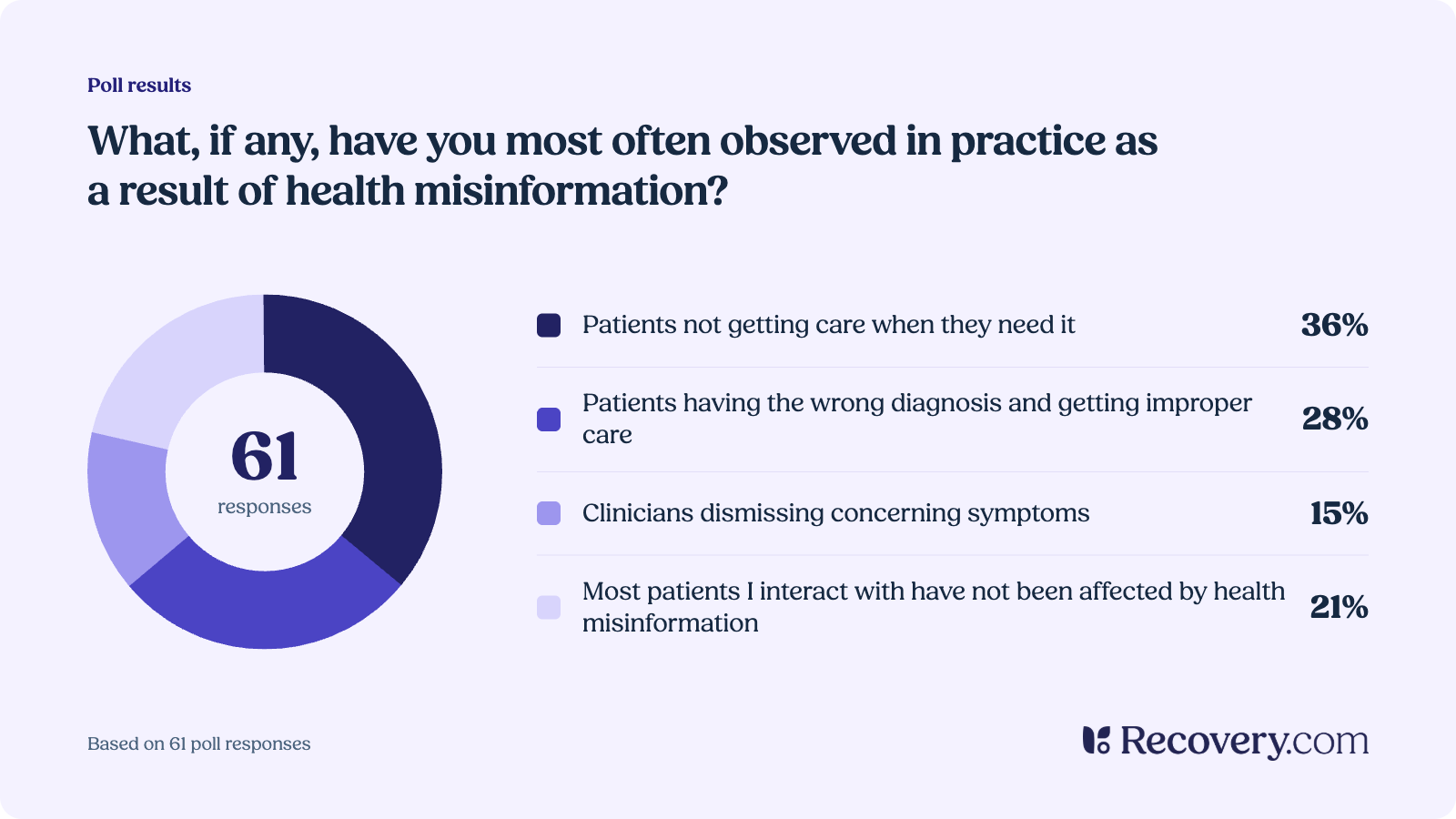
As poll respondents noted in Dr. Kennedy’s live session, misinformation is both prevalent and impactful, so it’s vital to both challenge and correct.
What's the Difference Between Misinformation and Disinformation?
Misinformation is false information shared without intent to deceive. Disinformation is spread on purpose for money, attention, or a political goal.
With a patient, friend, or family member who believes something false, you're usually dealing with misinformation. Dr. Kennedy advises not to react with anger, and not to ignore it. Both let the false belief keep spreading. Instead, try something like: "Your perspective is this. Let me tell you how I see it."
Use the same skills you use with patients. Listen closely, don't interrupt, and try to understand the values and fears behind the belief. Ask questions that invite reflection. And don't keep re-explaining, because "people's eyes will glaze over."
The goal isn't to win in one conversation. If the person says, "Huh, I've never thought of it that way," you've made progress.
5. How Do You Get Lawmakers and the Public to Listen?
Build relationships, keep your message short, and don't go it alone.
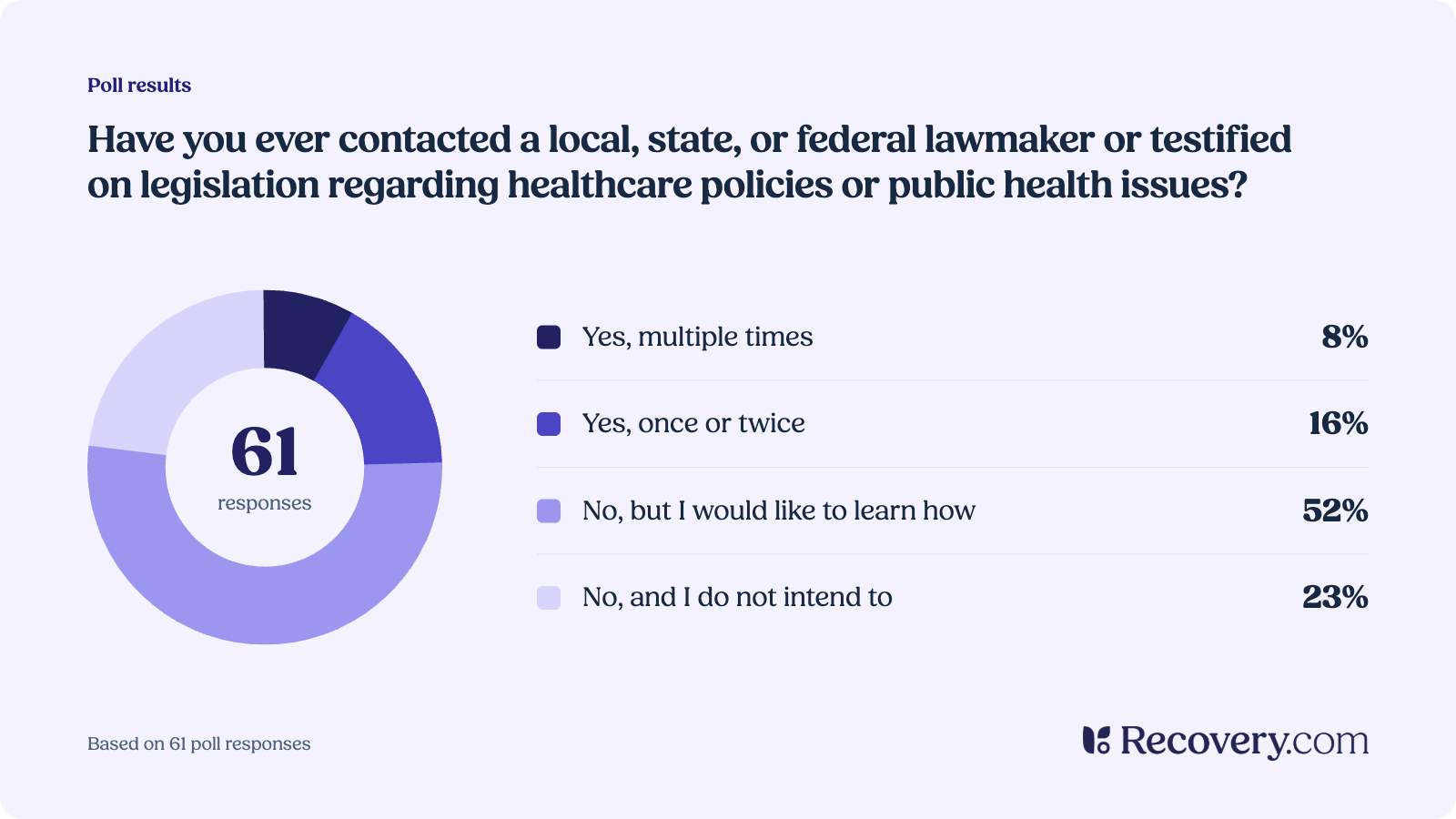
How Do You Build a Relationship With Your Legislator?
Legislators are far more likely to take your input seriously if they already know who you are. Start by searching "who are my legislators" with your home address, since that determines who represents you. Most people have two state legislators (except in Nebraska, which has a one-chamber legislature), plus local officials.
Look up their committees and interests. You might share an alma mater or a hobby. Sign up for their newsletter and follow them on social media. This fall, many will hold community events before the November election, often with few people attending. It's a good chance to introduce yourself as a healthcare professional and offer to help on health issues.
If you can't meet in person, send a short email: thank them for their work, say you're a constituent, explain you're a healthcare professional, and offer to help. Being a constituent is key. Contacting a powerful committee chair who doesn't represent you is, in Dr. Kennedy’s words, "wasting your breath."
Dr. Kennedy describes three levels of relationship:
- Responsible constituent (following and subscribing)
- Engaged constituent (meeting informally)
- Active constituent (meeting on an issue or serving as a health consultant)
Pick your current level and aim for the next one over the coming year or two.
Dr. Kennedy’s residents showed how this pays off. Their patients were refusing to carry fentanyl test strips because the strips were classified as drug paraphernalia. The residents met with their state legislator, who added decriminalization to a larger bill. It passed and became state law.
How Do You Communicate So People Actually Remember?
Whether you're writing an op-ed, testifying, or posting online, avoid what Dr. Kennedy calls "the kitchen sink approach." Know your audience, use no more than three pieces of data, and choose stories over statistics. Patient stories (with privacy protected) are where clinicians have a real edge.
Always end with a clear ask. Too many op-eds build the reader up and then leave them with nothing to do. Include a petition link, a legislator's phone number, or another concrete next step.
Word choice matters too. "Eighty percent fat free" sells better than "20% fat," even though they mean the same thing.
Why Join an Advocacy Organization?
Community groups and professional organizations are already working on most issues you care about. Open their emails, go to meetings, and learn from colleagues. When Connecticut advocates asked Dr. Kennedy to wear a white coat to a rally at the state capitol, she didn't own one, so she bought one on Amazon. Following the lead of community organizations is part of the job.
The Bottom Line
Health advocacy doesn't require a law degree or unlimited free time. It builds on skills healthcare professionals already use every day. Dr. Kennedy's five actions are to vote, address misinformation, get to know your legislators, educate the public, and join an advocacy organization.
Start with one. As her pipeline fight showed, small groups of committed people can win even when they're told they can't.
Find more free live and on-demand CEs featuring industry experts here.
Use Recovery.com to find mental health and addiction treatment. Search for the care that fits your needs, compare your options, and connect directly with a treatment provider today.
FAQs
Health advocacy means working outside direct patient care to improve the health of individuals, communities, or populations. It can include speaking up for policies that help patients, pushing for changes inside a hospital or clinic, or working with lawmakers on health legislation. To count as health advocacy, the action has to benefit patients or communities, not just express a personal political view.
Getting a patient approved for a non-formulary medication, appealing a denied insurance claim, and signing a petition are all forms of health advocacy. So are voting, emailing your legislator, and posting about a health issue to raise awareness. On a larger scale, Dr. Kennedy's residents at Yale helped get fentanyl test strips decriminalized in Connecticut by meeting with their state legislator.
Clinicians bring two things policymakers value: firsthand patient stories and comfort with evidence. A short patient story (with privacy protected) can show a lawmaker why a bill matters more clearly than a page of statistics. Healthcare professionals also already use the core advocacy skills of collaboration, negotiation, and communication in their daily work.
Search "who are my legislators" and enter your home address, not your work address, since your home address determines who represents you. Most people have one state senator and one state representative, plus local officials like a mayor or county administrator. Nebraska is the exception, with a single-chamber legislature.
Keep it short. Thank them for their work, say that you're a constituent, explain that you're a healthcare professional, and offer to help with health issues that come up. Dr. Kennedy says many legislators will respond and value the connection, especially at the state and local level.
Start small. Make a plan to vote, sign up for your legislator's newsletter, or join an advocacy organization and read their emails. Dr. Kennedy recommends picking one action instead of trying to do everything at once.
Don't react with anger, and don't ignore it. Listen first, try to understand the fears or values behind the belief, and then offer your perspective with something like, "Let me tell you how I see it." The goal isn't to change their mind in one conversation. It's to create a small opening for them to consider another view.
Our Promise
How Is Recovery.com Different?
We believe everyone deserves access to accurate, unbiased information about mental health and recovery. That's why we have a comprehensive set of treatment providers and don't charge for inclusion. Any center that meets our criteria can list for free. We do not and have never accepted fees for referring someone to a particular center. Providers who advertise with us must be verified by our Research Team and we clearly mark their status as advertisers.
Our goal is to help you choose the best path for your recovery. That begins with information you can trust.