Find Treatment By
Rehabs by Location


Learn
About Us
Recovery.com combines independent research with expert guidance on addiction and mental health treatment. Our mission is to help everyone find the best path to recovery through the most comprehensive, helpful network of treatment providers worldwide.
Advisory Council
Our advisory council brings together leaders in behavioral health, technology, and business. Their diverse expertise ensures our resources and product are innovative, evidence-based, and effective. They guide our mission as accomplished individuals dedicated to improving the landscape of addiction recovery and mental wellness.
What Is Racial Trauma? 10 Expert Answers to the Internet’s Most Searched Questions About Race and Mental Health


Mental health never exists in a vacuum. Our identities, families, communities, histories, relationships, and daily experiences all shape how we move through the world. For many Black and Brown people, race is not a background detail. It can affect safety, stress, belonging, access to care, and whether it feels safe to be vulnerable in the first place.
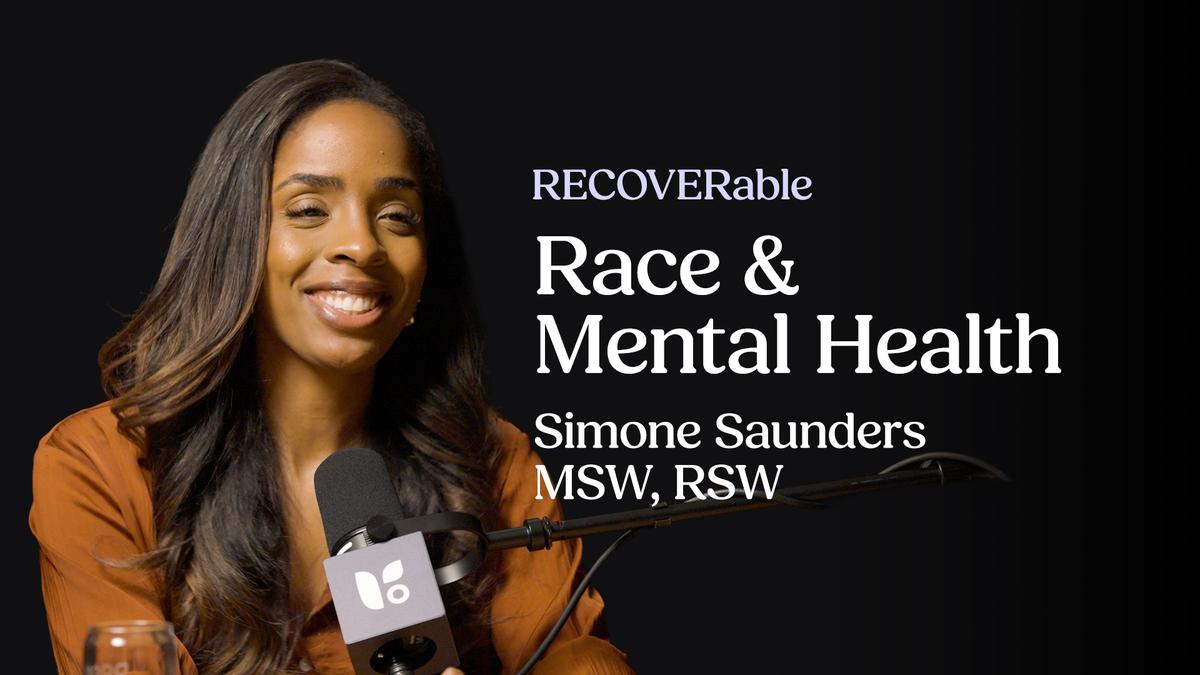
In this episode of RECOVERable, trauma therapist, social worker, and author Simone Saunders joins host Terry McGuire to explore the intersection of race and mental health. Saunders answers 10 of the biggest questions people ask about race and mental health, with one important reminder at the center of it all: support should make room for every part of who you are.
1. Racial Trauma Is Real, and It Can Leave a Lasting Mark
Racism is not simply an uncomfortable interaction that someone should be expected to “get over.” Saunders is clear that racism can cause real trauma, including trauma that is passed through generations.
“Racism can cause lasting damage and can cause trauma, including intergenerational.”
A harmful experience may happen directly, such as being discriminated against at school, work, or in healthcare. But racial trauma can also grow from the ongoing reality of having to anticipate how people may react to your appearance, hair, speech, name, or presence.
Can racism contribute to anxiety, depression, and PTSD symptoms?
According to Saunders, repeated exposure to racism can increase anxiety, depression, and posttraumatic stress disorder (PTSD) symptoms, though those symptoms may look different from person to person. One person may become more withdrawn or avoidant. Another may people-please, become angry, or feel constantly on guard.
“It can look like tension, tightness, anxiety sort of symptoms. So, like, you might feel a little bit jittery. You might feel pins and needles.”
That vigilance is not necessarily an overreaction. As Saunders explains, even what looks like an internal fear or cognitive distortion may have developed as a way to survive repeated harmful experiences. Curiosity matters, especially in therapy. Instead of asking, “Why are you so worried?” the better question may be, “What happened that taught you to stay alert?”
2. Microaggressions Add Up, Even When Others Call Them Small
Microaggressions are often brushed aside as harmless comments, awkward questions, or misunderstandings.
“Microaggressions are a form of complex trauma as well, right? So again, death by a thousand cuts.”
A person might comment on someone’s skin tone after a vacation, ask to touch a Black woman’s hair, or touch it without permission. A single comment may seem minor to the person making it. But for the person on the receiving end, it can be another moment of unwanted attention, objectification, or invasion of personal space.
Why are microaggressions so exhausting?
The toll is not just about one remark. It is about repetition and the constant calculations that may follow. Saunders describes how Black people may have to consider how a hairstyle, clothing choice, or way of speaking could affect how others view their professionalism, competence, or safety.
That constant awareness can wear on the nervous system. “It’s something that influences decisions,” Saunders says, even when it is not consciously at the front of someone’s mind every day.
When people dismiss microaggressions because they were not “serious enough,” they can miss the cumulative impact. The issue is not only intent. It is the pattern, the lack of control, and the emotional labor of navigating it again and again.
3. Mental Health Stigma Can Make Asking for Help Feel Risky
Why is mental health still taboo in many Black and Brown communities? Saunders points to several overlapping pressures, including the expectation to be exceptionally resilient.
“If I’m not giving people the things that they want, or if I’m not bending over backwards for people, then I’m not valuable as a person.”
The “strong Black woman” and “strong Black man” stereotypes may sound flattering from the outside, but they can become heavy roles to carry. If others expect you to be strong all the time, there may be little room to say, “I’m struggling,” “I need help,” or “I cannot handle this alone.”
How can “keeping family business in the house” reinforce stigma?
Privacy can be important. But Saunders notes that when family struggles must always stay private, people can become isolated in painful experiences. If no one talks about depression, anxiety, trauma, or harmful family dynamics, it can become harder to name what is happening, much less seek support.
That silence may be rooted in protection, history, or concern about judgment. Still, it can make people feel that therapy is not for them or that asking for help would be disloyal.
“You can go to therapy and not tell a single soul that you have a therapist, and that’s okay.”
Seeking support does not mean rejecting your family, culture, or community. It can mean choosing to care for yourself in a new way.
4. A Therapist Does Not Have to Share Your Race, But They Must See Your Full Story
Many people wonder whether they need a therapist of the same race to heal from racial trauma. Saunders says not necessarily. A shared identity can create an important sense of safety and reduce the burden of having to explain certain experiences. But it is not the only factor that matters.
What matters most is whether a therapist can openly and respectfully explore the parts of your identity that shape your life. A therapist should not avoid race, culture, religion, sexuality, gender, or other important parts of a client’s experience just because the conversation feels uncomfortable.
Is “I don’t see race” a red flag in therapy?
For Saunders, it can be.
A therapist who insists they “just see a person” may believe they are being fair. But ignoring race can mean ignoring a core part of someone’s lived experience. It can reinforce the message that racial identity does not deserve space in the room.
“If as a therapist, that’s not something that you’re willing to acknowledge, you’re missing a core portion of the client’s story.”
A culturally responsive therapist does not need to have every answer. They do need cultural humility, which Saunders describes as knowing you will not know everything, remaining committed to learning, and examining how your own identity affects the therapeutic relationship.
5. Black Men May Face Extra Pressure to Hide Vulnerability
Black men can face intense expectations around masculinity, self-reliance, and emotional control. Saunders explains that Black men may be heavily scrutinized for anything that others perceive as feminine, soft, or outside narrow definitions of masculinity.
That pressure can make vulnerability feel unsafe. It can also make it difficult to know who is safe enough to open up to, or how to express emotions after years of learning to suppress them.
“It can feel really isolating to not know who’s safe to let your guard down around and also not know how.”
Are younger Black men becoming more open to therapy?
Saunders sees more willingness among younger men to talk about mental health and try therapy, even though stigma remains. Sometimes people arrive at therapy with self-awareness. Other times, they arrive cautiously, saying they are “just coming to explore.”
That is okay. Saunders describes this early stage as a kind of safety-seeking. A person may be quietly asking: Is this therapist safe? Can I be honest here? Will I be judged for having feelings?
The therapeutic relationship needs room for those questions. Direct conversations about race, gender, culture, and masculinity can help make therapy feel more honest and less isolating.
6. The “Strong Black Woman” Role Can Make Rest Feel Uncomfortable
The strong Black woman schema is the belief that Black women should always be resilient, capable, and able to care for everyone else. Saunders explains how that role can become internalized:
“I actually can’t rely on people. Then I have to support myself. There is nobody to help me.”
That belief can create deep exhaustion, loneliness, anxiety, and depression. It can also make it difficult to receive help, set boundaries, or believe you still have value when you are not doing everything for everyone.
What does rest look like when you are used to carrying everyone else?
Rest may not feel peaceful at first. Saunders offers an honest reminder: “Rest is not going to feel comfortable.”
For someone used to hyper-independence, rest can bring up guilt, discomfort, or the feeling that they should be doing something productive. The goal is not to force that feeling away. It is to notice it, reflect on it, and slowly make room for rest anyway.
Rest is not laziness. It can be a practice in believing that your worth is not dependent on how much you do for other people.
7. Faith and Therapy Can Work Together
Faith, prayer, and spirituality can offer meaning, connection, resilience, and community. Saunders emphasizes that these can be powerful sources of support. But faith does not have to replace therapy, medication, or other mental health care.
“Faith and prayer can be a point of resilience for a lot of people, but it also doesn’t replace the need for mental health care.”
As one person told the host, “I pray on my way to the pharmacy to pick up my depression meds, and I pray on my way to my therapist.” Saunders calls that response “perfect.”
Can you go to therapy and still be religious?
Absolutely. Therapy and faith can complement one another. Faith may help someone find meaning, connect with others, or feel grounded in difficult moments. Therapy can help someone process emotions, relationships, trauma, and mental health symptoms.
A good therapist can ask whether faith has been helpful, harmful, or both. They can also help a client decide whether they want spirituality to be part of their treatment, without making assumptions either way.
8. You Can Heal Even If Your Parents Will Not Go to Therapy
Intergenerational trauma can be passed down through experiences, behaviors, beliefs, coping patterns, and family dynamics. It is natural to wish the people who hurt you, even unintentionally, would do their own healing work.
But Saunders says you can still work on your own healing even if your parents choose not to go to therapy. You may not get every answer, apology, or resolution you want. That can bring real grief.
Can healing include grieving the relationship you wanted?
Yes. Saunders says people may grieve “the relationship that you could have, the parent that you could have, the childhood that you could have had.”
Healing does not require pretending that loss does not hurt. It may mean acknowledging what was missing while building new ways of relating to yourself, your loved ones, and future generations.
“There’s also intergenerational resilience, too. And I think that that’s important to pass down.”
9. Community Can Be Healing When Care Is Hard to Access
A lack of culturally responsive providers, financial barriers, insurance limits, and past harmful healthcare experiences can make therapy feel out of reach. Saunders acknowledges that historical and current mistreatment can create understandable mistrust of health professionals.
When therapy is not immediately accessible, community can still matter deeply. That could mean a trusted friend, family member, support group, nonprofit, faith community, or another person who can truly see and understand you.
What matters most in community support?
Connection. Saunders says the most important piece is not necessarily the type of support, but the ability to form relationships where you can show up as your full self.
“Being able to have support, whether that is a mental health practitioner or community that recognizes those things, is really important.”
Community is not a replacement for professional care when someone needs it. But it can be a meaningful source of belonging and support, especially when accessing therapy feels difficult.
10. The Right Therapist Makes Space for Questions, Choice, and Safety
Finding a therapist can feel intimidating, especially when you are already unsure whether you will be understood. Saunders encourages people to remember that an initial consultation is for both people. The therapist is learning about you, but you are also deciding whether they are a good fit.
Ask direct questions. How do they integrate culture into sessions? How do they approach faith, sexuality, gender, or trauma? What are their areas of experience and limitations? What will therapy actually look like?
What are green flags during a therapy consultation?
A promising therapist should be able to clearly explain how they work, what they specialize in, what logistics to expect, and how they approach identity in care. They should make room for client choice and agency.
You do not have to stay with a therapist who does not feel like a fit. As Saunders puts it, if you do not feel comfortable with their responses, “you don’t have to go with that person.”
The Biggest Takeaway
Race can shape everyday life in profound ways, including how safe it feels to be vulnerable, seek help, rest, trust providers, or talk honestly about mental health. Recognizing that reality is not about reducing someone to one part of their identity. It is about seeing the whole person.
Whether support comes from a therapist, a friend, a faith community, or a combination of sources, the right support should make room for your full story.
Our Promise
How Is Recovery.com Different?
We believe everyone deserves access to accurate, unbiased information about mental health and recovery. That's why we have a comprehensive set of treatment providers and don't charge for inclusion. Any center that meets our criteria can list for free. We do not and have never accepted fees for referring someone to a particular center. Providers who advertise with us must be verified by our Research Team and we clearly mark their status as advertisers.
Our goal is to help you choose the best path for your recovery. That begins with information you can trust.