Find Treatment By
Rehabs by Location


Learn
About Us
Recovery.com combines independent research with expert guidance on addiction and mental health treatment. Our mission is to help everyone find the best path to recovery through the most comprehensive, helpful network of treatment providers worldwide.
Advisory Council
Our advisory council brings together leaders in behavioral health, technology, and business. Their diverse expertise ensures our resources and product are innovative, evidence-based, and effective. They guide our mission as accomplished individuals dedicated to improving the landscape of addiction recovery and mental wellness.
What Is Chronic Pain? 10 Expert Answers to the Internet's Most Searched Chronic Pain Questions


This Fall, the National Survey on Drug Use and Health (NSDUH) and the Center for Behavioral Health Statistics and Quality (CBHSQ) released fresh data highlighting the prevalence of chronic pain in Americans. They found that:1
- 1 in 5 adults has experienced chronic pain in the past three months.
- Chronic pain is more common among adults with substance use disorders (21.6%) than those without (17.8%).
- Chronic pain is more common among adults with any mental illness (33%) than those without (16.3%).
These data offer only a small glimpse of chronic pain’s far-reaching impact. To truly understand it, we need to listen to and empathize with the people living with it every day.
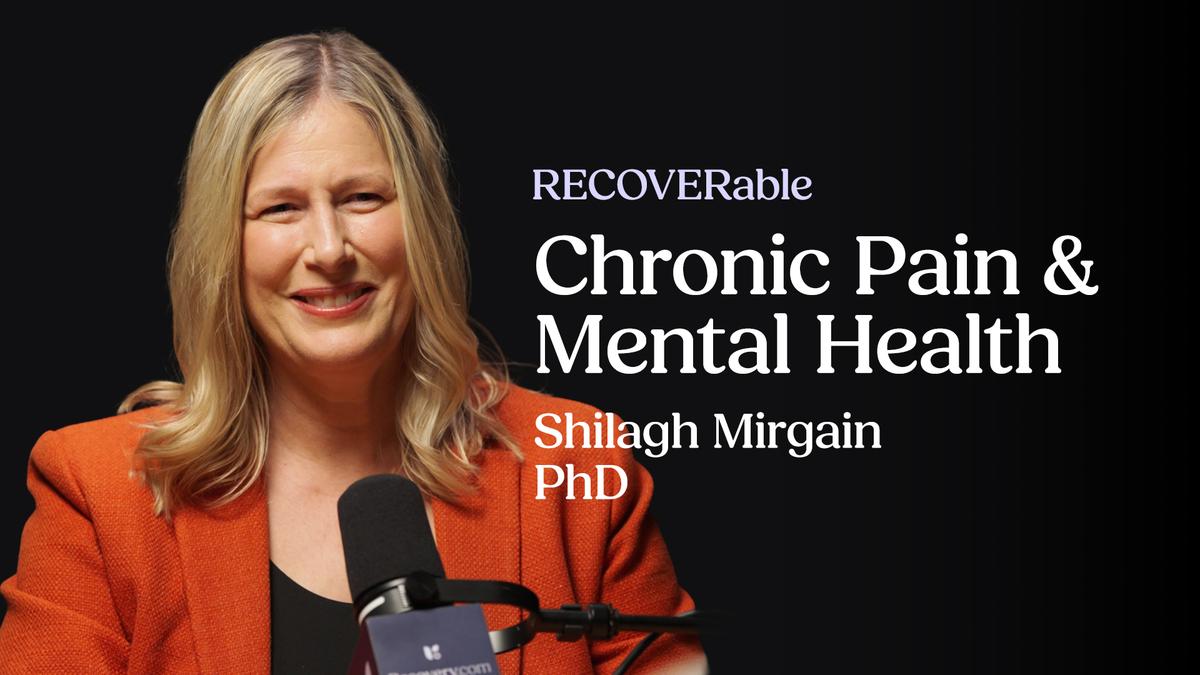
In this episode of RECOVERable, host Terry McGuire speaks with clinical psychologist Dr. Shilagh Mirgain about chronic pain as more than a physical symptom. She shares a compassionate, whole-person way of understanding pain that makes room for medical care, mental health, relationships, purpose, and the everyday realities of living with a chronic condition.
Here are 10 important questions from the conversation, along with practical ways to support yourself or someone you love who is living with chronic pain.
1. What is Chronic Pain, and Does It Have to Happen Every Day?
Chronic pain is not simply an injury that is taking longer than expected to heal.
If you touch a hot stove or break a bone, pain gets your attention and helps you protect yourself. Chronic pain, however, may continue beyond the initial healing period, often for three to six months or longer. According to Dr. Mirgain, “Chronic pain is like a broken alarm signal.”
It also does not have to be constant. Pain can come and go, with periods of lower pain and difficult flares. What often matters most is its ongoing impact on daily life, including sleep, mobility, mood, relationships, and your ability to do things that once felt routine.
“Most people don't have pain every day, every waking hour of the day. Instead, it fluctuates.”
2. Can You Have Pain Without a Current Injury?
Yes. Pain is real even when tests do not provide a clear explanation.
The episode explores central sensitization, a process in which the nervous system becomes more reactive and pain signals continue even after an injury has healed. As Dr. Mirgain explains, “You can have pain without having an injury, and an injury without having pain.”
Conditions such as fibromyalgia, migraines, arthritis, diabetic neuropathy, and cancer-related pain can be complex. Not every pain experience has one visible or easily identified cause.2 A normal scan or unclear test result does not mean someone is imagining their pain. It means they may need care that looks at the bigger picture.
3. Is Chronic Pain All in Your Head, or Can Stress and Mental Health Make It Worse?
Pain is real, and so is the connection between physical and emotional health.
Getting therapy or other mental health support does not mean pain is “all in your head.” It means you are receiving another form of care that may help you cope with the emotional, practical, and relational effects of living with pain.
Chronic pain and mental health can influence each other.3 Persistent pain may contribute to depression, anxiety, fatigue, grief, and burnout. In turn, these issues, plus catastrophizing (or expecting pain to ruin everything) can make pain feel more intense and harder to manage.
“Pain is real. There are biopsychosocial components to pain, especially chronic pain.”
Instead of forcing positivity, the conversation encourages balanced thinking. The goal is not to pretend pain is manageable every day. It is to move from “There is nothing I can do” toward “This is hard, and there may be one step I can take today.”
4. Can Trauma Affect Chronic Pain?
Trauma can leave the nervous system feeling unsafe and on high alert.
Dr. Mirgain explains that childhood trauma, posttraumatic stress disorder (PTSD), and complex trauma may be connected with heightened vigilance and a reduced sense of safety.4 When your nervous system is already scanning for danger, physical sensations and pain may feel more intense.
“Normal aches and pains can feel more intense, and then that pain can be amplified as a result of trauma that hasn't been integrated and processed.”
It is important to remember that trauma does not mean a person caused their chronic pain. It is one reason trauma-informed care can be especially valuable when pain, anxiety, sleep difficulties, and feeling unsafe overlap.
5. Why Do Pain Flares Create So Much Fear, and How Can You Prepare For Them?
The fear of pain can sometimes become nearly as limiting as pain itself.
A chronic pain flare-up can make plans feel uncertain. You may hesitate to commit to a drive, visit, or activity because you are worried about how you will feel later. Over time, that fear can lead to avoidance, isolation, deconditioning, and a life organized around what might go wrong.
Dr. Mirgain reminds us that, “It’s so important not to future forecast with pain” or assume that a difficult day will mean a lifetime of pain. Hope is not denial. It is staying in the present and asking, “What can I do today to support myself?”
6. What is a Pain-Flare Plan?
Planning for difficult days can reduce stress when a flare happens.
Consider deciding ahead of time what you need when your pain reaches an eight or 10, then share that pain flare management plan with the people in your household. It may include medication guidance from your clinician, a quiet room, help with children or chores, adjusted plans, or a specific way loved ones can check in.5
“Fear of pain or over-anticipation of pain can actually become more problematic than the pain itself.”
A simple tool, such as writing your pain number on a whiteboard, can help family members understand how you are doing without requiring you to repeatedly explain yourself. A plan cannot prevent every flare, but it can replace some last-minute panic with clarity and care.
7. What Does a Whole-Person Approach to Chronic Pain Treatment Look Like?
Effective chronic pain management looks beyond one painful body part.
The biopsychosocial approach to pain considers biological factors, emotional health, and social circumstances together. Medical evaluation, medication, physical therapy, movement, acupuncture, massage, and other clinician-guided options may all be part of a care plan. Still, they may not be the entire answer.
Mental health support can include relaxation techniques, mindfulness, treatment for anxiety or depression, pain psychology, and skills for responding to distress. Social factors matter too, including safety, access to care, financial stress, relationships, housing, and community support.
As Dr. Mirgain puts it, “You’re not just that body that has pain. There’s a whole person sitting there.”
8. Does Seeing a Therapist Mean Your Doctor Thinks the Pain is Imaginary?
No. A pain psychologist can offer support without dismissing your experience.
A mental health referral can feel invalidating, especially if you have already been told that nothing is wrong. But a clinician who understands pain management may help you build coping skills, find accountability, and address the secondary suffering that pain can bring, including fear, grief, distress, and disruption to daily life.
Dr Mirgain encourages it.
“I think of a pain psychologist as a coach or a guide, providing a variety of different strategies.”
Pain support groups can also offer knowledge and connection. Learning from people who understand can make it easier to try new strategies and feel less alone.
9. What Can You Do Each Day to Manage Chronic Pain Without Letting it Run Your Life?
Small, repeatable supports can help you make more room for your life.
The self-management tools discussed include daily relaxation, social connection, balanced thinking, appropriate movement, enjoyable activities, and healthy distraction. These strategies are not a quick cure or a replacement for medical treatment. Dr. Mirgain explains that they can help you build more agency and quality of life alongside the care you receive.
“Instead of, ‘How do I get rid of this pain?’ it’s, ‘What am I doing for self-care?’”
You might be wondering how to manage chronic pain, especially if you are new to doing so. You can start small with one or two changes, not a complete life overhaul. For example, you might try slow breathing with a longer exhale, reach out to one safe person, ask a clinician about movement that fits your condition, or schedule an activity that feels meaningful or enjoyable. As Dr. Mirgain says, “You don’t need to be positive in your thinking, but balanced.”
10. How Can Pacing and The Spoon Theory Help?
Use your energy intentionally instead of all at once.
The episode describes the boom-and-bust cycle: doing too much on a relatively good day, then experiencing a severe flare afterward. The Spoon Theory can give you and your loved ones a shared language for energy. If you have 12 “spoons,” or units of energy, showering, driving to an appointment, and making dinner may each take some of them.
Pacing can mean planning ahead, modifying tasks, resting before you are depleted, asking for help, and saving energy (or “spoons”) for what matters most. You might sit instead of stand for a task, order dinner after an appointment, or intentionally do less. That is not giving up. It is protecting your capacity.
According to Dr. Mirgain, protecting your capacity involves recognizing what you need and how to make it happen.
“Maybe I need to take a break. Maybe I need help with something. Maybe I need to sit down for the task instead of standing.”
Pain Deserves Care, Not Judgment
Chronic pain can be deeply isolating, especially when others cannot see or understand it. Dr. Mirgain’s message is both validating and practical: You are not failing and you do not have to navigate this alone.
Medical care remains important, but a fuller approach can also make room for rest, support, mental health care, meaningful activity, and a plan for difficult days.
Listen to the full RECOVERable conversation with Dr. Shilagh Mirgain for a compassionate look at reclaiming more control and connection while living with chronic pain. If pain is affecting your mood, relationships, or daily life, explore Recovery.com for mental health treatment and resources.
Our Promise
How Is Recovery.com Different?
We believe everyone deserves access to accurate, unbiased information about mental health and recovery. That's why we have a comprehensive set of treatment providers and don't charge for inclusion. Any center that meets our criteria can list for free. We do not and have never accepted fees for referring someone to a particular center. Providers who advertise with us must be verified by our Research Team and we clearly mark their status as advertisers.
Our goal is to help you choose the best path for your recovery. That begins with information you can trust.