Find Treatment By
Rehabs by Location


Learn
About Us
Recovery.com combines independent research with expert guidance on addiction and mental health treatment. Our mission is to help everyone find the best path to recovery through the most comprehensive, helpful network of treatment providers worldwide.
Advisory Council
Our advisory council brings together leaders in behavioral health, technology, and business. Their diverse expertise ensures our resources and product are innovative, evidence-based, and effective. They guide our mission as accomplished individuals dedicated to improving the landscape of addiction recovery and mental wellness.
What Causes Dissociative Identity Disorder? Expert Answers to Common DID Questions


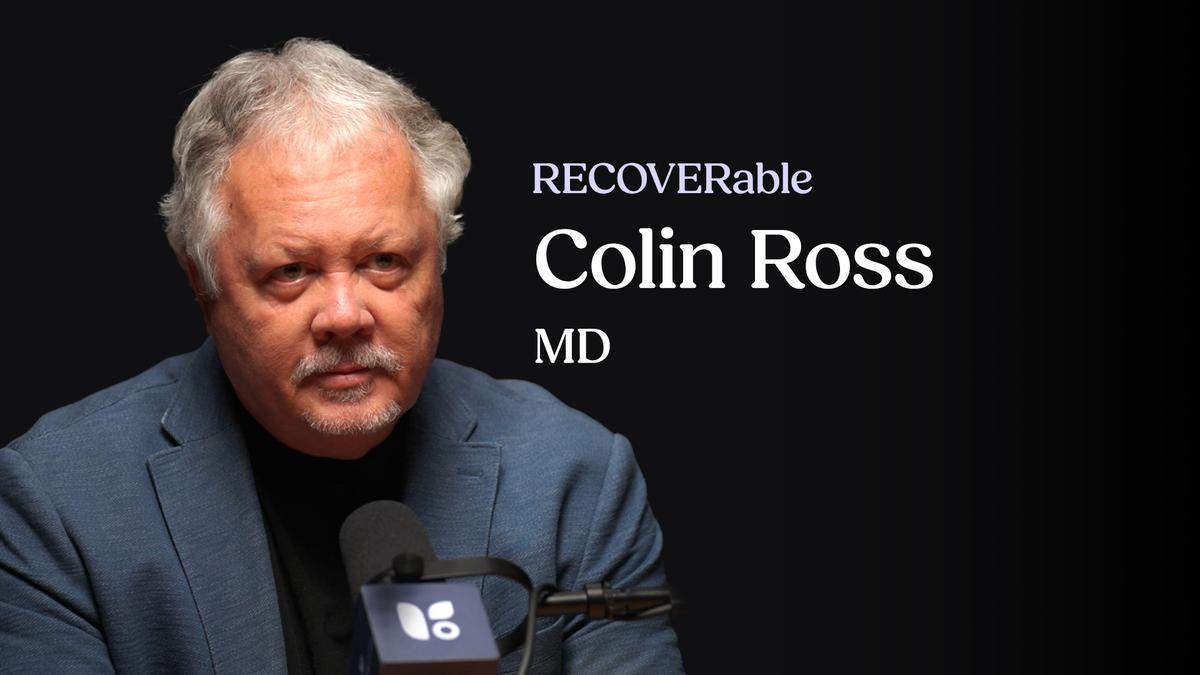
Dissociative identity disorder (DID), formerly called multiple personality disorder, is often portrayed in ways that can make the condition seem mysterious or frightening. Psychiatrist and DID specialist Dr. Colin Ross offers a different picture, one centered on dissociation, trauma, and the ways people adapt to overwhelming experiences.
In the podcast, Ross explains what DID is, why he believes it develops, what switching between identity states can feel like, and how DID differs from schizophrenia and everyday dissociation. He also challenges misconceptions about violence and explains why successful treatment does not always require a person’s identity states to fully integrate.
1. What Is Dissociative Identity Disorder?
Dissociative identity disorder involves distinct identity states, which Ross prefers to call “parts,” along with switching between those parts and amnesia associated with the switches.
Different parts may have their own names, perceived ages, roles, memories, or characteristics. Ross emphasizes, however, that these parts should not be understood as literally separate human beings. They are psychologically meaningful identity states within one person.
For Ross, amnesia is an especially important part of distinguishing DID from other experiences involving identity states. A person may have parts or experience switching without the degree of memory disruption associated with DID.
Is DID the Same as Multiple Personality Disorder?
DID is the condition previously known as multiple personality disorder. Ross prefers the term “parts” over language that might suggest multiple completely separate people.
This distinction matters because dramatic portrayals of DID can reinforce misconceptions about what the condition actually looks like. As Ross puts it, “Most people with DID just seem like regular people.”
2. What Causes Dissociative Identity Disorder?
Ross describes DID primarily as an adaptation associated with severe, chronic, and inescapable childhood trauma, combined with a person’s capacity to dissociate.
That disconnection may involve memories, emotions, physical sensations, or awareness. Ross gives the example of a child psychologically distancing themselves from abuse by experiencing it as though it were happening to someone else.
With repeated overwhelming experiences, that pattern of compartmentalization may become increasingly complex. In Ross’s clinical model, DID can be understood as an extreme form of this dissociative adaptation.
Why Do Some People Develop DID After Trauma and Others Don’t?
Trauma does not automatically mean a person will develop DID. Ross describes dissociation as a spectrum and emphasizes individual differences in the capacity to dissociate.
He also sees substantial overlap between DID and complex post-traumatic stress symptoms. From his clinical perspective, many people with DID have features of complex post traumatic stress disorder (PTSD), while most people with complex PTSD do not have DID.
Explore Personality Disorders Treatment Centers
3. Is Dissociative Identity Disorder the Same as Schizophrenia?
No. DID and schizophrenia are different conditions. Ross notes that people with DID may report hearing voices, but hearing voices by itself does not establish a schizophrenia diagnosis.
People with DID may also experience depression, anxiety, PTSD symptoms, substance use problems, or other mental health concerns. In some cases, they may initially seek treatment for those problems without recognizing dissociation as part of what they are experiencing.
How Is DID Different From Everyday Dissociation?
Ross describes dissociation as existing on a continuum. Mild dissociation can happen in ordinary life. For example, someone may drive a familiar route while absorbed in thought and later realize they do not remember every part of the trip.
At the more severe end, a person might find themselves somewhere else without knowing how they got there. Trauma can also produce dissociative experiences without DID, such as feeling detached from the body during an assault.
The presence of dissociation alone, therefore, does not mean someone has dissociative identity disorder.
4. How Is Dissociative Identity Disorder Diagnosed?
Dissociative identity disorder is diagnosed through a detailed clinical assessment, not a brain scan, blood test, or single symptom. Ross describes the process as beginning with a general psychiatric history before moving from broad questions about dissociation to more specific ones.
A clinician might explore concerns such as anxiety, depression, memory difficulties, and trauma history. If dissociation appears relevant, they can ask about experiences such as significant periods of missing time.
Ross emphasizes the difference between ordinary forgetfulness and substantial memory gaps. Someone might discover that several hours have passed without knowing what happened, for example. Other people may describe conversations or activities the person cannot remember.
Clinicians also need to consider other possible explanations for memory loss, including substance use, neurological conditions, or brain injury.
What Symptoms May Come Up During a DID Assessment?
Ross describes looking for a collection of clues, including significant missing time, gaps in autobiographical memory, being told about behavior the person cannot recall, markedly different behavior during those periods, internal voices or thoughts that feel separate from their usual sense of self, and experiences of different parts taking control.
He cautions against immediately asking highly specific questions about named identities or ages. Instead, clinicians can gradually narrow their questions as they understand the person’s experiences.
Online screening tools may help someone recognize experiences worth discussing with a professional, but Ross says they cannot provide a complete clinical diagnosis.
5. How Is Dissociative Identity Disorder Treated?
Ross describes psychotherapy as central to DID treatment. Therapy may focus on understanding dissociation, identifying parts, improving communication between them, reducing disruptive switching and amnesia, and addressing trauma-related beliefs and emotions.
Treatment may also address depression, anxiety, substance use, PTSD symptoms, and other concerns occurring alongside dissociation. Ross says there is no medication that specifically cures DID or dissociation.
He also sees similarities between DID treatment and Internal Family Systems (IFS), an approach built around the idea that people can have different internal parts. In DID, those parts may be more separated, conflicted, or associated with significant amnesia and disruption.
Does Recovery From DID Require All Parts to Integrate?
Not necessarily. Ross does not define successful recovery only as combining every identity state into one fully integrated identity.
Another possible goal is cooperative functioning. Parts may remain distinct while learning to communicate, share information, and work together without disruptive amnesia or uncontrolled switching.
As Ross describes that outcome, “There’s no amnesia, there’s no chaotic switching.” His conclusion is straightforward: “That looks like recovery to me.”
6. What Does Switching With DID Feel Like?
Switching occurs when a different identity state or part takes a more prominent role. According to Ross, these changes can range from subtle to dramatic.
A person might experience missing time, headaches around a switch, a foggy or dreamlike feeling, or a sense of moving into the background while another part takes over. Amnesia can also create practical problems involving work, relationships, parenting, driving, or spending.
Ross offers a relatively everyday example: someone might discover clothing they do not remember purchasing because another part selected and bought it.
Can Other People Tell When Someone With DID Switches?
Not necessarily. Some switches may involve noticeable changes, but others can be difficult for another person to detect.
Changes might appear in facial expression, mood, tone of voice, or the person’s eyes. The subtle nature of many switches helps explain why DID may not resemble the exaggerated transformations commonly depicted in movies and television.
7. Does DID Treatment Require All Alters to Merge Into One Identity?
No. Ross says successful DID therapy does not necessarily require all parts to permanently fuse into a single identity.
Full integration can be one possible outcome, but another goal is greater cooperation among parts. Instead of what Ross calls an “internal civil war,” parts may learn to communicate, share information and memories, manage emotions together, and function more collaboratively.
What Does Cooperation Between Parts Look Like?
Ross describes cooperation as much of the actual work of therapy. As communication increases, greater integration may develop gradually rather than being forced as the singular goal.
He recalls one person asking whether full integration meant waking up, brushing their teeth, going to work, eating lunch, and being “the same person” throughout the day. Their response was, “I don’t want to do that.”
The story illustrates why treatment goals should account for the individual. For some, full integration may be desirable. For others, cooperative functioning and reduced internal conflict may be meaningful goals.
8. How Can You Find a Therapist Who Understands DID?
Look for a clinician with demonstrated education and experience in dissociation, complex trauma, and DID rather than relying solely on broad labels such as “trauma-informed.”
Ross recommends theInternational Society for the Study of Trauma and Dissociation (ISSTD) as one place to start. Its directory allows people to search geographically for clinicians connected with the field. If a therapist is unavailable, Ross suggests asking whether they can recommend someone else.
What If You Cannot Find a DID Specialist?
When a DID specialist is not accessible, Ross suggests looking for a clinician with substantial experience treating complex PTSD or relevant trauma-focused approaches. He specifically mentions internal family systems (IFS) and eye movement desensitization and reprocessing (EMDR) as areas in which someone might seek trained clinicians.
The key is to investigate a clinician’s actual knowledge and experience rather than assuming anyone who advertises trauma treatment has specialized DID expertise.
9. How Can You Support Someone With Dissociative Identity Disorder?
Supporting someone with DID does not require becoming their therapist. Ross’s advice to loved ones is straightforward: be supportive, remain yourself, and do not panic.
That includes listening without ridicule or accusation, treating the person respectfully, and offering practical and emotional support. Boundaries still matter. Supporting someone does not mean accepting harmful behavior or taking over the role of a mental health professional.
What Should You Do If Someone With DID Switches?
Ross gives the example of someone switching into a frightened child part who does not recognize the person they are with. In that situation, simple reassurance and orientation may help, such as calmly explaining that they are safe.
However, Ross cautions loved ones against becoming overly involved in trying to manage switching as though they are the therapist.
He also stresses that support people need support themselves. Burnout can make it harder to remain a steady presence.
10. Can Someone With DID Live a Healthy, Productive Life?
Yes. Ross says he has known many people with DID who have built careers, managed complex responsibilities, and functioned successfully in everyday life.
That does not mean every person follows the same path or that recovery is guaranteed. Co-occurring concerns, unstable circumstances, substance use, and access to appropriate care can affect treatment and functioning. But a DID diagnosis does not determine what someone can accomplish.
Why Does Ross Describe Dissociation as an Adaptation?
Ross describes dissociation as a creative adaptation to overwhelming experiences. For a child in circumstances they cannot escape, separating memories, emotions, or other aspects of experience may serve a protective purpose.
Problems can emerge when those same patterns continue operating under different circumstances later in life.
This framing offers a less shaming way to understand treatment. Rather than condemning the mind for how it learned to cope, therapy can help the person understand those adaptations and develop patterns that work better for their present life.
Final Thoughts
DID treatment can focus on safety, stability, psychotherapy, and greater cooperation among parts. Loved ones can help by listening without judgment, maintaining boundaries, and avoiding the role of therapist.
Ross frames dissociation as an adaptation to overwhelming experiences. Recovery can involve understanding those patterns and developing healthier ways to navigate life today.
Our Promise
How Is Recovery.com Different?
We believe everyone deserves access to accurate, unbiased information about mental health and recovery. That's why we have a comprehensive set of treatment providers and don't charge for inclusion. Any center that meets our criteria can list for free. We do not and have never accepted fees for referring someone to a particular center. Providers who advertise with us must be verified by our Research Team and we clearly mark their status as advertisers.
Our goal is to help you choose the best path for your recovery. That begins with information you can trust.