Find Treatment By
Rehabs by Location


Find Treatment By
Learn
About Us
Recovery.com combines independent research with expert guidance on addiction and mental health treatment. Our mission is to help everyone find the best path to recovery through the most comprehensive, helpful network of treatment providers worldwide.
Advisory Council
Our advisory council brings together leaders in behavioral health, technology, and business. Their diverse expertise ensures our resources and product are innovative, evidence-based, and effective. They guide our mission as accomplished individuals dedicated to improving the landscape of addiction recovery and mental wellness.
Sam Miller’s 8 Honest Lessons on Addiction, Homelessness, and Healing Through Comedy


Kayla Currier is a Senior Web Content Editor at Recovery.com. She received her B.A. in Journalism and Media Studies at the University of South Florida where she served as a contributing writer and editor for the Crow’s Nest.
Kayla Currier is a Senior Web Content Editor at Recovery.com. She received her B.A. in Journalism and Media Studies at the University of South Florida where she served as a contributing writer and editor for the Crow’s Nest.
Table of Contents
- 1. Addiction Is Often About Escape, Not Euphoria
- 2. Early Trauma Doesn’t Disappear; It Follows You
- 3. Rock Bottom Is a Moment of Clarity, Not Just Chaos
- 4. Early Sobriety Can Be the Hardest Part
- 5. Community Isn’t Optional in Long-Term Recovery
- 6. Healing Means Learning to Be Okay With “Okay”
- 7. Comedy Can Be Therapeutic, But Therapy Is Therapy
- 8. Breaking Generational Cycles Is Possible
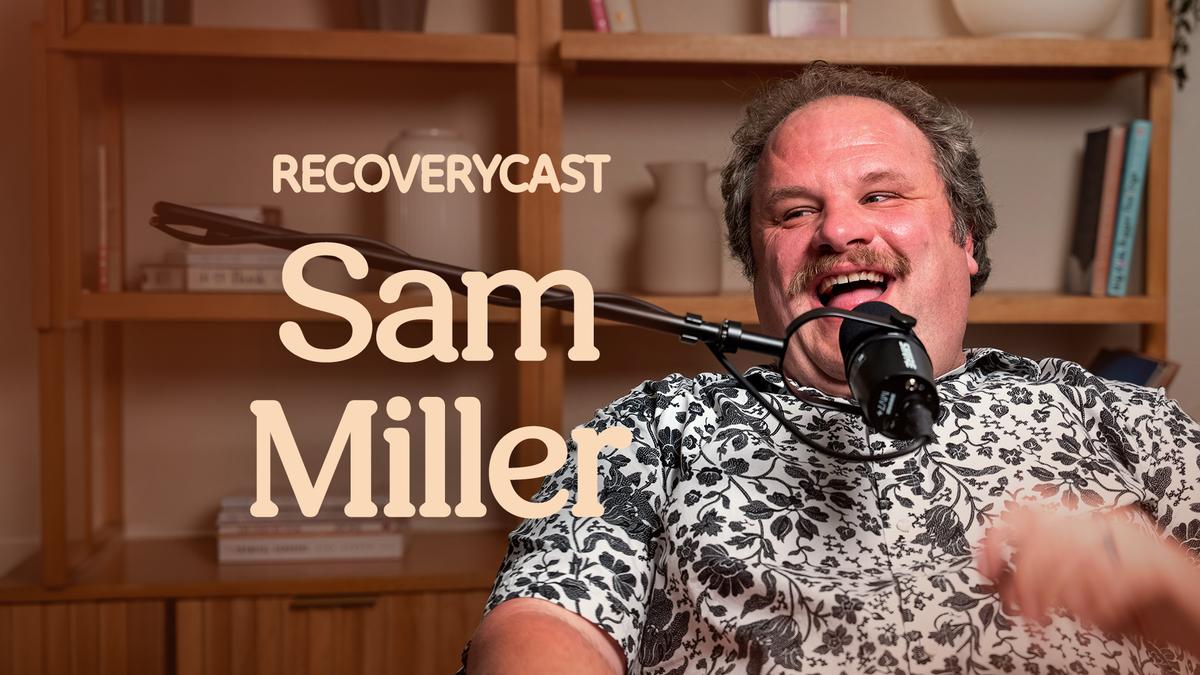
Sam Miller is a professional comedian and recovery advocate who has built a career on turning dark chapters into laughter. But beneath the punchlines are stories of addiction, homelessness, incarceration, and trauma.
On this episode of Recoverycast, Sam shares what it actually takes to achieve and maintain long-term sobriety. From sleeping under a tarp outside the Capitol Theater to later recording his comedy album in that same building, Sam’s journey is both complicated and deeply human.
Here are eight of the most powerful lessons from his story.
1. Addiction Is Often About Escape, Not Euphoria
Sam makes something painfully clear. He wasn’t chasing a high, but running from reality. “It wasn’t about getting high. It was about not being sober,” he says.
As a child, Sam grew up in a home marked by fear and unpredictability. His father could be loving one moment and terrifying the next. After his father died when Sam was 12, the fear grew instead of disappearing.
When he first got high as a teenager, something clicked. He describes seeing his future in that moment. He would do whatever he could to avoid feeling the way he felt when he was sober.
Addiction recovery often starts when we understand this truth. Many people aren’t chasing pleasure. They’re trying to numb their pain.
2. Early Trauma Doesn’t Disappear; It Follows You
Sam speaks openly about emotional volatility, physical abuse, and the confusion it created around love. He loved his father deeply, but was also afraid of him.
To disappoint his dad felt terrifying. To make him proud meant everything.
That mix of fear and love shaped how Sam came to understand relationships.
Years later, even in sobriety, he would still feel tightness in his chest when thinking about his father. In therapy, his counselor asked him what that tightness wanted to say.
His answer was simple but life-changing. It wanted to tell him he would be okay.
Sam’s story is a reminder that trauma doesn’t always resolve itself with time alone. Therapy, self-reflection, and emotional honesty were critical parts of Sam’s mental health recovery.
3. Rock Bottom Is a Moment of Clarity, Not Just Chaos
One night, homeless and living under a tarp, Sam experienced what he calls the most important day of his life.
He suddenly felt like he was looking down at himself. He saw clearly where his life was headed.
“I’m either going to kill myself, or I’m going to get help,” he says. Four days later, he stood on his mother’s porch and told her, “I don’t want to be a drunk anymore.”
He detoxed, and this time, it was different this time.
In addiction recovery, there is often a shift that feels unmistakable. A different level of real. Sam had tried to get sober before, but he was really ready this time.
Explore Drug Addiction Treatment Centers
4. Early Sobriety Can Be the Hardest Part
Many people assume sobriety brings instant relief. Sam’s experience was more complicated. At four months sober and again at eleven months sober, he was struggling with intense suicidal ideation.
He didn’t want to admit it. Pride kept him quiet at first. But he had done enough work in recovery to know isolation was dangerous.
So he went to extra meetings and talked about it. That honesty likely saved his life.
Today, he says suicidal thoughts are rare. Maybe once a month on a bad day. But the intensity has dropped dramatically.
Recovery isn’t a straight line, but a sustained effort, especially when things feel heavy.
5. Community Isn’t Optional in Long-Term Recovery
Sam didn’t just attend meetings. He engaged. He made friends. He did service work. He participated fully.
Instead of running from sobriety, he began running toward recovery.
That shift made all the difference.
He also emphasizes something important. No act of compassion is wasted. The therapists, treatment centers, and people who tried to help him years earlier may have seemed ineffective at the time. But their words stayed with him.
When he finally got sober, those seeds mattered. His story is a good reminder that if you’re supporting someone struggling with addiction, listening and offering compassion is never wasted.
6. Healing Means Learning to Be Okay With “Okay”
One of the most powerful moments in the episode happens at a river.
Three years into recovery, Sam was sitting with his young son on the Fourth of July. The sun was filtering through the trees. His son was throwing rocks in the water.
For a moment, he felt something unfamiliar.
“I’m going to be okay.”
He realized something critical. When he was in active addiction, he was focused on feeling great. In early recovery, he still wanted to feel great. But the real work was learning how to be okay with being okay.
That shift from extreme highs and lows to steadiness is part of long-term sobriety. Today, Sam says he feels about 52% happy. And to him, that is incredible.
7. Comedy Can Be Therapeutic, But Therapy Is Therapy
Sam began doing stand-up comedy in 2014, when he was six years into sobriety.
The first time he stepped on stage, he felt the same click he once felt with drugs. He knew it would change his life.
Comedy became a powerful outlet. It allowed him to tell stories about addiction, homelessness, and incarceration without shame. It also helped him connect with others in recovery.
But he’s clear about something many overlook.
Comedy is not therapy. Therapy is therapy.
Sam continues working with a therapist to address trauma, PTSD, and emotional regulation. That combination of creative expression and professional mental health support has been essential.
Recovery requires tools. Not just talent.
8. Breaking Generational Cycles Is Possible
Sam’s father endured abuse. His father did better than his own dad. Sam is determined to do better than his.
He admits he still feels anger and grief when he thinks about his father. He wants to fight him and hug him at the same time. Both feelings can be true.
Healing doesn’t mean pretending the past was fine. It means choosing differently. Similarly, addiction recovery isn’t just about staying sober. It’s about ending cycles.
The Bigger Lesson From Sam’s Recovery Story
Sam’s journey from addiction and homelessness to national comedy stages is nothing short of remarkable. But what makes it powerful isn’t his career success. It’s his honesty.
Recovery, as Sam describes it, about consistency over perfection. It’s about asking for help and learning to sit with discomfort. It’s about being okay with okay.
If you’re struggling with substance use, mental health challenges, or trauma, know that help exists. And if you’re supporting someone who is, listening may be more powerful than trying to fix it.
To hear Sam’s full story, listen to the complete Recoverycast episode now. And if this resonated with you, consider sharing it with someone who might need to hear it today.










Our Promise
How Is Recovery.com Different?
We believe everyone deserves access to accurate, unbiased information about mental health and recovery. That's why we have a comprehensive set of treatment providers and don't charge for inclusion. Any center that meets our criteria can list for free. We do not and have never accepted fees for referring someone to a particular center. Providers who advertise with us must be verified by our Research Team and we clearly mark their status as advertisers.
Our goal is to help you choose the best path for your recovery. That begins with information you can trust.