Find Treatment By
Rehabs by Location


Learn
About Us
Recovery.com combines independent research with expert guidance on addiction and mental health treatment. Our mission is to help everyone find the best path to recovery through the most comprehensive, helpful network of treatment providers worldwide.
Advisory Council
Our advisory council brings together leaders in behavioral health, technology, and business. Their diverse expertise ensures our resources and product are innovative, evidence-based, and effective. They guide our mission as accomplished individuals dedicated to improving the landscape of addiction recovery and mental wellness.
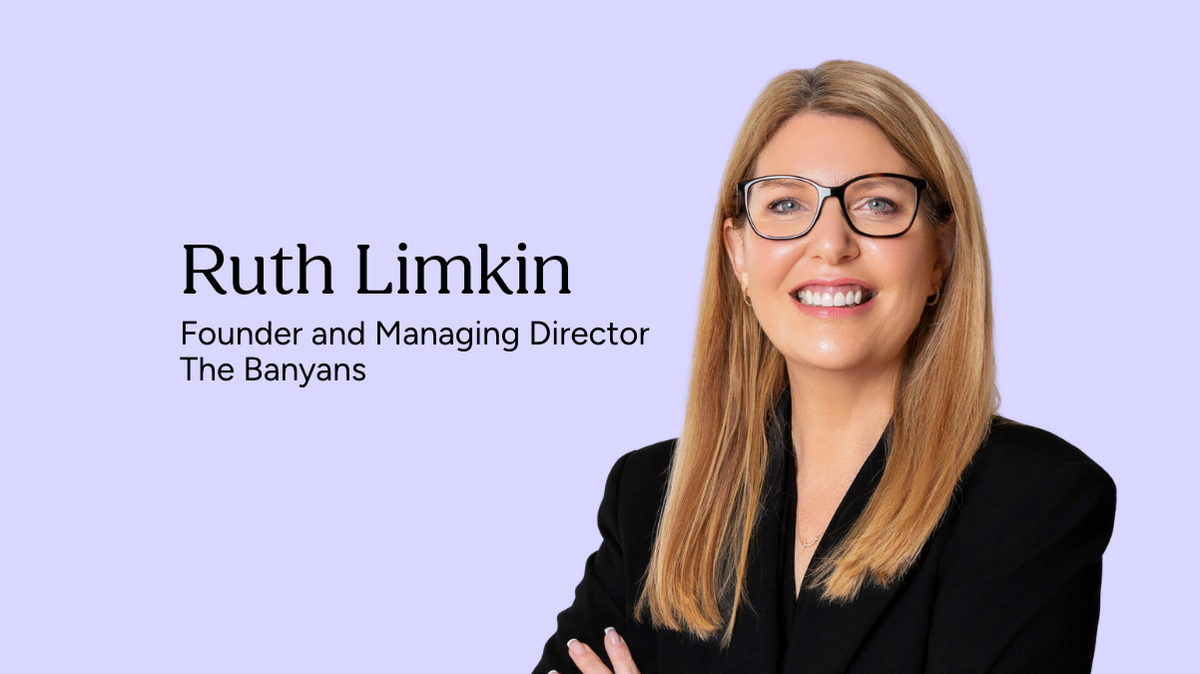
Executive Treatment, Stigma, and the Multiplier Effect: Ruth Limkin of The Banyans


A few months after a construction CEO finished six weeks of residential treatment at The Banyans, his CFO called Ruth Limkin with an update. The business had been going down the tubes. Now, he said, the man running it was a different person, and the company had turned around.
That company had about 200 employees. Every one of them had a family that kept getting a paycheck because one leader got well.
Ruth, the founder and managing director of The Banyans Healthcare and a group executive with South Pacific Health, traveled from Australia to sit down with Recovery.com Chief Growth Officer Cliff McDonald on this episode of Recovery Reach. They covered why private, one-on-one treatment can actually lower barriers to care, how a private equity acquisition went right, why Australia may be 15 years behind the US on stigma, and the most expensive five centimeters of her life.
Meet Ruth Limkin and The Banyans
Ruth never planned a career in behavioral health. Her background spans not-for-profit work, media, politics and business, and she had already started a charity and a kindergarten when a property owner called her out of the blue.
That owner had built a mountaintop home with 10 ensuite bedrooms overlooking the ocean in southeast Queensland. "No one builds that accidentally," Ruth said. The family had a heart for helping people but no idea how to run a human services business. Ruth offered to find someone to lead it, kept looking, and eventually found herself.
Ten years later, the organization spans three programs.
- The Banyans has two residential locations and a day program. All therapy is one-on-one, blending medical and holistic care, and it is private pay.
- Byron Private is a 12-bed program in Byron Bay offering group therapy with some individual treatment. It is also private pay.
- South Pacific Private is a licensed 54-bed hospital in Sydney with a 30-year history, built on the Pia Mellody model from The Meadows. It accepts private health insurance.
The Banyans treats co-occurring substance use disorder and mental health conditions, standalone mental health concerns and eating disorders. Clients arrive from the US, Singapore, the UK and the Middle East. A growing share are executives who come in for burnout and then recognize that alcohol or other substances had become their way of coping.
The $120,000 question: can premium care reduce barriers?
The Banyans' mission is to reduce barriers to accessing care. Years ago, while onboarding a new financial controller, Ruth got challenged on it. The signature program costs 120,000 Australian dollars. How is that reducing barriers?
Her answer: some people will never go to treatment if it means doing therapy in a group.
"They might be running a company that's listed on the stock exchange. They can't talk about different things, and we want them to feel the safety to really be vulnerable and get well."
For a public figure or the leader of a listed company, privacy is not a luxury add-on. It is the condition that makes treatment possible at all.
That does not mean isolation. Every therapy session at The Banyans is one-on-one, but meals, yoga and other activities happen together, with no disclosure required. Ruth said connection often happens anyway, because clients realize they are not the only one. The shame lifts. "I love it when I walk through The Banyans and I can hear laughter."
Cliff, who is in long-term recovery himself, connected that to his own experience. The disease wants people isolated, and most people end up alone before they finally get help.
A private equity acquisition that strengthened the mission
Five years ago, a specialist healthcare private equity firm acquired The Banyans as the cornerstone of a larger behavioral health platform. Ruth admits she asked every question she could think of, then held her breath.
It turned out well. Before the deal, a family and a charity owned The Banyans. The new owners brought three things that changed what was possible:
- Capital and appetite to grow. They saw the potential and had the resources to invest in it.
- A clinical-first lens. As healthcare specialists, they understood that great clinical care is what makes a great business.
- Financial discipline. They acted as thought partners and brought more rigor to the business side.
With that support, the team asked a bigger question. The Banyans serves executives, public figures and their families. How could they serve the wider community too? The answer was to add like-minded quality providers, Byron Private and South Pacific Private, and build a pathway of care so that whoever called, they could help in some way.
Cliff noted that many providers with good intentions are stuck bootstrapping. Access to capital changes what a mission-driven organization can actually do.
Being the first call, even when you're not the right fit
Private pay and insurance-based admissions run as separate teams. The conversations, stakeholders and paperwork are different enough that they need different skill sets. But the group recently upgraded its phone system so a caller to The Banyans or Byron Private can be warm transferred straight to the hospital's admissions team.
The referral habit started long before the acquisition. Back then, The Banyans received 700 to 900 inquiries a month and was not the right fit for many of them. Ruth told her admissions team that it did not matter if they could not help someone. They still wanted that person to get help, so every caller received an email listing other quality providers.
"If we really love people, we actually need to love them enough to get them into treatment, not just into us."
The reasoning is clinical, not just kind. Making that first call takes enormous courage. Cliff described it as picking up the thousand-pound telephone. If a caller hits a dead end, they may slip back into pre-contemplation and stay out of reach for a long time.
Why Australia may be 15 years behind on addiction stigma
Australia is making progress on mental health, Ruth said, but it still does not talk about addiction or recovery. She described a national love affair with alcohol: it is everywhere, and the culture is saturated with it.
She pointed to a 278-page federal government report on the harms of alcohol and other drugs, which estimated that around 800,000 Australians miss out on substance use disorder treatment every year. Part of the reason, she believes, is silence. When heavy drinking is normal, people don't recognize they might need help.
Another part is culture. The "she'll be right" attitude leaves little room to admit struggle, especially for leaders and especially for men. And addiction is still treated as a moral failing rather than a health condition.
"I'm a breast cancer survivor. In the same way that we're all okay to talk about cancer... the same happens with addiction, but we just haven't been really great at recognizing it as a health condition."
When Cliff asked how far behind the US Australia is, she estimated about 15 years. In the States, people casually mention their therapist. In Australia, that rarely happens, so Ruth makes a point of talking about her own psychologist in workplace presentations. She compares a check-in every three to six months to tuning up your car, but for your soul.
COVID helped normalize conversations about mental health, she added, but it also drove relapse, more day drinking and isolation among remote workers.
Surviving COVID: "the worst two years of my life"
Australia closed its international borders for two years, and many states closed their interstate borders too. At the time, only 30% of The Banyans' clients came from within its home state. Overnight, roughly 70% of its market was locked out.
The program shut down completely for the first six weeks of the national lockdown. Ruth met with directors every day, watching cash flow and asking whether they could survive another six weeks. Then came two years of delivering on the clinical promise with a much thinner pipeline.
When medical exemptions finally allowed interstate clients, each one first had to spend two weeks in a quarantine hotel. For someone struggling with substance use or mental health, that is a risky place to wait. The team responded by:
- Delivering online therapy every day of the quarantine period
- Sending food hampers to replace the hotel meals
- Treating the two weeks as the start of care rather than a delay
In year two, vaccine mandates for healthcare workers meant parting ways with some staff. And because of how its staffing was structured, The Banyans was one of the few Australian companies that received zero government wage support. Its staff were technically employed by a placement company that also served mining clients, so the revenue drop never hit the eligibility threshold.
Ruth called it the worst two years of her life, worse even than breast cancer. The organization made it through and kept helping people.
What's overrated and underrated in behavioral health
Overrated: the window dressing. Rooms should be comfortable and functional, and yes, The Banyans has a heated magnesium pool. But nine times out of 10, clients' own homes are nicer than the residence. They are not paying for the setting. They are paying for individualized, intensive clinical care, which is what actually drives cost and outcomes.
Underrated: blending medical and complementary care. Ruth called this her controversial take. An all-medical model has its place, but she doesn't think it heals people on its own. Holistic and allied health care without a medical foundation can be risky and can short-change people. The combination is what works.
Cliff tied this to the therapeutic alliance. He mentioned CarePredictor, a company founded by his friend Michael that measures outcomes by individual clinician, regardless of credentials, and uses that data to inform hiring. The quality of the person delivering care matters more than the amenities around it.
The most expensive five centimeters of her life
Asked about early advice that turned out to be wrong, Ruth told a story she admitted sounds boring at first. It was about a driveway.
Legal advisors told The Banyans it could use the existing driveway and easement at the original property. The neighbors did not want a treatment center next door and took them to court. The original advice turned out to be wrong by about five centimeters.
The fix was a brand new, very steep driveway plus settling the court cases. Total cost in the first 18 months of operation: about one million dollars.
Cliff's takeaway for operators: trusting experts is good, but second and third opinions are better, especially on zoning and land use, where community opposition is common.
What behavioral health leaders should be thinking about: trust
Ruth's closing message was about building trust in the field. In Australia, private addiction treatment is relatively new and unregulated, and she has been lobbying government to regulate it. Quality providers don't fear oversight. She is even considering a voluntary code of conduct or an association of quality providers if regulation doesn't come.
Internationally, she sees the same challenge. Her prescription:
- Share clinical outcomes data and be as transparent as possible about what you do
- Engage big tech directly. Google's policies and reviews are both real opportunities and real threats to the field
- Build trust with every stakeholder: media, governments, the people who use services and the platforms that shape how they find care
- Speak with a united voice alongside other quality providers
"We can be really confident, because there's amazing quality providers in our field."
Ruth also shared a definition of addiction she finds useful: ritualized, compulsive comfort seeking. Everyone does it in some form. She calls herself a recovering perfectionist. Some people use overwork or exercise; others use substances that are more harmful and more visible. Her own program for staying well is simple, if not always easy: social connection, time in nature, good food, movement, sleep, and no alcohol.
Lessons for treatment center operators
- Privacy can be an access strategy. For some clients, one-on-one care is the only path into treatment.
- Measure impact beyond the client. A healthier leader can mean a healthier company and hundreds of families.
- Choose capital partners who put clinical quality first. The right investor sees good care as good business.
- Never let a call end in a dead end. Warm transfers and referral lists keep people moving toward care.
- Invest in clinicians, not amenities. The therapeutic alliance drives outcomes.
- Get second opinions on high-stakes advice, especially zoning and land use.
- Lead on trust. Outcomes data, transparency and a united voice protect the whole field.
Our Promise
How Is Recovery.com Different?
We believe everyone deserves access to accurate, unbiased information about mental health and recovery. That's why we have a comprehensive set of treatment providers and don't charge for inclusion. Any center that meets our criteria can list for free. We do not and have never accepted fees for referring someone to a particular center. Providers who advertise with us must be verified by our Research Team and we clearly mark their status as advertisers.
Our goal is to help you choose the best path for your recovery. That begins with information you can trust.