Find Treatment By
Rehabs by Location


Find Treatment By
Learn
About Us
Recovery.com combines independent research with expert guidance on addiction and mental health treatment. Our mission is to help everyone find the best path to recovery through the most comprehensive, helpful network of treatment providers worldwide.
Advisory Council
Our advisory council brings together leaders in behavioral health, technology, and business. Their diverse expertise ensures our resources and product are innovative, evidence-based, and effective. They guide our mission as accomplished individuals dedicated to improving the landscape of addiction recovery and mental wellness.
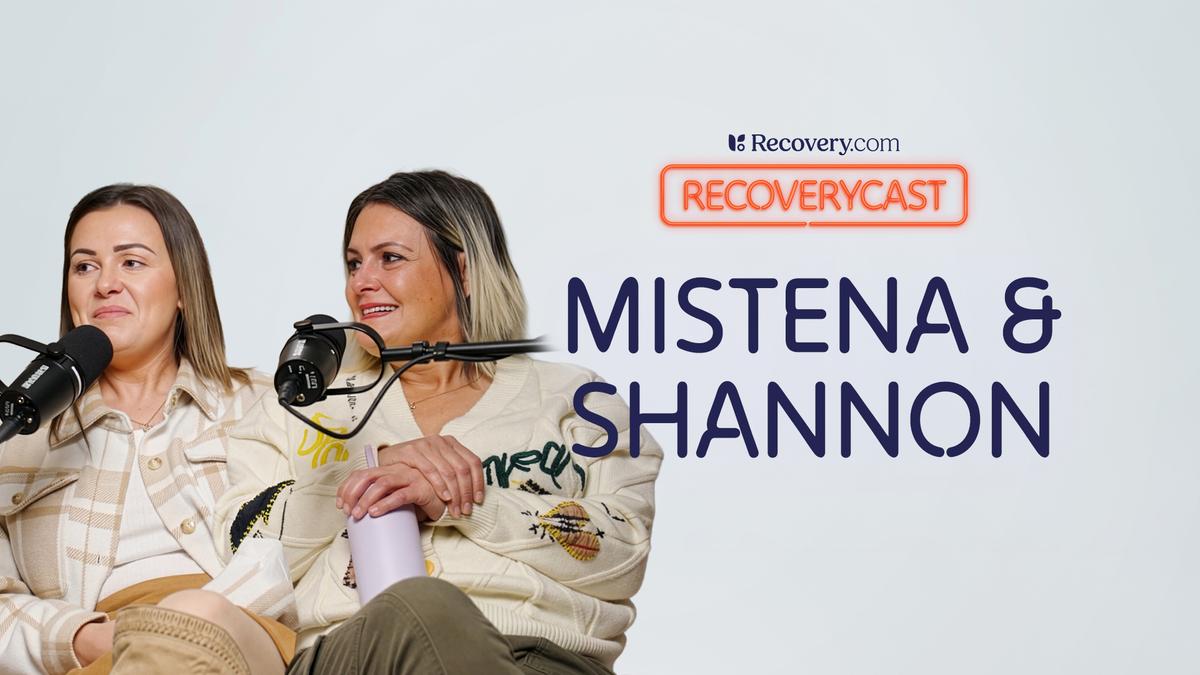
Mistena and Shannon’s 7 Powerful Lessons on Addiction, Mother-Daughter Healing, and Choosing Recovery


Kayla Currier is a Senior Web Content Editor at Recovery.com. She received her B.A. in Journalism and Media Studies at the University of South Florida where she served as a contributing writer and editor for the Crow’s Nest.
Kayla Currier is a Senior Web Content Editor at Recovery.com. She received her B.A. in Journalism and Media Studies at the University of South Florida where she served as a contributing writer and editor for the Crow’s Nest.
Table of Contents
Addiction rarely affects just one person. It ripples through families, leaving lasting emotional imprints that can take years to untangle.
In this Recoverycast episode, we sit down with Mistena and her mother, Shannon, to tell a story that is as devastating as it is hopeful. Their story isn’t a linear recovery narrative. It’s a raw conversation about addiction, emotional abuse, and the slow work of rebuilding trust between a mother and daughter after decades of pain.
Mistena grew up navigating chaos, fear, and instability while Shannon battled untreated anxiety and substance use. Their story includes estrangement, homelessness, repeated relapses, and times when hope felt dangerous to hold onto. It also shows what can happen when boundaries are drawn, and healing becomes a shared effort.
This episode offers rare insight into addiction from both sides: the person using substances and the loved one trying desperately to survive it. These lessons speak to anyone impacted by addiction, whether personally or through someone they love.
1. Addiction Doesn’t Erase Love
For years, Mistena believed the most painful lie addiction told her.
She thought her mother didn’t love her enough to stop.
As a child and young adult, Mistena watched Shannon disappear again and again, sometimes physically, sometimes emotionally. The conclusion felt obvious. If love were strong enough, addiction wouldn’t win. That belief quietly shaped Mistena’s sense of self-worth and followed her into adulthood.
It was only after Shannon found sustained sobriety that Mistena began to see addiction differently. She realized her mother’s substance use wasn’t rooted in indifference or spite, but in untreated anxiety, trauma, and survival instincts that spiraled out of control.
Mistena explains that addiction isn’t a choice made against loved ones. It’s often a desperate attempt to escape unbearable internal pain. This shift in understanding didn’t erase the hurt, but allowed space for compassion without excusing the damage done.
For families, this lesson matters. Addiction can coexist with love, even when actions suggest otherwise. Recognizing that complexity can be the first step toward healing.
2. Children Adapt to Chaos to Survive
Mistena didn’t grow up with stability. She grew up with rules that changed daily, fear that lingered even on good days, and the constant sense that safety could disappear without warning.
In her home, moments of calm were often followed by punishment or rage. Dinner tables became battlegrounds. Books, music, and television were tightly controlled. Even joy felt dangerous.
Mistena learned early how to read the room, how to stay quiet, and how to protect herself emotionally. She poured her energy into school because it was the only place that felt predictable. When that was threatened, it felt like her last lifeline was being cut.
This is what survival looks like for many children in homes affected by addiction and abuse. They adapt in ways adults may not recognize until years later. Anxiety, hypervigilance, and perfectionism are learned responses, not personality flaws.
Mistena’s story reminds us that children don’t need perfect parents. They need consistency and safety. When those are missing, the effects can last long after childhood ends.
Explore Drug Addiction Treatment Centers
3. Untreated Mental Health Can Fuel Addiction
Before meth entered Shannon’s life, anxiety was already there.
Shannon describes years of debilitating fear and panic that something was wrong with her body. Attempts to seek medical help left her feeling dismissed, misunderstood, or overmedicated. At one point, prescription medications made it nearly impossible for her to function.
Without proper support, Shannon turned to substances as a way to survive daily life. Meth didn’t start as a reckless decision. It felt like a solution, and a way to get through the day when nothing else worked.
This part of their story highlights a critical truth: addiction and mental health are deeply intertwined. When anxiety, depression, or trauma go untreated, substances can become a form of self-medication.
Recovery, in Shannon’s case, required addressing both. Sobriety alone wasn’t enough. Learning how to manage her anxiety, accept help, and rebuild her daily routine became just as important as staying substance-free.
4. You Can’t Force Someone to Get Sober
Mistena tried everything.
She bargained, pleaded, threatened, and even offered financial support in exchange for sobriety. She opened her home, put her own family at risk, and ignored her own limits because letting go felt impossible.
None of it worked.
What finally changed wasn’t persuasion or pressure. It was Shannon reaching a point where she was ready, after a psychiatric hospitalization and a moment of profound vulnerability. Even then, Mistena approached sobriety cautiously, guarding herself against hope because hope had hurt before.
This lesson is one of the hardest for families to accept. Love alone can’t force recovery. Readiness has to come from within.
Mistena’s story also shows the cost of not setting boundaries. While her persistence eventually aligned with Shannon’s readiness, she acknowledges that it could have gone very differently.
5. Boundaries Protect Everyone Involved
For much of her life, Mistena didn’t have boundaries with her mother. She felt responsible for Shannon’s emotions and safety.
That changed when Mistena became a mother herself.
Protecting her children required a level of firmness she had never allowed herself before. It meant deciding what behavior she could tolerate and what crossed the line. It meant accepting that love doesn’t require self-sacrifice without limits.
Boundaries weren’t punishments, but safety measures.
This shift didn’t come easily. Mistena describes the fear, grief, and guilt that accompanied boundary-setting. But over time, those boundaries became the foundation for a healthier relationship.
For families navigating addiction, boundaries aren’t signs of abandonment. They’re acts of care, for both the person in recovery and the people who love them.
6. Recovery Is Built One Ordinary Day at a Time
There was no dramatic turning point where Shannon suddenly believed in herself.
In the beginning, she simply wanted out of the psych unit.
What followed was a series of small, ordinary choices. Going to the gym. Making jewelry for income. Showing up to work even on days when her anxiety was overwhelming. Crying through entire days and still moving forward.
Shannon describes recovery as learning how to live again, how to exist without substances filling emotional voids. Some days are still heavy. Her anxiety hasn’t disappeared. But using substances is no longer an option.
Recovery, in this sense, isn’t about perfection. It’s about persistence.
7. Healing Relationships Takes Time and Honesty
Today, Mistena and Shannon are rebuilding a relationship they never truly had.
It doesn’t look like a traditional mother-daughter dynamic. At times, it feels more like friendship. At other times, old wounds resurface, and conversations get messy.
What makes the difference now is honesty.
They talk about the past. They acknowledge pain without minimizing it. They allow space for grief and forgiveness to exist at the same time. They show up for each other, imperfectly but consistently.
Their story shows that healing relationships after addiction is possible, but it’s complex and takes time. Rebuilding trust is slow and happens through actions repeated over time.
Mistena and Shannon’s story reminds us that addiction isn’t just about substances, but the road back to connection.
Their journey offers hope without sugarcoating reality. Recovery is possible. Healing is possible. Relationships can be rebuilt, even after years of damage, when boundaries, honesty, and support come together.
For anyone affected by addiction, whether personally or through someone they love, this episode is a powerful reminder that you’re not alone.
Listen to the full Recoverycast episode to hear Mistena and Shannon’s story in their own words, and share this post with someone who might need it.
Our Promise
How Is Recovery.com Different?
We believe everyone deserves access to accurate, unbiased information about mental health and recovery. That's why we have a comprehensive set of treatment providers and don't charge for inclusion. Any center that meets our criteria can list for free. We do not and have never accepted fees for referring someone to a particular center. Providers who advertise with us must be verified by our Research Team and we clearly mark their status as advertisers.
Our goal is to help you choose the best path for your recovery. That begins with information you can trust.