Find Treatment By
Rehabs by Location


Learn
About Us
Recovery.com combines independent research with expert guidance on addiction and mental health treatment. Our mission is to help everyone find the best path to recovery through the most comprehensive, helpful network of treatment providers worldwide.
Advisory Council
Our advisory council brings together leaders in behavioral health, technology, and business. Their diverse expertise ensures our resources and product are innovative, evidence-based, and effective. They guide our mission as accomplished individuals dedicated to improving the landscape of addiction recovery and mental wellness.
Trust Is the Product: MGMT Digital on Behavioral Health Marketing


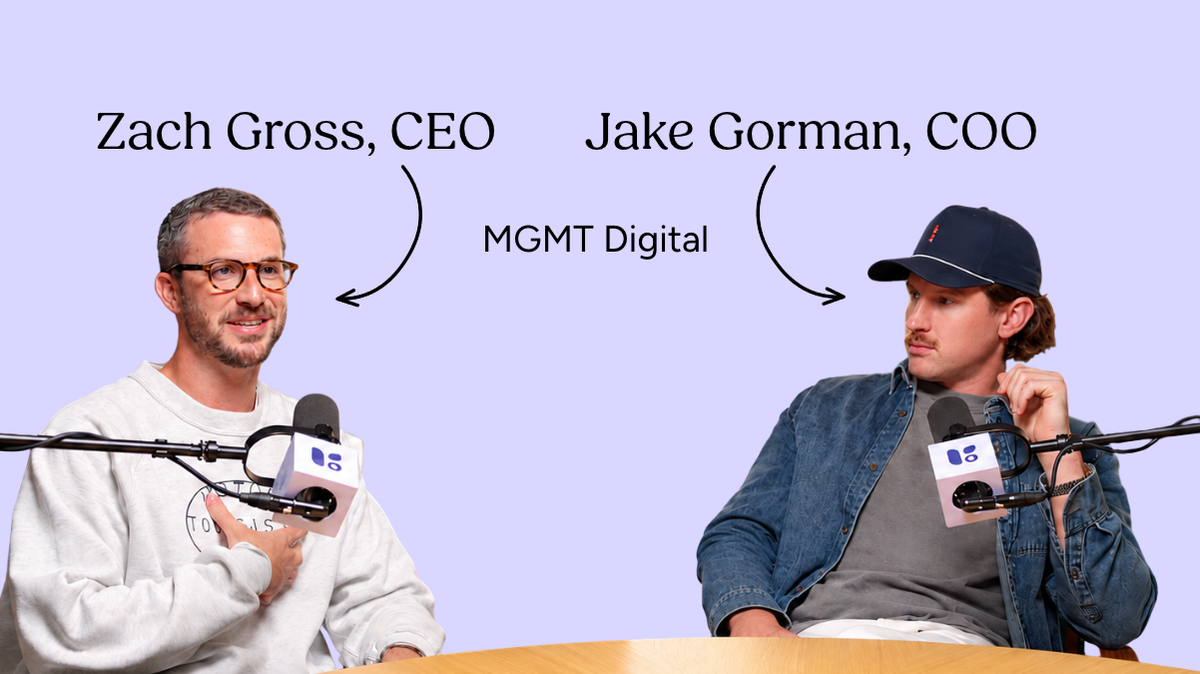
Zach Gross and Jake Gorman built MGMT Digital by turning down every client outside behavioral health. Nearly a decade later, that refusal is the reason the agency works.
On this episode of Recovery Reach, host Cliff McDonald, Chief Growth Officer at Recovery.com, sits down with the MGMT Digital co-founders to talk about what a treatment center should expect from a marketing partner, why most agencies fail in this field, and how two people in long-term recovery built a company around the values they learned getting sober.
If your organization has burned through three agencies in three years, this conversation is for you.
Trust is the product
Cliff opens with the problem every treatment center owner recognizes: most buyers of marketing services are not experts in marketing, the burn rate on agencies is high, and it is common for a provider to cycle through five partners in three years. So how does an agency earn trust at the start of a relationship?
Zach's answer is that trust is the only thing MGMT actually sells. The agency has to earn it from the provider, and then help the provider earn it from the families searching for care. Everything else is execution.
In practice, that looks like three things.
- Education over pitching. Most new clients have never had a prior agency explain how the work actually works. MGMT starts there, with no guarantees, and uses past results as a realistic framework for what to expect.
- Over-communication. Jake says the word three times in a row on the show. Clients hear from the team every week, not at a monthly debrief, whether the news is good or bad. A project running long gets flagged. A win gets flagged too.
- Honest numbers, even when they lose the deal. Jake describes prospects who were just told by another agency that $3,000 would produce 16 admissions. MGMT instead shares real cost-per-admission ranges by geography, drawn from its own data across similar facilities. Some prospects walk away. Many come back six months later.
That last point connects to a structural reality of this field: the conversion happens offline, on a phone call, not on a pixel. So MGMT builds its own conversion data for each client, which takes time. Zach is candid that these are not one-call closes. They are long sales processes because the strategy has to be sound before anything gets built.
Why a niche agency wins in behavioral health
Cliff has yet to see a generalist agency that is good at behavioral health. Zach and Jake built their company on the same conviction. Plenty of businesses from other verticals have approached MGMT over the years. They turned every one of them down.
Jake admits that felt like turning away dollar signs at first. Over time it became the deciding factor in most new client conversations. Providers meet with three or four agencies, and they tend to land on the one whose entire team has only ever done this work.
Specialization shows up in ways that go beyond the monthly retainer:
- After 50, 80, or 100 behavioral health clients, the same problems repeat. The team can advise on admissions setup, back-end processes, and tracking the way a consultant would, which matters most for startups that do not yet have those answers.
- For many clients, MGMT is the entire marketing arm. Some have one in-house collaborator. Some have a small team. Many have no marketing department at all.
- Everyone who works at MGMT has to be client-facing to some degree. Zach and Jake see the typical account manager role as an intermediary who has to go ask the expert and get back to you. They hire people who built the strategy and can explain it.
The agency's three core values are work ethic, communication, and transparency with customers. Cliff, who used to help companies build out core values as an advisor, says that if he could pick only one for this field it would be transparency, because historically it has not existed here.
MGMT also runs without a built-out sales department. Zach and Jake handle new business themselves, and the operating philosophy is retention over growth. Focus on keeping clients, and steady growth has followed every time.
Branding before lead generation
Good lead generation does not happen without good branding. Zach repeats it like a law, and MGMT built an entire branding department around it. The agency creates new brands and rebrands existing ones, and both happen often.
The reason is historical. There was a time in this field when a generic website worked. That window is closed. With so many treatment options competing for the same families, a center that looks and sounds like every other center is starting from behind. When MGMT inherits a site that cannot be brought up to standard, Zach's reaction is simple: no wonder we are where we are. Let's back up.
Branding, in MGMT's definition, goes deeper than aesthetics:
- Positioning. How does this organization want to be seen by anyone who comes across it? Who are its audiences? What are its real differentiators?
- Messaging. Thousands of treatment center sites use the same handful of phrases. The work is saying those things in a way that is unmistakably this center's own.
- Design with intent. Typography and color are chosen with data behind the decisions, not just taste.
- A brand kit that changes how people talk. When a center has a defined tone and message, staff start describing the organization the same way internally. The brand becomes shared language, not just assets on a website.
Clients arrive at this work in two ways. Some have a clear vision and good inspiration, from inside the field or outside it. Others have no idea what they want. The team has to serve both, either executing on a client's direction or drawing the vision out of them in conversation and putting it on paper.
Zach credits Anna Hernandez, who helped him build the branding department side by side before leaving MGMT to become a therapist, a career change the agency supported while she was still on the team.
Branding also flows straight into web design and content. The agency's content manager is, in Zach's words, a true writer at heart. Behavioral health content has to carry emotion and connect with a person in crisis, which is a different job than content in almost any other field.
Why they are here
Both co-founders are people in long-term recovery, and both say the agency's values came directly from that experience.
Zach found recovery in Los Angeles around 2016 and 2017, a period he describes as the Wild West of the treatment field, when unethical practices were common. He worked inside centers as a tech, in admissions, and in marketing, and made a decision early to stay on what he calls the good side of the industry. MGMT was born in late-night conversations with Danny, a close friend from recovery who had worked at a behavioral health agency in Florida. They took on their first client together. Danny later passed away, and Zach says watching the company they built keep growing took on a different meaning after that. Ethical marketing has driven everything since.
Jake tells it plainly: your life before you commit to sobriety looks a lot different, and you cannot imagine what is on the other side. After rehab, he threw himself into behavioral health marketing for nearly five years, often working from 7:00 AM to 9:00 PM. The rewarding part came early, listening to the phone calls his campaigns generated and hearing people get into treatment. When you get sober, he says, you have to take that energy and put it into something.
The two were introduced by a mutual friend who told Zach he was about to meet the most genuine person he knew. They worked together for a year before merging companies. As Cliff puts it, they dated first.
Cliff asks whether the agency was built on principles learned in recovery. Both say yes without hesitation. Zach adds the line that frames the whole episode: in digital marketing there are a lot of numbers to throw around, but in this field each number is a person going through the most difficult time in their life.
Cliff shares his own version of that discipline. He tries to say field instead of industry, human instead of lead, and admit instead of convert, and he fails at it every day. Then he reaches for Tradition One of the 12 steps, that our common welfare should come first, as the standard for how agencies, treatment centers, and Recovery.com should work together.
Lightning round
Most underrated thing in behavioral health marketing? Alumni programs. Zach puts it at the top of the list for any treatment organization, with or without an agency. Cliff agrees it produces the lowest cost per admission a center will ever see, and points to one of his favorite providers, where 38% of admissions come from alumni. That took years of effort to build.
Most overrated? The way AI search is being sold. SEO, AEO, GEO, and every other acronym are being pitched either as something to fear or as a brand-new service line. Zach sees it all as one thing: organic search. Clearly communicating a client's differentiators and specializations benefits the whole organic bucket. It is a new opportunity, not a threat, and it should be approached practically.
Advice that turned out to be wrong? Two answers.
- Zach was told early that an agency focused only on behavioral health could never grow enough to survive, and that he would have to expand into other industries. He did the opposite and doubled down.
- Jake was advised to put SEO and content under one roof, with a single SEO manager writing the content and doing the technical work. MGMT built separate departments instead, with experienced SEO managers and a dedicated content team. He believes that split paid off long-term.
What should behavioral health leaders be thinking about for the future?
- Own your data. Jake sees far too many providers with an EMR and no CRM. Lead handling on the back end is where marketing value gets lost, and attribution is impossible without the right systems. There is a second reason too: if you ever want to expand or sell, the acquirer is buying your data. Do not go years without logging it.
- Diversify your sources. Zach meets operators who have run centers for five or six years with paid Google advertising as their only source of traffic. He considers that a serious problem. Some channels will always be stronger than others, but they have to be viewed as one connected system, with honest partners who look at the whole picture.
Cliff's summary for providers listening: get a good tech stack, protect your data integrity, and diversify where your admissions come from, the same way you would diversify a portfolio.
About the agency partner program.
MGMT Digital is one of a selective group of agencies in Recovery.com's agency partner program. Between a quarter and a third of Recovery.com's business comes through agencies like MGMT that bring their treatment center clients onto the platform. If you run an agency serving behavioral health providers and want to learn more, get in touch.
Learn more about MGMT Digital at mgmtdigital.com.
Our Promise
How Is Recovery.com Different?
We believe everyone deserves access to accurate, unbiased information about mental health and recovery. That's why we have a comprehensive set of treatment providers and don't charge for inclusion. Any center that meets our criteria can list for free. We do not and have never accepted fees for referring someone to a particular center. Providers who advertise with us must be verified by our Research Team and we clearly mark their status as advertisers.
Our goal is to help you choose the best path for your recovery. That begins with information you can trust.