Find Treatment By
Rehabs by Location


Find Treatment By
Learn
About Us
Recovery.com combines independent research with expert guidance on addiction and mental health treatment. Our mission is to help everyone find the best path to recovery through the most comprehensive, helpful network of treatment providers worldwide.
Advisory Council
Our advisory council brings together leaders in behavioral health, technology, and business. Their diverse expertise ensures our resources and product are innovative, evidence-based, and effective. They guide our mission as accomplished individuals dedicated to improving the landscape of addiction recovery and mental wellness.
Lucas Curtin’s 9 Raw Insights on Alcohol, Anxiety, and Choosing Sobriety After Loss


Kayla Currier is a Senior Web Content Editor at Recovery.com. She received her B.A. in Journalism and Media Studies at the University of South Florida where she served as a contributing writer and editor for the Crow’s Nest.
Kayla Currier is a Senior Web Content Editor at Recovery.com. She received her B.A. in Journalism and Media Studies at the University of South Florida where she served as a contributing writer and editor for the Crow’s Nest.
Table of Contents
- 1. Drinking Started as Confidence, But Became an Escape
- 2. Anxiety Was There Long Before Alcohol
- 3. Grief Changed Everything Overnight
- 4. Hangovers Became Emotional, Not Just Physical
- 5. The Turning Point Was Quiet, But Clear
- 6. Sobriety Meant Facing Everything Head On
- 7. Community Made Sobriety Sustainable
- 8. Sobriety Gave Him Back His Creativity and Purpose
- 9. Grief Became a Source of Meaning, Not Just Pain
What happens when alcohol stops being fun and starts becoming a quiet way to cope?
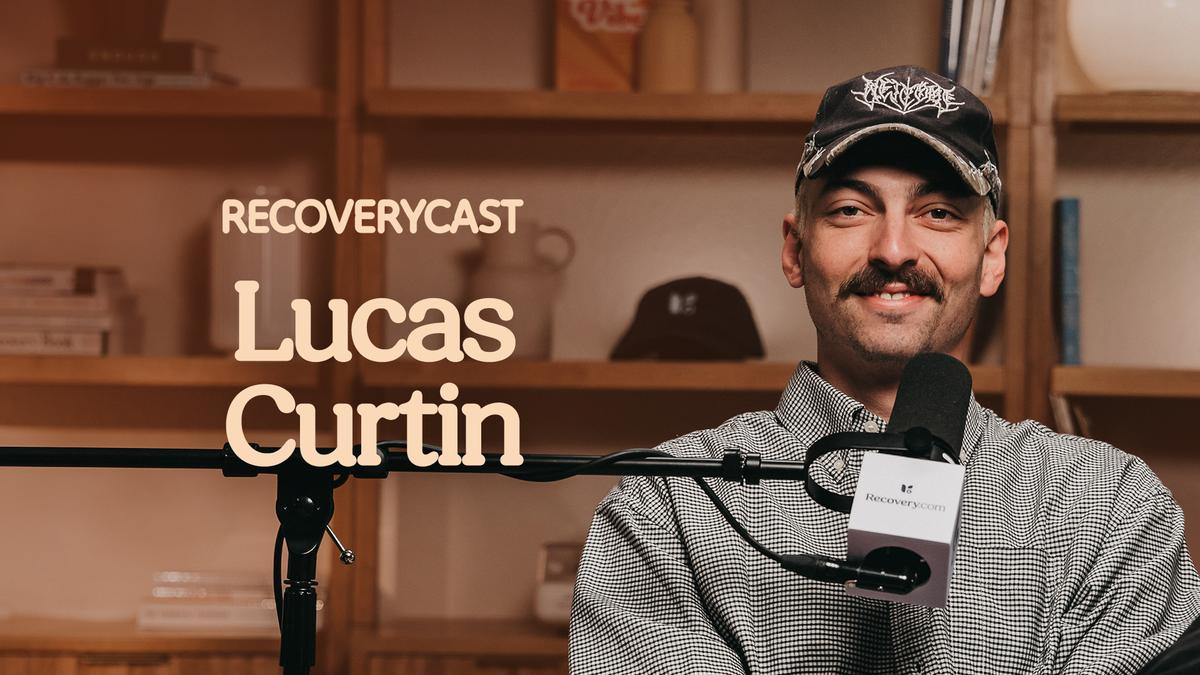
In this episode of Recoverycast, Lucas Curtin, known online for his creativity and humor, shares a deeply honest look at how his drinking slowly shifted into an emotional escape. Beneath the jokes and personality was a growing struggle with anxiety, grief, and self-doubt.
After experiencing a devastating loss and years of internal strife, Lucas reached a turning point. He decided to stop drinking, not through a dramatic intervention, but through a realization that something had to change.
His story is raw, relatable, and filled with insights for anyone who is sober curious, struggling with alcohol, or navigating grief and mental health. These lessons highlight what it really looks like to break a cycle and build a life rooted in honesty.
1. Drinking Started as Confidence, But Became an Escape
Like many people, Lucas didn’t begin drinking with the intention of using alcohol as a coping mechanism. In high school, alcohol felt like a way to unlock confidence and become a more outgoing version of himself.
He recalls enjoying that first buzz, describing it as a version of himself that felt funnier, louder, and more socially at ease. It wasn’t about losing control at first. In fact, he actively tried to avoid going too far.
But over time, the intention shifted. What started as a social enhancer became something deeper.
In college and beyond, drinking became less about connection and more about escape. It provided relief from the underlying anxiety and depression that he hadn’t fully named or understood at the time.
Looking back, Lucas recognizes that alcohol wasn’t solving anything. It was simply helping him avoid what he was feeling beneath the surface.
2. Anxiety Was There Long Before Alcohol
One of the most powerful insights from Lucas’s story is that alcohol wasn’t the root problem. It was a response.
As a child, he experienced anxiety in ways he couldn’t yet articulate. Health fears, internal worry, and panic attacks started early, even if no one around him fully recognized them.
He describes how these feelings often manifested physically, creating confusion and fear. Without language or tools to process those emotions, they quietly followed him into adulthood.
By the time alcohol entered the picture, it felt like a solution. It provided temporary relief from something he had been carrying for years.
This highlights a key truth for many people in recovery. Substance use often masks deeper emotional experiences rather than causing them.
Understanding that connection became an important part of Lucas’s journey toward sobriety.
3. Grief Changed Everything Overnight
A defining moment in Lucas’s story was the sudden loss of his former partner, who passed away unexpectedly at just 27 years old.
The grief was immediate and overwhelming. It disrupted everything he thought he understood about life.
In the aftermath, alcohol became even more central. It offered a way to temporarily step outside the pain, to avoid sitting with the reality of what had happened.
At the same time, there was a social acceptance around his drinking. People understood he was grieving, and in some ways, that made it easier to continue.
But the hardest moments came after the social interactions ended.
Lucas describes waking up alone, still facing the same grief, but now layered with confusion, exhaustion, and shame.
That contrast between external support and internal isolation became impossible to ignore.
Explore Alcohol Treatment Centers
4. Hangovers Became Emotional, Not Just Physical
As his drinking progressed, the consequences were not just physical.
Lucas began to experience intense emotional hangovers. These were filled with regret, self-criticism, and shame even when he hadn’t actually done anything wrong.
He would replay conversations, question his behavior, and feel a deep sense of embarrassment that didn’t match reality.
This internal narrative became one of the most exhausting parts of his experience.
Even attempts to cut back didn’t solve the problem. The cycle continued, with drinking followed by days of emotional fallout.
Eventually, he realized that alcohol wasn’t giving him relief. It was amplifying the very feelings he was trying to escape.
5. The Turning Point Was Quiet, But Clear
Lucas didn’t have a dramatic rock bottom moment.
Instead, his turning point came from a simple realization. He saw a future version of himself continuing the same patterns for years, and it didn’t feel like the life he wanted.
He remembers being out at a bar, surrounded by people, and recognizing that nothing was changing. The same conversations, the same routines, the same internal dissatisfaction.
That moment brought clarity.
“If I don’t make the decision to stop right now, I will just keep letting myself bleed into this,” he shared.
On October 19, 2024, he chose to stop drinking.
There was fear in that decision, but there was also something new. A sense that this time was different.
He describes it as a shift, almost like a switch flipping in his mind.
6. Sobriety Meant Facing Everything Head On
One of the hardest parts of sobriety isn’t quitting alcohol. It’s facing what comes up afterward.
Lucas describes early sobriety as being fully present with his thoughts and emotions, without the ability to numb them.
The anxiety, grief, and self-reflection were still there.
But this time, he chose to engage with them instead of avoiding them.
Running became a key outlet. He would go on long runs, sometimes crying, using movement as a way to process what he was feeling.
He also built routines around exercise, journaling, and self reflection.
These practices weren’t about perfection, but consistency and honesty.
Over time, he learned that discomfort was something to move through, rather than fear.
7. Community Made Sobriety Sustainable
A major factor in Lucas’s recovery was his friendship with Gabe.
Gabe had already begun exploring sobriety and introduced the idea that life without alcohol was even possible.
Later, he became a steady, nonjudgmental presence in Lucas’s life.
Their relationship was built on honesty, humor, and accountability. They could talk openly about cravings, struggles, and even joke about missing a drink, without acting on it.
This kind of support created a safe environment where Lucas could grow.
Importantly, Gabe met him where he was. There was no judgment or pressure, only encouragement.
That dynamic made it easier for Lucas to stay committed to his decision.
It also reinforced a key principle. Recovery doesn’t have to happen alone.
8. Sobriety Gave Him Back His Creativity and Purpose
Before getting sober, Lucas often felt stuck.
He wanted to pursue creative projects, but something always held him back. Alcohol drained his motivation and made it easier to avoid taking action.
After getting sober, that began to change.
Instead of numbing his emotions, he started channeling them into creativity. His experiences, including anxiety and grief, became sources of insight rather than obstacles.
He describes this shift as taking ownership of his life.
Rather than saying, “My life sucks,” he began asking, “What can I do with what I have?”
This mindset opened new doors.
Sobriety didn’t just remove alcohol. It created space for connection, creativity, and growth.
9. Grief Became a Source of Meaning, Not Just Pain
Perhaps the most profound lesson from Lucas’s story is how his relationship with grief evolved.
Instead of something to escape, grief became something to learn from.
He describes it as a tool that deepened his appreciation for life, relationships, and the present moment.
Gratitude became an important part of his daily routine.
Rather than worrying about what could happen in the future, he focuses on what exists right now. The people in his life, the opportunities he has, and the ability to feel fully.
Sobriety allowed him to experience that fully.
He reflects on this with a powerful perspective. Choosing not to numb himself means honoring the lessons that grief has given him.
Lucas Curtin’s story isn’t about perfection or having all the answers.
It’s about honesty.
It’s about recognizing when something is no longer working, facing difficult emotions, and choosing a different path even when it feels uncomfortable.
His journey shows that sobriety isn’t just about removing alcohol. It’s about building a life that no longer requires escape.
If his story resonates, consider what role alcohol plays in your own life. And if you’re curious about what life could look like without it, you’re not alone.
Listen to the full episode of Recoverycast to hear Lucas’s story in his own words, and explore more resources on Recovery.com to find support that meets you where you are.










Our Promise
How Is Recovery.com Different?
We believe everyone deserves access to accurate, unbiased information about mental health and recovery. That's why we have a comprehensive set of treatment providers and don't charge for inclusion. Any center that meets our criteria can list for free. We do not and have never accepted fees for referring someone to a particular center. Providers who advertise with us must be verified by our Research Team and we clearly mark their status as advertisers.
Our goal is to help you choose the best path for your recovery. That begins with information you can trust.