Find Treatment By
Rehabs by Location


Learn
About Us
Recovery.com combines independent research with expert guidance on addiction and mental health treatment. Our mission is to help everyone find the best path to recovery through the most comprehensive, helpful network of treatment providers worldwide.
Advisory Council
Our advisory council brings together leaders in behavioral health, technology, and business. Their diverse expertise ensures our resources and product are innovative, evidence-based, and effective. They guide our mission as accomplished individuals dedicated to improving the landscape of addiction recovery and mental wellness.
Lacey Spence’s 8 Honest Lessons on Addiction, Prison, Recovery, and Rebuilding a Life


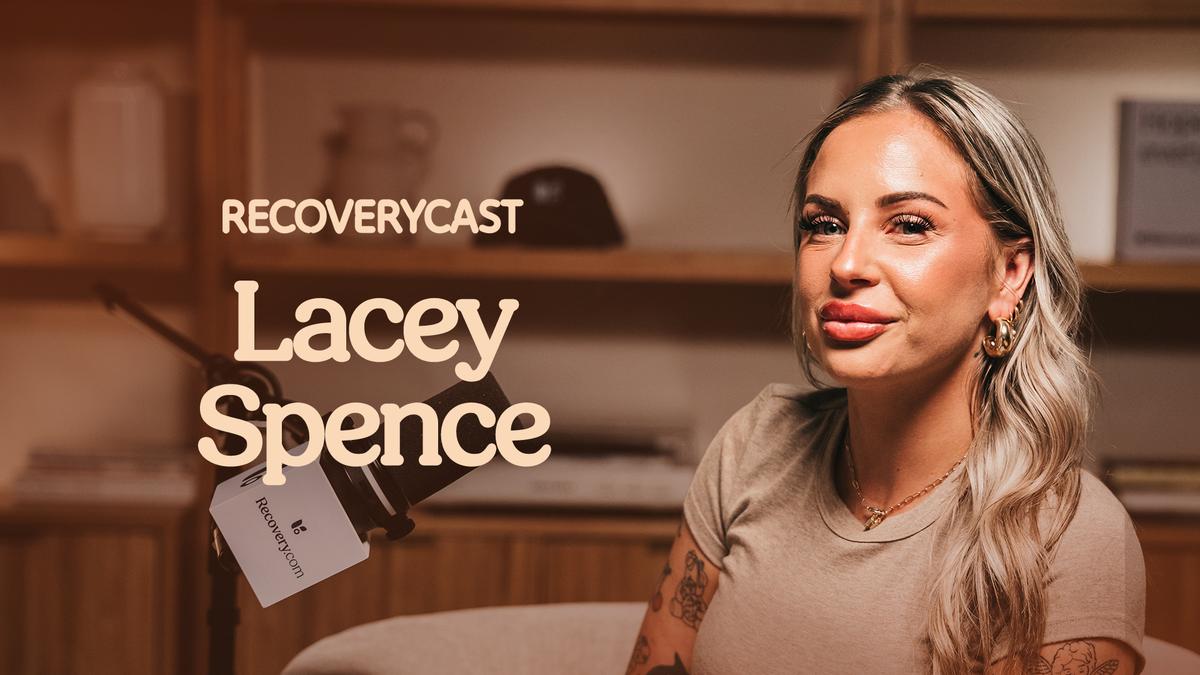
Lacey Spence is funny, honest, and warm, with an energy that lights up a room.
But she also carries a story shaped by addiction, trauma, prison, and ultimately, extraordinary resilience.
Her journey hasn’t followed a straight line.
Long before she struggled with addiction, she was navigating abandonment, grief, instability, and survival. By the time opioids took over her life, she had already spent years trying to outrun pain that started in childhood.
What makes her story so powerful isn’t just the depth of what she survived, but the life she built afterward.
Today, Lacey is nearly nine years sober, married, reunited with her children, thriving in her career, and using her voice to challenge stigma around addiction and recovery.
Her conversation on Recoverycast is emotional, heartbreaking, and, above all, hopeful.
These are some of the biggest lessons from her story.
1. Unhealed Childhood Trauma Doesn’t Simply Disappear
Lacey’s story began with instability at a very young age.
After her mother abandoned her and her sister at a shelter, the girls entered foster care in California. Lacey was only four years old.
For years, she bounced between foster homes while her father fought for custody.
Eventually, he won, and Lacey remembers being overjoyed to finally live with him. But even after leaving foster care, the emotional damage didn’t magically go away.
That pain continued to surface in different ways throughout her adolescence. She became angry, emotionally reactive, and rebellious.
After learning her mother had died by suicide, everything escalated. She started acting out, running away, and searching for relief anywhere she could find it.
But one of the most powerful moments was when Lacey finally realized she wasn’t simply a “bad kid.”
“I was acting accordingly,” she said, repeating what a therapist later told her.
For many people struggling with addiction, trauma is part of the foundation. Lacey’s story is a reminder that unresolved pain often shows up long before substances enter the picture.
2. Addiction Can Take Hold, Even When Life Feels Stable
One of the most striking parts of Lacey’s story is how “normal” life looked before addiction fully took over.
She was raising two children, earning her GED, graduating from dental assistant school with honors, and building a future. She described pumping breast milk in the bathroom while juggling motherhood and school.
“I’m doing it all,” she said.
Then came the prescription painkillers.
After an accident, Lacey was prescribed Percocet, a prescription pain medication containing oxycodone (an opioid).
At first, the pills didn’t seem dangerous. She and her partner eventually began taking opioids recreationally on weekends, almost casually.
“Looking back, we had no idea what was going to happen,” she said.
That is one reason opioid addiction can be so deceptive. It often starts in ordinary moments, with no dramatic turning point.
For many people, it can begin with legal prescriptions, emotional relief, or wanting to feel good after a stressful day.
Lacey vividly remembers the first euphoric feeling opioids gave her. She called friends just to tell them she loved them.
That emotional relief became addictive long before the physical dependency fully set in.
Explore Opioids Treatment Centers
3. Addiction Can Escalate Faster Than Many People Realize
At first, Lacey and her partner were functioning. They both had jobs. They were parenting. Bills were getting paid.
From the outside, things still looked manageable.
But addiction has a way of quietly expanding until it consumes everything.
Soon, they were taking increasing amounts of pills, lying to doctors for refills, and spending hundreds of dollars a day to avoid withdrawal.
Eventually, prescription pills became too expensive, and someone introduced them to heroin.
At first, both of them resisted.
“We were like, no, that’s not the same thing,” Lacey recalled.
But withdrawal eventually overpowered fear.
Within weeks, she transitioned from smoking heroin to injecting it. She began using meth shortly after.
What stands out in her retelling is how quickly her entire life collapsed once addiction escalated. Bankruptcy, crime, homelessness, losing custody of her children, and strained relationships all followed.
“I had lost everything,” she said.
Her story pushes back against the myth that addiction only happens to certain kinds of people. Lacey was educated, employed, and parenting before substances slowly overtook every part of her life.
4. Rock Bottom Often Looks Like Total Desperation
As her addiction worsened, survival became the priority.
Lacey described bouncing between hotels, strangers’ homes, and trap houses where every day revolved around finding drugs and money.
She talks openly about robbing people, selling belongings, and eventually engaging in sex work to fund her addiction.
One moment in particular captures just how emotionally devastating addiction became for her.
While preparing to meet a client arranged by a friend, Lacey locked herself in a bathroom and began hyperventilating.
“I can’t do this,” she remembers saying over and over.
But withdrawal and desperation eventually won.
Addiction can strip people of their sense of identity long before it destroys their circumstances. Throughout the episode, Lacey repeatedly reflects on how broken and disconnected she felt during that period of her life.
“I was so desperate for relief from any feeling I had,” she said.
That honesty is part of what makes her story resonate so deeply. She doesn’t glamorize addiction, but she also refuses to reduce herself to shame.
5. Prison Became the Place Where Recovery Started
Eventually, Lacey was arrested for robbery and sentenced to prison. At the time, she believed her life was over.
“I ruined my life,” she remembered thinking.
The beginning was brutal. Detoxing in jail forced her to face every emotion she had spent years numbing with drugs.
She describes sitting in a small cell with nothing but her thoughts.
But something began to shift during her second year incarcerated.
Instead of shutting down, Lacey started rebuilding herself piece by piece. She signed up for every class she could find, including communication courses, parenting classes, prison programs, and therapy groups.
Each small accomplishment mattered.
“When I would graduate from my classes, I felt proud,” she said.
While prison didn’t heal her trauma, it created space where she could finally stop running long enough to begin rebuilding.
One of her most powerful realizations was this: “You are never too far gone.”
That message became central to her recovery story.
6. Recovery Is About Rebuilding Trust, Not Just Staying Sober
When Lacey got out of prison, she knew sobriety alone wouldn’t rebuild her life.
She had to rebuild trust.
One of the most emotional moments in the episode comes when she talks about returning to work as a dental assistant.
For many people, receiving a key to a workplace would feel routine. For Lacey, it felt monumental.
“I used to steal everything from everybody,” she said through tears. “Nobody would even trust me to go in their house.”
Her boss gave her new opportunities and responsibilities when she desperately needed them.
That trust helped restore her sense of humanity.
“I didn’t think I was worthy enough to be a normal person again,” she admitted.
Recovery often involves relearning how to exist in ordinary life, whether at home or at work, or within the community.
Lacey’s story highlights how transformative it can be when someone is finally given a genuine second chance.
7. Getting Her Children Back Became Her Greatest Motivation
Throughout the episode, one theme appears over and over again: motherhood.
Lacey never stopped wanting to be a mom, even during the worst periods of her addiction.
After prison, regaining custody of her sons became one of the driving forces behind her recovery.
It wasn’t easy. She describes fighting through legal battles, resentment, and setbacks to rebuild that relationship.
At one point, her son admitted he was scared to tell his guardian he wanted to live with his mom again.
That moment stayed with her.
“This is why I did this,” Lacey said emotionally.
Today, she describes the joy of hearing ordinary questions in her home:
“What’s for dinner, Mom?” “Can you do my laundry?”
Those small moments represent everything she once feared she had lost forever.
8. Recovery Doesn’t Erase Grief, But Changes How You Carry It
Even after years of sobriety, Lacey still carries grief.
Her father, the person she described as her best friend and greatest supporter, died unexpectedly during the COVID pandemic.
She openly admitted she feared his death would trigger relapse.
Instead, she stayed sober.
What stopped her was thinking about her children hearing the words: “Your mom’s using again.”
That decision became one of the proudest moments of her recovery.
Lacey’s story makes it clear that sobriety doesn’t eliminate pain. Life still happens. People still die. Trauma still resurfaces.
But recovery gives people new tools, new relationships, and new reasons to keep going.
“Everything is going to be okay,” she said.
That belief now anchors her life.
Lacey’s story isn’t just a story about addiction. It’s a story about identity, motherhood, trauma, and survival. It’s about the possibility of rebuilding a life that once felt completely destroyed.
Her journey shows that recovery is rarely linear, easy, or perfect. But it is possible.
Today, she is sober, reunited with her children, married, successful in her career, and helping others feel less alone through radical honesty about where she has been.
If this conversation resonated with you, listen to the full episode of Recoverycast, share it with someone who may need encouragement, or take a moment to reflect on your own capacity for change and healing.
Sometimes the most important reminder is the simplest one: You are never too far gone.
Our Promise
How Is Recovery.com Different?
We believe everyone deserves access to accurate, unbiased information about mental health and recovery. That's why we have a comprehensive set of treatment providers and don't charge for inclusion. Any center that meets our criteria can list for free. We do not and have never accepted fees for referring someone to a particular center. Providers who advertise with us must be verified by our Research Team and we clearly mark their status as advertisers.
Our goal is to help you choose the best path for your recovery. That begins with information you can trust.