Find Treatment By
Rehabs by Location


Learn
About Us
Recovery.com combines independent research with expert guidance on addiction and mental health treatment. Our mission is to help everyone find the best path to recovery through the most comprehensive, helpful network of treatment providers worldwide.
Advisory Council
Our advisory council brings together leaders in behavioral health, technology, and business. Their diverse expertise ensures our resources and product are innovative, evidence-based, and effective. They guide our mission as accomplished individuals dedicated to improving the landscape of addiction recovery and mental wellness.
Justin Krompier’s 7 Life-Changing Lessons on Sobriety, Healing, and Chasing Your Dreams After Addiction


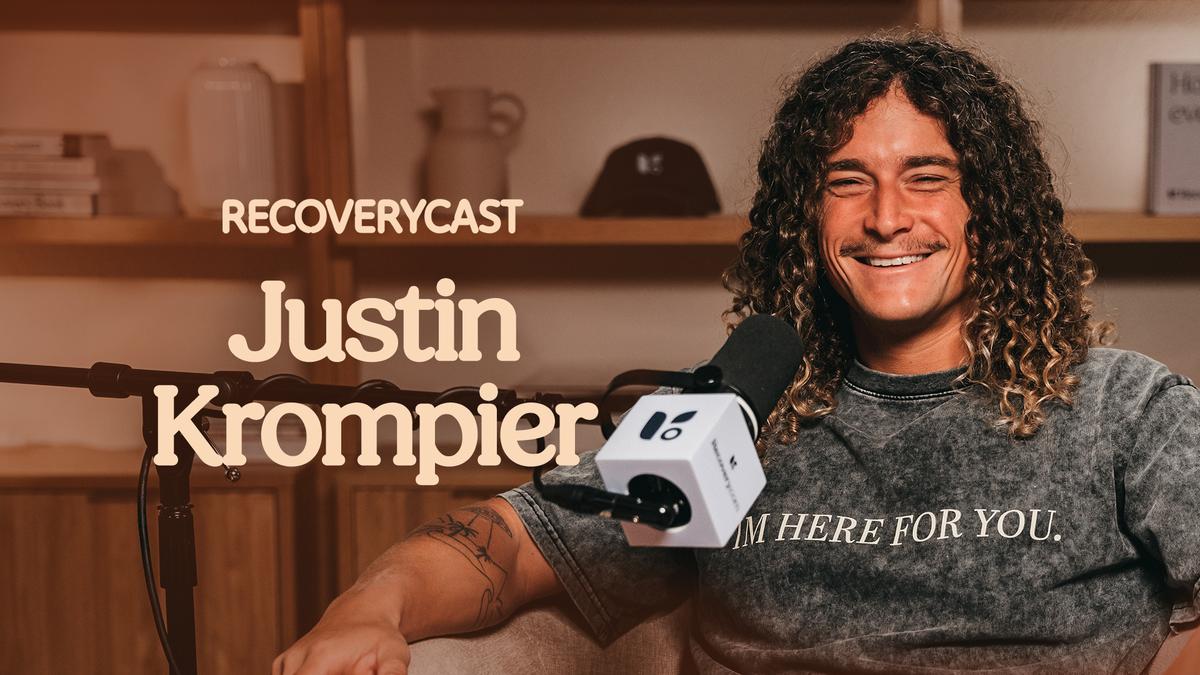
Recovery rarely happens all at once. More often, it begins with a quiet realization, a painful truth, or a moment that finally cuts through years of denial.
For photographer and filmmaker Justin Krompier, that moment came while sitting on his parents’ couch during withdrawal. After years of addiction, failed relationships, manipulation, and isolation, he joined his sister for a guided meditation just to escape his racing thoughts for a few minutes. But instead of silence, one message kept repeating in his mind: “Just go to rehab.”
That moment changed everything.
On this episode of Recoverycast, Justin shares how addiction slowly took over his life, how recovery helped him reconnect with himself, and how photography and creativity became part of his healing journey.
Today, he’s known for his breathtaking outdoor photography and inspiring recovery story, but his path there was anything but easy.
These are some of the most powerful lessons from Justin’s story about addiction recovery, mental health, purpose, and rebuilding a meaningful life.
1. Addiction Often Starts Long Before Anyone Notices
Justin’s story didn’t begin with heroin. It started much earlier, with feeling restless, misunderstood, and desperate to quiet his mind.
As a kid, he was energetic, outdoorsy, and constantly getting in trouble at school. Eventually, he was prescribed Adderall for ADHD at a young age. Looking back, he describes that experience as his introduction to changing how he felt through substances.
At first, it seemed harmless. The medication came from a doctor. His parents believed they were helping him focus and succeed in school. But Justin remembers something shifting almost immediately. He became deeply self-conscious and anxious in ways he had never experienced before.
“I became so self-conscious when I started taking those stimulants,” he shared.
That early experience normalized pharmaceuticals and planted the idea that uncomfortable feelings could be managed externally. Soon, experimentation followed. He began searching medicine cabinets, trying pills, and chasing altered states of consciousness.
What makes Justin’s story especially relatable is how gradual it all felt. There was no dramatic overnight collapse. It was curiosity, experimentation, and emotional escape slowly evolving into dependence.
His story reflects a reality many people in addiction recovery talk about: substance use often begins as an attempt to cope, belong, or feel different emotionally.
2. Addiction Thrives on Self-Deception
One of the hardest parts of addiction is how convincing it can be.
Justin believed he had control for years. In college, he convinced himself that addiction only happened to “weak people.” He thought mentally strong people could use substances recreationally without consequences.
That belief followed him as opioid use escalated.
He described opiates as the answer to everything he struggled with internally. They quieted his anxiety, erased his insecurities, and made him feel confident, productive, and comfortable in his own skin.
“It was like everything I ever wanted,” he said.
But slowly, the consequences piled up. He stopped caring about school. He quit lacrosse because he would rather get high than attend practice. He manipulated his parents for money under the guise of funding film projects. Relationships deteriorated. Friends distanced themselves.
Meanwhile, Justin continued telling himself he was “fine.”
One of the most striking moments in the conversation came when he admitted that everyone around him knew he had a problem long before he did.
“You’re the last one to know,” he said about addiction.
That insight captures something painfully true about substance use disorders. Addiction can distort perspective. It can convince people they’re managing things while chaos spreads into every corner of life.
For Justin, recovery only became possible once the denial finally cracked.
Explore Drug Addiction Treatment Centers
3. Rock Bottom Can Arrive Through Comparison
The turning point in Justin’s recovery wasn’t dramatic in the way people often imagine. It wasn’t an arrest or a public collapse.
It was seeing the contrast between his life and his cousin’s life during the holidays.
His cousin had a stable job, a house, gifts for family members, and a future. Justin, meanwhile, felt spiritually empty and emotionally dead. He spent most days lying on a couch, focused only on getting high and avoiding withdrawal.
Seeing those two realities side by side forced him to confront something he had avoided for years.
For the first time, he fully accepted that he had a problem.
“That contrast made it very clear to me… I am actually different,” he explained.
What makes this moment powerful is that it shattered the fantasy Justin had been clinging to, the idea that one day he would eventually figure out how to use substances “normally.”
Instead, he realized that every attempt at moderation had only led him deeper into addiction.
That moment of honesty became the foundation for recovery.
Sometimes healing begins when people stop comparing themselves out of recovery and finally compare themselves into it.
4. Recovery Starts With Radical Honesty
Justin described entering recovery as finally taking off the masks he had worn for years.
After detoxing on his parents’ couch and hearing that persistent inner voice telling him to go to rehab, he finally said the words out loud: “I have to go to rehab.”
The response from his family was immediate. No shock. No denial. Everyone already knew.
That realization was humbling, but it was also freeing.
For years, Justin believed he was successfully hiding his addiction. In reality, his family had been watching him disappear in slow motion.
Recovery began the moment he stopped pretending.
When he arrived at rehab, scared and uncertain, another patient asked him a simple question:
“So, are you ready to turn it over to God?”
Justin remembers feeling an overwhelming sense of surrender. Not perfection. Not certainty. Just surrender.
“I’m willing to do whatever you guys tell me to do,” he said.
That willingness changed the trajectory of his life.
One of the strongest themes throughout Justin’s story is that recovery required openness. He had to become teachable again. He had to stop believing he could outthink addiction by himself.
For many people in recovery, honesty becomes the first real act of freedom.
5. Connection Is More Powerful Than Isolation
Addiction isolated Justin from nearly everyone around him.
Recovery reconnected him.
At rehab and later in an Oxford House, he finally found people who understood what he was experiencing. That sense of shared experience became life-changing.
“You feel like you’re alone in all of it,” he said. “So the most powerful two words you can hear are ‘me too.’”
That idea sits at the heart of recovery communities. People heal when they realize they are not uniquely broken.
Justin described early recovery as surprisingly joyful. He delivered pizzas with friends, attended meetings, went to the gym, and slowly learned how to live again. Simple moments started feeling meaningful.
One story perfectly captured that shift. Sitting at dinner with friends after a meeting, someone joked about needing to read a book for a certification. Justin laughed so hard he couldn’t stop.
It sounds small, but to him it felt monumental.
“That’s what it felt like,” he said. “I felt alive for the first time.”
Recovery didn’t instantly solve every problem in his life. But it gave him back something addiction had stolen, the ability to genuinely connect, laugh, and feel present.
6. Creativity Can Become Part of Recovery
Before addiction consumed his life, Justin dreamed of becoming a filmmaker and storyteller.
Recovery gave him the chance to rediscover those passions.
As he got healthier, he found himself drawn back to nature, photography, and adventure. He started taking hiking trips with friends and obsessively learning everything he could about photography.
His addictive personality didn’t disappear; it transformed.
Instead of chasing drugs, he began chasing sunrises, mountain landscapes, and creative growth.
“I was all in,” he said about photography.
That passion eventually became a career. But it didn’t happen overnight. Justin worked ordinary jobs, including delivering pizzas and driving for UPS, while building his portfolio and developing his craft.
What’s inspiring about his story is that recovery didn’t just remove substances from his life. It created room for purpose.
Many people entering sobriety fear life will become boring or empty without drugs and alcohol. Justin’s experience shows the opposite can happen. Recovery can make space for passions that addiction buried.
For him, photography became more than work. It became proof that he could rebuild a meaningful life from scratch.
7. Don’t Quit Before the Miracle Happens
Near the end of the episode, Justin shared a phrase that continues to guide him:
“Don’t quit before the miracle happens.”
That message carries weight because his life today once felt impossible to him.
There was a time when he believed he would never travel, create art, or feel joy again. He thought addiction would define the rest of his life.
Now he spends his days photographing stunning landscapes, telling stories, inspiring others in recovery, and living the life he once believed was out of reach.
Justin also shared a concept he calls the “sacred mosaic,” the idea that every painful moment, setback, relationship, and experience eventually becomes part of a larger picture.
At the time, those moments often feel meaningless or unfair. But looking back, he can see how each piece connected to the next.
“If it didn’t happen exactly how it did, my life wouldn’t look the way it does now,” he explained.
That perspective doesn’t erase pain, but it offers hope.
Recovery is rarely linear. Growth takes time. Healing often unfolds in ways people cannot immediately understand.
But Justin’s story is proof that transformation is possible, sometimes far beyond what someone initially believes they deserve.
Justin’s story is ultimately about more than addiction recovery. It’s about rediscovering identity, purpose, creativity, and connection after years of feeling lost.
His journey from heroin addiction to outdoor photographer and storyteller shows how recovery can become the beginning of a completely different life, not the end of one.
The biggest lesson from Justin’s story may be this: the life waiting on the other side of recovery might be far bigger and more beautiful than you can currently imagine.
To hear Justin’s full story, listen to this episode of Recoverycast and explore more conversations about mental health, addiction recovery, and healing. If this story resonated with you, consider sharing it with someone who may need hope today.
Our Promise
How Is Recovery.com Different?
We believe everyone deserves access to accurate, unbiased information about mental health and recovery. That's why we have a comprehensive set of treatment providers and don't charge for inclusion. Any center that meets our criteria can list for free. We do not and have never accepted fees for referring someone to a particular center. Providers who advertise with us must be verified by our Research Team and we clearly mark their status as advertisers.
Our goal is to help you choose the best path for your recovery. That begins with information you can trust.