Find Treatment By
Rehabs by Location


Learn
About Us
Recovery.com combines independent research with expert guidance on addiction and mental health treatment. Our mission is to help everyone find the best path to recovery through the most comprehensive, helpful network of treatment providers worldwide.
Advisory Council
Our advisory council brings together leaders in behavioral health, technology, and business. Their diverse expertise ensures our resources and product are innovative, evidence-based, and effective. They guide our mission as accomplished individuals dedicated to improving the landscape of addiction recovery and mental wellness.
Jon Gustin's 8 Unexpected Lessons on Sobriety, Fatherhood, and Breaking Generational Patterns


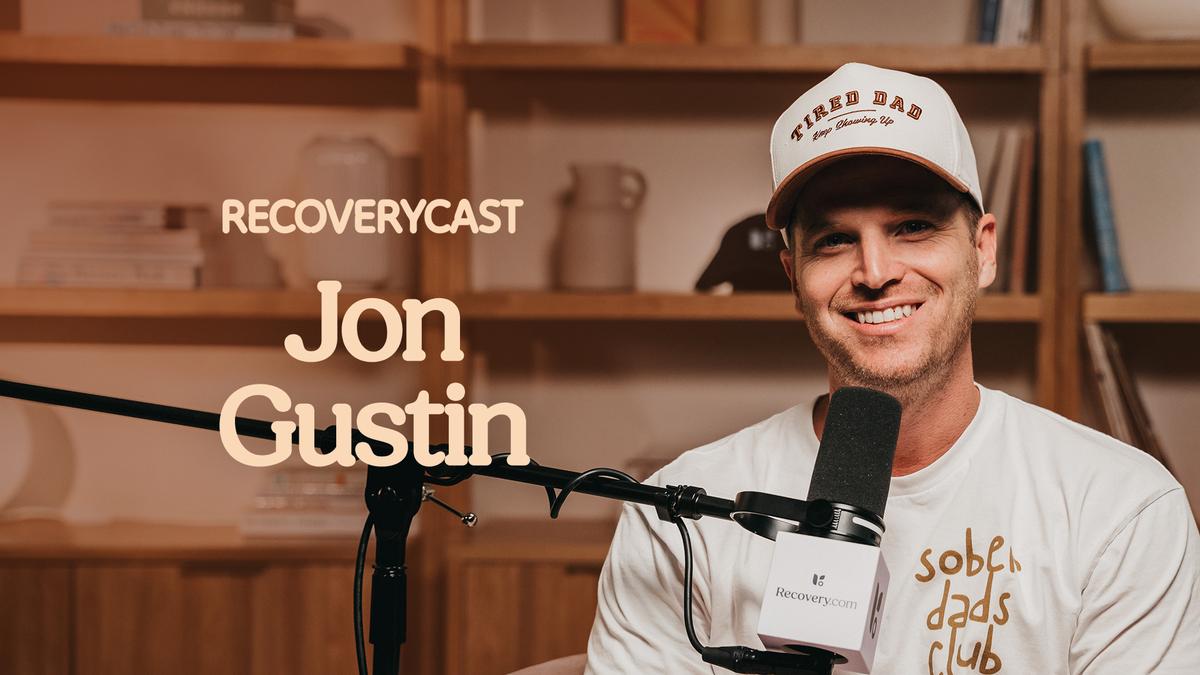
Sobriety didn't just change Jon Gustin's relationship with alcohol. It changed how he showed up as a husband, father, and person.
Known online as Tired Dad, Jon has built a community by sharing the realities of parenting with honesty and humor. But behind his relatable videos is a deeper story that includes decades of addiction, loss, shame, and ultimately, healing.
On this episode of Recoverycast, he opens up about addiction, loss, fatherhood, and why recovery is ultimately about becoming present.
Here are the biggest lessons from his story.
1. Addiction Often Starts Long Before Anyone Notices
Jon's addiction story didn't begin with years of heavy drinking. It began with one pill.
At 13 years old, a classmate offered him Adderall before a standardized test. Jon immediately recognized something different in the way it made him feel. His first thought wasn't whether it was dangerous. It was how he could keep feeling that way forever.
Looking back, he recognizes that moment as the beginning of his addiction. The substance boosted his confidence and quieted his insecurities, and temporarily solved problems he didn't yet know how to face.
What stands out most is how quickly experimentation became escape. Jon wasn't looking for excitement. He was looking for relief from anxiety, uncertainty, and eventually the emotional fallout of his parents' divorce. Substances gave him an answer before he had the emotional tools to find healthier ones.
His story is a reminder that addiction often develops gradually, especially when substances become a way to avoid difficult emotions.
2. Rock Bottom Isn't Always One Dramatic Moment
Many people imagine rock bottom as a single catastrophic event. For Jon, it was dozens of close calls spread over years.
There was alcohol poisoning, blackouts, dangerous drug use, and waking up unsure how he had survived the night. Even after frightening experiences, he found himself returning to substances again and again.
But the most sobering moments came when Jon lost close friends to overdose and suicide.
These losses forced him to confront where his own life was headed. Even today, he says he carries survivor's guilt. Rather than one dramatic rock bottom, recovery came after years of realizing the life he was living wasn't sustainable.
Explore Drug Addiction Treatment Centers
3. Becoming a Parent Doesn't Automatically Heal Addiction
Many people believe major life milestones naturally change unhealthy behaviors. Jon hoped becoming a father would do exactly that.
When his daughter was born, everything changed overnight. Suddenly, he wasn't responsible only for himself. His wife was recovering from a C-section, navigating postpartum depression, and their newborn depended on him completely. The weight of those responsibilities felt overwhelming.
Rather than asking for help, Jon returned to the coping strategy he knew best.
He drank more. He secretly took leftover prescription pain medication prescribed to his wife after surgery, carefully calculating how many pills he thought she wouldn't notice were missing.
Looking back, Jon realized addiction had kept part of him emotionally frozen. While his career, marriage, and family grew, he never learned the emotional skills he'd spent years numbing with substances.
4. The Turning Point Came When He Could No Longer Ignore Himself
Jon attempted sobriety multiple times before it finally lasted.
Dry Januarys came and went. Promises were made and broken. Like many people with substance use disorder, he found himself believing that this time would be different.
After years of trying to quit, worsening anxiety, kratom misuse, and a mental health crisis forced Jon to face reality. The morning after finishing half a bottle of tequila, he realized his children were still young enough that they wouldn't remember him as someone who drank if he stopped now.
January 2, 2023, became his sobriety date.
It wasn't driven by perfect confidence. It was driven by honesty. For the first time, he admitted to himself that he was no longer partying. He was running from something, and it was time to face it.
5. Recovery Means Learning to Feel Instead of Escape
Jon says the biggest difference between getting sober and staying sober was realizing he couldn't simply remove alcohol. He had to replace it with healthier ways of coping.
For years, every uncomfortable emotion had a familiar solution. Anxious? Drink. Stressed? Drink. Overwhelmed? Drink. Alcohol and drugs became shortcuts that helped him avoid difficult emotions instead of working through them.
Once those substances were gone, those feelings were still there.
"The party's over," Jon realized. "This is about running from something."
That mindset changed everything. Rather than asking how to quit drinking, he started asking why he needed to drink in the first place.
His first year of sobriety became a complete reset. Therapy, meditation, breathwork, exercise, and even cold plunges became healthier ways to cope. Rather than escaping discomfort, Jon learned to work through it.
True to his personality, he committed fully. Jon compares recovery to building muscle. Every anxious moment he faced without drinking became another repetition. Every uncomfortable feeling he worked through made him a little stronger. Instead of numbing his emotions, he learned to trust that he could survive them.
6. Sobriety Made Him a Better Husband Before It Made Him a Better Dad
While Jon often talks about fatherhood, he says recovery first transformed his marriage.
Before sobriety, he believed being a good husband meant providing financially and keeping his emotions to himself. Once alcohol was no longer masking those feelings, he learned to communicate honestly instead of pretending everything was fine.
Today, Jon openly tells his wife when he's anxious, overwhelmed, or struggling. He also confronted the guilt of hiding alcohol and secretly taking her prescription medication years earlier. Recovery required accountability, not excuses.
Jon believes healthy relationships aren't built on perfection, they're built on honesty. That emotional openness has strengthened his marriage and created a home where difficult conversations are welcomed instead of avoided.
7. Your Children Don't Need a Perfect Parent, They Need a Present One
Jon's online community knows him as Tired Dad, a name that reflects his parenting philosophy. Being exhausted doesn't mean you're failing. It usually means you're showing up.
One of the biggest changes since getting sober is how he approaches mornings. Instead of waking up hungover and simply getting through the day, he now starts each morning with intention, enjoying coffee with his wife before the kids wake up. Parenting is still chaotic, but now he's fully present for it.
Jon jokes that Tired Dad used to mean "Hungover Dad." Sobriety gave his children a version of their father they'll actually remember.
He also models emotional honesty. When he's stressed, he tells his children. If he loses his patience, he apologizes. Rather than pretending to be perfect, Jon believes emotionally healthy families are built by repairing mistakes, not avoiding them.
8. Breaking Generational Patterns Starts With One Honest Conversation
Jon grew up believing men should hide their emotions. Recovery challenged that belief.
Today, when his daughter notices he's stressed, he talks to her honestly in an age-appropriate way. In return, she's learned to do the same when she's having a hard day. Jon believes those small conversations are helping break generational patterns.
He also says parents don't have to be perfect. One of the greatest gifts they can give their children is an honest apology. By modeling accountability and vulnerability, he's teaching his kids that mistakes don't define a person, it's how they respond that matters.
For Jon, emotional honesty isn't weakness, it's strength. Children don't need parents who have all the answers. They need parents who show them what healthy struggle and repair look like.
Jon Gustin's recovery story is about more than quitting alcohol. It's about replacing shame with honesty, choosing presence over escape, and becoming the husband and father he always wanted to be.
Recovery hasn't made life easier. Parenting is still exhausting, marriage still takes work, and challenges still arise. The difference is that Jon now faces them instead of running from them.
As he says, being tired isn't a sign you're failing. More often, it's proof you're showing up.
To hear more of Jon's story, listen to the full episode of Recoverycast. If these lessons resonated with you, consider sharing the episode with someone who could use a reminder that recovery, healing, and change are always possible.
Our Promise
How Is Recovery.com Different?
We believe everyone deserves access to accurate, unbiased information about mental health and recovery. That's why we have a comprehensive set of treatment providers and don't charge for inclusion. Any center that meets our criteria can list for free. We do not and have never accepted fees for referring someone to a particular center. Providers who advertise with us must be verified by our Research Team and we clearly mark their status as advertisers.
Our goal is to help you choose the best path for your recovery. That begins with information you can trust.