Find Treatment By
Rehabs by Location


Learn
About Us
Recovery.com combines independent research with expert guidance on addiction and mental health treatment. Our mission is to help everyone find the best path to recovery through the most comprehensive, helpful network of treatment providers worldwide.
Advisory Council
Our advisory council brings together leaders in behavioral health, technology, and business. Their diverse expertise ensures our resources and product are innovative, evidence-based, and effective. They guide our mission as accomplished individuals dedicated to improving the landscape of addiction recovery and mental wellness.
Jesse Crosson’s 7 Hard-Won Lessons on Addiction, Incarceration, and Second Chances


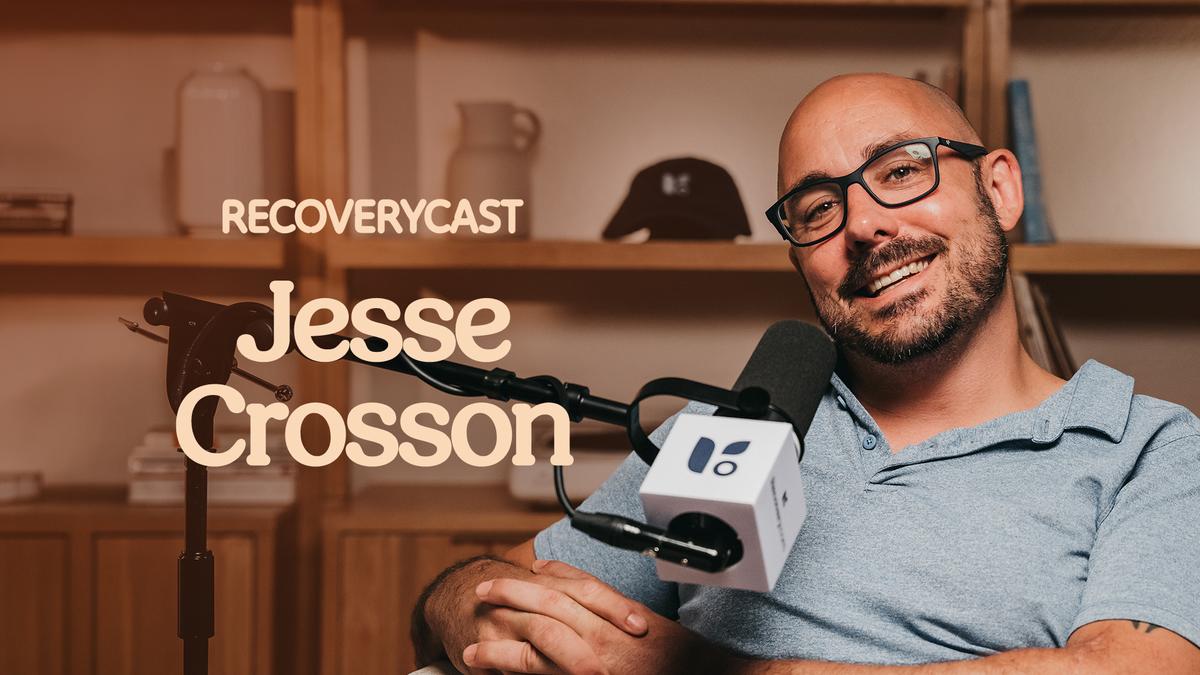
At 17, Jesse Crosson tried cocaine and felt something he had spent much of his life searching for. For a few minutes, he felt like he was enough.
But that feeling disappeared quickly. Within three months, Jesse went from working two jobs and considering his future to daily cocaine use, mounting debt, criminal activity, and an arrest that would change the course of his life. He eventually received a 32-year prison sentence and spent 19 years incarcerated before being granted a pardon in 2021.
Today, Jesse is an author, speaker, content creator, and founder of the Second Chancer Foundation. His work focuses on incarceration, reentry, criminal justice reform, and helping justice-impacted people recognize possibilities beyond their past.
On this episode of Recoverycast, Jesse shares a story that goes beyond addiction or incarceration. It’s also about shame, accountability, connection, purpose, and learning to see a person as more than their worst moment.
Here are seven lessons from his journey.
1. Addiction Can Attach Itself to the Feeling You’ve Been Searching For
Jesse grew up around recovery. His parents had histories of substance use and got sober when he was young, and 12-Step meetings and support groups were a familiar part of childhood. Yet Jesse remembers feeling that something inside him had gone quiet. He describes himself as a curious, talkative child before a point when “the light just kind of switched off.”
As a teenager, drinking alcohol and smoking marijuana initially had more to do with belonging than escaping. Cocaine was different.
“The first time I did cocaine, I felt like enough,” Jesse recalls. “I remember thinking, oh, this is what I’ve been looking for.”
The feeling lasted about 15 minutes. Jesse immediately wanted it again. Within months, his cocaine use had become constant, and the life he had been building began unraveling at lightning speed.
Looking back, Jesse recognizes a pattern that stretched beyond cocaine. For years, he had tried to change uncomfortable feelings through substances, relationships, exercise, and other outside experiences. None of them could resolve what was happening underneath.
Explore Cocaine Treatment Centers
2. A Better Question Can Change the Way You Understand Your Past
Prison gave Jesse something he had rarely experienced before: time.
He began reading and writing, eventually studying psychology. His original motivation was deeply personal. He wanted to understand how he had ended up where he was.
At first, his questions centered on what was “wrong” with him and the people around him. Over time, he realized those questions were leading him in the wrong direction.
“The question wasn’t what was wrong with me or what was wrong with them,” he says. “It was what happened to me, what happened to them.”
That shift didn’t erase responsibility for the harm Jesse had caused. Instead, it gave him a way to examine the experiences, behaviors, pain, and patterns that shaped him without reducing his entire identity to them.
Understanding the past and taking accountability can exist together. For Jesse, learning to hold both ideas became an important part of figuring out how he wanted to live moving forward.
3. Helping Someone Else Can Reveal What You Were Looking For All Along
One of Jesse’s most memorable relationships in prison began with a man nicknamed Big Baby, a physically imposing person with a reputation for violence.
One day, Big Baby approached Jesse with an unexpectedly vulnerable request: “Would you help me get my GED?”
Jesse agreed, with a trade. Big Baby would teach him to box, and Jesse would tutor him. They spent hours working through schoolwork, particularly math. Progress could be frustrating. One day, after finally understanding an algebra concept, Big Baby returned the next day unable to remember it.
Jesse was discouraged. Big Baby was frustrated. Then he stopped and said something Jesse never forgot: “If I got it yesterday, I can get it again.”
Eventually, he earned his GED. Jesse remembers him returning with tears streaming down his face, picking Jesse up and swinging him around in celebration. Watching that joy created a realization.
“This is what I’ve been looking for with the cocaine, with the girls,” Jesse remembers thinking.
The experience reshaped the rest of his time in prison. Education and self-improvement still mattered, but they became tools for something larger. Jesse wanted to put himself in a better position to support other people and witness them becoming more of who they could be.
4. People Are More Complicated Than Their Worst Actions
Prison also challenged Jesse’s assumptions about what makes someone “good” or “bad.”
One of his cellmates was an older veteran who became a mentor. He taught Jesse how to shave, expanded his vocabulary, and shared lessons about leadership from his military experience.
Then Jesse learned something startling: the man was a serial killer.
The discovery forced him to sit with two realities at once. This person had caused terrible harm, and this same person had also played a meaningful, supportive role in Jesse’s life.
“No one is just one thing,” Jesse says.
That doesn’t mean minimizing harm, excusing violence, or avoiding accountability. Jesse’s own story contains serious harm that he speaks about directly. Instead, his experience challenges the idea that one action, label, conviction, or period of someone’s life can tell the complete story of who they are.
That belief would eventually become central to his work with incarcerated people and young people involved in the justice system.
5. Small Moments of Humanity Can Carry Enormous Weight
Jesse experienced one of the most painful moments of his incarceration when his father died.
He was in restrictive housing at the time. Prison staff arranged for him to speak with his father before surgery, and later allowed his mother to tell him about his father’s death in person. A psychologist also asked Jesse where he wanted to be afterward and advocated for that choice.
Then something else happened.
After other incarcerated people learned his father had died, people Jesse barely knew began approaching him. Someone offered coffee. Someone brought soup. Others put a hand on his shoulder and simply told him they were sorry.
He remembers it as an unexpectedly humane experience in a setting usually associated with the opposite.
Years later, Jesse also remembered a staff member who used his first name despite rules discouraging it. Her explanation stayed with him. Nobody, she told him, could make her treat him as less than he was.
Moments like these reinforced a lesson Jesse would carry into his work after prison: treating someone with dignity does not require ignoring what they have done.
6. Freedom Can Be Overwhelming, Even When You’ve Waited Years for It
Jesse didn’t know when he woke up on August 16, 2021, that he was about to leave prison.
His pardon application had grown from what he expected to be a simple form into a document of more than 300 pages detailing his accountability, accomplishments, support network, and hopes for the future. Then he waited.
Two years later, he was called into an office.
“You’ve been granted a pardon,” he was told. “You’re going home today.”
Walking out after 19 years was exhilarating, but reentry wasn’t simple. Everyday experiences could become overwhelming. Jesse struggled with technology and had to ask questions that seemed obvious to everyone else. He spent months wondering how people ordered pizza before finally learning that he could use an app.
Even a celebratory trip to Costco became too much. Surrounded by choices, people, lights, and stimulation, Jesse had a panic attack and needed to leave.
He describes having to become comfortable looking foolish, asking questions, and slowly learning how to exist in unfamiliar spaces. Reentry was not a single triumphant moment. It was a process of adjusting, grieving, learning, and building a life one experience at a time.
7. A Second Chance Becomes More Meaningful When You Help Someone Else See Theirs
After his release, Jesse began turning lived experience into service.
Through the Second Chancer Foundation, he has worked on reentry and mentorship programs and connected incarcerated people with mentors outside prison. His work eventually expanded into a juvenile center, where he noticed something important.
At first, Jesse asked young people what resources they needed and tried to provide them. Yet many didn’t engage. Slowly, he realized the problem wasn’t simply access.
Some of the young people couldn’t picture those opportunities belonging to someone like them.
Jesse began bringing in people who shared their backgrounds, neighborhoods, or experiences and had gone on to build careers and lives the young people could imagine wanting. Suddenly, he could see a shift. The message became, “Maybe I can do that.”
Jesse knew the feeling because someone had once given it to him. Years into his sentence, he heard a formerly incarcerated person return to prison and tell the room, “You have a future, and you matter.” Jesse remembers how much hope those words created.
Today, that’s the message he tries to carry forward: a person can be accountable for their past and still have a future worth building.
A Future Can Be Bigger Than a Past
Jesse’s story doesn’t offer a simple version of redemption. His journey includes addiction, violence, incarceration, grief, accountability, healing, and the difficult adjustment to life after nearly two decades behind bars.
What connects those experiences is a gradual change in how he understood himself and other people. He stopped searching only for ways to escape uncomfortable feelings and began finding meaning in connection, curiosity, service, and helping others recognize their own possibilities.
As Jesse tells people today, there can be a future beyond what someone currently imagines, but building that future has to begin somewhere.
Listen to the full Recoverycast episode to hear more from Jesse about cocaine addiction, his 19 years in prison, reentry, the Second Chancer Foundation, and what second chances can look like in practice. Consider sharing the episode with someone who may need a reminder that their past does not have to define what comes next.
Our Promise
How Is Recovery.com Different?
We believe everyone deserves access to accurate, unbiased information about mental health and recovery. That's why we have a comprehensive set of treatment providers and don't charge for inclusion. Any center that meets our criteria can list for free. We do not and have never accepted fees for referring someone to a particular center. Providers who advertise with us must be verified by our Research Team and we clearly mark their status as advertisers.
Our goal is to help you choose the best path for your recovery. That begins with information you can trust.