Find Treatment By
Rehabs by Location


Learn
About Us
Recovery.com combines independent research with expert guidance on addiction and mental health treatment. Our mission is to help everyone find the best path to recovery through the most comprehensive, helpful network of treatment providers worldwide.
Advisory Council
Our advisory council brings together leaders in behavioral health, technology, and business. Their diverse expertise ensures our resources and product are innovative, evidence-based, and effective. They guide our mission as accomplished individuals dedicated to improving the landscape of addiction recovery and mental wellness.
From Google to Behavioral Health: Why Gary Garth Sold an Inc. 5000 Agency to Fight Body Brokers


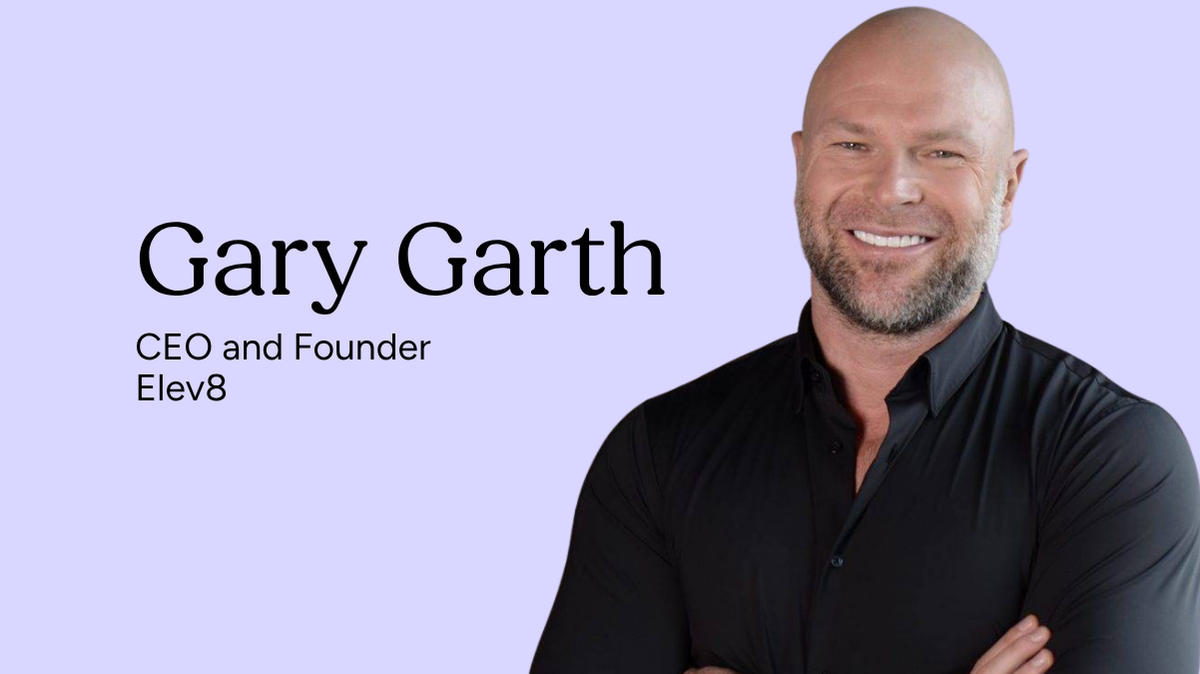
In 2019, Gary Garth was running a five-time Inc. 5000 fastest-growing company. The money was good. The clients were big. And he was miserable.
"I was not fulfilled. I was stressed. I was dealing with a lot of demons myself," he says. "And at the same time, my best friend died from an overdose. Basically got into the hands of one of these body brokers, I later discovered."
He looked at his client portfolio, heavy on personal injury lawyers, mortgage companies, and tech firms, and asked himself a question that changed his career: How am I making the world a better place?
On this episode of Recovery Reach, Garth, founder of the behavioral health growth agency Elev8, sat down with host Clint Mally to talk about the winding road from Google channel sales to behavioral health, why paid ads are the most overrated lever in treatment center marketing, and what he'd tell any facility owner who wants to make an impact tomorrow.
From Google Channel Sales to a Failed Rehab Investment
Garth's marketing pedigree runs deep. He spent 10 years in channel sales with Google, enabling 200 marketing agencies and 5,000 advertisers, followed by a stint at Microsoft. His previous company white-labeled PPC and SEO solutions for agencies and landed on the Inc. 5000 list five times before he sold his shares.
His first move into behavioral health wasn't an agency. After his friend's death, he invested in two boutique overseas luxury facilities, one in the Dominican Republic and one in Canada, joining as CMO, partner, and investor. The plan was to reshape the industry from the inside.
The timing could not have been worse. It was February 2020. Fourteen months of travel restrictions followed, and he burned through a lot of money.
"It was a blessing," he says now. "Not to compare myself with Steve Jobs, but you can only connect the dots looking backwards. I'm not a clinician. I'm not a therapist. Who am I to operate a facility? But I'm a great marketer."
While grounded, he interviewed behavioral health marketing agencies for his facilities and found what he calls "SEO snake oil salesmen." When he asked about expected learning curves and cost per lead, opportunity, and admit, the answers were shrugs. No promises. No benchmarks.
"If you know a vertical, you can predict to some extent," he says. He saw people who needed treatment, facilities sitting below census, and a marketing ecosystem that couldn't connect the two. He cut his losses and started Elev8.
More Than a Marketing Agency: 360-Degree Patient Acquisition
Three years in, Elev8 has grown to 46 clients across more than 20 states, ranging from a six-bed facility to a multi-location operator with nearly 2,000 beds, with a team of about 30 and roughly $4 million a month under management on Google alone.
But Garth learned quickly that demand generation by itself doesn't produce ROI in this field. Elev8 is now organized into three departments:
- Elev8 Media makes the phone ring: PPC, SEO, social, web design, publisher-agnostic budget allocation
- Elev8 Tech builds the systems and processes so leads don't fall through the cracks
- Elev8 Sales handles admissions enablement and business development enablement, from non-reciprocal partnerships to call handling and follow-up cadence
"We're not a marketing agency anymore. We're a growth accelerator," he says. "Maybe we're not starting with marketing. Maybe it's the CRM enhancement. Maybe we start with the alumni just to get that going."
The hardest early lesson was client selection. Elev8 took on accounts that looked great on paper, big Google budgets, but were out-of-network operators with transparency problems. Garth fired two of them and absorbed months of losses so the team understood the standard. "We're not gonna accomplish it with partners where there's not complete alignment and trust."
Overrated: Paid Ads. Underrated: Alumni and the Brand They Build
Garth manages millions in monthly ad spend, so his answer to the overrated question carries some irony: over-dependency on paid ads.
"It's a good accelerator, but the minute you turn off the paid campaigns, the music stops. There's no more inquiries the next day."
The underrated counterpart is everything that compounds: brand, referral partnerships, and especially alumni programs, which he calls one of the most underutilized assets in the field. Strong alumni engagement yields reviews, comments on third-party sites, and citations, which matters more than ever because of how people now search.
"That's what AI is doing right now, pulling up citations, referring domains, comments, social media," he says. "You're basically not gonna exist if you don't build the brand."
Prospective patients are having criteria conversations with AI before they ever reach out. Can I work from there? Can I use my cell phone? Can I bring my pet? If the brand, reviews, and profiles aren't in place when those questions get asked, the facility never enters the conversation.
Garth's alumni approach is personal. He's been to treatment himself, and he remembers the feeling at day 30: a single discharge session, then straight back into the world. "It's almost like sending me straight into the wolves." The six-month recovery plan he built for himself, goals, gratitude, healthy habits, became the alumni planner Elev8 now deploys with clients, alongside training on review generation and Google Business Profile hygiene.
The BD Playbook: Start With the Founder
Most digital agencies stop at the website. Elev8 also consults on business development, and Garth's core argument is that referral relationships are a leadership responsibility, not something to outsource to a single rep.
Founders often fear that if a BD rep leaves, the Rolodex leaves with them. Garth flips it: "You gotta build a brand as an owner with all these different potential referral providers."
For any facility owner asking how to make an impact tomorrow, he offers a three-step sequence:
- Run outreach from the founder's profile. You can hire someone to do the work, but the connection requests and conversations should come from leadership.
- Book the first meetings as the founder. Tier your referral opportunities and take the biggest ones personally before handing relationships to a BD liaison.
- Build a referral partner newsletter. Open houses, alumni programs, new contracts, success stories. Most referral partners just want to know their person will get the right care. Staying top of mind is an easy win most facilities never attempt.
The logic is practical as well as relational. No facility can serve everyone, so referrals out are inevitable, and strong partnerships turn those into a two-way channel that effectively reinvests in your acquisition engine.
Stop Steering by Bad Data
The advice Garth got early in his career that turned out to be wrong? That an agency's job ends when the phone rings.
"If you don't have a marketer with skin in the game, committed to assessing those things and collaborating with the other stakeholders, it will never work," he says.
The failure mode is everywhere: a facility pauses a keyword or kills a landing page because calls didn't convert, when the real problem was a mismanaged call. His challenge to any owner or marketing director: pull 10 calls longer than five minutes and listen to them. At least one, probably several, will reveal an admissions problem masquerading as a marketing problem.
Elev8 builds this into its operating model. Automatic lead rating pushed into dashboards. Monthly admissions enablement calls. Account managers listening to two to five calls per client against an assessment script. "If you don't follow it, I don't wanna work with you."
The same discipline applies to data across the organization. Facilities silo their EMR, VOB, billing, and marketing data, then wonder why they can't calculate the numbers any SaaS company would consider table stakes. "You go to investors, you raise money, that's the metrics. I put in a dollar, we get three. Here's a bigger check," he says. "But here, we're not measuring the whole lifetime patient value."
What Leaders Should Focus On Next
Asked what behavioral health leaders should be thinking about for the future, Garth doesn't hesitate: AI visibility and brand, built on a foundation of operational excellence.
"When you take all those different things, it's about operational excellence. Not siloed data, understanding the entire patient journey, from initial consideration to discharge and relapse rate," he says. "That's what translates into a good brand."
Because for Garth, the stakes never stopped being personal. He tells his team that the landing page task they're checking off in the project management software might be the difference in whether somebody gets into treatment. One client grew from five beds to 40 and a second location. "That's 35 people extra on a monthly basis. And then all those families. You multiply that by 12."
Our Promise
How Is Recovery.com Different?
We believe everyone deserves access to accurate, unbiased information about mental health and recovery. That's why we have a comprehensive set of treatment providers and don't charge for inclusion. Any center that meets our criteria can list for free. We do not and have never accepted fees for referring someone to a particular center. Providers who advertise with us must be verified by our Research Team and we clearly mark their status as advertisers.
Our goal is to help you choose the best path for your recovery. That begins with information you can trust.