Find Treatment By
Rehabs by Location


Find Treatment By
Learn
About Us
Recovery.com combines independent research with expert guidance on addiction and mental health treatment. Our mission is to help everyone find the best path to recovery through the most comprehensive, helpful network of treatment providers worldwide.
Advisory Council
Our advisory council brings together leaders in behavioral health, technology, and business. Their diverse expertise ensures our resources and product are innovative, evidence-based, and effective. They guide our mission as accomplished individuals dedicated to improving the landscape of addiction recovery and mental wellness.
Gabbie Egan’s 8 Hard-Earned Lessons on One Year of Sobriety, Identity, and Reclaiming Your Life


Kayla Currier is a Senior Web Content Editor at Recovery.com. She received her B.A. in Journalism and Media Studies at the University of South Florida where she served as a contributing writer and editor for the Crow’s Nest.

Kayla Currier is a Senior Web Content Editor at Recovery.com. She received her B.A. in Journalism and Media Studies at the University of South Florida where she served as a contributing writer and editor for the Crow’s Nest.
Table of Contents
- 1. Sobriety Doesn’t Fix Everything Overnight
- 2. You Grieve More Than Alcohol When You Get Sober
- 3. One Year Sober Does Not Mean You’re “Cured”
- 4. Community Isn’t Optional in Recovery
- 5. Sobriety Changed How She Sees Herself
- 6. Reclaiming Your Story Takes Boundaries
- 7. Creativity Didn’t Disappear, But Deepened
- 8. Recovery Is Built One Day at a Time
For Gabbie Egan, sobriety wasn’t a glow-up moment or cinematic turning point. It arrived messy and uncomfortable. One year into recovery, Gabbie is honest about something many people are afraid to say out loud: life didn’t immediately get better when she stopped drinking. In fact, for a while, it got harder.
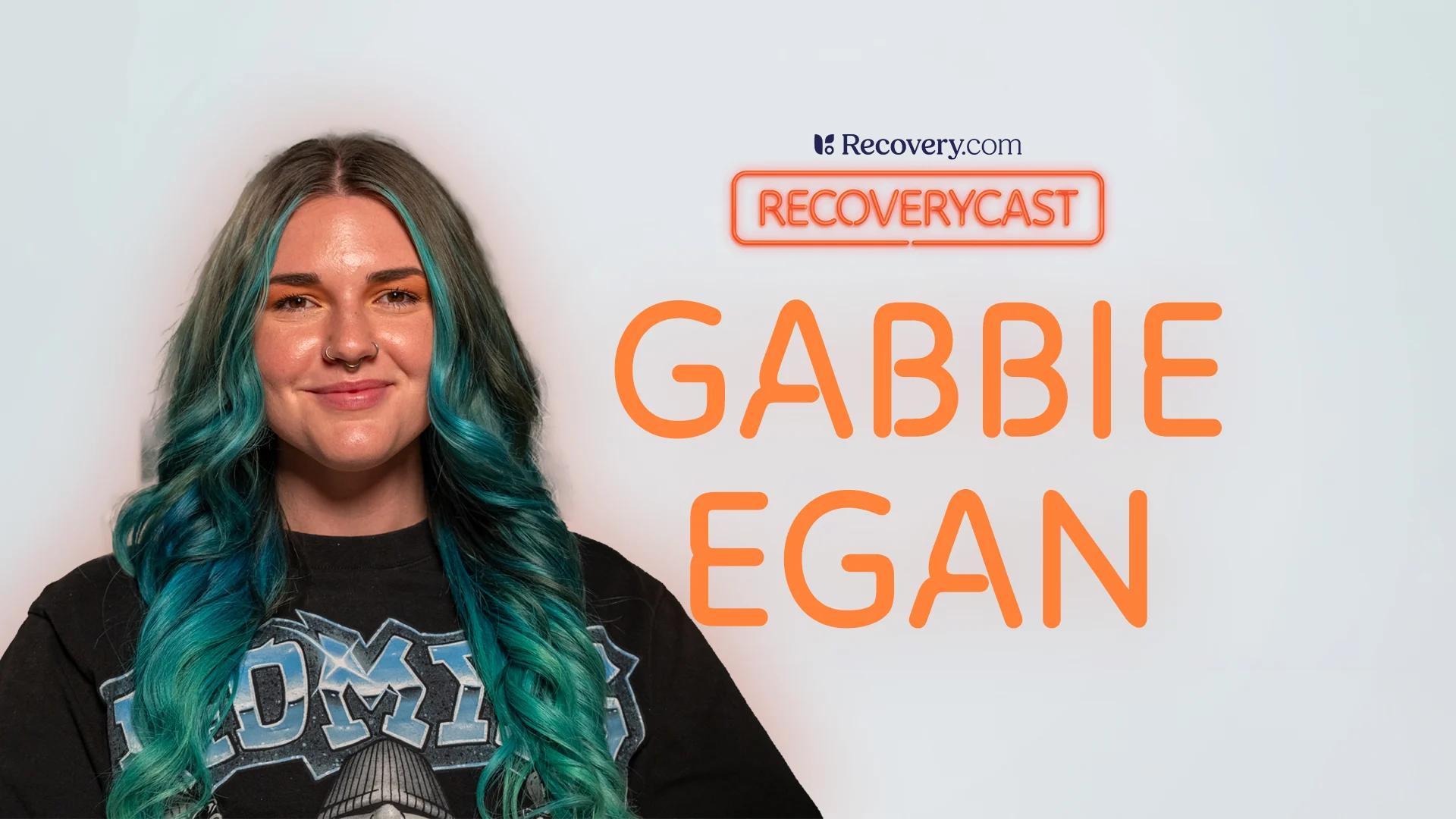
If you missed Gabbie’s first conversation with us, you can start with her original episode here. In this powerful return to Recoverycast, Gabbie reflects on her first full year sober and what it actually took to get there. She speaks openly about grief, mental health, losing friendships, rebuilding trust, and learning how to sit with herself without numbing out.
She also shares the clarity, creativity, and opportunities that emerged once she stopped running from her emotions. This episode isn’t about perfection or polished recovery. It’s about real recovery. The kind that asks you to stay when everything in you wants to escape. Below are some of the most meaningful lessons from Gabbie’s story, each rooted in hard-earned growth and lived experience.
1. Sobriety Doesn’t Fix Everything Overnight
Gabbie admits she expected sobriety to bring instant relief. She believed that once she quit drinking, life would quickly fall into place. Instead, she found herself grieving the loss of a lifestyle she once thought defined her.
Early sobriety stripped away her coping mechanisms before anything had time to replace them. Without alcohol or substances, every emotion hit harder. Anxiety, sadness, and restlessness surfaced all at once. She describes feeling like a shell of herself from barely sleeping, barely eating, and wondering why she felt worse instead of better.
This stage of recovery can be deeply discouraging. Gabbie points out that many people stop here, right before things begin to shift. The discomfort can feel endless, especially when progress isn’t immediately visible. But the truth is, healing takes time, and both the body and mind need space to recalibrate.
Her honesty serves as a reminder that early recovery isn’t a failure when it feels hard. It’s often a sign that real change is happening beneath the surface.
2. You Grieve More Than Alcohol When You Get Sober
Sobriety came with loss. Gabbie grieved friendships, routines, and a version of herself she once believed was fun, free, and fearless. Drinking had been tied to her identity for years, especially as someone who became a mom young and felt she had missed out on parts of life.
Letting go of alcohol also meant letting go of the way she once accessed freedom and release. That grief was real and valid. She talks about losing friends she couldn’t stay close to while protecting her sobriety, and how isolating that loss felt at times.
At the same time, she began discovering something new. In losing the chaos, she slowly found herself again. Not the loud, numbed version, but a grounded one who could sit with discomfort and keep going.
This grief didn’t mean sobriety was wrong. It meant change was happening.
3. One Year Sober Does Not Mean You’re “Cured”
Reaching one year sober brought pride, but it also brought dangerous thoughts. Gabbie noticed her mind drifting toward the idea that maybe she could drink normally now. Maybe she had earned it. Maybe she was different.
She recognized this thinking as part of addiction itself—the belief that time equals immunity. To counter it, she leaned into her sober community and began reading the Big Book of Alcoholics Anonymous for the first time, a full year into sobriety.
Seeing her own thought patterns reflected back was grounding. It reminded her that recovery is ongoing, not something you complete. Staying sober meant staying honest about how her brain works and asking for support when those thoughts crept in.
This lesson underscores something many people need to hear: milestones matter, but they don’t erase vulnerability.
Explore Alcohol Treatment Centers
4. Community Isn’t Optional in Recovery
One of the strongest anchors in Gabbie’s recovery has been community. From a sober support group chat with other women to long conversations with people who have more time sober than she does, connection has been essential.
During moments of grief and temptation, she chose not to isolate. She reached out. When she lost a close friend to suicide shortly after her one-year anniversary, the pain was overwhelming. Being sober meant feeling everything without numbing it away.
What kept her grounded wasn’t willpower alone, but people who understood exactly what she was going through. Recovery stopped feeling like something she had to do by herself.
Her story reinforces a core truth of addiction recovery: healing happens in connection.
5. Sobriety Changed How She Sees Herself
Alcohol once helped Gabbie feel comfortable in her own skin. Without it, she had to face the parts of herself she used to avoid, like anxiety and self-doubt.
Over time, something shifted. She began to accept herself as she is and learned how to sit with discomfort instead of escaping it. That acceptance became one of the greatest gifts sobriety gave her.
She describes feeling more like herself than she ever had before. This wasn’t because everything was easy, but because everything was real. That sense of authenticity became more fulfilling than any temporary high.
6. Reclaiming Your Story Takes Boundaries
Being sober in the public eye comes with unique challenges. Gabbie speaks openly about the pressure to explain herself, prove her growth, or satisfy critics who expect her to fail.
Learning that she doesn’t owe everyone access to her healing has been a critical part of her recovery. Accountability matters, but so do boundaries. She gets to decide who deserves her energy and vulnerability.
Reclaiming her story has meant owning her past without being trapped by it. She can acknowledge harm and take responsibility, but still move forward. This balance isn’t easy, but it’s necessary.
7. Creativity Didn’t Disappear, But Deepened
One of Gabbie’s biggest fears was losing her creativity in sobriety. For years, she associated emotional intensity and substance use with her artistic drive. She worried that getting sober would flatten her imagination.
Instead, the opposite happened. Once she stopped drinking, her creativity returned with clarity and focus. She found herself able to create with intention rather than chaos.
Reopening her business, teaching tie-dye internationally, and trusting herself professionally all happened because she was sober. These were two things she never believed she could handle without substances. Sobriety didn’t dull her creativity. It gave it direction.
8. Recovery Is Built One Day at a Time
If Gabbie could offer one piece of advice, it would be this: keep going, especially when it feels pointless, especially when nothing seems to be improving.
She’s clear that recovery is not linear. There are low days, high days, and long stretches of uncertainty. Progress often shows up quietly, long after you expect it to.
Choosing sobriety isn’t about instant gratification. It’s about building a life that slowly becomes worth staying present for. And for Gabbie, one year in, that life is finally taking shape.
Gabbie Egan’s story isn’t a highlight reel of recovery, but a reminder that real sobriety is complicated and deeply human. It asks for honesty and patience and gives back clarity and self-trust.
If you’re sober-curious, newly sober, or walking through the messy middle of recovery, remember: you’re not doing it wrong just because it feels hard.
To hear Gabbie’s full story in her own words, listen to this episode of Recoverycast. Share it with someone who might need it. And most of all, remember that staying one more day can change everything.
Our Promise
How Is Recovery.com Different?
We believe everyone deserves access to accurate, unbiased information about mental health and recovery. That's why we have a comprehensive set of treatment providers and don't charge for inclusion. Any center that meets our criteria can list for free. We do not and have never accepted fees for referring someone to a particular center. Providers who advertise with us must be verified by our Research Team and we clearly mark their status as advertisers.
Our goal is to help you choose the best path for your recovery. That begins with information you can trust.