Find Treatment By
Rehabs by Location


Find Treatment By
Learn
About Us
Recovery.com combines independent research with expert guidance on addiction and mental health treatment. Our mission is to help everyone find the best path to recovery through the most comprehensive, helpful network of treatment providers worldwide.
Advisory Council
Our advisory council brings together leaders in behavioral health, technology, and business. Their diverse expertise ensures our resources and product are innovative, evidence-based, and effective. They guide our mission as accomplished individuals dedicated to improving the landscape of addiction recovery and mental wellness.
Chef Devan Rajkumar’s 8 Hard Truths About Addiction, Ego, and Building a Purpose-Driven Life in Sobriety


Kayla Currier is a Senior Web Content Editor at Recovery.com. She received her B.A. in Journalism and Media Studies at the University of South Florida where she served as a contributing writer and editor for the Crow’s Nest.
Kayla Currier is a Senior Web Content Editor at Recovery.com. She received her B.A. in Journalism and Media Studies at the University of South Florida where she served as a contributing writer and editor for the Crow’s Nest.
Table of Contents
- 1. Addiction Starts in Escape
- 2. High-Functioning Addiction Is Still Addiction
- 3. Grief Can Fuel Addiction If It’s Not Processed
- 4. Your Environment Can Accelerate Addiction, But It’s Not Always the Root Cause
- 5. Denial Is the Most Powerful Barrier to Recovery
- 6. Rock Bottom Is a Moment of Clarity, Not Just Collapse
- 7. Recovery Requires Ego Deflation and Daily Work
- 8. Purpose Turns Pain Into Service
On the outside, Chef Devan Rajkumar had it all. Television appearances. Billboards. A nationally syndicated show. International travel. A booming culinary career. A brand built on charisma, flavor, and what he calls “mad love.” But behind the scenes, he was falling apart.
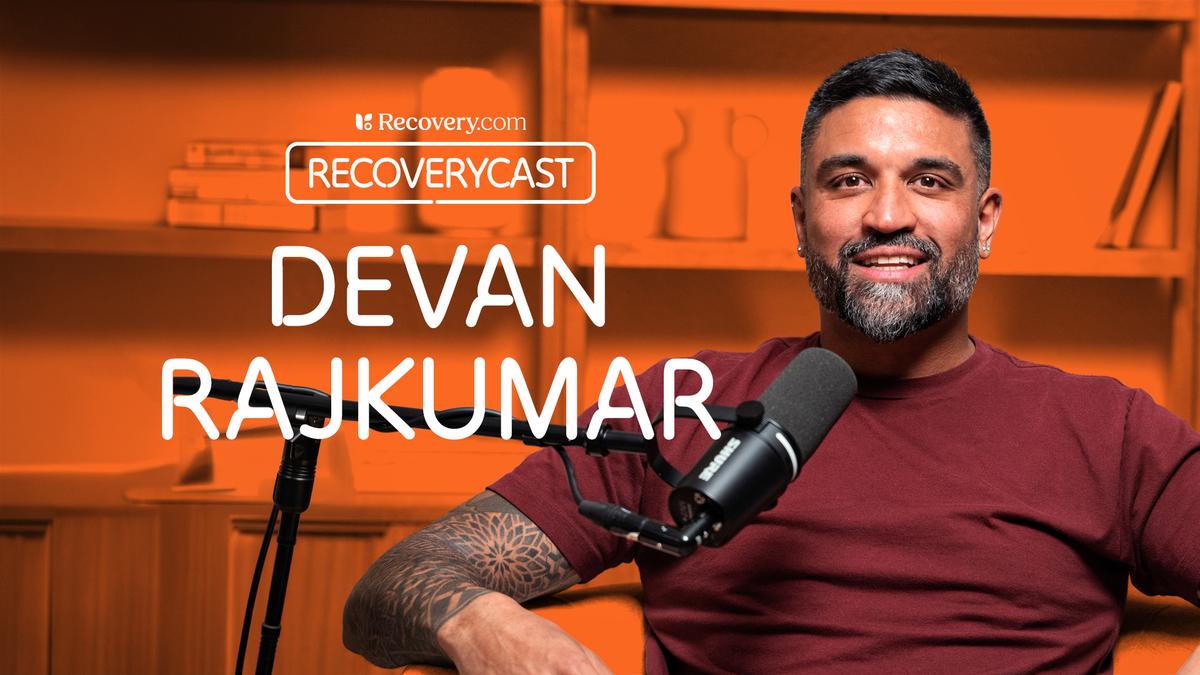
In this episode of Recoverycast, Devan shares what it was really like to build a high-profile culinary career while struggling with addiction. From teenage substance use to devastating grief, from chest pain that nearly killed him to the ego that kept him stuck, Devan opens up about what finally pushed him into lasting recovery.
Now over four years sober, he speaks with clarity, humility, and wisdom. These are eight of the most powerful lessons from his story.
1. Addiction Starts in Escape
Devan didn’t “dabble.” At 13 years old, he was already chasing intensity. He describes himself as the kid who had to drink the most, smoke the most, and prove the most.
Even then, it wasn’t about partying, but about disappearing. “For some reason, I just wanted to disappear,” he says. Substances gave him relief. Even if it was brief.
He describes creating a routine to disguise his substance use as a teenager. Looking his parents in the eyes and thinking he had outsmarted everyone.
“I thought I was always one step ahead,” he says. That manipulation became muscle memory that followed him into adulthood.
For many, addiction begins as a coping mechanism. And when coping becomes dependence, the progression is already underway.
2. High-Functioning Addiction Is Still Addiction
When people picture addiction, they often have an image of what the disease looks like.
Devan was on television. He was filming nationally syndicated shows. Cooking elaborate dishes. Judging on major networks. Landing brand deals.
But he was also partying until five or six in the morning before live TV appearances.
He describes lying down for 20 minutes before a studio call time, his mind spinning. Bright lights. Live audience. Production crew. All while hiding what he had done hours before.
“I thought I could fool everybody,” he says. But internally, it was chaos. Devan was exhausted and full of guilt and shame while operating at what he estimates was 50%.
High-functioning addiction can look successful from the outside. In Devan’s case, it can even look charismatic, driven, and productive. But the internal cost is brutal.
Just because a person is “functioning” doesn’t mean they’re thriving. And productivity doesn’t cancel out pain.
Explore Drug Addiction Treatment Centers
3. Grief Can Fuel Addiction If It’s Not Processed
When Devan was 21, his older brother died by suicide. The grief was overwhelming, and he didn’t have the knowledge or tools to know how to process it. So he numbed it.
“I couldn’t deal with the grief. And I dove even deeper,” he says.
Devan describes believing he had a “get out of jail free card.” Who could challenge him? His brother had just died.
For years, he fixated on the unanswered questions. Was his brother depressed? Was it family dynamics? Was there something he missed?
Nearly two decades later, he began to process the grief differently. Now, he focuses on gratitude for the 21 years they had together. He speaks of leading with appreciation rather than anger.
Grief doesn’t disappear; rather, it evolves. If it isn’t faced, it can become fuel for self-destruction. But when it is processed, it can become a source of compassion and depth.
4. Your Environment Can Accelerate Addiction, But It’s Not Always the Root Cause
The culinary industry is intense. High stress. Long hours. Physical pain. Open bars. Party culture.
Devan describes finishing catering events and walking from the kitchen straight into a packed nightclub. It was a work-hard, play-hard environment. And it normalized extreme behavior.
But Devan is honest about something important. Even if the environment had been different, he believes he would have found a way to use substances.
“I could score in the desert,” he jokes.
He acknowledges that while the industry amplified his addiction, it didn’t create it.
Yes, your environment matters, but until the internal drivers are addressed, changing your scenery alone is rarely enough.
5. Denial Is the Most Powerful Barrier to Recovery
When asked what kept him from asking for help, Devan says six letters: Denial.
Despite his substance use resulting in lost opportunities and trips to the hospital, he was in denial. He knew a solution existed. He had been to treatment before and even experienced short periods of sobriety. But his ego told him he could manage his addiction.
“I got myself into this. I can get myself out,” he says.
Denial is powerful because it often hides behind achievement and success. For Devan, the breakthrough came when he could no longer ignore the reality that he might die.
Denial keeps people stuck, but honesty breaks the cycle.
6. Rock Bottom Is a Moment of Clarity, Not Just Collapse
In 2021, after a period of heavy partying abroad, Devan returned home and ensured his dealer was waiting at his place.
Within hours, he experienced severe chest pain. Every line felt like it could be the last.
“I knew, this is it. You’re going to die,” he says. That was the turning point.
He reached out for help. It took weeks to get into treatment. He relapsed once more after discharge, but this time it was different.
A sponsor asked him a direct question: “Have you ever given this program 100%?”
The answer was no. So he decided to do exactly that.
His sobriety date is May 10, 2021.
Devan’s rock bottom wasn’t just the physical pain he experienced, but the realization that he had immense potential and was throwing it away.
“What happens if I give this gift my all?” That question changed everything.
7. Recovery Requires Ego Deflation and Daily Work
Getting sober was one step. Living well was another.
Devan speaks candidly about ego and the need to be right.
In recovery, he learned humility. “True humility is not thinking less of yourself, but thinking of yourself less,” he says.
He worked through resentment toward his father by writing letters, practicing empathy, and understanding generational trauma. Slowly, Devan built structure through meetings, sponsorship, physical fitness, community, and spiritual connection.
He emphasizes something many overlook. Relapse often happens long before a person drinks or uses drugs. It happens when daily practices stop.
When he relapsed after treatment, he realized he had stopped doing the work. No meetings. No sponsor calls. No spiritual grounding. Now, recovery isn’t just abstinence, but character development.
“My worst day sober will always be better than my best day high,” he syas.
That clarity comes from daily commitment.
8. Purpose Turns Pain Into Service
Devan waited one year before going public about his addiction.
He was afraid. What would fans think? His family? Industry peers?
But he realized something powerful. People saw him as successful. They didn’t see his struggle. So he told the truth, and it resonated.
Now, Devan uses his platform to talk about mental health awareness, substance use recovery, and navigating triggers like holidays and work events. He still cooks, but there is a deeper layer.
His signature phrase, “mad love,” became more than slang. It became a mission.
Mad love for himself, for his family, for his neighbors, for the person struggling silently behind an Instagram filter.
He speaks about selfless service without praise or recognition. About auditing your circle. About loving some people from a distance. About protecting your sobriety at all costs.
Recovery gave him purpose beyond his career.
“If nothing changes, nothing changes,” he says. Now, he chooses change.
The Biggest Lesson
Devan’s story isn’t just about addiction in the culinary industry. It’s about denial, ego, grief, and the exhausting cost of living behind a mask. But it’s also about hope.
Recovery didn’t strip away his drive, but refined it. It didn’t dull his passion, but deepened it. And it didn’t shrink his world, but expanded it.
If Devan’s story resonates with you, listen to the full Recoverycast episode. Share it with someone who might need to hear it. Or take a quiet moment to ask yourself, what would change if you gave your life 100%?










Our Promise
How Is Recovery.com Different?
We believe everyone deserves access to accurate, unbiased information about mental health and recovery. That's why we have a comprehensive set of treatment providers and don't charge for inclusion. Any center that meets our criteria can list for free. We do not and have never accepted fees for referring someone to a particular center. Providers who advertise with us must be verified by our Research Team and we clearly mark their status as advertisers.
Our goal is to help you choose the best path for your recovery. That begins with information you can trust.