Find Treatment By
Rehabs by Location


Find Treatment By
Learn
About Us
Recovery.com combines independent research with expert guidance on addiction and mental health treatment. Our mission is to help everyone find the best path to recovery through the most comprehensive, helpful network of treatment providers worldwide.
Advisory Council
Our advisory council brings together leaders in behavioral health, technology, and business. Their diverse expertise ensures our resources and product are innovative, evidence-based, and effective. They guide our mission as accomplished individuals dedicated to improving the landscape of addiction recovery and mental wellness.
Bobby Kazz’s 7 Honest Lessons on Male Body Image, Disordered Eating, and Recovery


Kayla Currier is a Senior Web Content Editor at Recovery.com. She received her B.A. in Journalism and Media Studies at the University of South Florida where she served as a contributing writer and editor for the Crow’s Nest.
Kayla Currier is a Senior Web Content Editor at Recovery.com. She received her B.A. in Journalism and Media Studies at the University of South Florida where she served as a contributing writer and editor for the Crow’s Nest.
Table of Contents
- 1. Body Image Struggles Can Start Shockingly Early
- 2. For Many Men, Eating Disorders Hide Behind “Normal” Behavior
- 3. Praise Can Be One of the Strongest Reinforcements
- 4. Binge Eating Often Follows Restriction
- 5. Social Media Can Help and Harm at the Same Time
- 6. Redefining Health Was a Turning Point
- 7. Recovery Is Not Linear, and That’s Okay
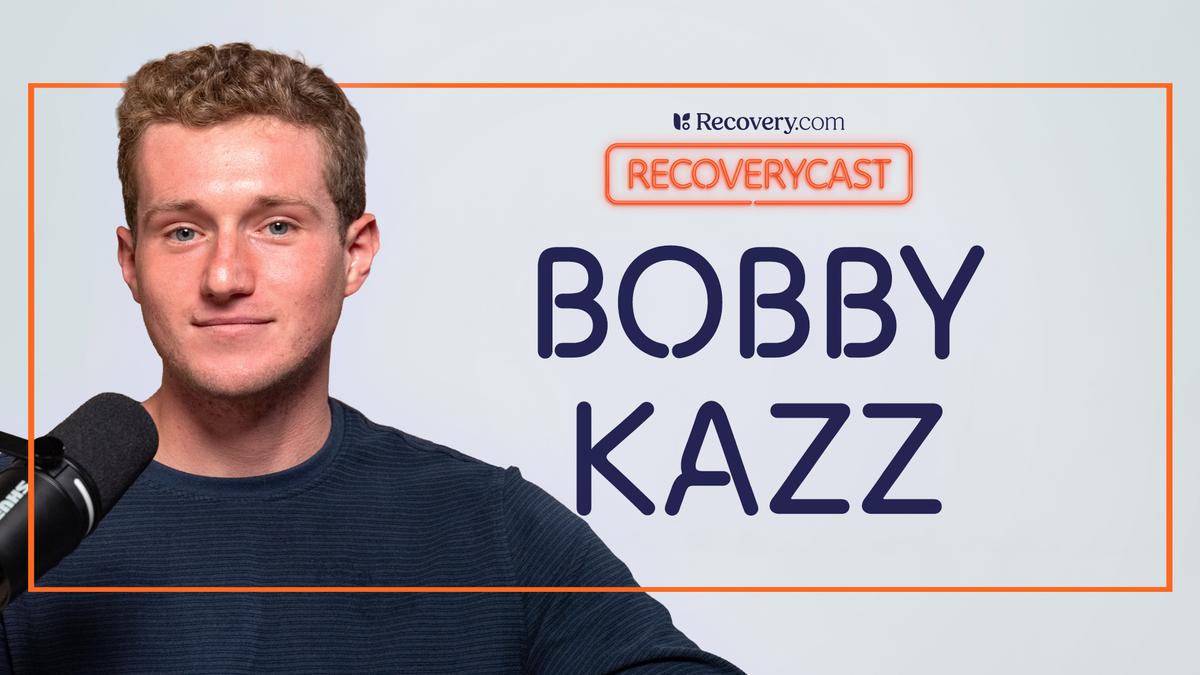
Eating disorders are still widely misunderstood, and when they show up in men, they are often ignored, minimized, or completely invisible. On this episode of Recoverycast, Bobby Kasmir, known on social media as Bobby Kazz, shares a deeply personal story that challenges the stereotype of what an eating disorder looks like and who it affects.
Bobby grew up feeling different in his own body, long before he had the language to describe what was happening. What started as childhood body awareness slowly turned into restriction, compulsive exercise, binge eating, and an exhausting cycle of shame. Along the way, praise from others reinforced behaviors that were quietly damaging his physical and mental health.
In conversation with Recoverycast, Bobby reflects on the stigma men face around eating disorders, the role fitness culture and social media played in his recovery journey, and how his definition of health has completely changed. His story is honest, uncomfortable at times, and deeply relatable for anyone who has ever felt trapped in their own head around food or body image.
1. Body Image Struggles Can Start Shockingly Early
Bobby’s relationship with food and body image didn’t begin in adolescence. It started when he was just six years old. Growing up as an overweight kid, he became acutely aware that his body looked different from the people around him.
He remembers asking his mom how to lose weight at an age when most kids are still figuring out how to tie their shoes. Watching TV and absorbing messages from the media reinforced the idea that thinness was the standard, and anything else was wrong.
One moment stood out as a turning point. At his sixth birthday pool party, a classmate bluntly commented on his body, calling him fat. That single sentence stayed with him. From that moment on, Bobby began constantly checking mirrors, comparing himself to others, and internalizing the belief that his body needed fixing.
For years, he thought these thoughts were normal. It wasn’t until high school that he realized his level of hyper awareness and self-scrutiny wasn’t something everyone experienced.
2. For Many Men, Eating Disorders Hide Behind “Normal” Behavior
As Bobby got older, his behaviors became harder to hide, but not because they looked extreme on the outside. Running every day, skipping meals, and pushing himself at the gym were often praised, not questioned.
He describes how restriction and over-exercise felt like the expected path to weight loss. Eat less, move more, repeat. Compliments poured in as his body changed, reinforcing behaviors that left him exhausted, dizzy, and mentally consumed.
No one questioned how he was achieving the results. Friends and family simply asked what he was doing, and he enjoyed hearing how good he looked. For the first time, his body was receiving positive attention.
This is one of the most dangerous aspects of eating disorders in men. What looks like discipline or dedication is often deep suffering disguised as motivation.
Explore Eating Disorders Treatment Centers
3. Praise Can Be One of the Strongest Reinforcements
Bobby explains that compliments became addictive. After years of feeling invisible or ashamed of his body, external validation felt powerful.
He weighed himself multiple times a day. If the scale went up even slightly, he responded by restricting further. Skipping meals turned into days without food, fueled by fear and the belief that thinner always meant better.
Internally, his body felt worse and worse. He was lethargic, mentally foggy, and socially withdrawn. But externally, he was receiving praise he had never experienced before. That disconnect kept him trapped in the cycle longer than he realized.
It became clear that chasing approval can drown out warning signs, especially when the world rewards unhealthy behaviors.
4. Binge Eating Often Follows Restriction
While high school was dominated by restriction, college introduced a new struggle. Binge eating.
With the help of fitness tracking devices and calorie burn metrics, Bobby developed the belief that food had to be earned. He walked tens of thousands of steps a day, spent hours in the gym, and tried to out-exercise hunger.
Eventually, his body fought back. Extreme hunger led to binge eating, followed by intense guilt and shame. He describes eating entire bags of food in minutes, feeling completely out of control, then immediately planning how to punish himself afterward.
One binge, which he labeled “rock bottom” in his notes app, became a moment of reckoning. Writing down everything he ate forced him to confront how severe the cycle had become.
Binge eating was not a lack of willpower. It was a biological and emotional response to years of deprivation.
5. Social Media Can Help and Harm at the Same Time
Bobby began sharing his story on TikTok during college, initially posting health and wellness content. Eventually, he decided to speak openly about his eating disorder, something very few men were doing publicly at the time.
His goal was simple: to help others feel less alone.
The response was overwhelming. Messages poured in from people who felt seen for the first time. Some said his videos inspired them to eat breakfast or reach out for help.
But behind the scenes, Bobby was still struggling. Creating content about disordered eating often pulled him back into the mindset he was trying to escape. Reliving old behaviors for the sake of relatability became triggering.
Eventually, he realized that continuing to post that content was costing him his health. Walking away from it meant risking his audience, but staying meant sacrificing himself.
6. Redefining Health Was a Turning Point
For a long time, Bobby equated health with appearance. Being smaller felt like success, even when he was miserable.
Over time, his definition changed. Health became about how he felt, not how he looked. Energy levels, mental clarity, and emotional stability mattered more than a number on the scale.
One pivotal moment came when a CrossFit coach casually told him to eat more after a workout. That simple statement reframed food as fuel, not an enemy.
Later, training for a marathon reinforced this lesson. Bobby learned that movement requires nourishment, and that eating well made his body stronger, not weaker.
This shift did not happen overnight, but it changed everything.
7. Recovery Is Not Linear, and That’s Okay
Bobby is open about relapses. Early on, he believed that one setback erased all progress. Over time, he learned that recovery includes bad days, not despite them.
Instead of punishing himself after a binge, he practiced returning to normal routines. Eating breakfast the next day. Moving forward without restriction.
He explains that progress looks different over time. Bad days become less frequent. The space between relapses grows.
The biggest lesson he shares is that recovery doesn’t require perfection. It requires compassion, honesty, and support.
Bobby’s story challenges outdated narratives around eating disorders and masculinity. His experience reminds us that disordered eating does not have a single look, gender, or cause. It thrives in silence but weakens when spoken about openly.
To hear Bobby’s full story in his own words, listen to the complete Recoverycast episode. If this conversation resonated with you, consider sharing it with someone who might need it, or taking a moment to reflect on your own relationship with food, movement, and self-worth.
Looking for Support?
If you or someone you love is struggling, eating disorder treatment is available and can help. Recovery.com can help you explore eating disorder treatment centers, resources, and options tailored to your needs, wherever you are in your journey.
Our Promise
How Is Recovery.com Different?
We believe everyone deserves access to accurate, unbiased information about mental health and recovery. That's why we have a comprehensive set of treatment providers and don't charge for inclusion. Any center that meets our criteria can list for free. We do not and have never accepted fees for referring someone to a particular center. Providers who advertise with us must be verified by our Research Team and we clearly mark their status as advertisers.
Our goal is to help you choose the best path for your recovery. That begins with information you can trust.