Find Treatment By
Rehabs by Location


Learn
About Us
Recovery.com combines independent research with expert guidance on addiction and mental health treatment. Our mission is to help everyone find the best path to recovery through the most comprehensive, helpful network of treatment providers worldwide.
Advisory Council
Our advisory council brings together leaders in behavioral health, technology, and business. Their diverse expertise ensures our resources and product are innovative, evidence-based, and effective. They guide our mission as accomplished individuals dedicated to improving the landscape of addiction recovery and mental wellness.
Adrienne Wilkerson on Trust in Behavioral Health Marketing & How She Almost Lost It All


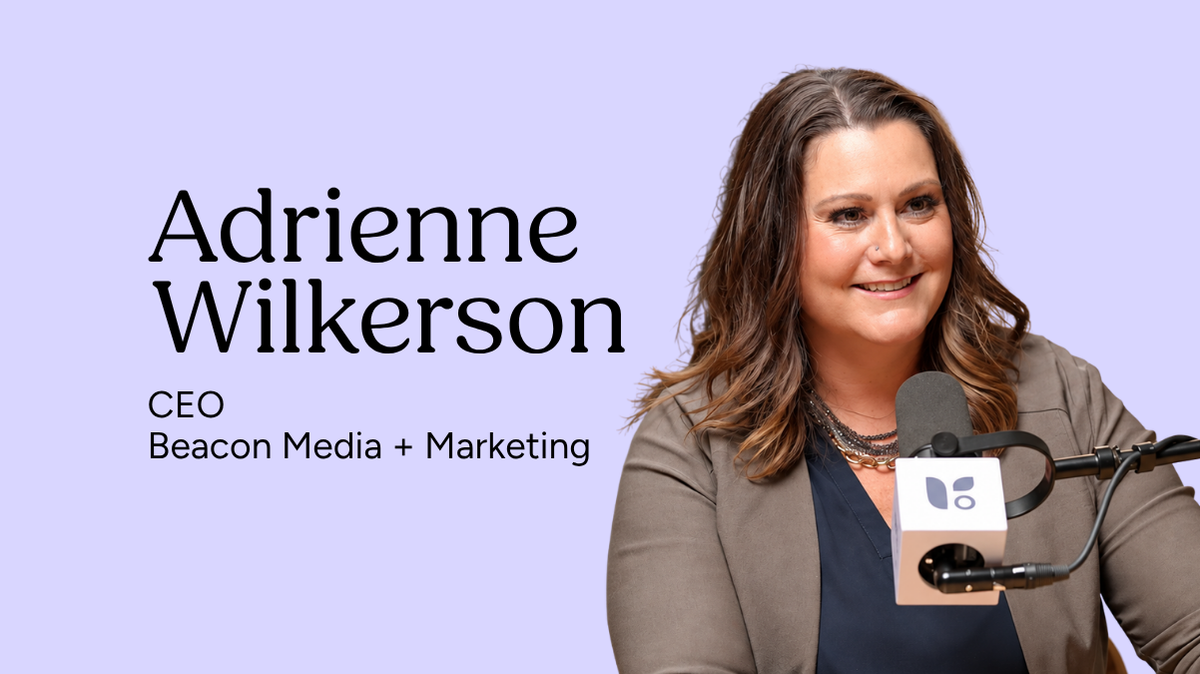
In March of 2020, Adrienne Wilkerson watched a third of her client roster disappear in three weeks.
Most of it was not behavioral health. It was the med spas, the in-person service businesses, everyone whose revenue required a person to physically walk through a door. Her agency, Beacon Media + Marketing, had spent eight years building a book of business in Anchorage and, more recently, across the country. A chunk of it evaporated in less than a month.
"March and April were really, really bad that year," she said.
She also remembers writing the final payroll check. She and her co-founder Jennifer Christiansen took nothing. It emptied the savings account down to the last dollar, with the PPP loan still unfunded and no guarantee it would come. It landed the next day.
Beacon went on to have its best year ever in 2020. The reason had less to do with the loan than with the decision the two founders made in the middle of that month.
Two options: batten the hatches, or unfurl every sail
Beacon had already started moving toward mental and behavioral health in 2019. The website pages were live. The positioning existed on paper. But it was not yet the focus of the business.
When COVID hit, Wilkerson and Christiansen sat down with a binary choice in front of them.
"We either batten down all the hatches, pull all the sails in, put our head between our knees and hang on for dear life and hope there's something on the other side of this," Wilkerson said, "or we unfurl every dang sail we've got. We put everybody on the oars, and we go all in on mental behavioral health and cut into the wave."
They picked the second one. Every paid ad dollar shifted to mental and behavioral health. They ran internal training to bring the staff up to speed, drawing heavily on Wilkerson's own background in the field. They replaced every lost client.
Her framing on it now is worth noting for anyone who thinks the pandemic remade their business: "COVID accelerated what was already there. It didn't change the track."
Why an Alaska agency niched into behavioral health
Beacon's origin story starts with two people who kept running into each other by accident.
Wilkerson launched her first company in 2001, doing graphic design, branding, and websites. By 2010 she could see that traditional marketing was shifting under her feet and that she needed to evolve with it. In October 2011, she walked into a client meeting and found Jennifer Christiansen sitting across the table. They knew of each other, had never met, and had a mutual client. Three weeks later the exact same thing happened with a different client.
"Something's going on here," Wilkerson remembers thinking. "Stars are aligning somewhere. We need to pay attention."
They merged businesses in January 2012 and launched what was effectively the first full-service digital marketing agency in Alaska.
"Forget cutting edge, we were bleeding edge at the time," she said. Clients were still asking whether they really needed a website. Then they were asking whether this Facebook thing was going away.
One of her favorite war stories from that era: client engagement numbers started falling off a cliff, week over week, across the entire roster. It took three weeks of digging before Christiansen found the cause, a buried internal Facebook memo announcing the shift to pay to play.
"So now we had to go back to all of our clients and say, you know what you were paying us last month? We gotta double that, because now you gotta pay Facebook."
Beacon went national in 2017, and that move is what forced the niche. In Alaska they had been a small fish in a small pond. Nationally they were a small fish in a very big pond, and their old positioning around small business did not translate.
"We had to now practice what we preached on a much deeper level," Wilkerson said. So they looked at which clients they worked best with and where they already spoke the language. The answer was healthcare, and specifically mental and behavioral health.
That was not a coincidence. Her father was a therapist for 30 years who built his own medical and counseling practice around whole-person care, a progressive idea in the mid-1990s. One of Wilkerson's first professional jobs was doing the medical billing in his clinic, which meant she saw the back end of behavioral health operations up close. Her husband later got certified as a behavioral health counselor and worked for years at one of only two detox facilities in the state of Alaska.
Beacon officially niched down in 2019, months before the field's demand curve went vertical.
The two things that make behavioral health marketing different
Ask Wilkerson what surprised her most about the niche and she goes straight to reviews.
"When we had our roofers and our plumbers and our HVAC guys, getting a review's no big deal. You ask for reviews all day long, and that is a cornerstone of digital marketing. That is a whole different game in behavioral health."
The second difference is one every operator recognizes and plenty of marketing teams still get wrong.
"Frequently you're not marketing to the client. You're marketing to the client's loved ones."
Beacon now walks clients through a version of the ideal-client exercise with an extra step bolted on. Okay, that's your ideal client. Now who is actually bringing them to your clinic? Who is the father, the mother, the sister, the partner, sometimes the best friend, sometimes the boss?
"That's who we need to market to."
Reframing the review ask
Wilkerson's take on negative reviews runs against the instinct of most treatment center leaders.
"Bad reviews aren't a bad thing," she said. In an era where AI can manufacture a convincing five-star profile at scale, a few bad reviews now function as a credibility signal. What matters is the response.
"Character comes out in the bad times. We all coast in the easy times, but who we really are comes out in how we deal with the challenges." A negative review from someone at their lowest, or from a family member watching a loved one enter treatment for the third time, is a public opportunity to demonstrate grace and empathy in a way a glowing review never allows.
That said, if a facility is sitting at three stars, it needs positive reviews, and the ask has to be built differently. Beacon has had success on the therapy and counseling side with something simple: a review card with a QR code at checkout, paired with language that reframes what is being asked for.
Not "leave us a review." Something closer to: your story could help somebody else in crisis.
"That changes the scenario," Wilkerson said. "My story has weight. My story has power. I could help somebody else not have to go through this?"
The output changes too. Instead of a hotel-style review about wait times and bed comfort, you get a narrative arc. What the person learned. How they grew. What the place did for them.
As Mally put it during the conversation, the ask stops being "do me this favor" and becomes "here's a simple way to give back."
Traffic is holding. Conversions are not.
One of the most actionable stretches of the episode was Wilkerson's read on why treatment center websites are underperforming right now.
Most clinics she sees are experiencing a meaningful drop in conversions, and the cause is not their content volume. It is that their user interface was built for an older search model.
"People are farther down the funnel when they're showing up at your website now than they used to be. So they're in a different stage of the buying journey, so your content has to respect that stage that they're in. It's no longer as much about awareness as it is connection and trust."
Mally offered his own version of the same diagnosis: most treatment centers do not have a branding problem, they have a trust problem. Their websites fail to display the signals that would lead any reasonable person to trust the organization. Not logos and color palettes. Reviews, video testimonials, certifications, clearly listed levels of care, and actual prices.
He also shared the equation he uses for behavioral health websites, which Wilkerson immediately adopted:
Empathy + authority = trust.
Two questions are running in a visitor's head. Does this treatment center understand what I'm going through? And can they actually help me? The first is empathy. The second is authority. You need content, in words, images, video, and audio, that answers both.
Overrated: AI as a therapist
Asked what is overrated in behavioral health right now, Wilkerson did not hesitate.
"AI as a therapist."
She is careful to give the technology its due as a research partner and a safe place to explore, and she understands exactly why adoption is accelerating. "It's nice to have a yes man who doesn't call you on stuff, who doesn't hold you accountable, who tells you what you want to hear."
Her objection is clinical, not philosophical.
"AI can't pick up that eye twitch when you mention somebody from your past," she said. It cannot notice the smile that surfaces around a particular memory and say, let's go back to that. It cannot read the hunched shoulders or the tension in the room. And it will not hold anyone accountable when the next fix is calling.
Mally connected it to attachment theory. For someone with a disorganized or insecure attachment style, the therapeutic relationship is often the first opportunity to experience what a different kind of relationship feels like. That requires stakes. It requires mutual vulnerability. As he put it, would gambling be as popular if there were nothing to win or lose?
Wilkerson's broader concern is generational. Every cohort after hers has had another layer of technology stacked on top of the last, each one eliminating some amount of real human connection and replacing it with a facsimile of it.
"Behavioral health does not exist in the easy places," she said. "It's at the rock bottom. It's when you gotta face your demons, and you gotta work through them." The field is now trying to reach people who have had no training in hard conversations, because unfriending someone has always been available as an alternative.
"Behavioral health is fighting more than just marketing."
Underrated: being willing to give something of yourself
Her underrated pick was the flip side of the same coin.
"It's that trust factor. It's focusing on you can have the hard conversations and come out the other side."
Doing that requires the industry to be more vulnerable in its messaging than it has historically been comfortable with. Concretely, that looks like a video bio instead of a text bio listing accreditations and alma maters.
"That really only matters to your colleagues," Wilkerson said. "The mom who's got a teenager who's relapsing again, they don't care how many letters you have after your name. They want to know you're going to take care of their son. And you're not going to judge him or her relapsing for the third time."
She is quick to acknowledge the tension. She is a private person herself, deliberate about what she shares and how. There is a path to walk between revealing nothing and over-revealing.
"But we have to give some of ourselves, and that is the underrated opportunity that AI's actually creating."
Her summary: choose to create trust first and connection first, and everything else follows.
Why this work is personal
Wilkerson's investment in the field runs deeper than a market opportunity.
Her father, the therapist, grew up as an adult child of an alcoholic and spent years believing he was simply broken. He never planned to marry or have children. Meeting Wilkerson's mother changed that calculus, and working out his own history led him to the framework that finally explained it. There was a name for what he was carrying. That meant there was something to work on.
Years later her husband walked through the front door after a continuing education course on PTSD and announced that he had it. They had been married ten years at that point. Like her father, he had assumed he was just broken, and that there was no version of the story where that changed.
"But now there was a label. There was something he could identify. There was now something he could work on and through," Wilkerson said. "And that week, our marriage changed."
She and her husband have been married 24 years.
"To be able to have a business that helps other businesses who help people is really the core," she said. "It's something bigger than ourselves."
She also credits her father with something subtler. Growing up in a small, tightly connected Anchorage community where her dad was both a pastor and one of the first people to run an in-church counseling program, she would come home from school angry at a bully. He never revealed anything about anyone. But he consistently walked her through the other side of it. What's going on at home for that kid? What might they be dealing with?
"It made me slow down and stop and think," she said. Years after graduation she ran into the girl who had made her school years miserable, now happy, healed, and openly crediting therapy for it.
The advice she got that was wrong
Mally closes every episode with two questions. The first: what advice did you get early on that turned out to be wrong?
Wilkerson's answer was thinking too small.
Early on she had a vision of building a national company with global impact. She took it to an attorney, who essentially told her to scale it back. You're here. You're in this little city. Don't set all that up. Just be this.
"I felt like I shrank when I walked out of that meeting," she said. "And I wish I had stuck with my gut."
The consequence was structural. Beacon eventually did go national, and it did so without infrastructure that should have been in place years earlier, through partner transitions and growth that would have been easier to navigate with the right foundation.
"Go ahead and dream big," she said. "And if somebody doesn't dream big with you, that's okay. Keep that dream and find somebody who will."
Her practical addendum for founders: when you're just starting out and every expert is telling you to go find a banker and an attorney, go get a second opinion.
What behavioral health leaders should be thinking about next
The second closing question: what should the field be paying more attention to?
Learning to work with AI rather than against it, she said, because the alternative is not available.
Patients are already arriving with a self-diagnosis and a proposed treatment plan in hand. It is difficult, and in many cases it is now an obstacle a clinician has to clear before treatment can even begin.
"But judging that is going to alienate the person more than it's going to help them."
Nobody has clean answers here yet. As Wilkerson pointed out, the CEOs of the companies building this technology keep reversing themselves on whether it eliminates jobs or enhances them. Her posture is cautious optimism, eyes open, with a clear line about where to draw the line.
Mally offered a framework he borrowed from Tony Robbins for exactly this kind of moment. If you could learn one thing in school, it should be to notice patterns, repeat patterns, and create patterns. Every disruption follows the same arc, whether it was Facebook going pay to play or generative AI arriving. Some people call it the end of everything, some people call it the savior of everything, and the people who do well simply watch how it is actually being used and then work out how to use it.
He compared it to baking. First you notice that all cupcakes share certain ingredients. Then you follow a recipe. Then you start asking what happens if you add sprinkles.
Wilkerson took the metaphor and ran:
"AI still cannot create anything original. It can imitate, it can mimic to the point where it looks original, but it's not. It's the average of what it can find. And humans still have that ability to innovate and create something new, and take that pattern and go, well, what if we added some cinnamon in here? And once I add cinnamon, now I have to adapt the flour, because the cinnamon's dry. That whole part of human ingenuity is still our moat."
Her one condition on all of it: don't abdicate your thought authority.
"AI's an amazing co-pilot. But the moment we take our hands off the wheel and tell the co-pilot to start flying that plane, we're in big trouble."
Connect with Adrienne Wilkerson.
Adrienne is the CEO of Beacon Media + Marketing, a full-service digital agency where roughly 70 to 80 percent of clients are in mental and behavioral health. You can connect with her on LinkedIn, where she is active and always up for continuing the conversation.
Our Promise
How Is Recovery.com Different?
We believe everyone deserves access to accurate, unbiased information about mental health and recovery. That's why we have a comprehensive set of treatment providers and don't charge for inclusion. Any center that meets our criteria can list for free. We do not and have never accepted fees for referring someone to a particular center. Providers who advertise with us must be verified by our Research Team and we clearly mark their status as advertisers.
Our goal is to help you choose the best path for your recovery. That begins with information you can trust.