Find Treatment By
Rehabs by Location


Learn
About Us
Recovery.com combines independent research with expert guidance on addiction and mental health treatment. Our mission is to help everyone find the best path to recovery through the most comprehensive, helpful network of treatment providers worldwide.
Advisory Council
Our advisory council brings together leaders in behavioral health, technology, and business. Their diverse expertise ensures our resources and product are innovative, evidence-based, and effective. They guide our mission as accomplished individuals dedicated to improving the landscape of addiction recovery and mental wellness.
Recovery.com Launches Behavioral Healthcare Demand Index; Google Forecasts Sharp Q4 Jump in Addiction and Mental Health Ad Costs


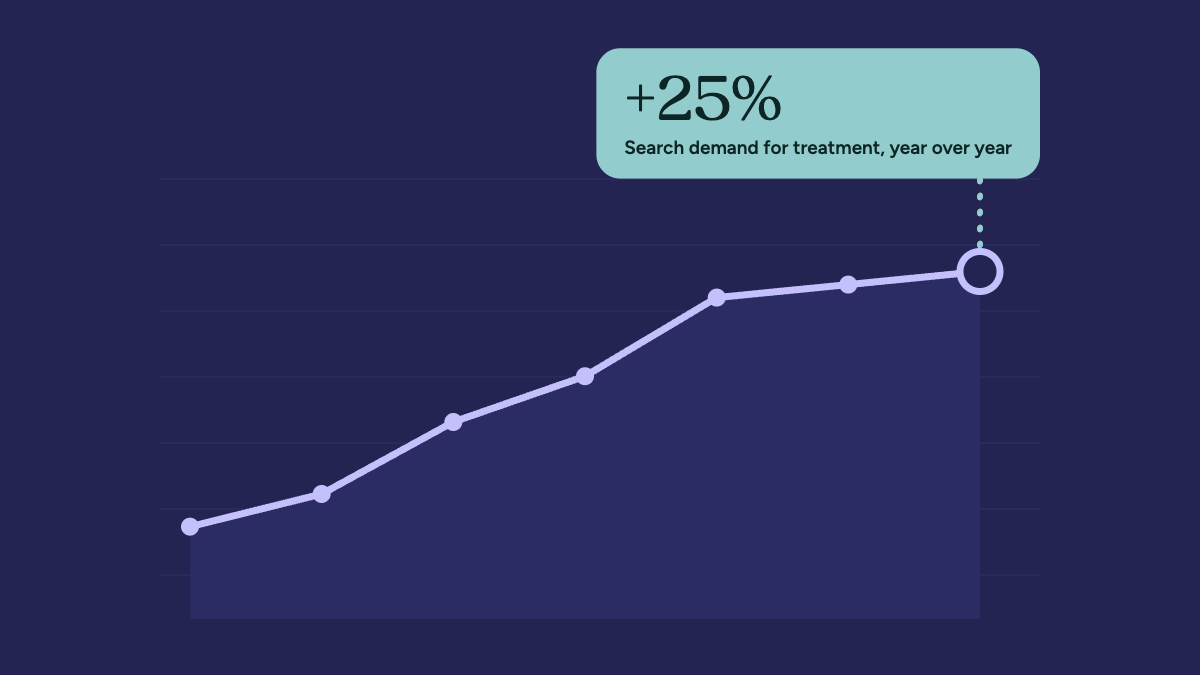
New quarterly index tracks how many people are looking for treatment and what it costs providers to reach them.
MADISON, Wis., October 29, 2026: Recovery.com released the first edition of its Behavioral Healthcare Demand Index, a quarterly summary of demand for addiction and mental health treatment in the United States. The Q3 2026 beta edition finds that demand held steady last quarter while the cost of reaching people on Google is forecast to rise sharply in Q4.
The index combines Google ad click data for addiction and mental health treatment with visits to treatment center pages on Recovery.com. It is designed to give treatment providers a consistent, repeatable read on demand and likely ad costs each quarter.
Key findings
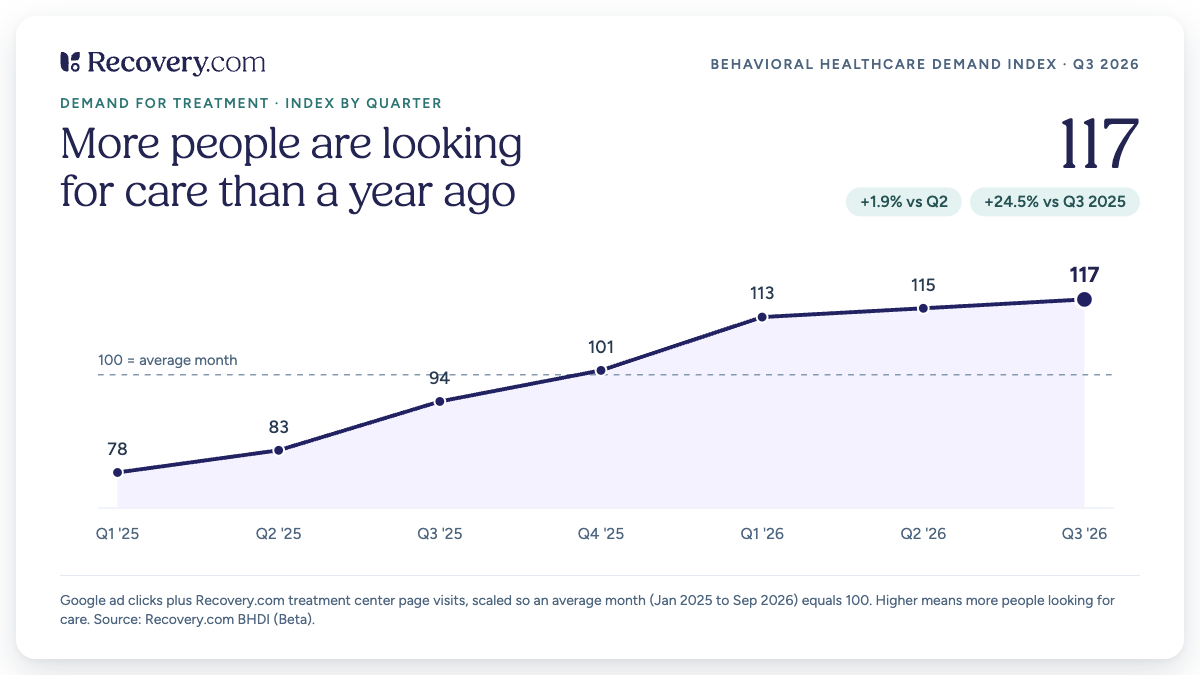
- Demand held steady. The Demand Index was 117 in Q3 2026, up 1.9% from Q2 and up 24.5% from Q3 2025. A score of 100 is an average month between January 2025 and September 2026.
- Summer peaked in August. The index reached 119 in August, then eased to 114 in September.
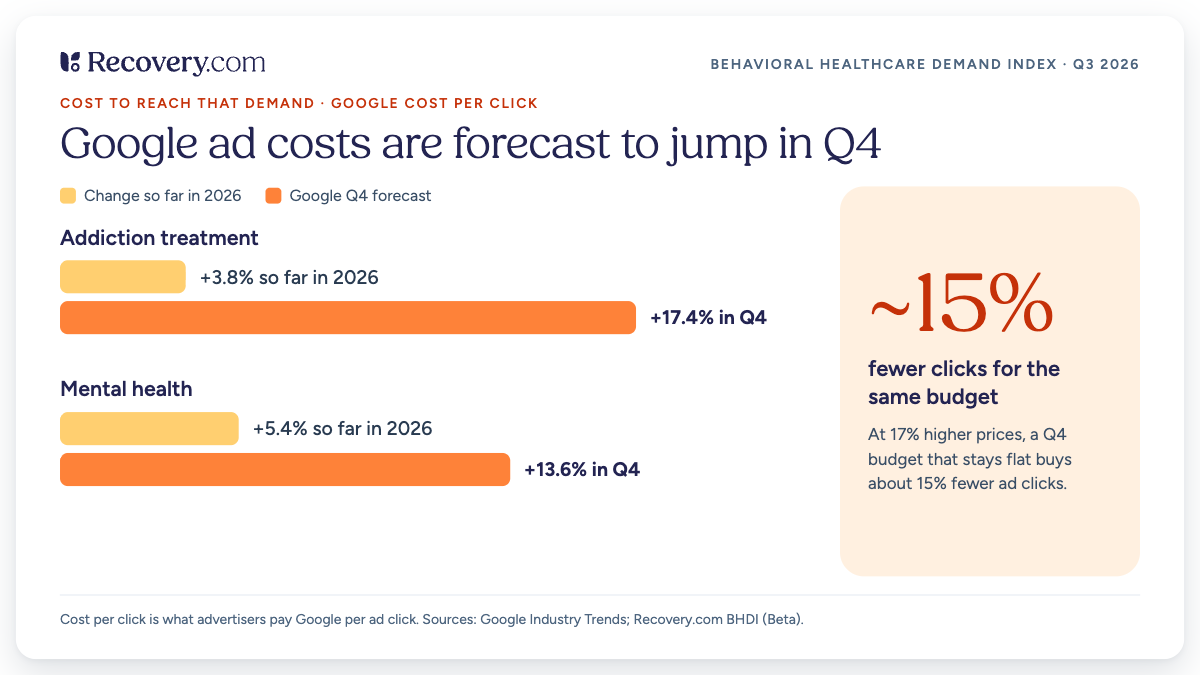
- Google costs rose slowly this year. Average cost per click is up 3.8% for Drug & Alcohol Rehab Programs and 5.4% for Mental Health Services from January to September 2026, compared with the same period of 2025.
- Q4 will cost more. Google forecasts cost per click rising 17.4% for Drug & Alcohol Rehab Programs and 13.6% for Mental Health Services in Q4 2026.
What else shaped the quarter. Demand for treatment doesn't move on its own. Holidays, school breaks, weather, the job market and major events all change when people look for care and when they're able to start it. The index reports these factors alongside the numbers so readers can tell a seasonal dip or a one-time event from a real shift in demand. Q3 2026 brought the hottest US summer on record, America 250 events and the World Cup final around July 4, and a softer job market, with unemployment rising from 4.1% to 4.2% and inflation reaching 3.7% in September.

How providers can prepare
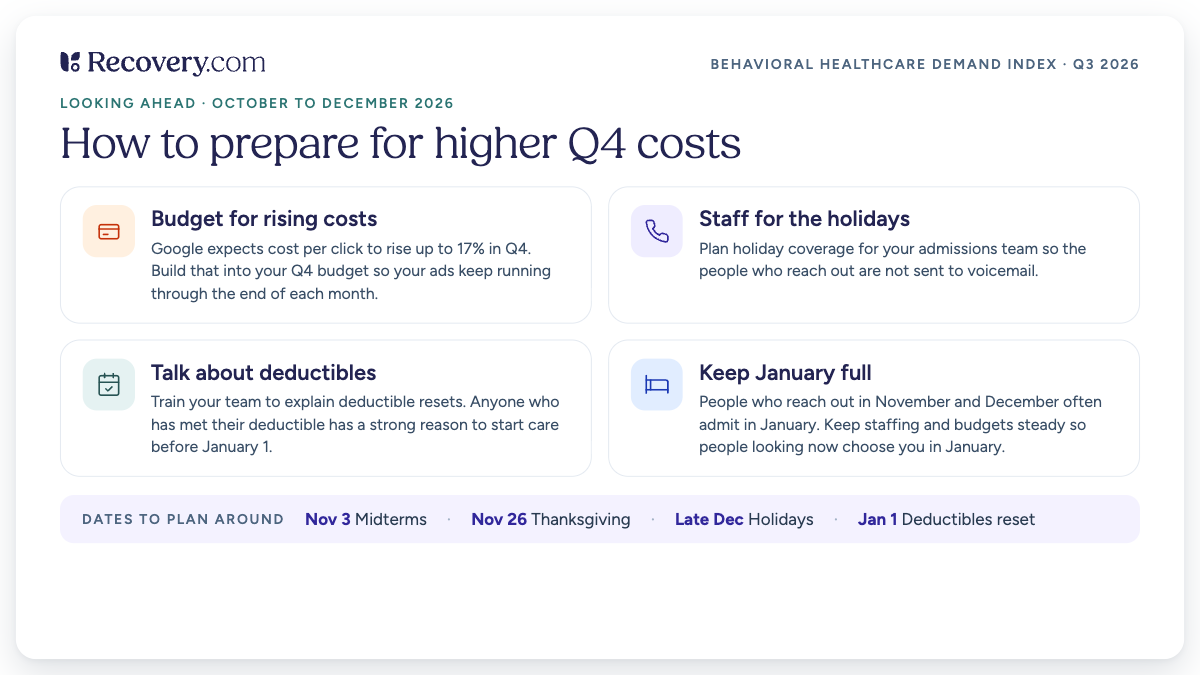
The summary outlines four steps treatment providers can take before year end:
- Budget for rising costs. Build up to 17% higher Google cost per click into Q4 budgets so ads keep running through the end of the year.
- Staff for the holidays. Plan admissions coverage so people who reach out are not sent to voicemail.
- Talk about deductibles. Train teams to explain deductible resets. Anyone who has met their deductible has a reason to start care before January 1.
- Keep January full. People who reach out in November and December often admit in January. Keep staffing and budgets steady so people looking now choose you in January.
Download the Q3 2026 summary , and see Recovery.com's treatment search seasonality guide.
About the index
The Behavioral Healthcare Demand Index is a composite of three metrics: Google ad clicks for Drug & Alcohol Rehab Programs, Google ad clicks for Mental Health Services, and visits to treatment center pages on Recovery.com. Each is scaled so an average month from January 2025 to September 2026 equals 100. Quarters are averages of monthly values. Other sources include Google Industry Trends, internal Recovery.com data, BLS jobs and CPI reports, and NOAA. The index is in beta, and methods may change in future quarters.
About Recovery.com
Founded in 2017, Recovery.com is the leading global platform for finding trusted mental health and addiction treatment. Each month, millions of people engage with us across our websites and social media platforms to search 25,000+ providers, compare treatment center details and reviews, read helpful recovery resources, interact with community content, and connect directly with the right treatment for them. We list all treatment options on our care navigation websites at no cost, while providing an ethical, best-in-class advertising platform for addiction treatment and mental health providers. Learn more at Recovery.com.
Media contact
Our Promise
How Is Recovery.com Different?
We believe everyone deserves access to accurate, unbiased information about mental health and recovery. That's why we have a comprehensive set of treatment providers and don't charge for inclusion. Any center that meets our criteria can list for free. We do not and have never accepted fees for referring someone to a particular center. Providers who advertise with us must be verified by our Research Team and we clearly mark their status as advertisers.
Our goal is to help you choose the best path for your recovery. That begins with information you can trust.